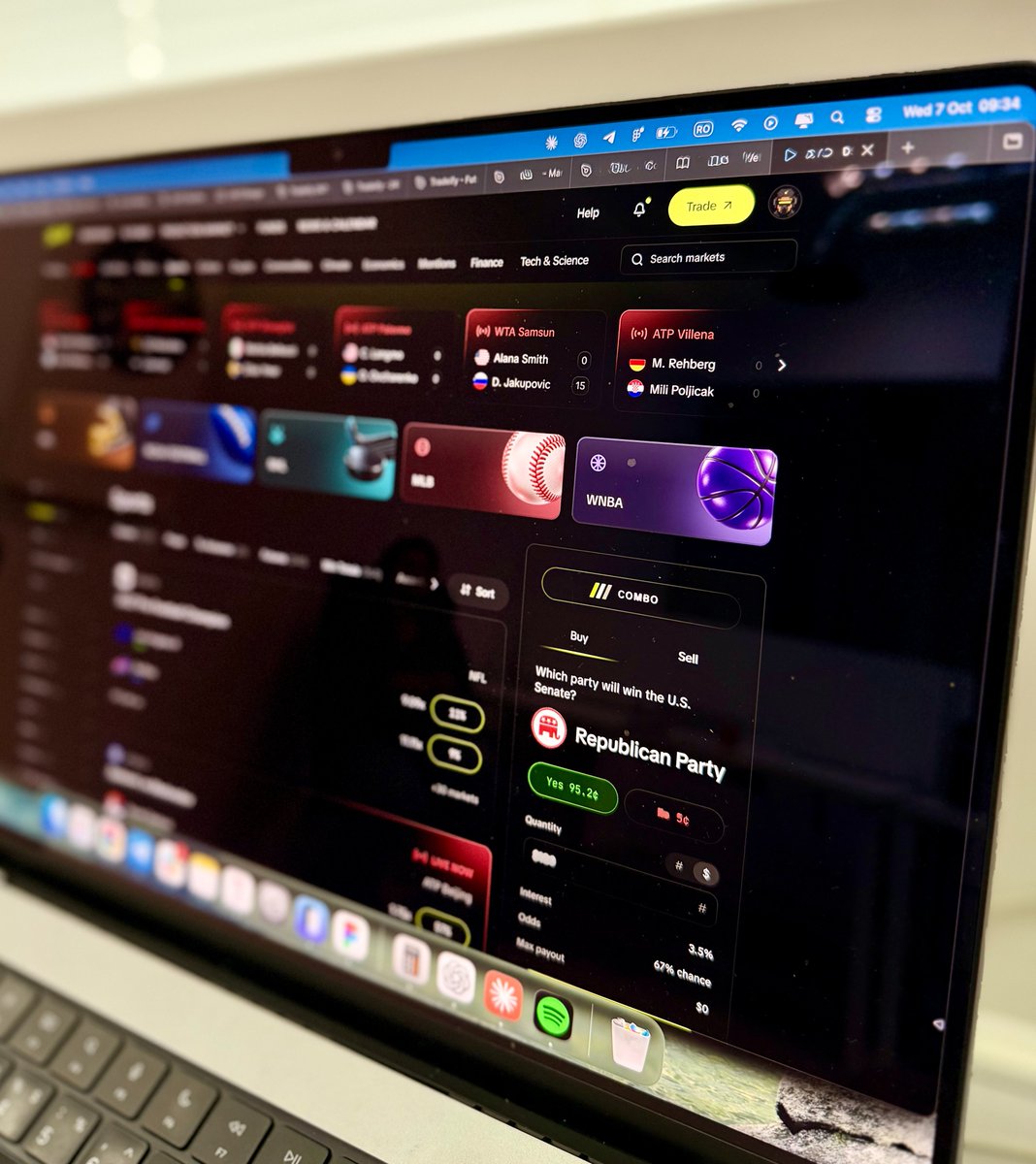
Evolution never stops.
Tradeify 247 was only the beginning.
A new challenger is approaching.
Ready for what’s next?
🔑 Request your beta key: https://t.co/3hEJ3HMqbA
This is the kind of work that makes me proud of our team. The creativity, attention to detail, and craftsmanship speak for themselves. So good to see this level of quality coming from our designers!
One of the biggest feelings is seeing my team become better than me at what they do
That’s exactly what a strong team should look like, people growing, taking ownership, and eventually doing things better than you ever could
Proud of them!
Every Vertical account now comes with its own AI Analyst.
MCP is now live. Plug your account into Claude or ChatGPT in seconds and ask anything.
It has your data. It might have the insights 🏔️
In 2026, points farming is dead for service-type products.
The problem isn't attracting people. It's that it attracts the wrong people. A points program incentivizes users to show up for the token rewards, not for the product.
The result: projects end up with a dopamine-fueled user base that vanishes the exact moment the token drops.
And to run a big airdrop that actually retains people, you need a big raise behind it. Most projects don't have that, so they attract low-ticket farmers who pretend to use the product, grab the points, and leave.
You end up with metrics that look like growth, but in reality there's zero real retention around whats truly a prop firm and what does it give you access to.
I think the right approach is balance.
Points can exist, but they have to come second to educating users about the product. If users understand why your product actually helps them, points become a bonus, not the main reason they're there!
That's when you make the switch: you go from a base of farmers to real users who keep coming back because they love what you built.
Retention comes from the product, never from the points.
(Yes, the title was a bit clickbaity, but that was so you'd click lol.)
Prop firms are going to do for trading what Robinhood did for stocks.
Robinhood didn't invent stock trading. It just made accessible what already existed for an "elite."
Before Robinhood, opening a brokerage account meant paying a commission on every trade. The minimum deposit was often several hundred dollars, and the platform was built for professionals.
Before you come at me: yes, technically the stock market was open to everyone. But in reality, it was mostly reserved for people with capital and knowledge.
Robinhood completely broke that: 0 commissions, an account opened in 5 minutes, fractional shares. Overnight, 18-yo could access the same markets as fund managers.
The result: 25M+ accounts created, 10M monthly active users.
Basically, they let an entire generation start investing.
Crypto prop firms are going to do the exact same thing for trading.
The retail trader market has exploded in recent years, and it's about to explode even more. A lot of people are showing up to the markets without much capital: $500-$5,000.
Prop firms let all of these people trade the markets with real capital, capital that could actually let them make a living.
3%/month on $1,000 is $30. So sure, you can treat the wife to a nice McDonald's.
3%/month on $100,000 is $3,000. Now we're talking about a completely different life.
It's not magic. It's just basic capital math.
The difference between Robinhood and prop firms:
- Robinhood gave you access to the markets.
- Prop firms give you access to capital.
In 5 years, asking a good trader why they trade their own capital instead of a funded account will sound as strange as asking why you were paying $10 commissions per trade in 2015.
16 hours later :
+200 new traders
+$27,33M in volume added
+$2M in funded capital
Now we are going to put light on real traders experience, Instant Funding capital, real prop's risk management.
Education phase to start.