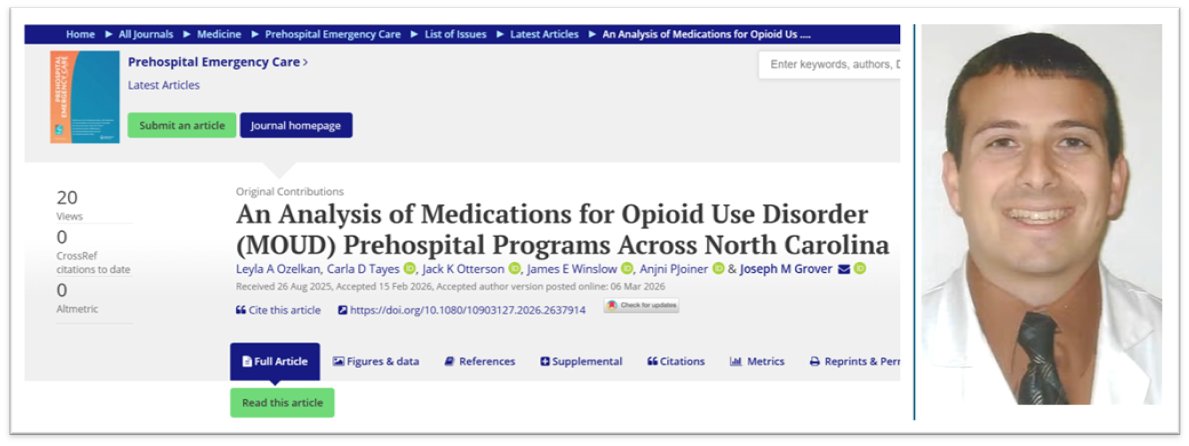
Sr. author, Dr. @JGroverEMSDoc, Dr. Carla Tayes (former @UNCEM resident & UNC EMS fellow), & Orange County EMS paramedic Leyla Ozelkan, co-authored this recent study. It assessed #EMS systems in NC that provide meds for #opiod use disorder (#MOUD).
https://t.co/CEyzm8semt
Be sure to stop by at #ACEP25 on Monday, 9/8. We'd love catch up with you, and hear your perspectives on these and other topics being discussed at this year's conference! @clshenvi@UNCEM
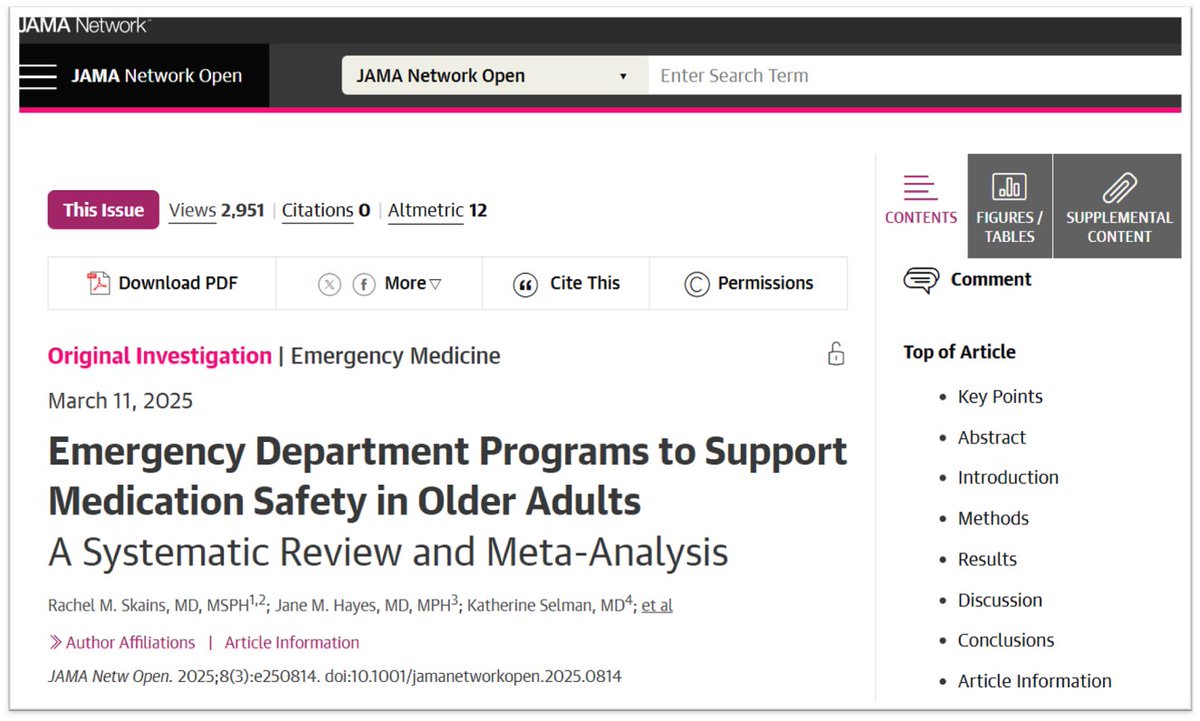
Dr. Martin Casey (@mfcasey), Dr. Carla Tayes (EM residency class of '24), & Beth Moreton recently contributed to; "Emergency Department Programs to Support Medication Safety in Older Adults: A Systematic Review and Meta-Analysis." @JAMANetworkOpen Link: https://t.co/REEvd2zGhS
New study! Managing severe agitation in older adults w/ antipsychotics/sedatives can lead to serious adverse events. Benzodiazepines, especially midazolam, pose highest risk. Quetiapine shows fewer adverse events. #Geriatrics#EmergencyMedicine@AGSJournal https://t.co/BlTrXhuicR
Meta-analysis: ER-based geriatric medication programs with clinical pharmacists, geriatricians, and computerized decision support can reduce potentially inappropriate medications and adverse drug events in older adults. https://t.co/9NjJSLZNf1 @RachelSkains@phraewatht@mfcasey
Kudos to Kevin Musgrow, clinical research assistant with @UNCEM, and colleagues for the abstract & publication at the @ACEPNow conference: "Frequency of Aspirin Re-Evaluation After a Bleeding-Related Emergency Department Visit: A Pilot Study." https://t.co/nPYwzmlW2J
Thank you @shan_lliu635@ifem2 for giving me the opportunity to share my thoughts on managing the older adult with acute agitation. More info at... https://t.co/RcytZlqvnL
New in the Journal of Geriatric Emergency Medicine:
https://t.co/fx9rAnnvRr
More important than family history in older patients is an understanding of the caregiver network supporting them.
This led us to think about what would go into a "Best Possible Caregiver History".
@drklam fantastic work! any thoughts/data on how often the legally authorized rep (decision maker) is different than then primary caregiver? such a challenge in the ed when adult children of cognitively impaired often have their own kids & careers to manage
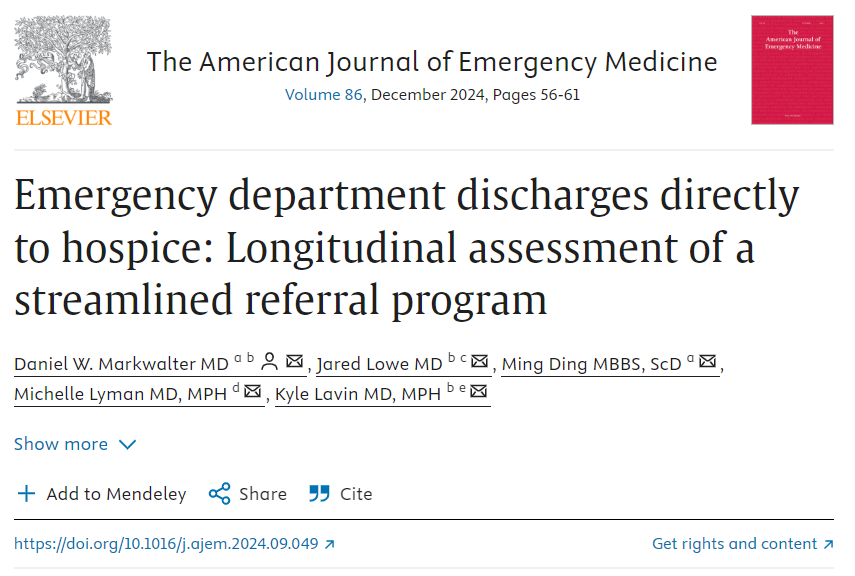
New research from Dr. Daniel Markwalter and Dr. Ming Ding with @UNCEM & colleagues: "Emergency Dept. Discharges Directly to #Hospice: Longitudinal Assessment of a Streamlined Referral Program." Link to publication: https://t.co/JEzQDNBVuY
Exactly how I felt, didn't start liking writing until I learned that the red ink is the process that gets you to the fun parts.... I hated writing—until I learned there’s a science to it | Science | AAAS https://t.co/lyCB7kafrG
Had a fantastic time doing my first podcast with the excellent @clshenvi on GEMCast! Thanks Dr. Shenvi for lets me share my thoughts on... Why Less is More: Strategies for Deprescribing in the ED https://t.co/lbqR8XjmkI
Potentially inappropriate medication use extends well beyond the domain of age. Imperative to consider chronic conditions as well when starting new medications.
Multidisciplinary group of healthcare professionals in France 🇫🇷 create a helpful list of potentially inappropriate prescriptions for antidiabetic drugs in persons with Type 2 diabetes:
https://t.co/Bv6otdqVWb
Highly relevant to our DIAL Study!
https://t.co/o3XwObmB8j