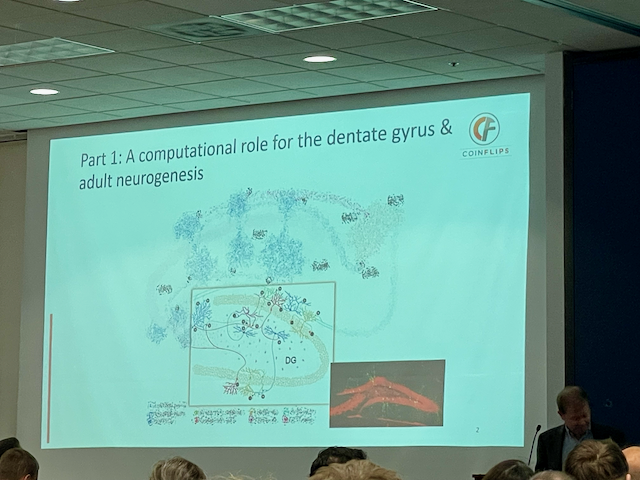
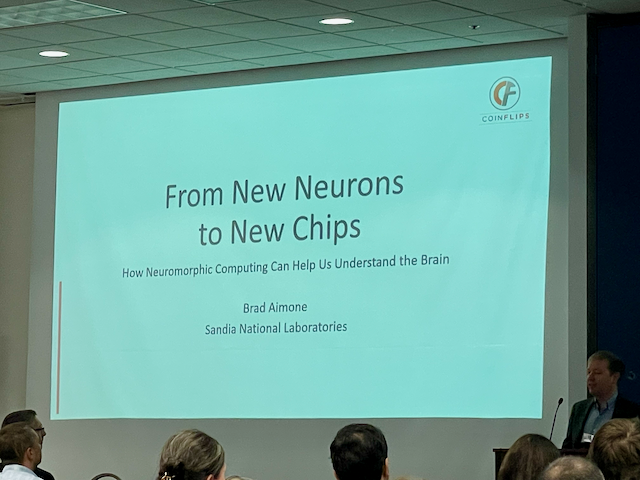
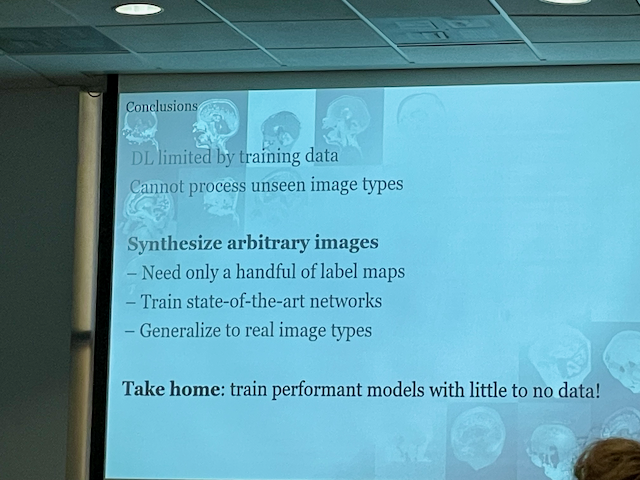
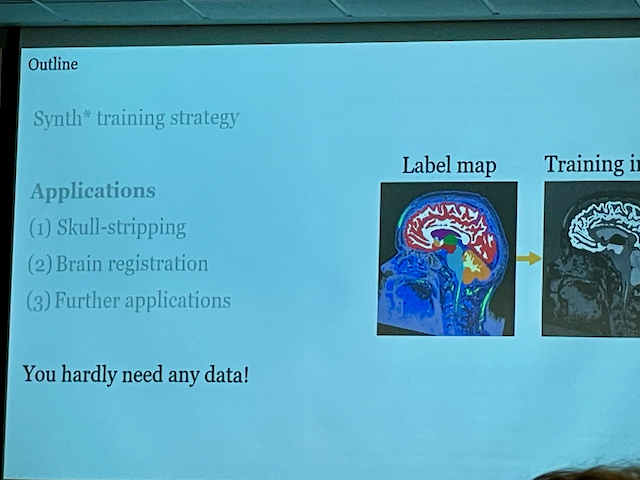
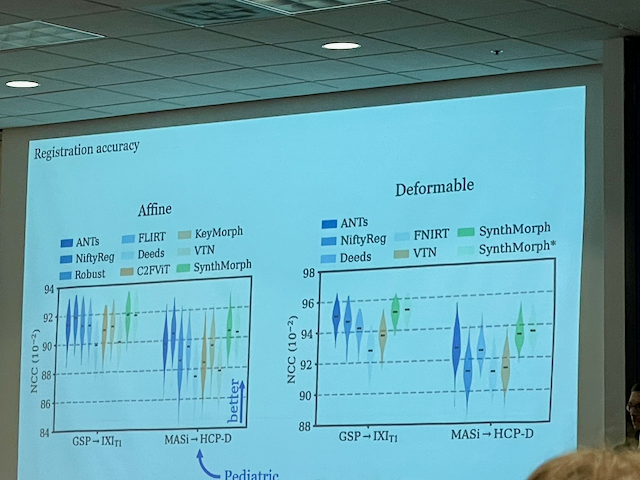
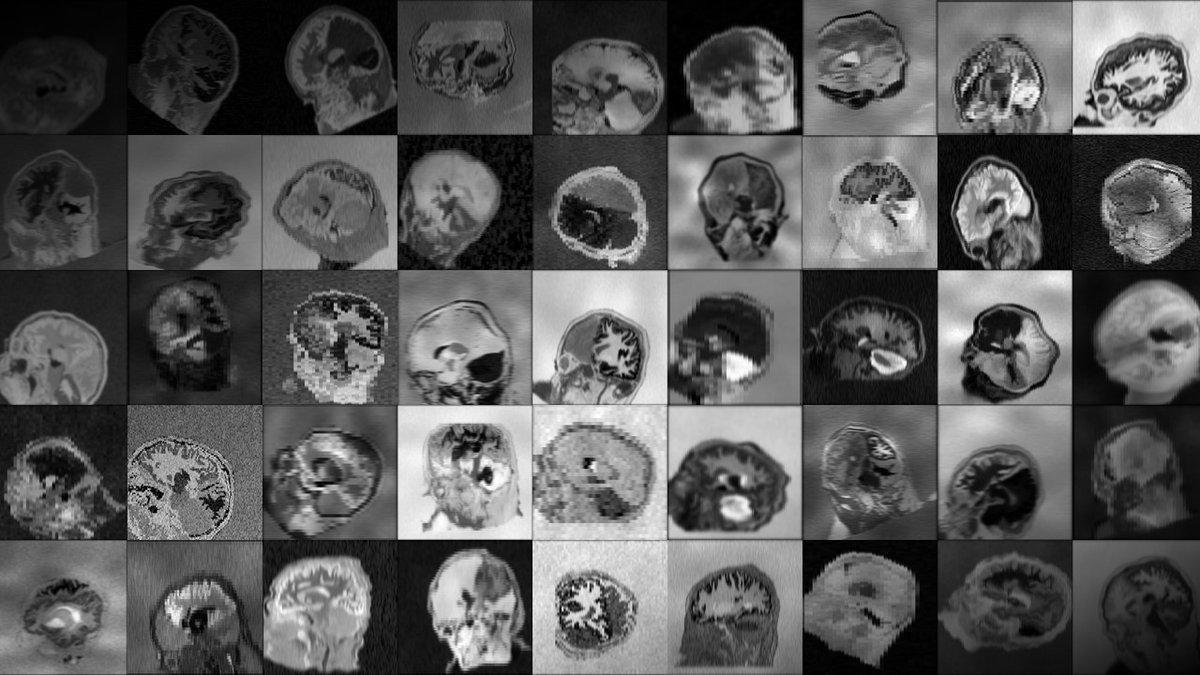
Data? Who needs data? Really, really fascinating presentation by @harvardmed's @mh3936. Note the last bullet on his takeaway slide! Our next speaker is @SandiaLabs' @jbimaknee, who is giving insights into the symbiosis between #NeuromorphicComputing and understanding the #brain.
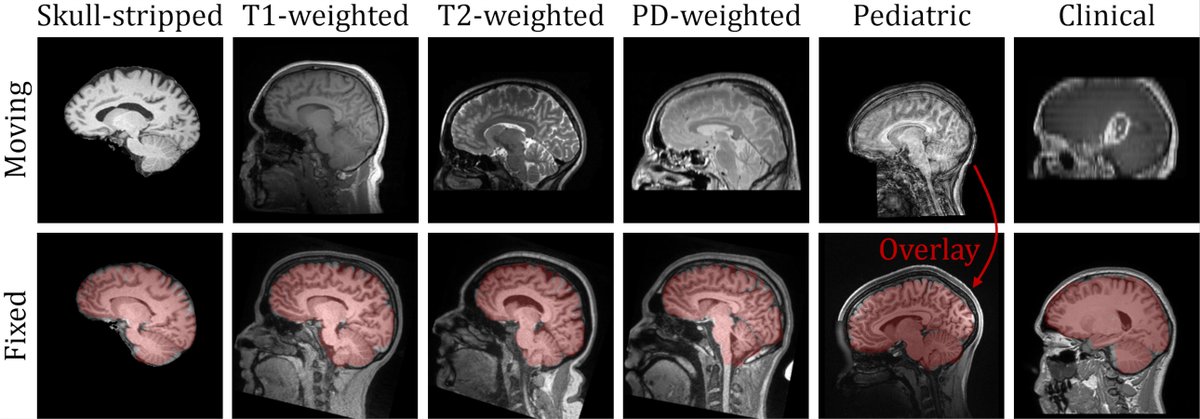
Researchers from @MGHMartinos developed a new approach to image registration, dubbed #SynthMorph, that takes advantage of #AI to achieve registration that is more robust, accurate, and faster than existing methods.
Learn more: https://t.co/RVvT2XE3ZB @mh3936@MassGeneralNews
#SynthMorph, a new, #AI-based approach to image #registration, is more robust, more accurate, and faster than existing methods. Lead author Malte Hoffmann discusses the tool here: https://t.co/nSL02lq3JO
More info: https://t.co/n4WcBxQKeb
@mh3936@AdrianDalca@FreeSurferMRI
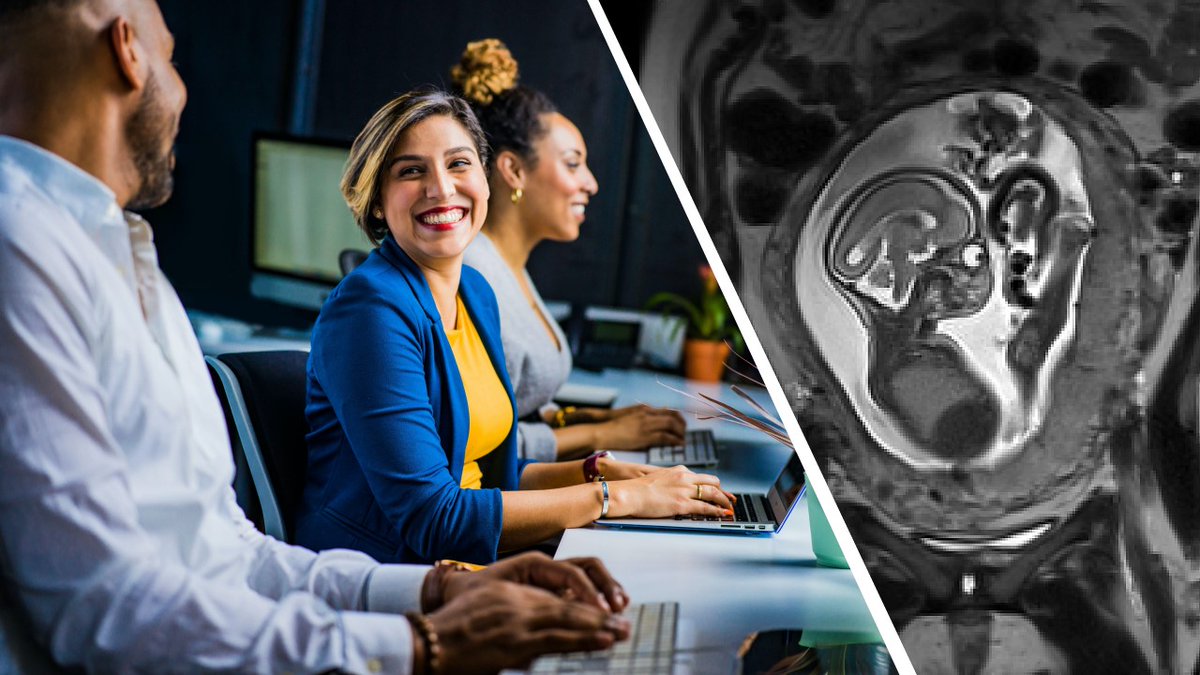
Don't move! Blurry MRI scans can lead to misdiagnoses, or repeat scanning. Benjamin Billot, @neeldey, @dc_moyer, @mh3936, Esra Abaci Turk, @BorjanGagoski, Ellen Grant, & #JClinic PI @GollandPolina introduce EquiTrack, to reduce MRI motion blur https://t.co/7SW0spyfbe
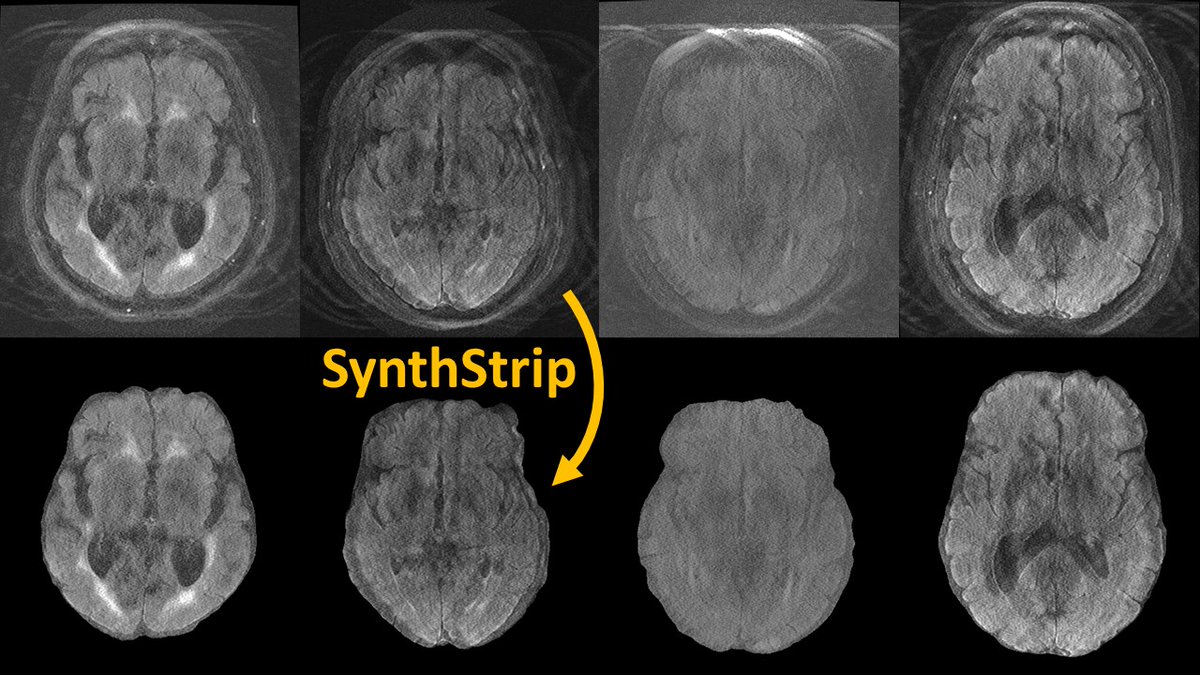
@f_amujo@FreeSurferMRI@AdrianDalca@mit_caml@MIT_CSAIL@MGHMartinos Thanks for your interest in SynthStrip! While the tool was designed for 3D neuroimaging data, it supports stacks of a few coherent slices from 2D scans. For single-slice inputs, you'd likely need to train a custom model.
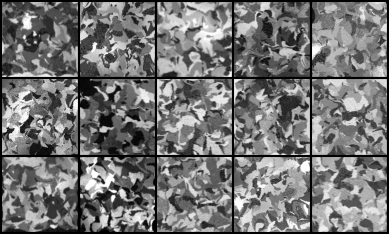
@soupaulte @FreeSurferMRI@AdrianDalca@MIT_CSAIL@MGHImaging@MGHMartinos It depends. For new anatomy, replacing the label maps might do. We also have an anatomy-agnostic model trained on random shapes; great for fine-tuning! https://t.co/KnCy6Z8isk