What do they got?
A big team, lots of money, a strong brand, seemingly unlimited resources, panache, reputation, all that. They’re established.
They’re your competitors.
You want to look away, but you see them everywhere. Their ads on your social, their name in the media, your dream clients on their website.
But you know what else they got?
Bigger company bloat. Overflowing obligations. Narratives to uphold. Appearances to maintain. Entitlement. Too much overhead.
They’re slow. They’re conservative. They talk too much. They’ve stopped taking risks. They’re resting on their laurels, gliding on their reputation. They’re on defense.
What they’ve really got is a lot to lose.
What do you got?
Hunger. Drive. Grit. Scrappiness. Independence. You’re on offense.
You don’t have enough, which is why you’re dangerous. You have no choice but to be clever and creative. To make up for what you don’t have with something they can’t have: The underdog spirit.
You can move. You can adjust. You can adapt. You can get it done while they’re still stuck deciding what to do.
Small is not a stepping stone. Small is not less than. It’s greater than. It’s faster than. It’s better than.
Savor your position. You don’t get to be the underdog forever. The baton will be passed. But for now, it’s your magic wand. Use it.
We stand with the underdogs.
@mymind Teaching custom agents "my taste" and to pull references from a specifically curated subset of images instead of going elsewhere where it searches by keyword and doens't do a great job
You have no experience.
You’ve never started a company.
You’ve never had a full time job.
Nike is going to kill you.
You’re a kid.
You don’t have technical skills.
You shouldn’t build hardware.
Apple is going to kill you.
You can’t build hardware.
You can’t measure heart rate non-invasively.
Athletes don’t care about recovery.
Under Armour is going to kill you.
It won’t be accurate.
You don’t listen.
You’re an ineffective leader.
You can’t recruit great talent.
You’re going to have to pay every athlete.
You can’t measure sleep non-invasively.
It’s too expensive to research.
Athletes are a small market.
The product costs too much to make.
The product costs too much to sell.
Your valuation is too high.
Consumers aren’t going to want it.
Hardware is too hard.
You should measure steps.
Fitbit is going to kill you.
You can’t build a marketing engine.
You can’t raise enough money.
You need a real CEO.
Google is going to kill you.
You can’t be a subscription.
You can’t build a brand.
You can’t do consumer in Boston.
Your valuation is too high.
You shouldn’t make accessories.
You shouldn’t make apparel.
Lululemon is going to kill you.
You can’t predict Covid.
Stay in your niche.
You are going to run out of money.
You can’t build a health platform.
Amazon is going to kill you.
You can’t measure blood pressure.
You can’t get medical approvals.
The market is too small.
You don’t understand AI.
The market is too competitive.
It won’t work internationally.
The supply chain is too complicated.
You can’t build an AI.
You can’t raise enough money.
It’s too competitive.
Healthcare isn’t going to want it.
…
Just keep going ✌️
when software had a soul
there was a moment around 2005 when using a Mac felt like touching something alive.
the dock bounced. the genie effect swooped. exposé scattered your windows like cards on a table. none of it was strictly necessary. all of it felt like someone cared – not about metrics, but about the feeling of using a machine.
software back then had texture. it had a philosophy. you could feel the person behind it. someone made a decision to make that icon beautiful, to animate that transition just so, to write that error message with a little warmth. apps had personalities. some were weird. some were over-designed in ways that would make a modern PM flinch. but they were alive.
the web was the same. personal sites were genuinely personal. blogs felt like letters. forums had regulars. you knew who made what. the internet had neighborhoods, and each one felt different.
nothing was optimized for scale. things were made by people who loved what they were making.
somewhere along the way, we traded all of that for growth.
A/B tests flattened the edges. design systems standardized the personality out. everything got faster, smoother, more consistent – and somehow less interesting. the quirks were removed because they didn't test well. the warmth got cut because it wasn't measurable. we optimized our way into a world of things that work perfectly and feel like nothing.
now every app looks the same. every interface follows the same patterns. every product speaks in the same calm, frictionless voice, siloed in their own little islands. the humanity got rounded off.
and then came AI agents. and the speed got inhuman.
now you can generate an entire product in an afternoon. ship a feature before lunch. spin up ten variations before anyone's had their coffee. the gap from idea to code is basically zero.
which sounds incredible. and it is. but there's a catch.
when making things are too easy, the slop comes for free too. mediocre things don't look obviously bad – they look fine. they work. they ship. they pass review. and now there are infinite of them. the internet is filling up with software that functions but means nothing. interfaces that are correct but feel dead. products made by agents, reviewed by no one, shipped into the void.
this is the thing that keeps me up at night. not that AI will replace people who care. but that it will drown them out.
here's what I still believe: the best things are made by people who couldn't help themselves. someone who lost sleep over an icon. who rewrote the same line of copy twelve times. who added an animation nobody asked for because it made the thing feel right. that obsession – that's not inefficiency. that's the whole point.
AI doesn't make that irrelevant. it actually makes it rarer and more valuable. taste is not a markdown skill. caring is not a parameter. the weird, specific, "soul" thing you put into something – that can't be programmed into existence.
the path forward isn't to make more slop faster. it's to finally give people with real vision the tools to make the thing they always imagined but couldn't build alone. the designer who had the idea but couldn't code. the kid who saw something nobody else saw. the person who cared too much about something most people wouldn't notice.
if we get this right, we don't get a faster factory. we get a renaissance. more strange, personal, opinionated software made by teams of people who care and mean it.
that's still possible. but only if the people who care get the space and tools to actually express themselves – and don't just hand the wheel to the agent and walk away.
@graceongrid Love seeing this come to life! Did you create it exclusively in Claude code or did you use the figma mcp and connect the two? Also, I see you huckleberry app 👀 haha
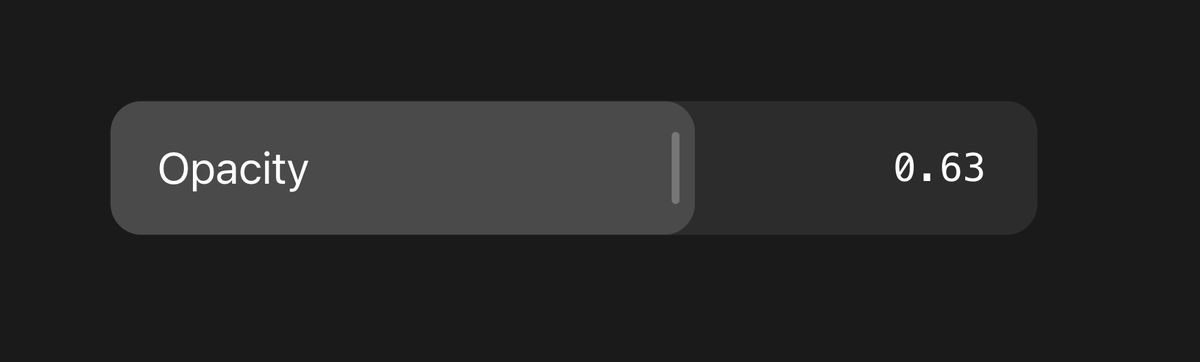
This slider lesson @joshpuckett's https://t.co/uY3PnYVA9I has me smiling like a little kid 🙂
As a web designer looking to expand my product skillset, this way of learning is very effective. Thanks for putting so much care in this! Learned a ton in only 2 lessons so far.
I'm all in on @thecosmos - I was a heavy Pinterest user, used mymind for a while, never got into Are(dot)na, but really loving what the team is building at Cosmos.
@graceongrid Oh it flies by! Hard to enjoy the baby phase when you’re in it for the first time. I look back at early photos and often feel like I just survived it and didn’t live it. We have a second one on the way, curious if we’ll be more present for # 2. Enjoy it as much as you can!