A thread of videos from today’s flight into Hurricane Melissa
In this first one we are entering from the southeast just after sunrise and the bright arc on the far northwest eye wall is the light just beginning to make it over the top from behind us.
My friend cracked 3 companies in just 15–20 days
24 LPA – Small Startup
28 LPA – Early-age Startup
40 LPA – Big Startup
He shared his interview experiences + prep roadmap here:
🔗 https://t.co/0lccY8ecBL
Must-read if you’re targeting frontend heavy roles.
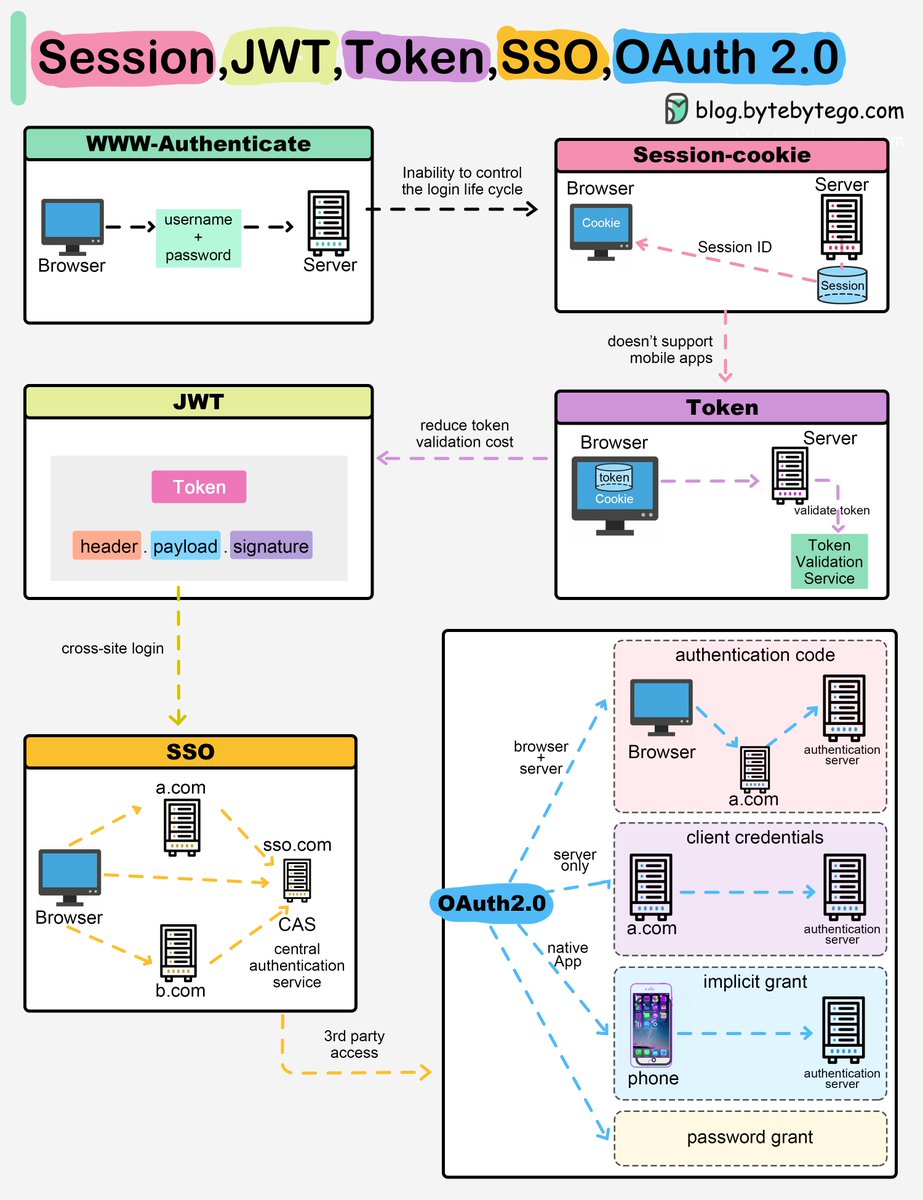
Session, Cookie, JWT, Token, SSO, and OAuth 2.0 Explained in One Diagram
When you login to a website, your identity needs to be managed. Here is how different solutions work:
- Session - The server stores your identity and gives the browser a session ID cookie. This allows the server to track login state. But cookies don't work well across devices.
- Token - Your identity is encoded into a token sent to the browser. The browser sends this token on future requests for authentication. No server session storage is required. But tokens need encryption/decryption.
- JWT - JSON Web Tokens standardize identity tokens using digital signatures for trust. The signature is contained in the token so no server session is needed.
- SSO - Single Sign On uses a central authentication service. This allows a single login to work across multiple sites.
- OAuth2 - Allows limited access to your data on one site by another site, without giving away passwords.
- QR Code - Encodes a random token into a QR code for mobile login. Scanning the code logs you in without typing a password.
Over to you: QR code logins are gaining popularity. Do you know how it works?
–
Subscribe to our weekly newsletter to get a Free System Design PDF (158 pages): https://t.co/FIzCeaWsZV
Cookies vs. Tokens
Cookies:
- Traditionally used for session management
- stored client-side
- auto-included in requests
- vulnerable to CSRF
Tokens:
- Commonly JWT
- stateless
- stored in local storage or cookies
- safer against CSRF
- flexible for mobile and SPA
People seem to be really confused about the "right way" to fetch data in React, specifically "fetch on render" vs "render as you fetch". I tried my best to diagram the difference
If you are an experienced Javascript developer , please learn -
- code modularity
- workers
- decorator functions
- Proxy and reflect
- bundler minification and obfuscation
- priortization and memoization
Crowdstrike Analysis:
It was a NULL pointer from the memory unsafe C++ language.
Since I am a professional C++ programmer, let me decode this stack trace dump for you.