When I created Claude Code as a side project back in September 2024, I had no idea it would grow to be what it is today. It is humbling to see how Claude Code has become a core dev tool for so many engineers, how enthusiastic the community is, and how people are using it for all sorts of things from coding, to devops, to research, to non-technical use cases. This technology is alien and magical, and it makes it so much easier for people to build and create. Increasingly, code is no longer the bottleneck.
A year ago, Claude struggled to generate bash commands without escaping issues. It worked for seconds or minutes at a time. We saw early signs that it may become broadly useful for coding one day.
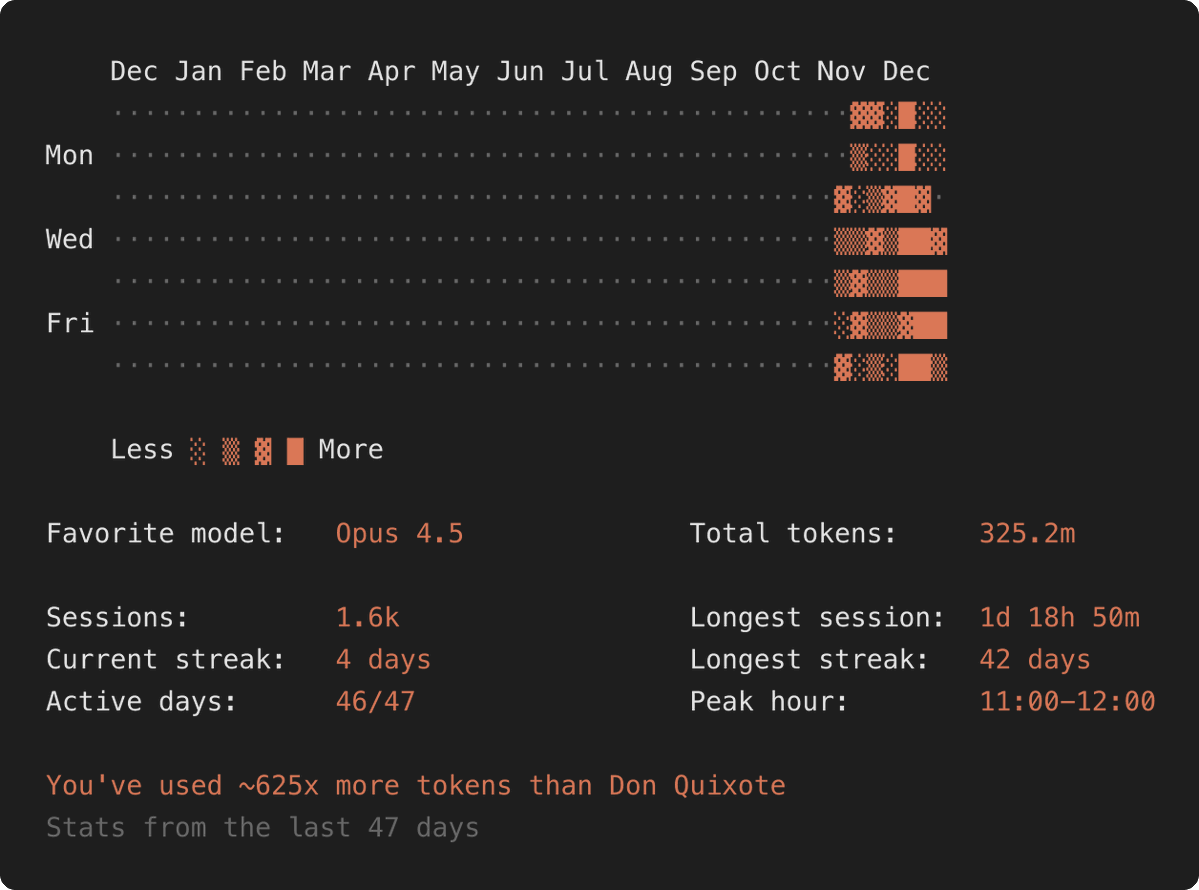
Fast forward to today. In the last thirty days, I landed 259 PRs -- 497 commits, 40k lines added, 38k lines removed. Every single line was written by Claude Code + Opus 4.5. Claude consistently runs for minutes, hours, and days at a time (using Stop hooks). Software engineering is changing, and we are entering a new period in coding history. And we're still just getting started..
Creator of AI: We Have 2 Years Before Everything Changes! These Jobs Won... https://t.co/dpca9UrK0x via @YouTube@Yoshua_Bengio interviewed by @StevenBartlett
This is one of the best takes on the risks associated with AI. Technically correct, of course. Great insights.
Many essential technologies are being rewritten in Go or Rust. This not only allows them to run in resource-restricted environments but significantly reduces infrastructure costs in the cloud. This is a competitive advantage. Many common technologies today will be left behind.
Today we're excited to introduce Devin, the first AI software engineer.
Devin is the new state-of-the-art on the SWE-Bench coding benchmark, has successfully passed practical engineering interviews from leading AI companies, and has even completed real jobs on Upwork.
Devin is an autonomous agent that solves engineering tasks through the use of its own shell, code editor, and web browser.
When evaluated on the SWE-Bench benchmark, which asks an AI to resolve GitHub issues found in real-world open-source projects, Devin correctly resolves 13.86% of the issues unassisted, far exceeding the previous state-of-the-art model performance of 1.96% unassisted and 4.80% assisted.
Check out what Devin can do in the thread below.
Sometimes educational content feels like it’s teaching you something because it’s flashy or long. But always ask yourself: “have I gained a mental model that I can apply to situations that don’t look exactly like the example?” If not, you aren’t learning, you’re imitating.