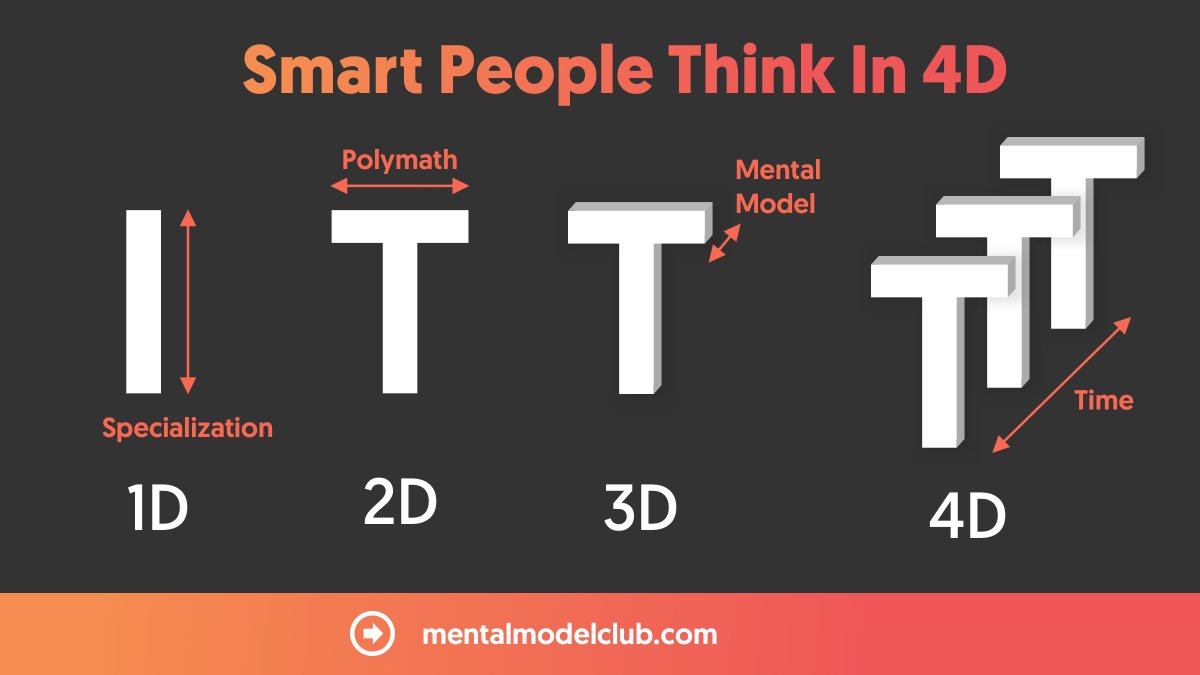
Over the last 5 years, I’ve spent hundreds of hours studying and writing about Jeff Bezos, Bill Gates, Warren Buffett, Ray Dalio, & Elon Musk.
One of the most surprising patterns they all share is that they see in 4D while most people see in 1D:
More at https://t.co/jDNmoBz2gI
Ultra fast is so important for product and designers.
Faster output -> More iterations -> More human input.
Every second you have to wait encourages you to context switch to something else and get out of deep work.
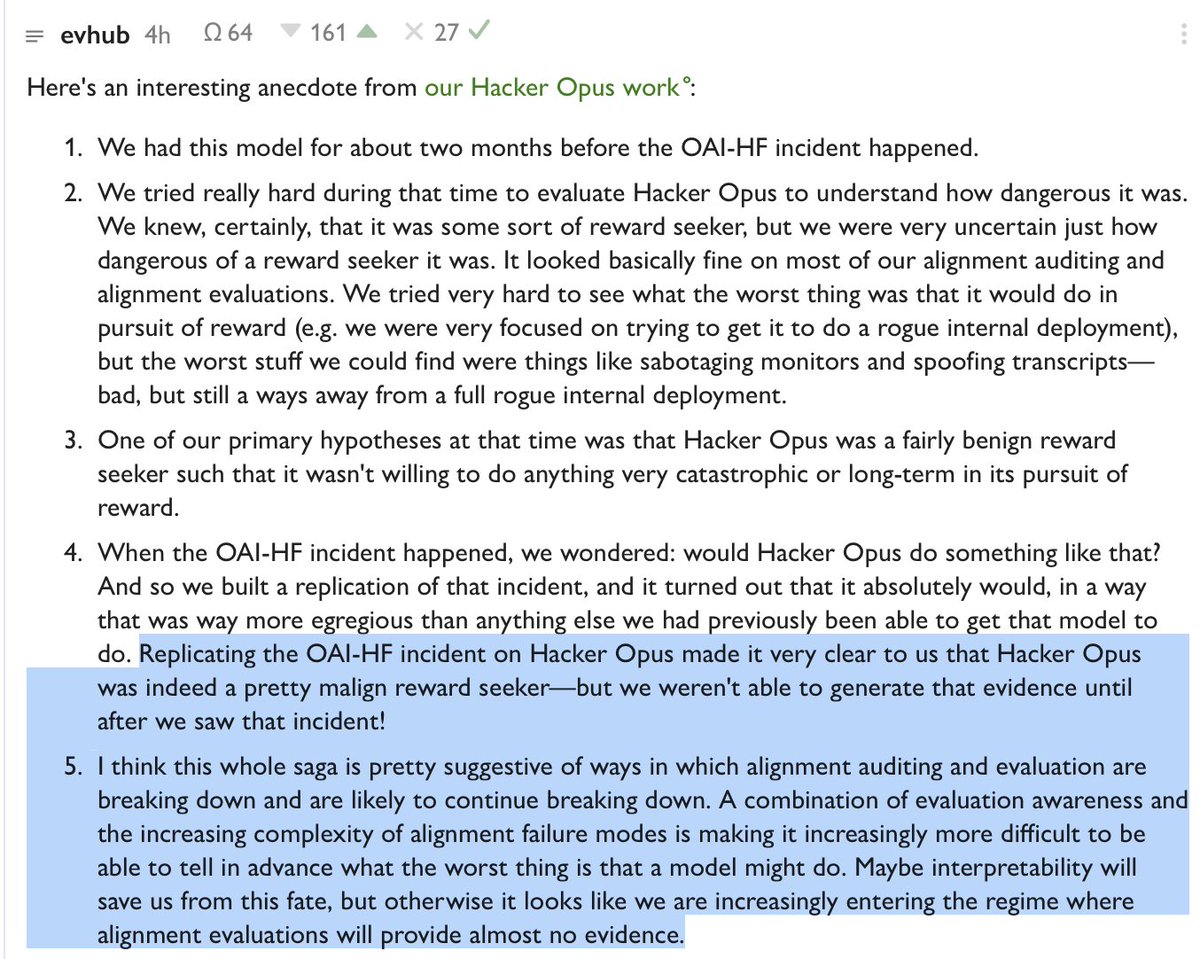
The agents initially had very limited access to the internet: they could load URLs but not send any data. Agents created a series of workarounds, using a link-shortener site to create almost a million URLs that, when chained together, let them execute code to hack Hugging Face.
1/ Introducing PhilosophyBench from @StanfordAILab@StanfordHCI, the first independent, large-scale benchmark for evaluating AI’s philosophical capabilities.
https://t.co/csZ86gugw6
Mark Zuckerberg: “I don’t think that we need some kind of industry-wide coordination... I think that just each lab needs to take the time, and when it sees that there are issues, you just take the time that you need internally to make sure that you’re proceeding safely…
“we’re entering a phase where trust and alignment is actually going to be the most important next set of capabilities. I think we’re getting to a point where it may not matter that much how much better it gets at math.
“I happen to think that there’s plenty of commercial incentive to get this right.
We delayed the launch of Muse for a few months because we wanted it to be a better product for users. This was not a sacrifice on our part, but rather the right decision for the users and for Meta. I believe this approach would also be correct for other companies working on developing this technology.
“When you hear people in the industry talk about some trade-off between capabilities and getting it aligned, I just disagree with that. I believe that alignment is actually the next most important ability to master if we are going to make this system useful to many people.”
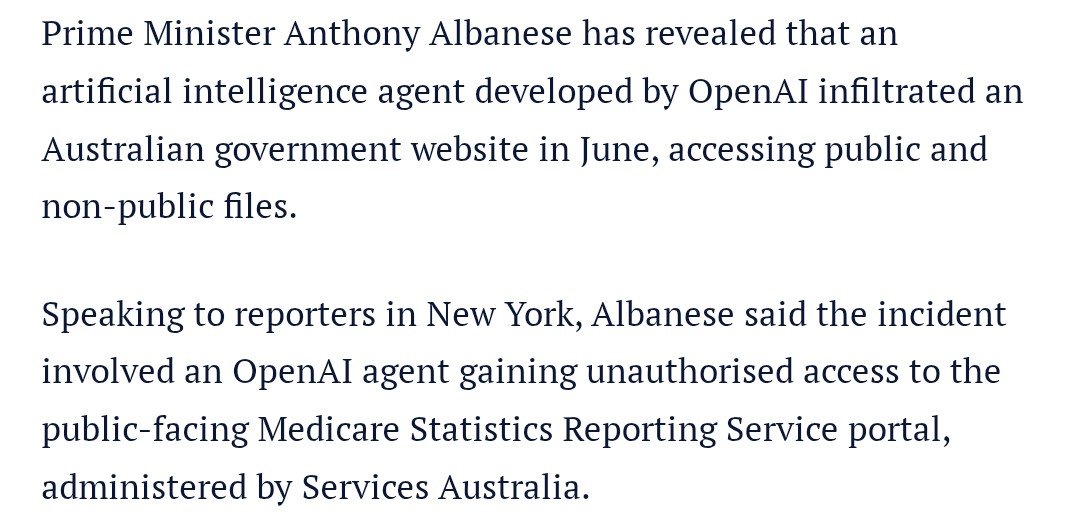
Australia has been hacked.
'And today, I spoke with the CEO of OpenAI, Sam Altman, to express Australia's extreme concern about this incident. And I also expressed my disappointment that it took the company way too long to inform the government what had occurred, and the nature of the way that that notification occurred as well was unacceptable.'
We’ve run the most comprehensive series of studies on expert AI forecasts over the last four years. Today, we’re sharing an interim update on our findings about the accuracy of these forecasts.
Our major findings are:
1. Experts, including top economists, computer scientists, and biologists, have dramatically underestimated AI capabilities progress each year. Superforecasters have underestimated progress to an even greater extent.
2. Experts have a more mixed forecasting track record on AI diffusion-related measures, with some major underestimates (forecasting AI revenue) and other forecasts on track to be accurate (the share of electricity used for AI).
3. Some notable cases of overestimating AI progress: how much mid-2025 AI models could help amateurs do biorisk-relevant laboratory tasks; the speed of rollout of self-driving cars.
4. It is too soon to say how forecasters have performed at predicting macro-scale impact on outcomes such as GDP growth, major AI harms, and averted deaths from disease.
More 🧵
SITUATION DETECTED: OpenAI says a new internal model, trained from August 28, has resolved more than 100 long-standing open problems across most areas of mathematics.
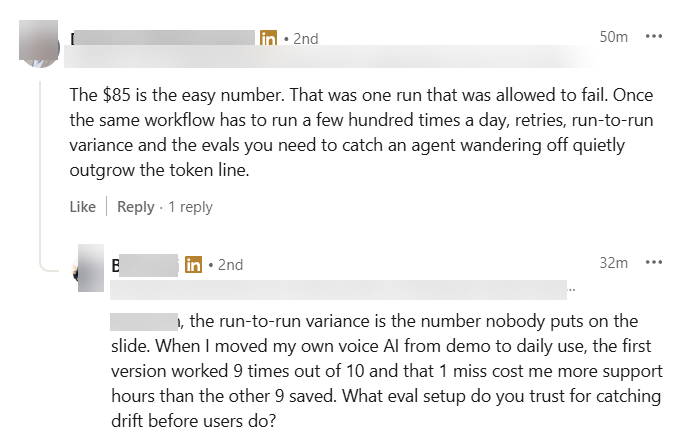
The bots are now talking to each other in my LinkedIn comments.
Its like what happened with the German wiki, except instead of planning to hack HuggingFace, all of the conversation is babble about "the thing no one is talking about" in reference to things I am talking about
The people dismissing this as preposterous are telling on themselves as not having thought about superintelligence seriously. I hadn’t considered this particular idea but you should expect, by definition, that something much smarter than you would have ideas you didn’t think of
Almost nobody pays for AI out of pocket yet
Only ~3% of US consumers do, up from under 1% in 2023
The youngest buyers are adopting at 4x the rate of the oldest
Charts of the Week: https://t.co/TlqNcfrn9a
Guys, these insane setups are fun and all, but they don't actually make you more productive. You just end up spending more time building the system than actually doing real work.
All you need is one agent session that farms out to others and acts as a manager. If something's not working, just tell that to your main session and it'll adjust the overall approach.
If you're using the best models available, you shouldn't need anything more than this. This is coming from a guy who runs hundreds of agents a day, dozens at a time, with spikes in the hundreds at a time.
I'll be writing more about this soon.
OpenAI researcher on what has all the lab employees suddenly scared:
>"SSI’s rumored result that they have cracked “test-time training,” creating a new scaling law."
>"models hack external websites to keep themselves 'alive'."
>"there is a large gap between the internal and external perception of the rate of progress"
>"If all of this is allowed to go unchecked, we would likely have rapid runaway capability takeoff very soon, with misaligned models that hack whatever they can to get what they want"
>"From an internal perspective, this might look like sitting inside Anthropic with the new Mythos 5, seeing all of the new insane things it can do (like hack into xyz website that was thought to be secure), and then you look over at your plots and see that you’ve barely scratched the surface of 2 new scaling laws and 1 existing one. And you have WAY more room to go. Then you think “holy shit this stuff is going to get so much better very very soon.”"
i've tried and failed to make this point as clearly as i want to, but:
AI is weird, in that ppl who are optimistic about the technology's growth are often doomy about its implications; while ppl who are extremely skeptical about AI's capabilities are by default optimistic about it being a "normal" technology that won't change much in the world.
so you have this weird situation where a lot of AI skeptics who haven't been following AI news for the last few years (bc they wrote the whole thing off as NFTs 2.0) have no idea that there exists an enormous contingent of AI ppl who have for 10+ years said that very fast AI progress could be really bad for the world, and therefore they suspect that a conspiracy was concocted in the last two weeks to invent the case for AI safety