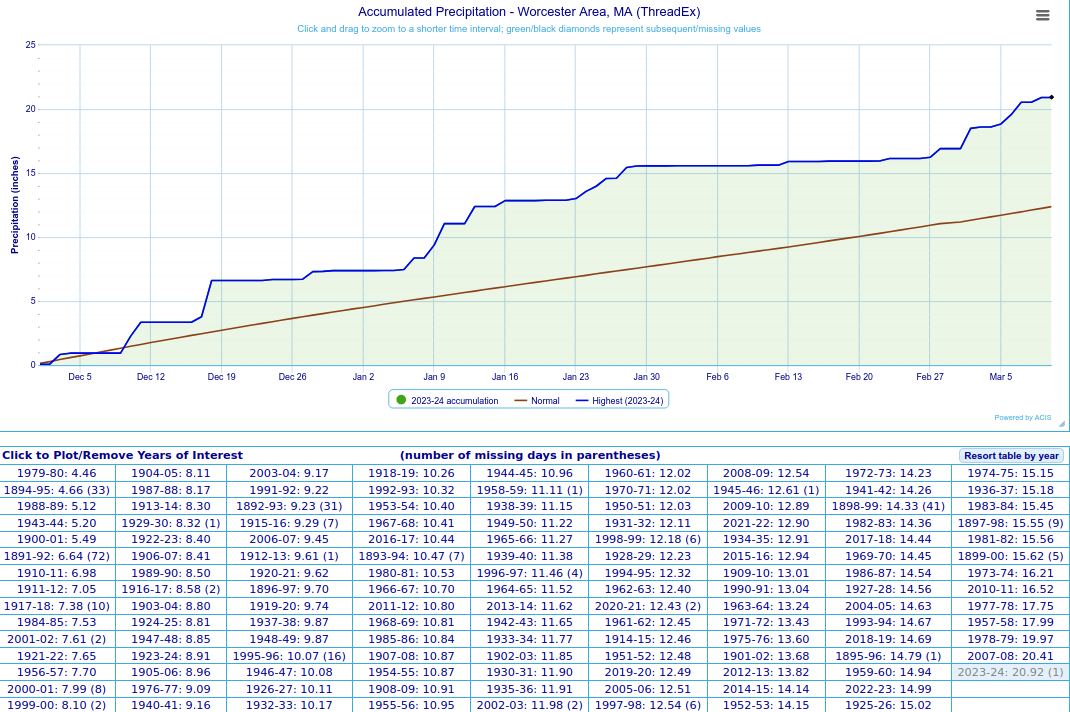
Moreover, the recent wet weather, including the past 12 months, has been characterized by a large number of extreme events. Of course, this element of climate change is an expected manifestation of warming.
Parts of New England have had some of the wettest weather on record from December through the end of March. The beginning of April brought more rain and snow.
https://t.co/ip1Ddn7tis
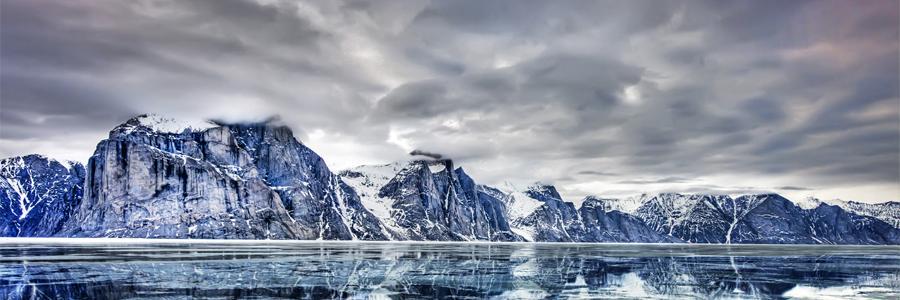
How will the Arctic look in 80 years? Researchers @UMassAmherst combined satellite data, field observations, & modeling to answer how climate change will affect 22.45 million square km. They produced the most detailed view yet of a possible future: https://t.co/2pkU9SEwXf
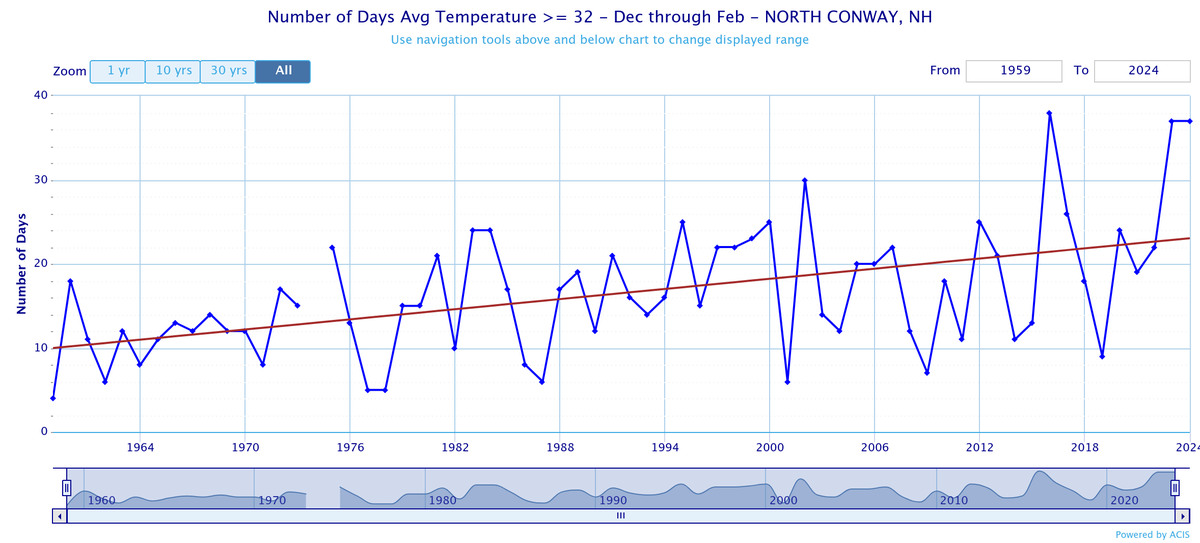
Icy conditions likely a result of more winter days above freezing. NWS data for nearby North Conway.
Yet another impact--in this case tragic--of our warming climate.
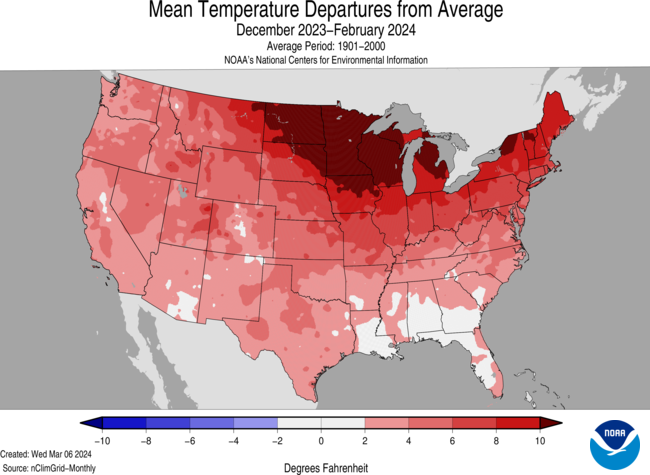
Per NOAA NCEI, the 2023–24 winter season ranked warmest on record for the contiguous U.S. with eight states across the Upper Midwest, Great Lakes and Northeast each observing their warmest winter on record. Northeast U.S. also had its warmest winter.
https://t.co/TZcOU8aUDL
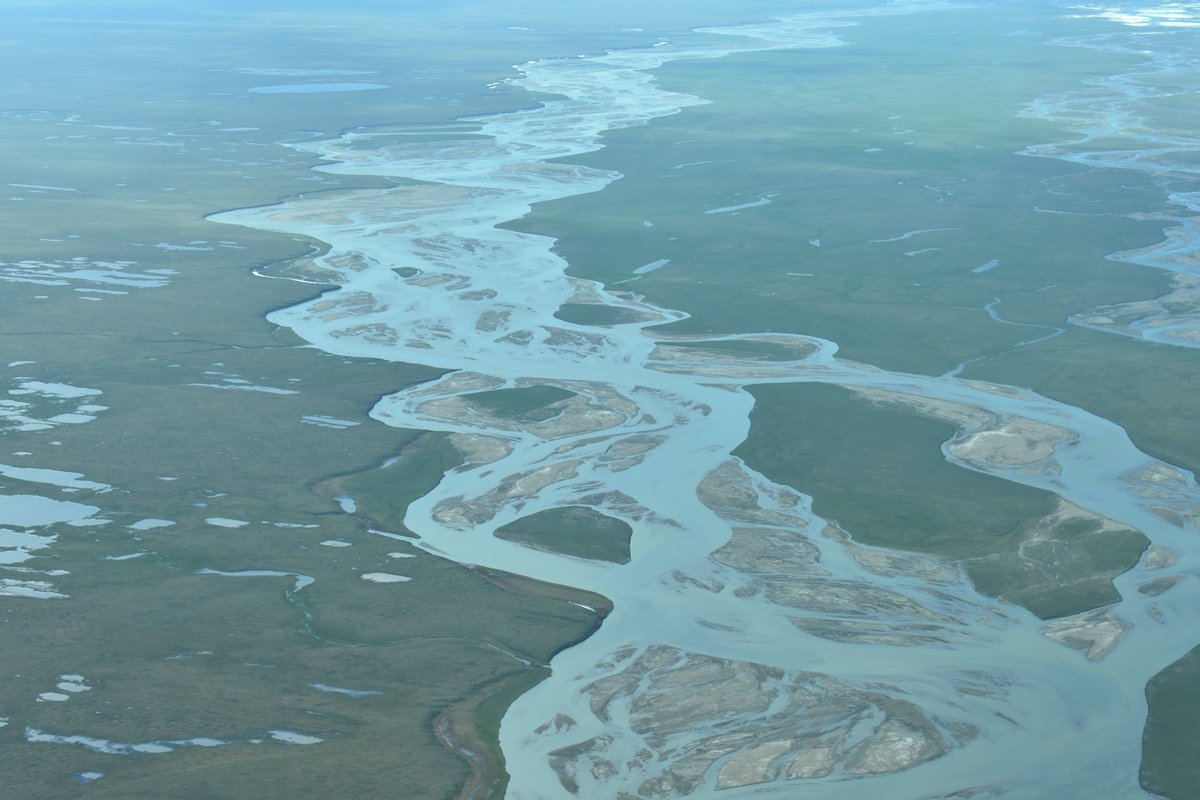
Arctic river are and will continue to see effects of warming, permafrost thaw, and water cycle intensification.
Take home: More river runoff in the far north where more where soil carbon exists. Increasing river flows could freshen the North Atlantic.
@EuroGeosciences#climate
Amherst MA just experienced its warmest meteorological (Dec-Feb) winter over the official period of record since 1893. BUT... data for the area extend to 1836. Winters have warmed by 4.4 F over those 188 years. And it was very wet too! @UMassAmherst@UMassScience @UMassGeo
@WeatherProf @Climatologist49 The tool used to do ranks based on full period of record. Some stations have a threaded record for sites in the location region. I just sent an email to the climate perspectives contact. This is an unfortunate bug or recent change.
“I wanted to go sledding and it’s really hard to go sledding without any snow," a 6-year-old in Dorchester told me. As the planet warms, that disappointment has become a recurring theme — and one that’s expected to increase in the future.
https://t.co/Tik3l29x3f
Climate data from 2023 confirms what we in western Massachusetts experienced firsthand last year amid heat waves & catastrophic floods: the year was one of the hottest & rainiest ever recorded in the region. My latest on local impacts of the #ClimateCrisis:https://t.co/ILplLg6S4k
Smart piece on how this latest extreme weather anomaly fits with our understanding of manifestations of a warming climate. Impacts of hydrological cycle intensification are wreaking havoc in many parts of the world this year: Las Vegas, Libya, Greece, Brazil to name a few.
After 11" of rain fell in Leominster in just a few hours—and as Hurricane Lee churned in an anomalously warm Atlantic Ocean—I asked one climate scientist if this is our new normal. "I don’t think we know what normal is anymore," he said. https://t.co/Knt2JeWuNG via @BostonGlobe
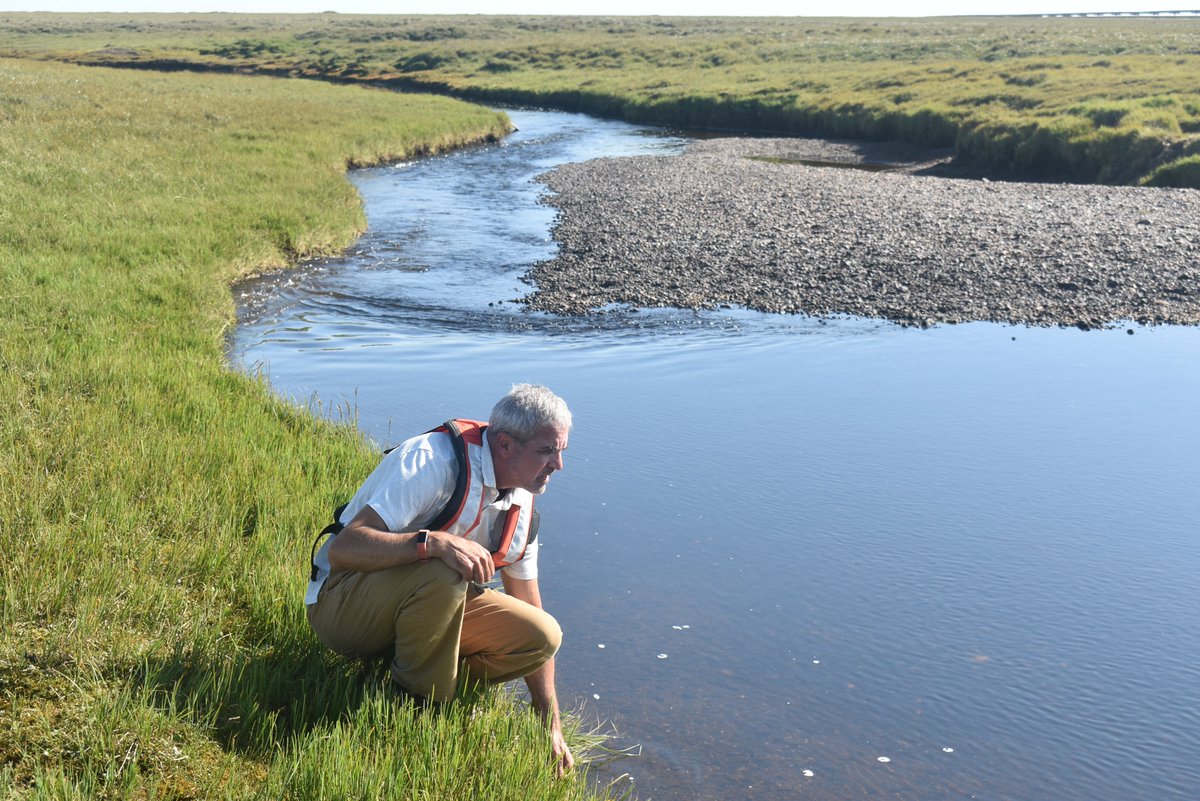
Members of our Beaufort Lagoons team wrapping up sampling of rivers near Prudhoe Bay, including the USGS-gauged Sagavanirktok and Kuparuk, and a small stream 8 km from the coast. Today heading south to foothills of Brooks Range. https://t.co/QSRWwULWlF @polargriffin@hardisonlab
@DrShepherd2013 Agree likely to come. Right now Zuckerberg et al are primarily interested in mobile app downloads. My days of looking at tiny screens is rapidly coming to a close...
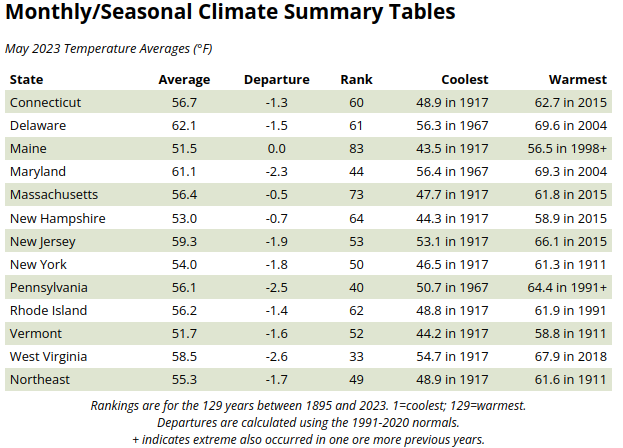
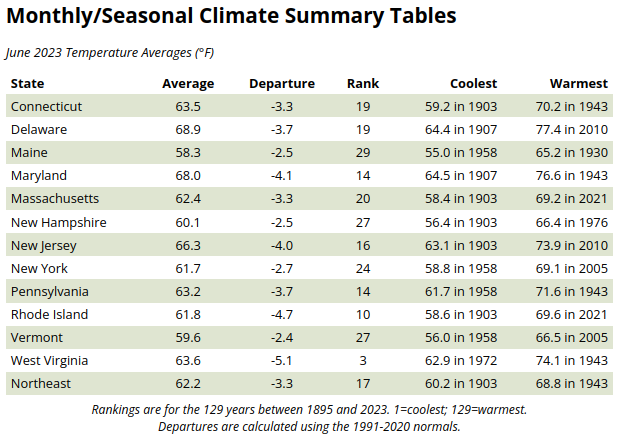
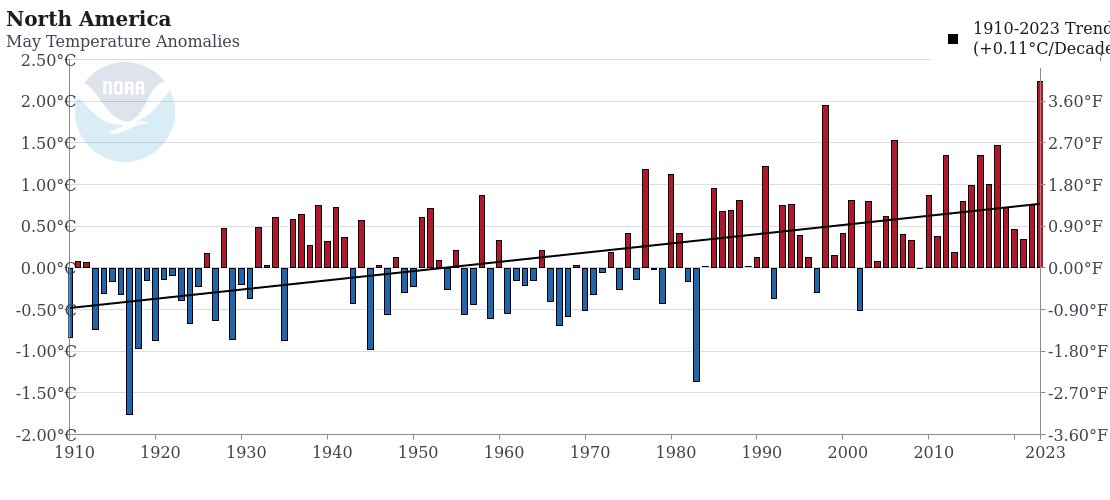
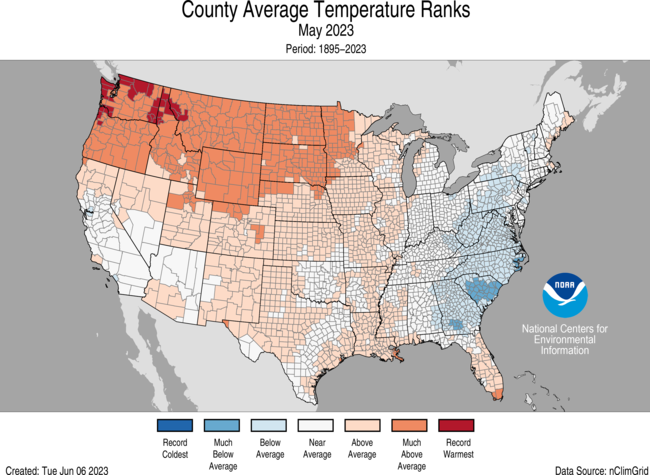
For the Northeast U.S., both May (-1.7 F) and June (-3.3 F) were colder than normal. The last time that consecutive months were colder than normal was three years ago, during April & May 2020.
Find more information about the May 2023 U.S. Climate Report, including individual state and county information, as well as downloadable maps: https://t.co/P5CoxcUamy #StateofClimate@NOAA