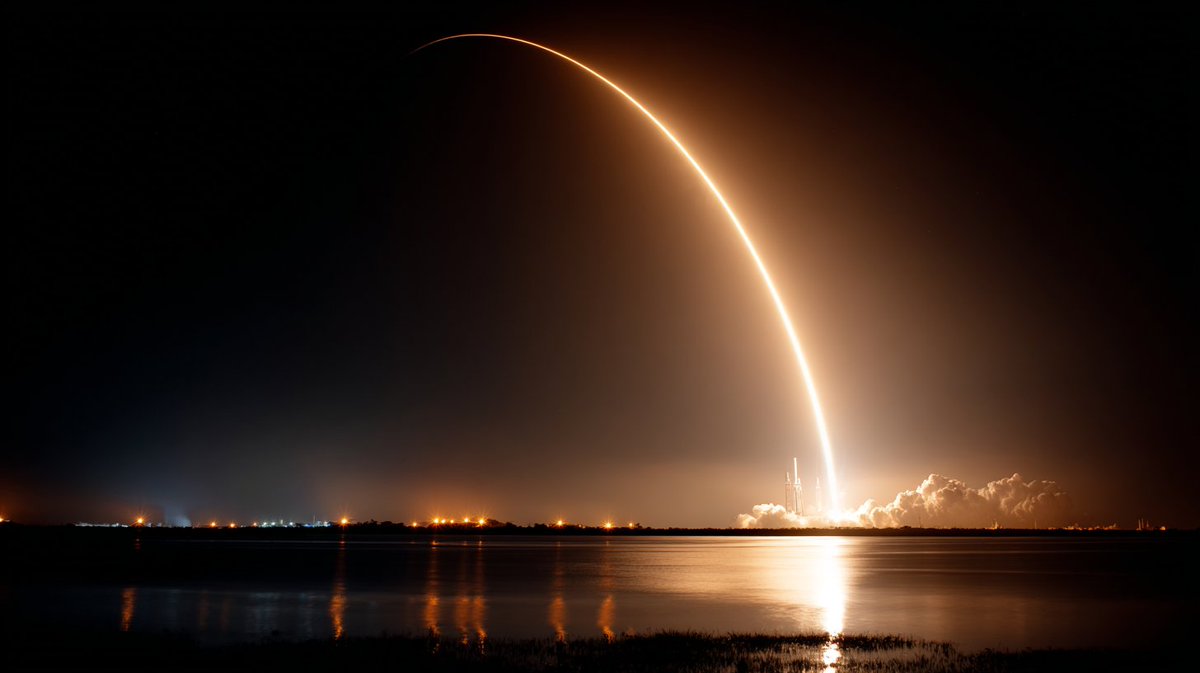
Starlink V3 satellites have >10X bandwidth of V2 and there’ll be >10X launched, which means >100X more bandwidth.
Also, altitude will be 350km vs 550km, so min latency can be cut in half.
Light travels 300km/ms in space, so physics round trip min latency drops to <5ms.
🇺🇸 Google just signed a deal worth $920 million per month with SpaceX (yes, almost a BILLION a month) for AI computing.
The deal will offer access to computing resources, including ~110,000 NVIDIA GPUs, CPUs, memory, as part of a deal that will give access to SpaceX's family of data centers.
Source: @WatcherGuru
The KARNO™ Power Module was just named the Most Valuable Product in @CSEmag's 2026 Product of the Year program. Credit like this from the CSE community means a lot and makes me even more excited for what’s to come.
Proud of the @Hyliion team who work tirelessly bringing the KARNO to the finish line.
https://t.co/XsPWaQG5Ha
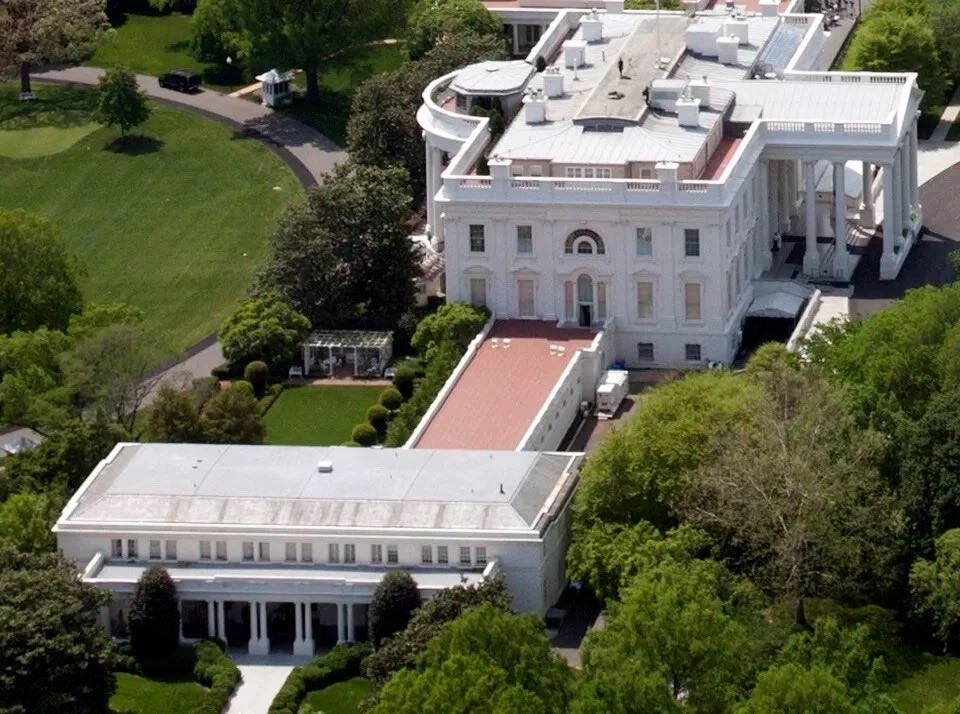
Americans all over are calling for the courts to order Donald Trump to rebuild the White House’s East Wing just how it was before he destroyed it.
Do you support this idea?
Ossoff: He’s trying to put his face on the money. He's building a monument to himself . But see, Atlanta, he's doing these things now because no one will honor him when he’s gone… because he's a failed president and a national disgrace.
BREAKING: Senator Jon Ossoff just took the stage in a packed arena in Atlanta. Republicans are freaking out about the energy surrounding this campaign. Let’s go!
60 Minutes was the most popular show on TV. Why are they destroying it? Because Trump doesnt like it. They didnt lie and pander hard enough.
So today they fired all the top people. (Anderson Cooper quit.)
60 Minutes will no longer be honest, insightful. Its over
TL;DR ⏱️ Breaking down Tesla's Smart Self-Cleaning Lens in 60 seconds 🥽
⚖️ Traditional protective glass domes shield camera sensors from weather but introduce severe light refraction. This refraction bends the incoming light rays just like a glass of water makes a submerged straw look broken. It also creates glare and ghosting distortions, which produce faint duplicate images hovering next to real objects in the video feed. These visual artifacts can easily trick or blind an autonomous driving neural network, the artificial digital brain responsible for safely steering the vehicle.
💡 Tesla's patent points to a different path completely eliminating these extra glass layers. They are deploying a compact and intelligent closed-loop cleaning system. This self-monitoring setup recognizes its own degraded vision and triggers a fix without any human input. It acts directly on a naked lens using sequenced fluid applications and mechanical sweeps.
🧠 A central controller constantly analyzes the live video feed for visual anomalies like blurriness or contrast shifts. A contrast shift happens when the sharp differences between light and dark areas wash out and become muddy. The moment it detects this environmental blinding, the computer autonomously triggers a cleaning cycle.
💦 The fluid dispensing system coordinates a precise chemical process. It starts by spraying a cleaning fluid or alcohol-based solution to dissolve baked-on road salt. Then, it sequences a microscopic and uniform film of lubricating oil. This oil acts much like a fresh coat of wax on a car hood, stopping new dirt from sticking to the glass.
⚡ To keep the camera's blind spot down to a fraction of a heartbeat, an internal motor spins at 12,000 RPM. This extreme rotational speed is roughly ten times faster than a standard car engine idling in traffic. The motor runs through a 71:1 gear reduction, meaning the internal motor spins seventy-one times just to turn the wiper blade a single time to generate massive twisting power. This allows the system to clear the lens surface in a blistering 0.355 seconds.
⚙️ The drivetrain uses a specialized worm gear architecture. This design features a screw-like shaft that meshes with a traditional toothed wheel. This unique shape naturally prevents mechanical back-driving, a problem where strong outside forces push against a mechanism and force the motor to spin backward. This physically locks the wiper blades in place so high-speed highway winds cannot pry them out of their parked positions.
🔄 The independent claim centers on a strict sequence managing the kinematic motion, which is the exact physical path the mechanical parts take. The system abandons traditional back-and-forth wiping for a strict one-way rotational sweep. By only moving forward, it pushes sharp sand and road grit completely off the optical surface. Pushing this abrasive debris away entirely eliminates the risk of micro-scratches that would otherwise permanently ruin the video feed.
🧬 The system has to wipe a convex lens, meaning the glass surface bulges outward like the exterior of a sphere. To handle this difficult geometry, the assembly can leverage a spring-loaded mechanism to achieve perfect surface conformance. This conformance is the mechanical ability of the blade to seamlessly adapt and hug the curved shape. It maintains uniform pressure to reduce streaking, pooling, and optical distortion.
🛡️ A dynamic mechanical housing remains open during normal driving conditions for maximum visibility. When activated, this movable physical shell acts as a smooth and sloped bridge to guide the delicate blades safely up onto the glass. This physical ramp prevents the wipers from snagging on the edges of the camera assembly.
📡 The entire mechanism functions as an environmental state machine, which is a digital logic system that automatically switches the physical hardware into different defensive modes depending on the weather. Operating on this continuous loop, the controller manages the trade-off of a closing opaque cover. It uses vehicle sensors to proactively shield the lens on gravel roads and runs a dust-clearing sweep before reopening on smooth asphalt.
🚀 This autonomous maintenance loop provides the uninterrupted vision critical for driverless platforms like robotaxis and humanoid robots. By maintaining perfect sight, it strips away the need for external glass housings. Removing these extra parts unlocks hundreds of millions of dollars in potential manufacturing savings based on current production scales.
@jpodhoretz Hey there! It’s the first. This is at a mosque, where we were invited by the congregation to speak before prayer. In this context, head coverings are the respectful move. One of the fun parts of being a rep for NYC is learning different customs for so many communities. Cheers!
Jimmy Kimmel infiltrates Trump’s cabinet meeting to help heap praise on “Mr. P”—and his work with extraterrestrials, or however that word's pronounced.
WORKING HARD OR HARDLY WORKING ⁉️
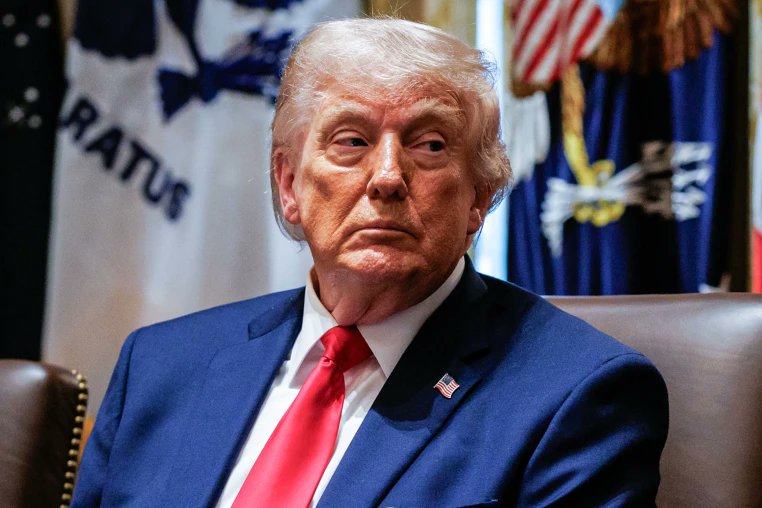
Aaron Parnas reported the folks at the White House are pretty mad at reporters for sharing photos of Donald Trump snoozing. Share, share, share. 😅
Sleepy Donatelli
Beautiful! I have accumulated ~3 million frequent flyer miles on #AmericanAirlines, a number that Starlink will help turbocharge in the years ahead. Maybe AA/Starlink miles will translate into Starship miles so that I can fly to the moon or Mars!
BREAKING: James Talarico just torched Ken Paxton in a way we didn’t think was possible. Retweet this to make sure every Texan knows how corrupt Paxton really is.
🇺🇸 Tesla quietly filed a patent that could cut battery production costs by nearly half.
The breakthrough is a new way to make battery cathodes without toxic liquid solvents, using a microscopic "spider web" structure that binds the materials together instead.
It also triples manufacturing speed and could shrink the physical footprint of battery factories by up to 50%.
It's not a lab experiment either. Gigafactory Texas is already mass-producing these cells for select Model Y vehicles, with Cybertruck, Cybercab, and Semi rollout expected through 2026 and 2027.
Battery cost is the last big barrier to affordable EVs. Tesla just moved the needle.
Source: Not a Tesla App