My history career as a trader
I've made my living trading futures contracts since I was 29 years old. I am 80 next year. I love trading. It is why I still do it and write about it. I cannot imagine life without market speculation, but I suppose that day will come.
I was not profitable immediately. I left the advertising agency business in 1975. I worked for one of the largest ad agencies in the world and had serious reasons to believe I would have named VP while still in my 20s.
The story of how I ended up at the Chicago Board of Trade is a two to three chapter story, I won't take it up in this post.
By the way, I hate X because serious engagement no longer happens. If you enjoy my "old stories" please let me know who you are. If there is enough interest I would post some of the book I am writing about my life as a commodity trader.
In 1981 when I started Factor LLC as a self-funded trading firm. It was profitable from the start although the firm has had four losing years. The average of the four was -8%. Minor, but losses nevertheless. Last losing year was 2013 at -15% or so.
But during the first four years I cannot even remember how many accounts I blew. Some blew up quickly. Others lured me into think I was on to something only to have the account bleed to death slowly.
Continental Grain wanted us to open accounts of our own with at least $10,000 to $20,000 -- that way we would take our trading seriously. That was serious money for me at the beginning.
So I would open an account and try trading grains with fundamentals or livestock with cycles.
Back then hardly anyone kept charts except point and figure charts, so when a friend bought me a 5th edition of the Edwards and Magee book in early 1978 my life changed. Suddenly I had a frame of reference with which I could understand price discovery.
So my next account was looking for classical chart patterns. But with this I struggled at first, but at least I did not blow up that account.
Yet it was not until mid-1979 that I became meaningfully profitable. This was five years after my first trade -- and that time spent working for the world's most prominent FCM at its Chicago headquarters.
But slowly I kept solving problems. That is what trading really is -- a huge problem solving game. Those that break even until they figure it out stand a chance.
1980 was hugely profitable
As was the first half of 1981.
That is when I decided it was time. I sold my commercial business to a good broker friend, quite customer business and incorporated Factor Research and Trading as a proprietary self-funded account at the Board of Trade.
There have been struggles along the way. Problem solving never ends. When one is kind of solved the next one pops up. Being a self-funded professional commodity trader is not easy work or everyone would be doing it.
There was about a decade I too a hiatus in the late 1990s/early 2000s to devote myself to charitable non-profit work, including becoming an NGO with the United Nations.
When I came back to trading in 2006 everything had changed. Trades were made on a computer using a computer. I was used to calling my orders into the pits.
I dramatically changed my risk management protocol in
I actually seriously wondered whether I could remember how I traded and whether my style would still work.
2007 was profitable, and 2008 was my last triple digit annual return. My style still worked.
But my challenges were not over. 2013 was the worst of the four losing years I've had in my 46 years of trading.
The why is a whole long story I won't get into here. It's too long a story.
But the episode resulted in the most dramatic changes in risk management I had even taken. This too is another story unto itself.
Anyway, here I am, still trading cause I love it. And because it has been very profitable for me.
I totally disbelieve that us average humans can run $10,000 into $1 million in a few years. I've done and a lot more, but that by trading in six different decades - the 1970s through the 2020s. I hope I can someday claim seven decades.
My main measure of success has not been ROR for years and never was win rate. All the changes I have made since 2014 have been aimed at cutting asset volatility to the nubs. I feel fortunate that I have been able to this, not have but a few small losing months in a decade.
ROR has not been my concern. From the early 1980s I believed that if I sought excellence in the things I could control that the profits would work themselves out.
This has been the case.
My observation of the Z gens is that they have expectations in trading that are 3 to 4 standard deviation affairs. Good luck with that one, Zers.
Thank about it. Renaissance Technology is the single most profitable trading firm in the world with an average ROR in the high 40s, low 50s.
Stan Druckenmiller is the best independent trade alive IMO. He averages in the 40s.
Back when Jack Schwager included me in a Market Wizards book he did extensive verification. I provided something like 18 years of documented performance using monthly statements reconciled with a CFTC performance table and IRS statements. Jack calculated that my average compound ROR was in the low 50s.
I do not accept Jack's numbers. In the first place, prop traders should NEVER use compound growth. We are always taking money out of accounts.
My stats put me in the low to mid 40s. But that is with only millions of AUM. Stan does his 40s with billions. There is a huge difference, some of you understand this, some of you don't, yet.
Why am I telling you all of this? Perhaps I am not talking to you, but to those Z and M gens who aspire to be career speculators.
Tame your expectations. There are massive data that conclusively places the odds of success for an aspiring trader becoming a career trader at 3 in a thousand.
You can be one of those 3 -- but believe me there will be reasons why that you might not yet understand.
There are a few things you need to do to have career trading become you.
I recommend futures, not equities. The leverage is magic, but know it is also dangerous.
Do not expect to be profitable for four or five years. If it is three, then great. Your job in the meanwhile is to learn how to lose. Great traders only become great traders because they became skilled at losing. Lose your capital and game over for you.
Next, get rid of social media. It is a trap. Follow me if you must, but turn your eyes and ears away from anyone claiming big profits of knowing where some markets is going.
You need a starting point. Put together some rules, if that is your thing, and commit to them. Bet far less than 1% of your capital on any given trade. Don't day trade. Learn to hold positions overnight and for days.
The biggest crock I hear from some of you is that you need to day trade to make enough money to become serious hold traders. The faulty logic of this idea is massive.
You don't want to do it the way I suggest? That's fine. Everyone needs to find their own way, so welcome to the landmine.
Trading is a math problem to solve. Price is all that matters. Fundamentals are meant to decisive you. Everything you could possibly know about a market is already reflected in price. Price is king.
When I started at the CBOT there were local traders and pit brokers who had fought on Omaha Beach in WW2. It was my father's generation who owned most of the memberships.
They all had the same advice. Cut your losses really quickly and have some technique that allows you to let profits grow. Small losses and much larger profits is the only math that works. Ignore me on this at your own peril.
Seriously, if I am not boring you to death but instead you find my history as a trader told in story form to be interesting, let me know. If I happen to follow you, DM a message.
I am slowly bringing together so many stories I have as a trader. Being a career trader, especially one that traded at an exchange and for the famed Commodities Corp., my life has been crazy. It has been one interesting event after another.
The people I have known and still know. The crazy trades I have been in. The places I have been. I sometimes ask my wife to pinch me so that I can wake up from this life as a full time commodity futures contracts for my own risk.
@normonics Hey Joe,
what do you recommend for children learning English as a secondary language ?
Is using your App an option for this?
BR from Germany
@businessbarista@openclaw How to only provide the necessary evil to OpenClaw, e.g. use a proxy mechanism for Claude without exposing API Keys, same for private data by obfuscating, etc.?
Another one: How to secure OpenClaw like a Fortress to reduce risk but still having 80% benefits?
@gregmushen Awesome transformation, Greg!
I was doing full body workouts in my 20/30s.
Questions:
1) Can you link your workout routine? And how long does one workout session last?
2) Did you use any protocols for your diet?
3) Any supplements you added during this time?
@TweetsOfSumit would always and forever go for "build a basement". never regretted that decision.
so much more more space for storage, comfy zone, hideout from the kids, etc. 😆
if you got a 1000sqm+ property, then you could build a bigger house instead 😁
@leojrr people pay other people to do pen-tests.
you got yours for free basically. :) (sorry!)
actually, i hope you got it fixed now.
wouldn't stop building in public tho, cause it's a free marketing mode.
better add some more consciousness in your cursor context.
@itsolelehmann that's also one reason why i don't hire any employees and go for other freelancers.
however, there are so many failures happening on management level in SMBs/big corp, that it's understandable to some degree.
FLOKI has Binance and Coinbase
$BRETT doesn’t have either YET and is about to flip it!
So then my question to you is, just how high do we really go
Seeing now the #1 meme coin on Base is able to flip the giants without the common person even having access to buy it with ease yet?
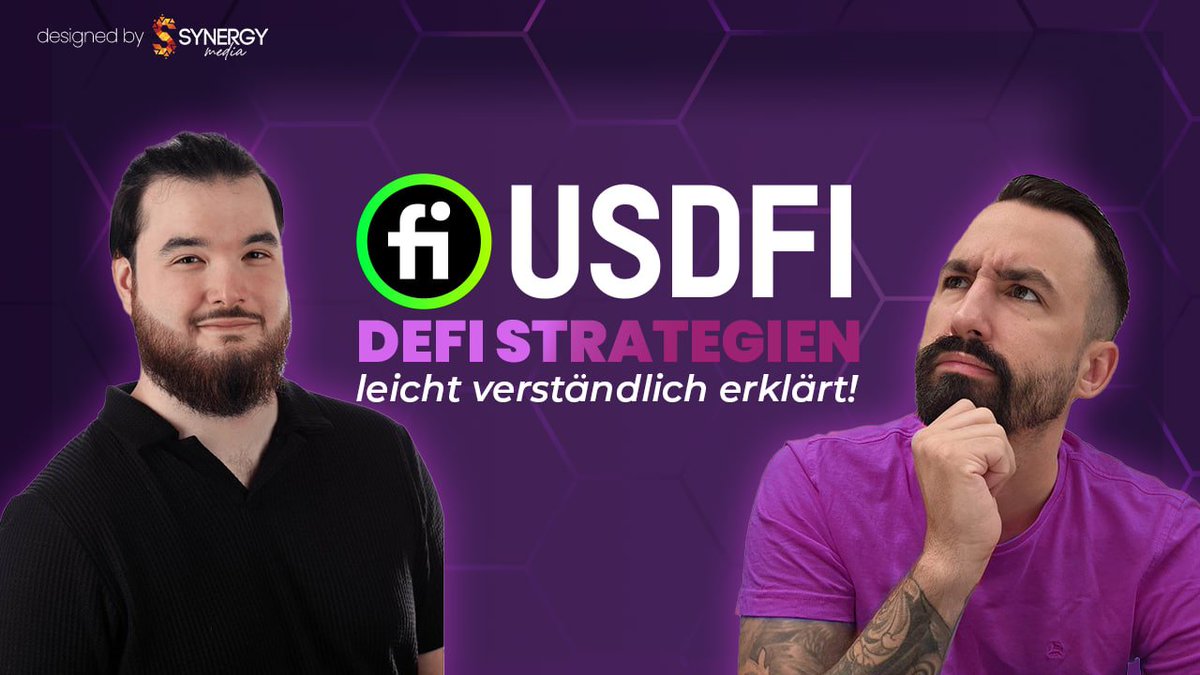
In diesem Video erfährst du alles über die spannendsten DeFi-Strategien mit @stable_usdfi! Wir tauchen ein in Lending und Borrowing Loops und wie du mit der Money Legos-Strategie dein DeFi-Portfolio weiter optimieren kannst. Dieses Tutorial ist perfekt für alle, die ihre Renditen steigern und mit smarten Strategien ihre Krypto-Investments maximieren wollen. Teil 1 ist der Start in die USDFI-Welt – also nicht verpassen und abonnieren für die Fortsetzungen!
Vergiss nicht, das Video zu liken, zu kommentieren und den Kanal zu abonnieren, um keine weiteren spannenden Diskussionen zu verpassen!
Hier geht es zum Video 👇https://t.co/sz6oqYG0pF