Marjane Satrapi, an Iranian-French cartoonist, filmmaker and activist, has died, France's presidency announced Thursday. She was 56.
People close to Satrapi said that she “died of sadness” after the death of her husband, Swedish film producer and actor Mattias Ripa, a year ago, French media reported.
In the 2000s, she won major acclaim for her black-and-white comic series and movie "Persepolis," a story that mirrored her own upbringing during the Islamic Revolution. The film received a 2008 Oscar nomination for Best Animated Feature Film; she was the first woman to receive an Academy Award nomination in that category.
Her other graphic novels included “Broderies” (“Embroideries”) and “Poulet aux prunes” (“Chicken with plums”), about the death of her great-uncle. Among her directing credits were the feature films "Radioactive," starring Rosamund Pike as Marie Curie, and "The Voices," starring Ryan Reynolds.
In the early 2020s, she coordinated the publication of a book that artistically depicted the women's revolution in Iran after the death of Mahsa Amini. The resulting work, “Woman, Life, Freedom,” denounced the Iranian government's repression.
"We are not asking any Westerners to come and make a revolution in our place. Just look at these people. They really need people to watch them, they need somebody to testify that everything they’re doing for freedom means something," she said of the book in 2024. "And this is the way we change politics, through public opinion."
A first look at Paweł Pawlikowski’s ‘FATHERLAND,’ starring Sandra Hüller and Hanns Zischler, has been released.
Set to premiere in competition at the 79th Cannes Film Festival.
Akira Kurosawa on how Fyodor Dostoevsky was an inspiration for making "Dreams" (1990):
"The impetus for 'Dreams' (1990) was a passage in a novel by Dostoyevsky, where he talks about dreams and the fact that they express our deepest fears and greatest hopes, and that this expression takes a shape which is something quite marvelous and unexpected and unimaginable in daily life. So I wrote down on paper a dream from my childhood, and this developed into a “collaboration” with other vivid dreams from various stages of my life.
Any description of dreams in mere words cannot capture their expressive power at all: this was the reason I made the film. But to give you an example of the surprise effects that dreams create, the sequence of the dead regiment marching through the tunnel [the fourth dream], which would be completely uninteresting to read about on paper, has in it a dog.
And this dog actually represents—this is what I realized upon waking from this particular dream—the dog represents my fear of militarism, because it’s a German shepherd, the type of dog that is used in wartime, and it carries a kind of saddlebag on its back which contains a number of hand grenades. The sound of this dog and its physical appearance were absolutely terrifying to me in my dream. So this is one of the types of things I marvel at, that my fear of militarism, due to the suffering I endured when Japan was under the rule of a militaristic government, takes the form of a dog."
(Akira Kurosawa's interview with Fred Marshall, 1993)
P.S: On this day, 36 years ago, "Dreams" (1990) premiered at the Cannes Film Festival, France.
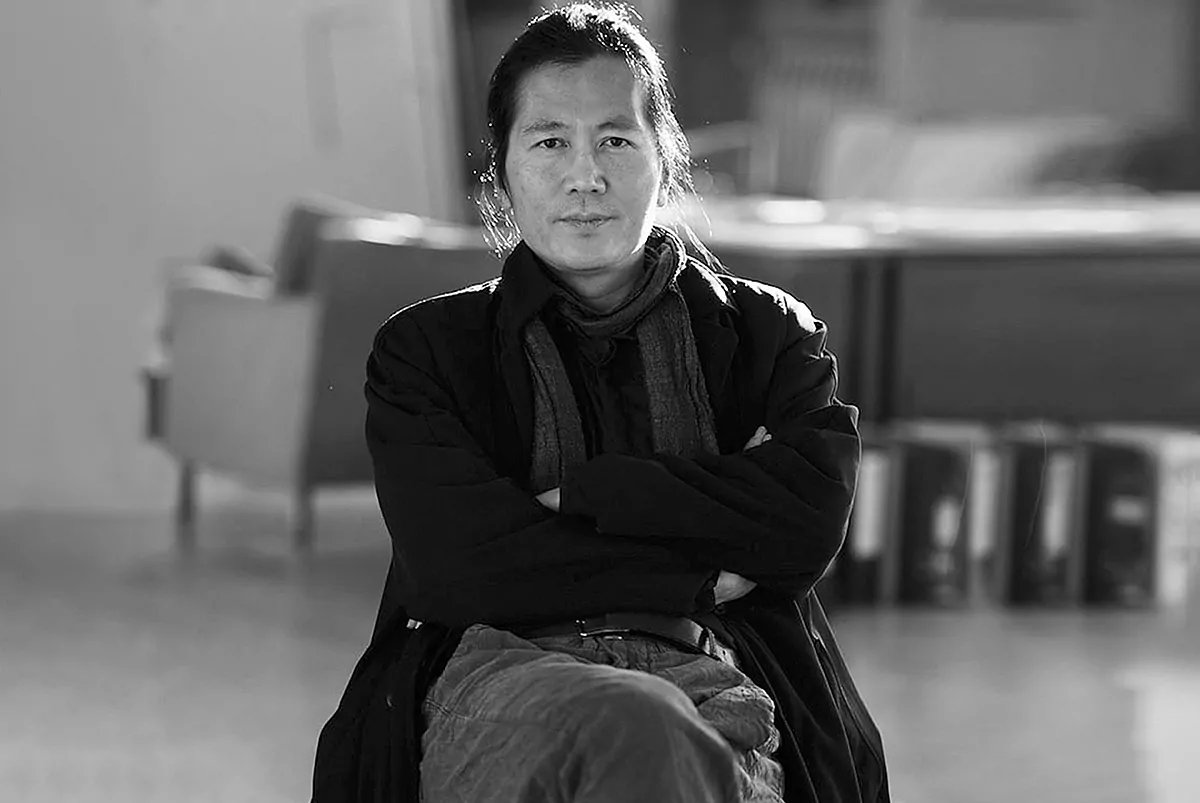
Dijo una vez Byung-Chul Han: «En el futuro habrá, posiblemente, una profesión que se llamará oyente. Acudiremos al oyente porque, aparte de él, apenas quedará nadie más que nos escuche. Hoy perdemos cada vez más la capacidad de escuchar… Escuchar es un prestar, un dar, un don. Es lo único que le ayuda al otro a hablar.»