There have been some radical shifts in hierarchy, as deep-seated changes affect the performance of Africa’s top 20 countries, measured on criteria including governance, influence and innovation. Here are the first takeaways from our top five.
🗣️ @NickNorbrook
From the birr float to foreign-bank entry and logistics reform, ➡️ https://t.co/Fuqmf4UrfY Ethiopia is moving away from its tightly managed economic model. The danger is not openness itself, but opening before firms, regulators and households can absorb the shock, write @NickNorbrook and @michaelmasrie.
Access Bank founder says African institutions must escape sovereign-risk ceilings, ➡️ https://t.co/ufwGU4IyRK tap global capital pools and use landmark deals such as the Dangote refinery IPO to make Lagos a serious financial centre.
Interview by @NickNorbrook in Nairobi.
More than 70 candidates. 14 countries. A jury of seven renowned African economists. And one winner: Senegal’s Abdoulaye Ndiaye is the inaugural recipient of the Africa NextGen Economist Prize!
This new award, created by Jeune Afrique and The Africa Report in partnership with the African Development Bank, shines a spotlight on a new generation of researchers and economists whose work is reshaping how Africa envisions its future.
At 37, he is an Assistant Professor at the NYU Stern School of Business and is affiliated with the Finance for Development Lab. His research focuses on the constraints limiting African states’ ability to mobilize domestic resources, at the crossroads of public finance, development economics, and political economy.
➡️ https://t.co/6lRHG2MLDU
Ethiopia is partnering with Aliko Dangote on a massive $4bn fertiliser project ➡️ https://t.co/0MiTXDYdcG in the Somali region, a strategic move aimed at achieving food sovereignty, curbing foreign exchange shortages, and demonstrating the state’s capacity for industrial-scale transformation despite pressing security and logistical risks.
Report by @michaelmasrie.
More than 70 candidates. 14 countries. A jury of seven renowned African economists. And one winner: Senegal’s Abdoulaye Ndiaye is the inaugural recipient of the Africa NextGen Economist Prize!
This new award, created by Jeune Afrique and The Africa Report in partnership with the African Development Bank, shines a spotlight on a new generation of researchers and economists whose work is reshaping how Africa envisions its future.
At 37, he is an Assistant Professor at the NYU Stern School of Business and is affiliated with the Finance for Development Lab.
His research focuses on the constraints limiting African states’ ability to mobilize domestic resources, at the crossroads of public finance, development economics, and political economy.
The presence of #Ethiopia's intelligence chief signals that this week's meetings with Secretary of State Marco Rubio in #Washington was no routine diplomacy, @michaelmasrie writes for @TheAfricaReport :
https://t.co/17ssT82ssS
Awash Bank’s listing on the Ethiopian Securities Exchange serves as a live stress test for the nation’s nascent capital market, ➡️ https://t.co/H3X32Uf4bS revealing a landscape where high investor appetite is currently bottlenecked by shallow liquidity and the absence of formal pricing anchors.
Report by @michaelmasrie.
East Africa’s leaders are pivoting towards domestic industrialisation and regional integration as global liquidity tightens, reshaping how the region positions itself in international capital markets - Michael Masrie.
Read more: https://t.co/xl7TS1KfNW
#EastAfrica#IAfCFTA
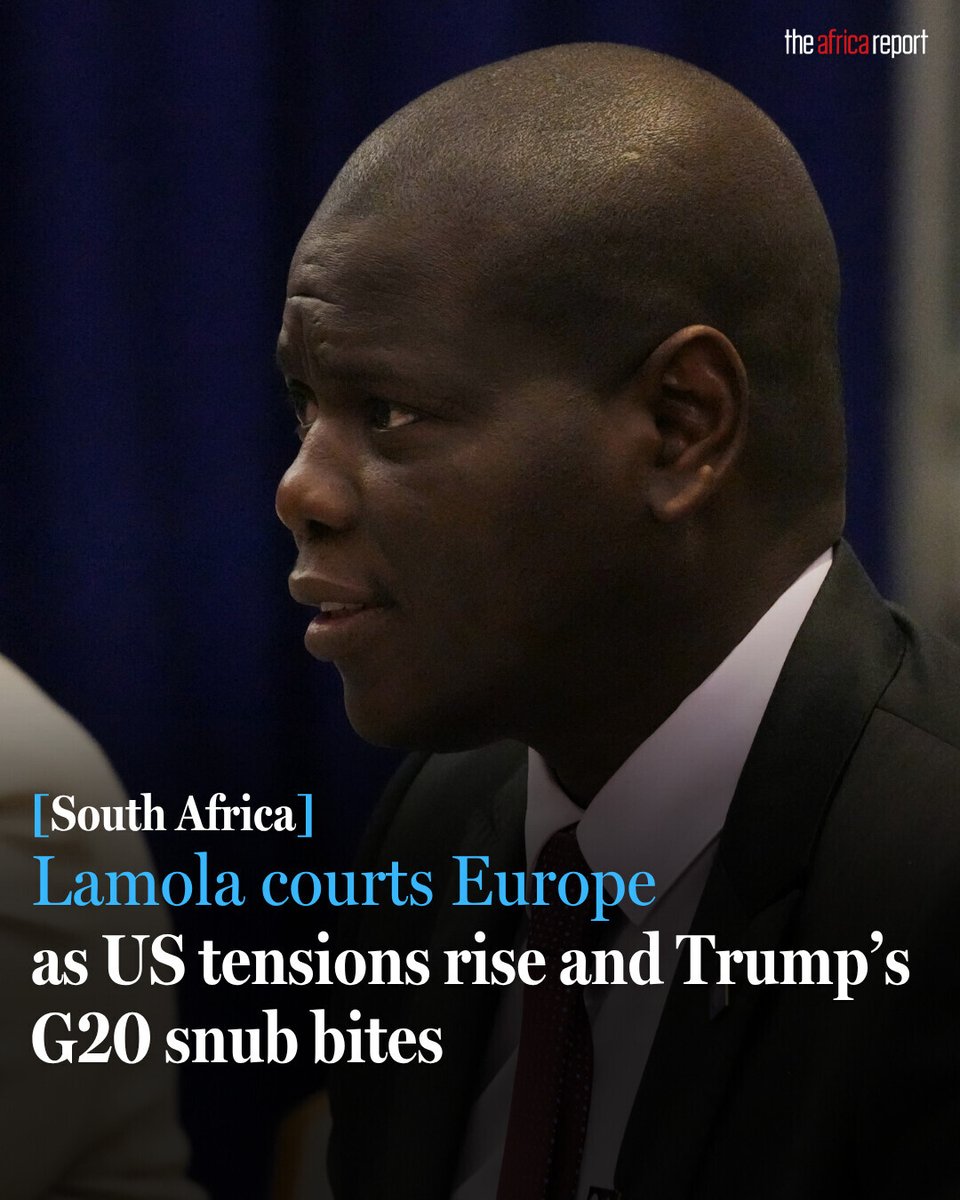
Pretoria is leaning on Germany and Spain for energy finance and skills deals, ➡️ https://t.co/lhMSaLoKZH while navigating strained ties with Washington and shifting global alliances.
Report by Marianne Merten.
From cost to control, ➡️ https://t.co/pmW4dvesQm the Ethiopian prime minister has reframed sea access as a security issue, arguing that reliance on external routes leaves his country exposed.
Report by @michaelmasrie.