For the next three months, we'll talk about graph engineering. After that, it will be something like network, signal or ecosystem engineering.
The idea is a graph that receives events or signals, creating value and self-improving over time through feedback loops. It'll be a blackbox that produces value and improve overtime.
Similar to auto-research projects, but instead of closed loops, it will be open loops.
What is your actual remote agent setup?
I see a lot of people using Discord, Telegram or WhatsApp for communication.
For agents, there's Hermes and OpenClaw.
Are there any other agents setup that are popular ?
We used to double our estimates for how long a task would take, knowing that estimates were always optimistic. Today, it feels like we need to halve them.
I like the idea of risk buffers. In software, it seems we are losing that concept because AI is compressing the time between idea and shipping.
I wonder what the correct approach is to that problem ?
@adamwathan@yongfook This is a crazy trend knowing 90% of vibe coded projects are using Tailwind. What are the projects that you're launching to react to this trend ?
@steipete Graph engineering was predictable. The next phase of graph engineering is adding signals through the graph to adapt to external events.
https://t.co/EsFesUSE7x
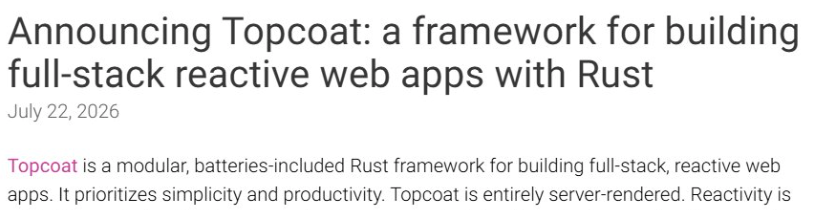
@FrancescoCiull4 LLMs might make fullstack Rust easier nowadays, so I may be wrong, but I wouldn’t call it productive to build SSR Rust apps: builds take minutes, the code is verbose and the complexity slows you down compared to a simple BFF for a fullstack app with a Rust backend.
@ibuildthecloud WASM and Rust are the infinity stones of performance for slow languages like TypeScript. We used this combo many times to improve hot paths in our servers. WASM is still an underutilized powerful tool.
@FrancescoCiull4 Backend in Rust and frontend in TypeScript totally make sense. But you posted about a reactive framework to render HTML in Rust. To me, it feels like the wrong tool for the problem.