One issue
One perspective
One diplomatic solution at a time
Every week, I’ll break down issues, challenge conventional thinking, and explore how diplomacy can turn conflict into opportunity;
Not because I have all the answers, but because every solution begins with a question
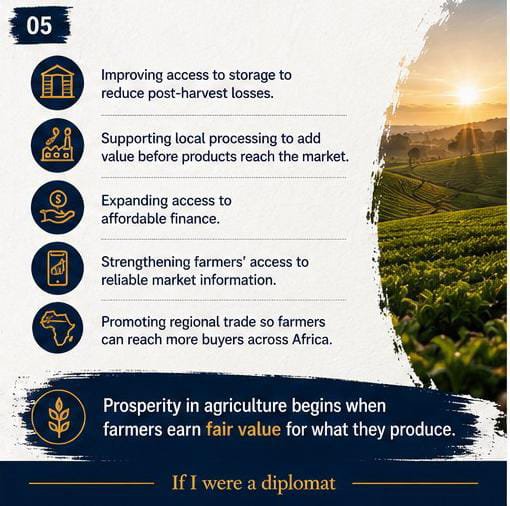
What’s happening is that, we are happy that agriculture is one of the main driving forces of the economy but we seem to pay little attention to the drivers of this force. #FarmersMustEat#That’sWhat’sHappening
What at all would make one develop love for agriculture. I just hope people would see the light in the agric sector.
Who has been deceiving us all these while that Agric is not for us??
#diplomacy#ifiwereadiplomat#agriculture#africa#ghana
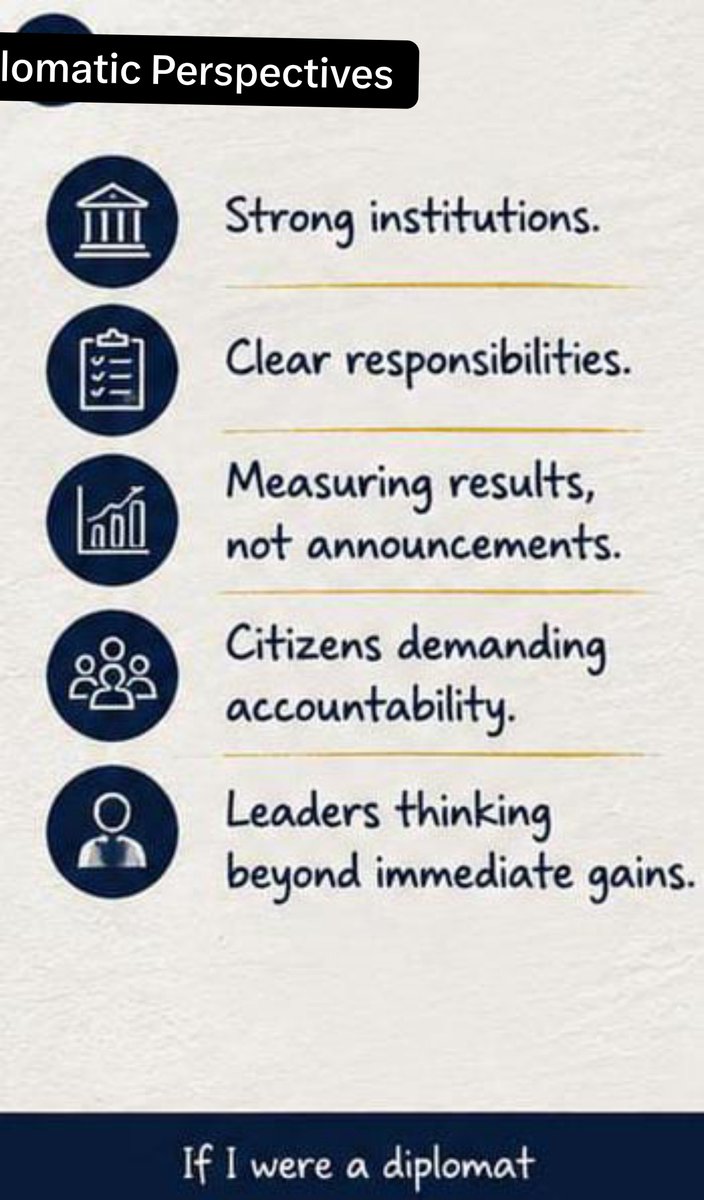
Governments, organizations, and individuals sometimes develop brilliant policies, strategies, and solutions to solve problems, but do not translate into progressive change
Who is responsible?
How do we measure progress?
How do we ensure that promises become action?
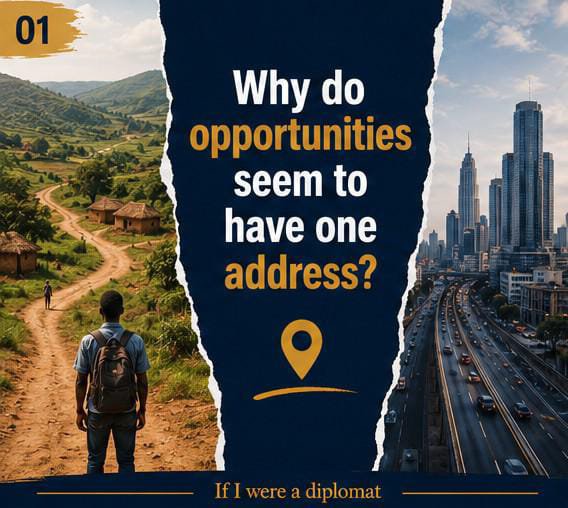
Why do opportunities seem to have one address?
Perhaps the real challenge isn't rural-urban migration.
Perhaps it's the unequal distribution of opportunity.
What if we've been defining poverty too narrowly?
Poverty can also be a lack of opportunity, quality education, access to healthcare, productive skills, strong networks, and the environment needed for people to reach their full potential.
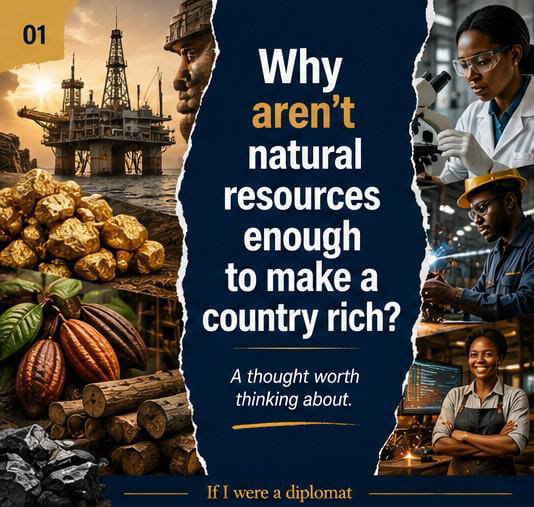
Many people believe that natural resources make a country rich.
History tells a different story.
Natural resources create opportunities, but opportunities do not automatically become prosperity.
That transformation depends on people.
Everyone needs food.
Yet those who produce it struggle to earn a decent living.
Perhaps it's because we have spent more time helping farmers produce more, and less time helping them earn more.
If I were a diplomat, I would shift the convo from agric to agricultural prosperity.
We often think diplomacy belongs in embassies, international summits, or the United Nations.
I see it differently.
Diplomacy begins the moment we choose dialogue over conflict and solutions over complaints.
The question is not always “What should we do?” Sometimes it is “Why haven’t we done what we already know?”
What problem do you think persists mainly because implementation fades?
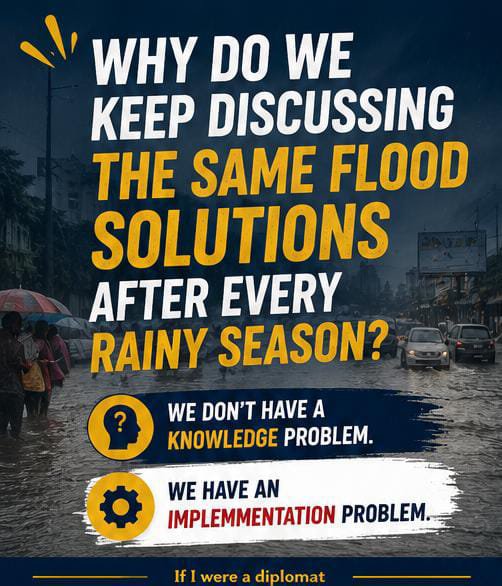
Every rainy season, we ask:
"How do we stop the floods?"
Perhaps we should also be asking:
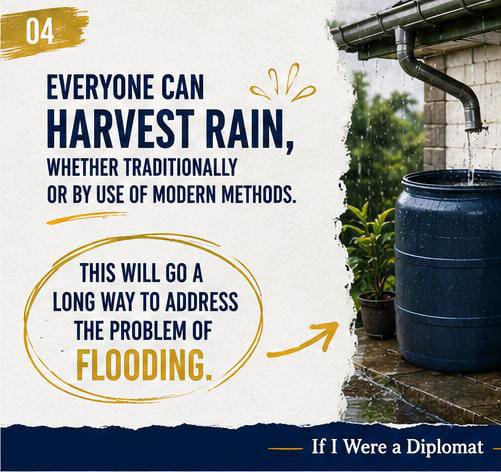
"Why do we allow so much rainwater to go to waste?"
It doesn't have to go to waste!!
#flood#diplomacy#harvest#ghana
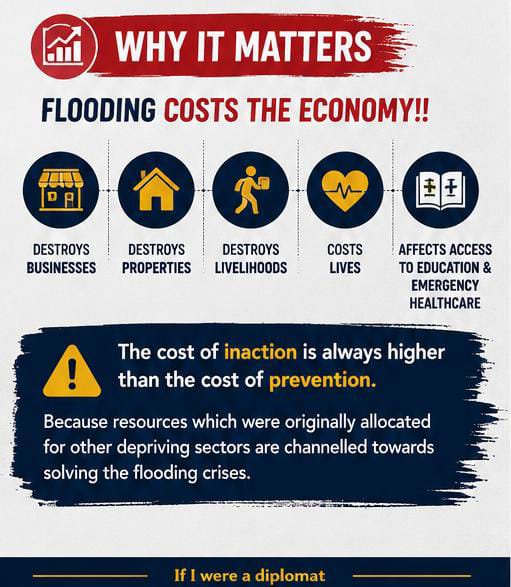
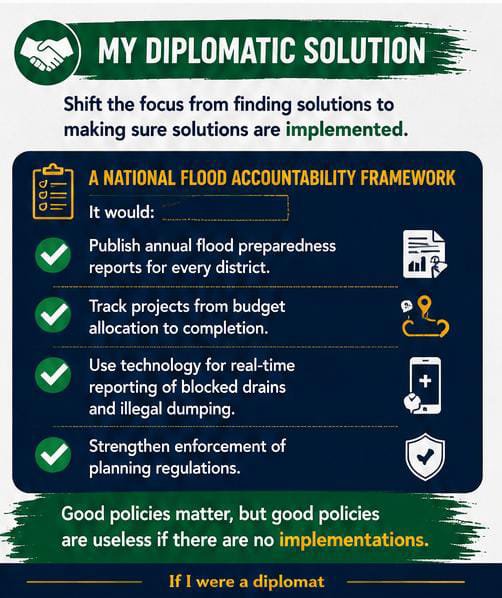
The challenge is no longer a lack of ideas. It is the gap between policy and implementation.
Flood resilience isn't built during an emergency. It is built through consistent planning, accountability, enforcement, and investment long before the rains arrive.
#flood#diplomacy
My thoughts are with every family, business owner, commuter, emergency worker, and everyone affected by the recent flooding.
This is not about finding solutions because we already have them. The gap here is implementation.