I'm pleased to share my latest article published with Addis Standard.
I invite you to read the article, reflect on its key message, and share your thoughts and perspectives.
👇
#Op_ed: From Peace Deal to Political Instrument: #Pretoria Agreement's quiet demise; weaponization of ceasefire in #Tigray
Three years after the Pretoria Cessation of Hostilities Agreement (#CoHA), what promised recovery is now “a managed stalemate sustained through narrative manipulation, economic coercion, military occupation, and normalization of impunity,” writes Gebremichael Negash.
He argues that the federal government minimized global scrutiny by reframing the Tigray war as a local dispute, ignoring mandates such as the withdrawal of non-#ENDF troops and the return of civilians. Though active fighting stopped, economic warfare and occupation endure, leaving a million people displaced.
Gebremichael emphasizes, "A ceasefire devoid of justice, accountability, and implementation is not peace,” leaving Pretoria as “the managed burial of an unfinished war, rather than a foundation for sustainable peace.”
https://t.co/ptoZRwpCF1
#Op_ed: From Peace Deal to Political Instrument: #Pretoria Agreement's quiet demise; weaponization of ceasefire in #Tigray
Three years after the Pretoria Cessation of Hostilities Agreement (#CoHA), what promised recovery is now “a managed stalemate sustained through narrative manipulation, economic coercion, military occupation, and normalization of impunity,” writes Gebremichael Negash.
He argues that the federal government minimized global scrutiny by reframing the Tigray war as a local dispute, ignoring mandates such as the withdrawal of non-#ENDF troops and the return of civilians. Though active fighting stopped, economic warfare and occupation endure, leaving a million people displaced.
Gebremichael emphasizes, "A ceasefire devoid of justice, accountability, and implementation is not peace,” leaving Pretoria as “the managed burial of an unfinished war, rather than a foundation for sustainable peace.”
https://t.co/ptoZRwpCF1
I have a new piece out today in Addis Standard: “Limits of #Pretoria: How Western #Tigray Became the Blind Spot of #Ethiopia’s Peace Deal.”
While the Pretoria Agreement silenced the guns, it did not resolve the deeper injustices shaping the reality on the ground. 👇
#Op_ed: Limits of #Pretoria: How Western #Tigray became the blind spot of #Ethiopia’s peace deal
https://t.co/eye9G4Vfs2
Three years after the signing of the Pretoria Agreement, Ethiopia finds itself at a “perilous inflection point,” writes Gebremichael Negash. While the accord succeeded in silencing the guns, he argues that #Western_Tigray has since deteriorated into an “information black hole,” where constitutional governance has been replaced by administrative fiat and systematic exclusion.
The author explains that, despite formal commitments to facilitate the return of displaced populations, the region continues to operate under de facto occupation-like conditions, largely shielded from journalists and humanitarian organizations. This enforced silence, Gebremichael contends, is deliberate. Through the criminalization of inquiry and severe restrictions on access, authorities have effectively transformed Western Tigray into a “phantom zone,” where allegations of arbitrary detention and identity-based abuses remain largely unexamined and undocumented. Meanwhile, the federal government, concerned about political destabilization, has allowed the #Amhara regional administration to treat the area as settled, bypassing established constitutional mechanisms for resolving territorial disputes.
The author emphasizes that this situation extends beyond a localized grievance, describing it instead as a “constitutional crisis in slow motion.” As he concludes, “Western Tigray is not a footnote to Ethiopia’s recovery. It is a mirror.”
This is reality on the ground. They siege Tigray by calling contested area in order to confuse IC. Tigray land is grabbed by terror & displacement of innocent civilians from their own home. Tigray has no left path except to bring it by force.
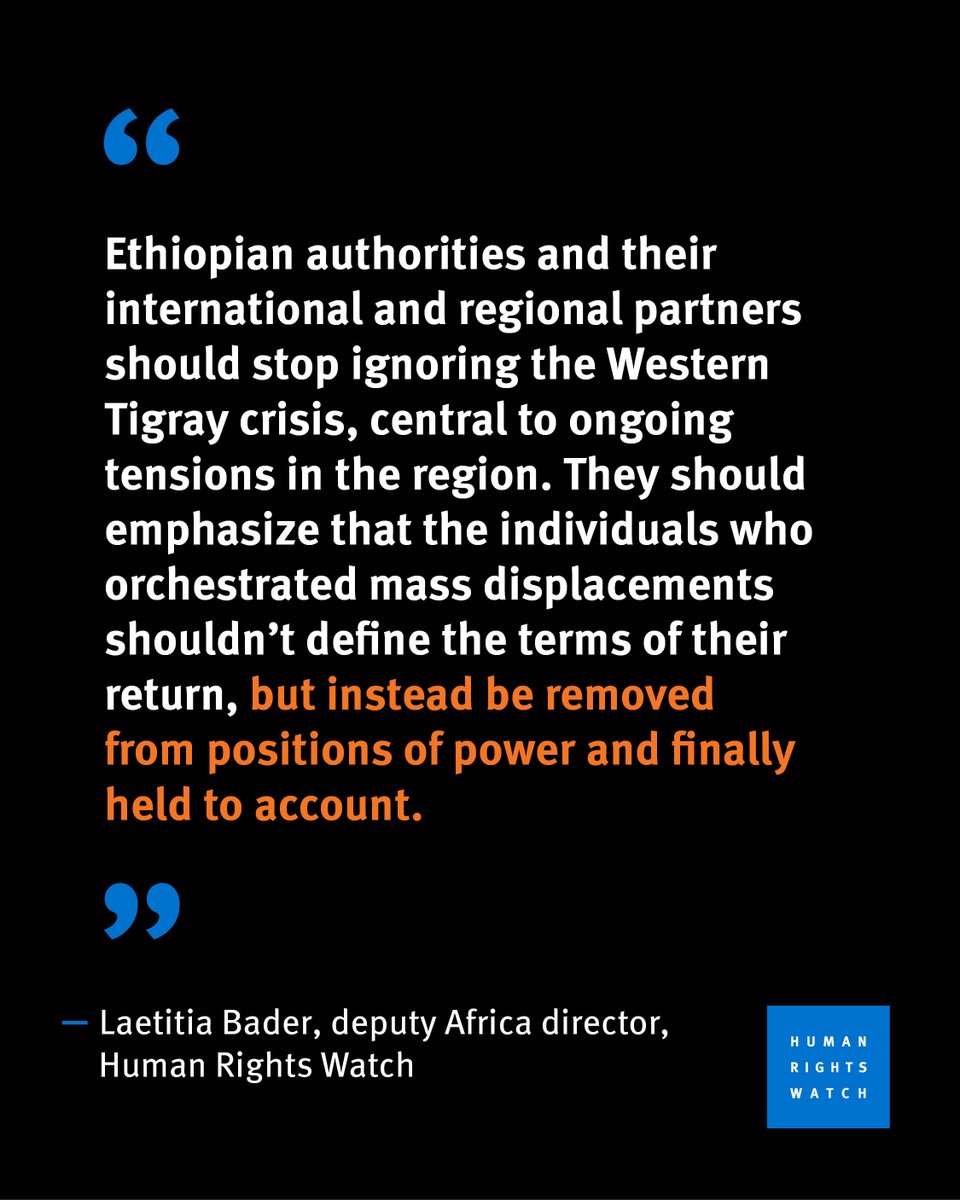
Authorities and security forces in Ethiopia’s contested Western Tigray Zone are arbitrarily detaining ethnic Tigrayans and imposing a discriminatory system that severely restricts their movements, employment, and access to services.
#Opinion: #Red_Sea or Strait of #Hormuz: Flashpoint for next great power confrontation
https://t.co/18HrKee9MA
The global focus on the Red Sea and the Strait of Hormuz risks overlooking a critical reality: “the Horn of #Africa is a more likely starting point for the next major geopolitical crisis,” argues Gebremichael Negash.
He notes that #Ethiopia sits at the center of this emerging dynamic, increasingly framing its landlocked position as a “strategic vulnerability,” which is reshaping regional alignments. This shift is reflected in the 2024 memorandum of understanding (MoU) with #Somaliland, a development that has unsettled #Somalia and raised concerns among regional actors. These tensions are further complicated by competing interests involving #Egypt, #Turkey, and Gulf states, effectively turning the Horn of Africa into a potential arena for proxy competition.
At the same time, the unresolved aftermath of the war in #Tigray, despite the #Pretoria Agreement, continues to sustain underlying instability. #Eritrea’s role in particular has heightened fears of renewed conflict, with potential spillover effects that could disrupt critical Red Sea shipping routes and broader global trade flows.
The author cautions that “without a coordinated African-led framework, the Red Sea’s future risks being shaped by external powers.”
#Opinion: #Red_Sea or Strait of #Hormuz: Flashpoint for next great power confrontation
https://t.co/18HrKee9MA
The global focus on the Red Sea and the Strait of Hormuz risks overlooking a critical reality: “the Horn of #Africa is a more likely starting point for the next major geopolitical crisis,” argues Gebremichael Negash.
He notes that #Ethiopia sits at the center of this emerging dynamic, increasingly framing its landlocked position as a “strategic vulnerability,” which is reshaping regional alignments. This shift is reflected in the 2024 memorandum of understanding (MoU) with #Somaliland, a development that has unsettled #Somalia and raised concerns among regional actors. These tensions are further complicated by competing interests involving #Egypt, #Turkey, and Gulf states, effectively turning the Horn of Africa into a potential arena for proxy competition.
At the same time, the unresolved aftermath of the war in #Tigray, despite the #Pretoria Agreement, continues to sustain underlying instability. #Eritrea’s role in particular has heightened fears of renewed conflict, with potential spillover effects that could disrupt critical Red Sea shipping routes and broader global trade flows.
The author cautions that “without a coordinated African-led framework, the Red Sea’s future risks being shaped by external powers.”
#Op_ed: Lives on Hold: Humanitarian crisis deepens amid stalled peace in #Tigray
https://t.co/kdfqSgMRhG
More than three years after the Pretoria Peace Agreement, Tigray’s reality reflects a fragile peace marked by stalled implementation and a deepening humanitarian crisis, writes Gebremichael Negash. He notes, “The human cost of delayed implementation is no longer abstract; it is being counted in deaths.”
While active conflict has largely subsided, the author explains that more than five million people still require emergency assistance, with nearly 891,000 internally displaced across 146 #IDP camps, many living in prolonged uncertainty. At the same time, restrictions on cash, fuel, and humanitarian access continue to compound the crisis. Gebremichael emphasizes that such "denial of humanitarian assistance can amount to collective punishment" when it targets civilians.
The author underscores that the path forward is clear but urgent: restoring services, ensuring full humanitarian access, and enabling safe returns. He concludes, “What remains is a choice: act now… or allow delay to deepen a crisis already measured in lives lost.”
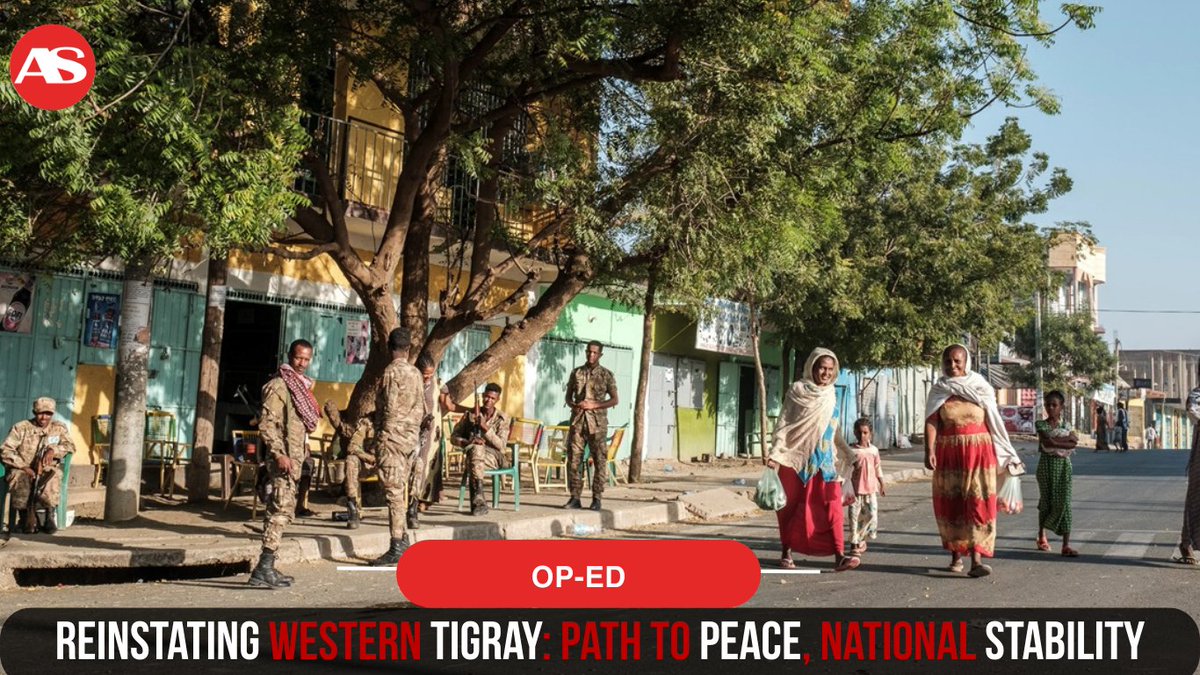
#Op_ed: Reinstating Western #Tigray: Path to peace, national stability
https://t.co/jXraE2nf6F
The #Pretoria Peace Agreement, signed in November 2022, was widely hailed as a turning point in ending #Ethiopia’s devastating war in Tigray. While large-scale hostilities have largely ceased, Gebremichael Negash highlights that full implementation remains elusive, particularly concerning the administrative status of Western Tigray.
He explains that the districts of #Wolkait, #Kafta_Humera, and #Tsegede remain under #Amhara and federal control, and displaced populations have yet to return. Gebremichael notes, “Restoration of these districts is not a matter of negotiating identity claims but a legal obligation under the peace agreement.”
The article notes that the stakes extend far beyond Western Tigray: “Successful implementation of the Pretoria Peace Agreement is not merely a regional matter; it is a national imperative.” Failure to implement the agreement, it warns, could embolden military solutions, deepen political mistrust, and destabilize the Horn of #Africa.
The author emphasizes that for Ethiopia, priorities must be clear: “Implement the peace deal first, and debate the politics later.”
#Op_ed: Reinstating Western #Tigray: Path to peace, national stability
https://t.co/jXraE2nf6F
The #Pretoria Peace Agreement, signed in November 2022, was widely hailed as a turning point in ending #Ethiopia’s devastating war in Tigray. While large-scale hostilities have largely ceased, Gebremichael Negash highlights that full implementation remains elusive, particularly concerning the administrative status of Western Tigray.
He explains that the districts of #Wolkait, #Kafta_Humera, and #Tsegede remain under #Amhara and federal control, and displaced populations have yet to return. Gebremichael notes, “Restoration of these districts is not a matter of negotiating identity claims but a legal obligation under the peace agreement.”
The article notes that the stakes extend far beyond Western Tigray: “Successful implementation of the Pretoria Peace Agreement is not merely a regional matter; it is a national imperative.” Failure to implement the agreement, it warns, could embolden military solutions, deepen political mistrust, and destabilize the Horn of #Africa.
The author emphasizes that for Ethiopia, priorities must be clear: “Implement the peace deal first, and debate the politics later.”
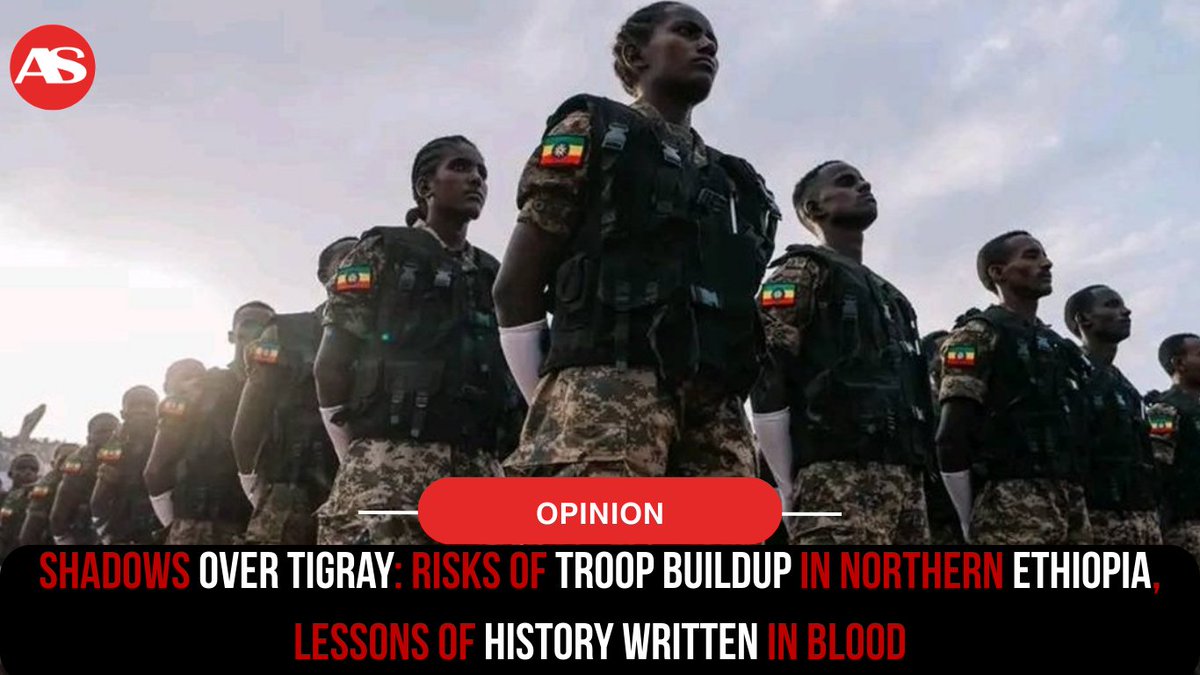
#Opinion: Shadows Over #Tigray: Risks of troop buildup in northern #Ethiopia, lessons of history written in blood
https://t.co/oYZoUntIlj
Recent reports of fresh troop concentrations in northern Ethiopia, particularly near Tigray, have raised concerns about the risk of renewed confrontation. While official channels characterize these movements as essential "security preparedness," Gebremichael Negash argues that Ethiopia’s modern history serves as a sobering cautionary tale: "Military force has repeatedly been employed to resolve political disputes—and each time, the outcome has been deeper fragmentation, prolonged instability, and staggering human cost.”
He points to the 2020–2022 Tigray war and the ongoing conflicts in the #Amhara and #Oromia regions as evidence of how easily "limited operations" can devolve into catastrophic national crises. Gebremichael notes, “Military escalation in Ethiopia rarely remains contained.”
The author contends that the nation currently faces “a strategic choice between repeating historical cycles of militarized political settlement or investing in negotiated federal reform.” He further emphasizes, “Sustainable peace in Ethiopia has never emerged from battlefield victories alone.”
#Opinion: Shadows Over #Tigray: Risks of troop buildup in northern #Ethiopia, lessons of history written in blood
https://t.co/oYZoUntIlj
Recent reports of fresh troop concentrations in northern Ethiopia, particularly near Tigray, have raised concerns about the risk of renewed confrontation. While official channels characterize these movements as essential "security preparedness," Gebremichael Negash argues that Ethiopia’s modern history serves as a sobering cautionary tale: "Military force has repeatedly been employed to resolve political disputes—and each time, the outcome has been deeper fragmentation, prolonged instability, and staggering human cost.”
He points to the 2020–2022 Tigray war and the ongoing conflicts in the #Amhara and #Oromia regions as evidence of how easily "limited operations" can devolve into catastrophic national crises. Gebremichael notes, “Military escalation in Ethiopia rarely remains contained.”
The author contends that the nation currently faces “a strategic choice between repeating historical cycles of militarized political settlement or investing in negotiated federal reform.” He further emphasizes, “Sustainable peace in Ethiopia has never emerged from battlefield victories alone.”
#Opinion: #AU Summit: Annual ritual without tangible progress
https://t.co/EnIeISckgF
Every February, African leaders convene in #Addis_Abeba for the African Union (AU) summit, issuing ambitious communiqués and pledges of unity. Yet, Gebremichael Negash argues that “for millions of ordinary Africans, little changes.”
He notes that since the AU succeeded the Organization of African Unity in 2002, its commitment to “non-indifference” has frequently collided with political hesitation. Peacekeeping missions in #Darfur and #Somalia, alongside interventions in #Ethiopia, #Sudan, and #South_Sudan, reveal a recurring pattern: “acknowledgment without enforcement.”
Gebremichael emphasizes that “Africa does not suffer from a shortage of declarations. It suffers from a shortage of consequences.” He cautions that, until enforcement and accountability are prioritized, AU summits “risk being rituals” that reassure leaders rather than produce meaningful progress.
#Op_ed: Redrawing Borders by Force: Western #Tigray, unmaking of #Ethiopia’s federal system
https://t.co/1RLkjVP6ZF
For decades, Western Tigray was administered as part of Ethiopia’s Tigray Regional State under the 1995 constitution. That constitutional order collapsed in November 2020, when #Amhara regional forces, backed by the federal military, seized the area during the war in Tigray. What followed, argues Gebremichael Negas, the author of this op-ed, was not a routine territorial dispute but “a campaign of ethnic cleansing,” marked by mass expulsions, sexual violence, and forced demographic change.
He contends that while Amhara nationalist actors frame the takeover as a “historical correction,” historical records and census data tell a different story. Federal censuses conducted in 1994 and 2007 show that the population of the area was more than 87% and 92% Tigrayan, respectively. The author further emphasizes that Article 46(2) of the constitution is unambiguous: “State boundaries shall be determined on the basis of the settlement patterns, language, identity, and consent of the peoples concerned.”
Gebremichael cautions that these events signal a broader existential threat to the nation, underscoring that "the crisis in Western Tigray is not an isolated border quarrel. It is the most acute symptom of a spreading disease that threatens to dismantle Ethiopia’s federal system from within." For the author, the path forward is a binary one: "The choice is stark: reaffirm the foundational principles of self-determination, equality, and rule of law, or accept a future where the country’s internal borders are redrawn by blood and iron."