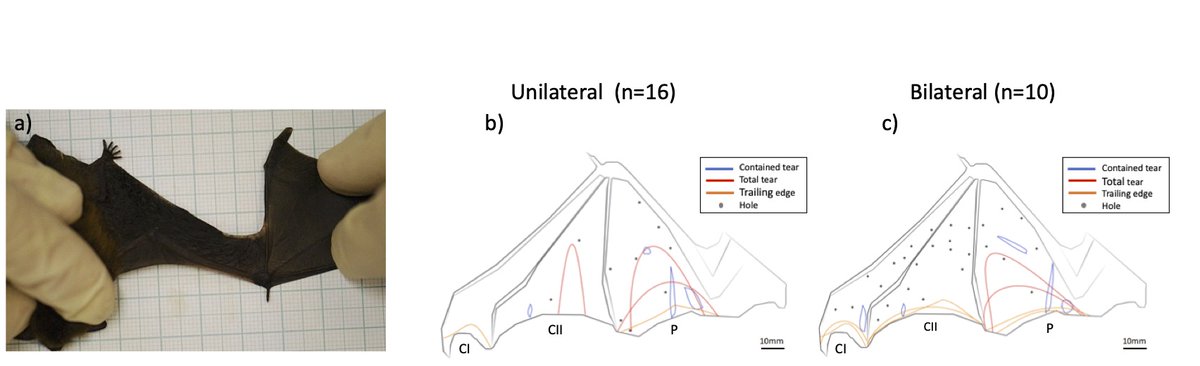
There is a Bat CATastrophe going on! Find out more in our new paper in @Ecol_Evol about how we used forensic DNA analysis to find cat DNA on lots of bat wing tears: https://t.co/cbyXFaAXJK @ran777no@drkirstyshaw @GaryDougill @micromelling@_BCT_
4/5 #WBTC1#Conserve4 We then looked at 11 short tandem repeat markers in the 🐱🧬(similar to those used in crime scene investigation in humans) and were able to produce partial 🧬profiles for 1/3rd of samples. This could be used to link predation events to individual 🐈🐈⬛
3/5 #WBTC1#Conserve4 Using real-time PCR (a sensitive detection technique), we looked for the presence/absence of 🐱🧬. We found 🐱🧬 in 2/3rds of wing swab samples. There were no significance differences due to the species, age or gender of the 🦇
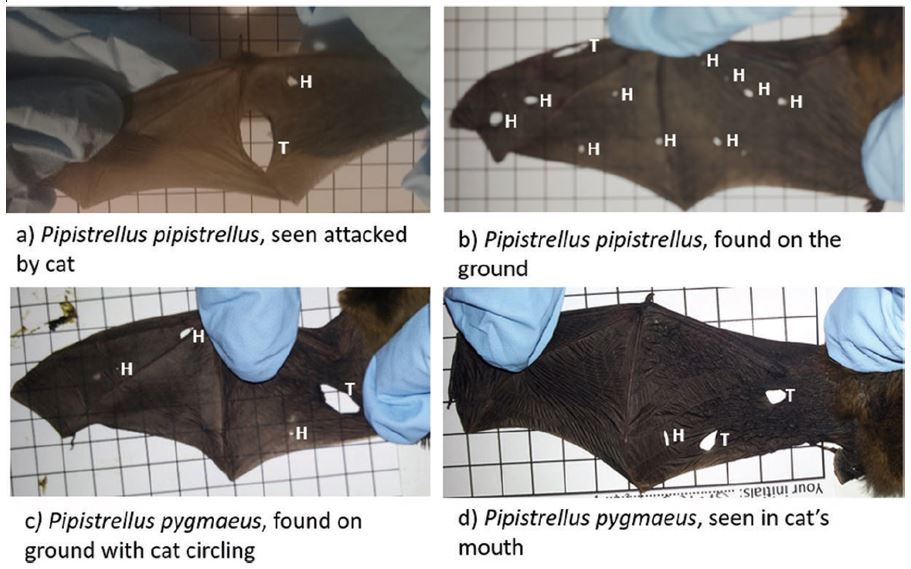
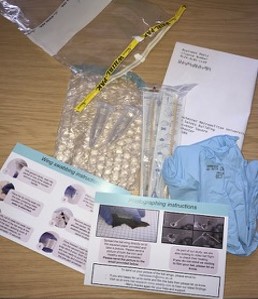
2/5 #WBTC1#Conserve4 We asked #batrehabilitators in 🇬🇧 to take swabs of injured wings from 🦇 in their care. The majority were Pipistrellus pipistrellus. The wings showed a variety of injuries including holes and tears – check out @robynannegrant in #EvoBeh1 from Wed for 📷
1/5 #WBTC1#EvoBeh2
Bat wings are thin, delicate and prone to tearing. Thousands of bats with wing tears are admitted to rescue centres annually in the🇬🇧. But how do we measure their effect on flight? And when are bats ready for release? @MMUEcolEnv@_BCT_#BatCatastrophe
5/5 #WBTC1#EvoBeh1 So why more tears in the plagiopatagium? We propose that cats are targeting bats bodies and their claws are tearing the wing. This is also confirmed by #batcarer observations. Sad, but great work by @ran777no@_BCT_#BatCatastrophe 🦇🐱
4/5 #WBTC1#EvoBeh1 Material testing P.pipistrellus wings showed that the plagiopatagium was not weaker than the other wing sections. Although tears here are likely to take longer to heal.