What it cost our family of four to live in August 2026.
📊 August 2026 Financial Report
💰 Income: $10,140
🛒 Spending: $7,605
💵 Saved: $2,535
📈 Cash savings rate: 25%
July was one of our best months this year. We saved 37% of what came in.
August was more expensive, but still pretty normal family life. No huge emergency and no major trip. Just higher spending on the kids, healthcare, utilities and a few other things.
Here’s the full breakdown.
$GOOG’s quarter in one sentence:
Cloud is accelerating. Search monetization is the question.
My quick take:
1️⃣ Search queries are growing at their fastest pace in five years. Search revenue grew 12%. More searches are great. How much revenue those extra searches generate matters more.
2️⃣ Cloud revenue jumped 103%, with TPU sales contributing meaningfully. That’s impressive. Now I want to understand the mix: recurring cloud consumption vs. hardware sales, customer concentration, and cash generation.
3️⃣ Gemini Carbon dropping on earnings day is convenient timing. Whether that was deliberate is anyone’s guess. 😉
4️⃣ Berkshire may have bought a great business without nailing the entry. Those are two different things.
5️⃣ Between SpaceX and Anthropic, investment valuation changes could make headline EPS increasingly noisy.
Watch operating income and free cash flow before celebrating—or panicking over—the bottom line.
❓My biggest question:
Can Google turn its AI usage growth into equally strong economics?
I agree with the stock ≠ business point.
But I’d push back on “fundamentals can’t be manipulated.” Autonomy and robotics are still optionality until they show up in revenue, margins and free cash flow.
A 5-year base doesn’t automatically mean a huge breakout. Sometimes it just means the market is waiting for proof.
If Tesla delivers that proof, then yeah — the rerating could be violent.
People keep saying social media is heading for its “Big Tobacco moment.”
I’m not sure they understand what happened to Big Tobacco.
In 1998, tobacco companies agreed to pay states an estimated $206 billion and accepted major advertising restrictions. The industry didn’t disappear. Investors actually did very well in the years that followed.
Now Meta has agreed to pay up to $18 billion in the youth-safety case.
Sounds huge.
Until you look closer.
The guaranteed piece is about $12.7B spread over 10 years. Another $5B is conditional on rivals like TikTok, YouTube and Snapchat agreeing to similar restrictions and payments.
That’s the part I find interesting.
Meta may have just turned regulation from a liability into a moat.
Big incumbents can absorb billions in compliance costs.
A startup trying to compete with them? Not so easily.
Regulation probably won’t kill social media.
It may just make the castle walls higher.
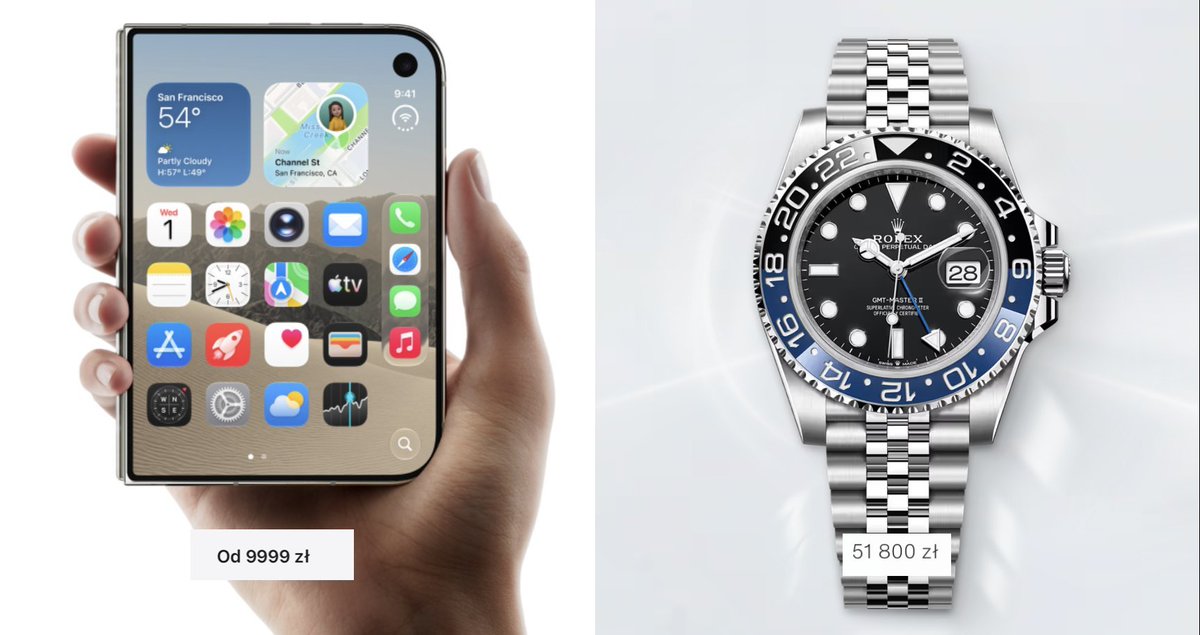
The iPhone Duo is basically a Rolex.
Nobody needs one.
Plenty of people still want one.
And honestly, part of the appeal is obvious: it signals that you can afford to spend a lot of money on something completely unnecessary.
Nothing wrong with that.
Just know what you’re actually paying for:
not utility — status.
Anthropic just modeled what AI could do to the U.S. economy by 2030.
They broke occupations into tasks using Department of Labor data, surveyed 10,980 Americans, and had the framework reviewed by 18 outside economists.
Here are the 10 craziest takeaways:
1️⃣ Three scenarios.
Modest: AI looks like another internet.
Substantial: bigger than the internet or railroad.
Extreme: GDP growth hits ~15% and the economy doubles every 4.5 years.
2️⃣ AI could handle half of all knowledge work by 2030 in the substantial scenario — with most of that capability being autonomous.
3️⃣ White-collar wages get squeezed.
Basically flat in the substantial case. Down more than 10% in the extreme case.
4️⃣ Electricians, nurses and other physical-world jobs could benefit.
AI boosts demand for work it still can’t physically do.
5️⃣ A lot of workers may have to switch careers entirely.
Not companies. Careers.
6️⃣ Construction could actually win.
AI designs and permits faster. Humans still have to build the thing.
7️⃣ Today roughly 60¢ of every dollar of GDP goes to labor.
In Anthropic’s extreme scenario, that falls to about 45¢.
8️⃣ Here’s the uncomfortable part:
the country gets much richer while many workers get worse off.
More of the upside goes to owners of capital — models, compute, infrastructure.
9️⃣ In the extreme case, AI isn’t just cheaper than humans at most knowledge tasks.
It’s better.
🔟 The takeaway for white-collar workers isn’t exactly comforting.
In the mild scenario, not much changes.
In the more aggressive scenarios, capital captures more of the upside while knowledge workers face wage pressure and displacement.
That might be the real AI debate.
Not whether AI grows the economy.
Who actually gets the growth?
We spent $1,125 on food for a family of four last month.
About $870 was groceries.
Could we lower it? Probably.
But we already cook most meals at home and don’t feel like grocery shopping needs to become an optimization project.
There’s a point where saving another $50 just isn’t worth the effort.
July savings rate: 37%
August savings rate: 25%
Same family.
Same lifestyle.
Different month.
That’s why I don’t judge our finances based on one monthly result.
I care more about the trend over a full year.
Small steps compound.
We already know it works with money. Even small amounts invested consistently for years can build real #FUmoney.
Health works the same way:
• daily walks
• a few incline push-ups against the counter
• squats while waiting for dinner
• brushing your teeth standing on one leg
None of this feels impressive today.
Do it for years, though, and the results add up.
Consistency beats intensity — in money and in health.
➡️ A family vacation may be expensive and still be worth every dollar.
➡️ A dozen subscriptions nobody uses may be cheaper and still be wasteful.
➡️ Paying for convenience during an unusually busy season may be rational.
➡️ Keeping that expense forever just because it became automatic may not be.
@BearBullTraders The backlog is huge, but the key question is how quickly it converts into revenue and at what margins. If Oracle needs massive capex to support that growth, the upside depends just as much on free cash flow as on the headline backlog number.
@joecarlsonshow The better question is why Uber would want to buy the Teslas themselves...Owning the network is a much better business than owning thousands of depreciating cars.
@dividendology The math checks out :)
$30 EPS × 24.8x = $744.
The real debate it’s whether Broadcom can actually deliver $30+ EPS and still deserve a ~25x multiple in 2028.
If both happen, today’s price is going to look pretty cheap.
The number of 401(k) millionaires just hit a record.
According to Fidelity, 769,000 accounts held $1M+ in Q2 2026 — up 19% in a single quarter.
And it wasn’t just the millionaires:
• Average 401(k), 403(b), and IRA balances hit record highs
• Workplace retirement savings rates stayed near record levels
• Strong markets gave retirement accounts another big boost
But here’s the weird part:
Even as balances rise, confidence about retirement is falling.
Americans now say they need around $1.46M to retire comfortably.
Higher living costs, household debt, and concerns about Social Security are clearly changing what “enough” feels like.
Your retirement account can be at an all-time high…
and you can still feel behind.
That might be the most 2026 thing ever.
@spectatorindex@Kalshi 46% this far out feels more like name recognition than a locked-in nomination.
And if it’s going to be a Republican, I’d personally rather see someone more measured like Rubio.
@Cobratate The post mostly holds together… until the ADHD line.
That part is just not how ADHD works.
You can make the point about purpose, pressure, and focus without tossing in a medical claim that doesn’t hold up.
Maybe skip the parts you didn’t feel like checking 😅
@BoomerDivvies You’re cooked. one Starbucks run and the whole FIRE plan is gone. Sell the portfolio, liquidate the 401(k), tell the kids college is off.
I don’t think it’s just a big-city thing.
A lot of neighborhoods simply aren’t designed for kids to be outside independently anymore.
If every trip to a park requires a car and every minute outside needs adult supervision, play stops being spontaneous and becomes another scheduled activity.
Kids still want to be outside. We’ve just made it harder for them to do it on their own.