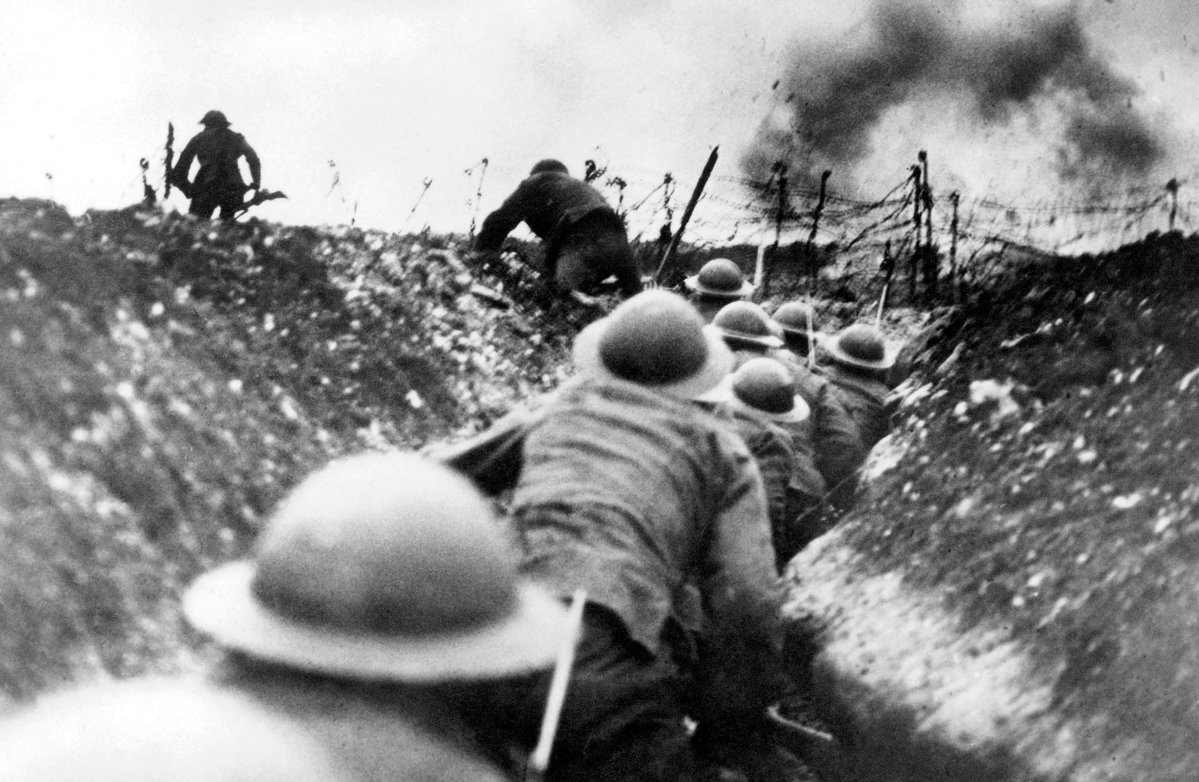
World War I left an "awful void . . . at the center of the Western soul."
As Rose notes in Explorer: The Life of Richard E. Byrd:
"An essential, blindly optimistic, element had gone out of Western life in the brief decade and a half since Scott and Amundsen had raced each other to the South Pole. The gentlemen who in two hundred years had built the European empires in India, Africa, and the Far East while exploring the last unknown spots in the Dark Continent and at the poles had been secure in their place. Good breeding and upbringing, they believed, created men of perseverance, fearlessness, honor, and patriotism. 'Rome, in particular, was a shining example of a civilising empire whose achievements rested on the exploits of its natural leaders.' Adherence to classic standards of virtue was leavened by profound religiosity. "Church memorials broadcast the virtues which distinguished a gentleman. In Bath abbey, the epitaph of Colonel Alexander Champion of the Bengal army announces that 'his Zeal, Courage, and Success were ever tempered by humanity' and that in his dealings with the world he was plain, open and unaffected.' The gentleman of the Western world was expected to be "more than just a gallant dandy with an overdeveloped sense of his own superiority and personal honour. 'True courage blended with humanity' were the essence of the gentleman."
Rose goes on to note, "the four-year slaughter on the western front that intervened between Oates's time and his had shot nineteenth-cennury idealism to pieces, as hundreds of thousands of gentlemen, steeped in true courage blended with humility, went over the top and marched to patriotic deaths for what their grieving survivors concluded was of little or no purpose. Byrd and the others who sought to pick up the fallen standard of the heroic life would have to develop new norms and values to carry on."
Arnold Joseph Toynbee explains how most civilizations decline :-
A civilization begins to decline when its minority (the ruling class) loses its ability to respond creatively to new challenges. Instead of producing new ideas, institutions, or solutions, the leaders become rigid and simply repeat old methods. They may still possess political power, but they no longer possess the creativity and moral authority that originally made people follow them.
As a result, the majority (the ruled ones) withdraws its “mimesis,” or willingness to imitate and follow the leaders. People cease to see the ruling minority as an example worth following and become increasingly alienated from it.
The society therefore loses its shared purpose and cohesion: the creative relationship between leaders and people breaks down, and social unity gives way to division, conflict, and ultimately disintegration.
Probably the most off-putting thing about the Tory party is the absolute unquestioning devotion to sustaining the Ukraine war. It's most prevalent in a number of midwit Tory backbenchers whose depth of understanding is wafer thin. They think this all started in 2022, and there is no moral or political complexity to it. Nobody is looking at the longer term geo-strategic national interest. As Britain sleepwalks into a food and energy crisis, nobody is looking for the off ramp.
For Europe, there is a collective interest at stake here. We have Turkey (a NATO member) seeking to replace Iran as the powerbroker in the Islamic world, an unresolvable predicament in Iran, and heightened tensions with China. Europe needs Russia as a third party intermediary, but all we're doing right now by giving Ukraine deep strike capabilities, is feeding the war of attrition that is cannibalising European energy and food infrastructure while driving Russia into the arms of China.
None of this factors into the thinking of the centre-right who continue to align with the EU neighbourhood policy of bringing Ukraine into the Western fold, even though EU members will veto membership and NATO membership is a long way off. Neither is likely to happen unless either or both organisations ignore their own accession rules, in which case serious questions have to be asked about their viability and credibility.
Instead of looking for a viable off ramp, the Westminster consensus is that there are no consequences for facilitating the escalation of the conflict, thereby dragging Britain into a hybrid war without even passing comment on it, let alone holding a debate about it.
The thinking in the Tory party appears to be no more sophisticated than Ukraine good, Putin bad. While you can reduce it to such simplistic terms, there is still the matter Britain's own interests, none of which are served by setting us up for a new cold war than demands defence spending we can ill afford. We can act to safeguard the territorial sovereignty of the Baltics, while ensuring Ukraine has the means to defend its own lines, but turning this war into a de facto proxy war is insanity - especially over a scrap of ethnic-Russian wasteland.
Regardless of your view of this conflict, it ought to be a matter of concern that HM opposition is not asking even basic questions about government policy towards Ukraine, particularly as Burnham struts around LARPing statesman while the British economy circles the drain, and Labour continues to dismantle our own armed forces.
A Leicester schoolteacher who never had a vote argued the world out of slavery. 🏴🇬🇧
Wilberforce had spent forty years fighting the trade. By 1824, the slave trade was illegal across the British Empire, but the people enslaved before that date were still slaves.
Elizabeth Heyrick saw a faster way.
She wrote a pamphlet. "Immediate Not Gradual Abolition." She organised a sugar boycott across Leicester. Then across the Midlands. Then across Britain.
Within nine years, the 1833 Slavery Abolition Act freed 800,000 people across the British Empire in a single Act.
She didn't live to see it. She died in 1831, two years before the Act passed.
Frederick Douglass said she had the head of a prophetess and the heart of an angel.
Almost nobody in Britain has heard her name.
We are here to put her back.
Your support pays for the research, the production and the hours it takes to get it right. Stories like Elizabeth's don't find themselves.
https://t.co/rih7iKwnvf
Be part of us. 🏴 🏴 🏴 ☘️
Be Proud Of Us. 🙏🇬🇧
The Interrogation
The Gulag Archipelago
Volume 1, Part 1, Chapter 3
“If the intellectuals in the plays of Chekhov who spent all their time guessing what would happen in twenty, thirty, or forty years had been told that in forty years interrogation by torture would be practiced in Russia; that prisoners would have their skulls squeezed within iron rings; that a human being would be lowered into an acid bath; that they would be trussed up naked to be bitten by ants and bedbugs; that a ramrod heated over a primus stove would be thrust up their anal canal (the “secret brand”); that a man’s genitals would be slowly crushed beneath the toe of a jackboot; and that, in the luckiest possible circumstances, prisoners would be tortured by being kept from sleeping for a week, by thirst, and by being beaten to a bloody pulp, not one of Chekhov’s plays would have gotten to its end because all the heroes would have gone off to insane asylums.
Yes, not only Chekhov’s heroes, but what normal Russian at the beginning of the century, including any member of the Russian Social Democratic Workers’ Party, could have believed, would have tolerated, such a slander against the bright future? What had been acceptable under Tsar Aleksei Mikhailovich in the seventeenth century, what had already been regarded as barbarism under Peter the Great, what might have been used against ten or twenty people in all during the time of Biron in the mid-eighteenth century, what had already become totally impossible under Catherine the Great, was all being practiced during the flowering of the glorious twentieth century—in a society based on socialist principles, and at a time when airplanes were flying and the radio and talking films had already appeared—not by one scoundrel alone in one secret place only, but by tens of thousands of specially trained human beasts standing over millions of defenseless victims.”
Around 150 AD, a pagan Roman official named Diognetus asked a strange question. He wanted to know what these Christians actually were.
They had no temples. No altars. They refused to swear by the genius of the emperor. They gathered before dawn and sang to Christ as if he were God. Yet they served in Roman armies, worked in Roman trades, and lived in Roman cities.
Pagan neighbors hated them. They were accused of atheism for refusing the gods. They were accused of incest for calling each other brother and sister. They were accused of cannibalism for what happened at their secret meals.
But they did something Rome had never seen. They rescued abandoned babies.
The Letter to Diognetus is one of the earliest explanations of Christianity written for outsiders. And its answer reframes everything the modern world thinks it knows about the early Church.
A thread.
Description of King Aethelstan;
"It was a common saying of the Anglo-Saxons of Aethelstan, that no one more legally or more learnedly conducted a government. It is not at all surprising, that he was a favourite both among his own people and in Europe. He was certainly a great and illustrious character. He appears to have been as amiable as great. To the clergy he was attentive and mild; to his people affable and pleasant. With the great he was dignified; with others he laid aside his state, and was condescending and decently familiar. His stature was almost the middle size; his hair yellowish, twisted with golden threads. His people loved him for his bravery and humility; but his enemies felt his wrath."
I lived dangerously by writing an essay on the Falklands when I was studying Argentine history at night school in Buenos Aires. I am still too ill and woozy to recreate my argument as coherently as I'd like. But here are a few scattered points. 1/
Fresh from endorsing @AlistairCarns for Labour leader, Anglofuturism caught up with Maurice Glasman, Baron Glasman outside the ARC conference to find out his ambitions for Britain in fifty years.
All systems working as intended.
Tories and Labour built this system to prioritise criminals.
Sometimes they bleat but watch, it will continue because it reflects MP and Whitehall priorities.
If you want change, ~99% MPs must be retired
The great Paul Whitehouse is 68 years old today, which means I am obliged to post this (again!) - arguably the most majestically random but brilliant comedy sketch committed to celluloid for at least the last, what, forty, forty five years?
Yes, forty, forty five years.
Happy birthday Paul 🤘
What is your best logical argument for the existence of God?
I have two arguments that are very compelling...
Argument number 1:
The universe must logically have had a beginning.
If it had a beginning, then that beginning must have had a cause.
That cause must be outside of this universe and outside of time.
An eternal, all powerful source. In other words, God.
The other option would be that the universe, time and matter was eternal. Which would per definition place it in the category of supernatural, which is absurd.
Argument number 2:
If good and evil exists, that means God must also exist.
Why? Because God is what gives the ultimate compass for what is objectively good and evil. Without God, an higher power that is all knowing and perfect, moral laws become subjective to each one of us.
You cannot have moral law without a moral law giver.
We can observe and logically understand that objective moral laws do indeed exist.
We can clearly see that evil, that which goes against the objective moral law, does exist.
Therefore good, that which follows the objectively moral law, must also exist.
And if those are true, therefore then, God exists.
Check this out.😎
The legendary Flying Scotsman casually outpacing a modern local train.
Built in the 1920s with those massive 6’8” driving wheels, she was the first steam loco to officially hit 100 mph back in 1934 — and she made it look easy.
Still an absolute icon at 75 mph today.
Pure British rail heritage. 🚂💨
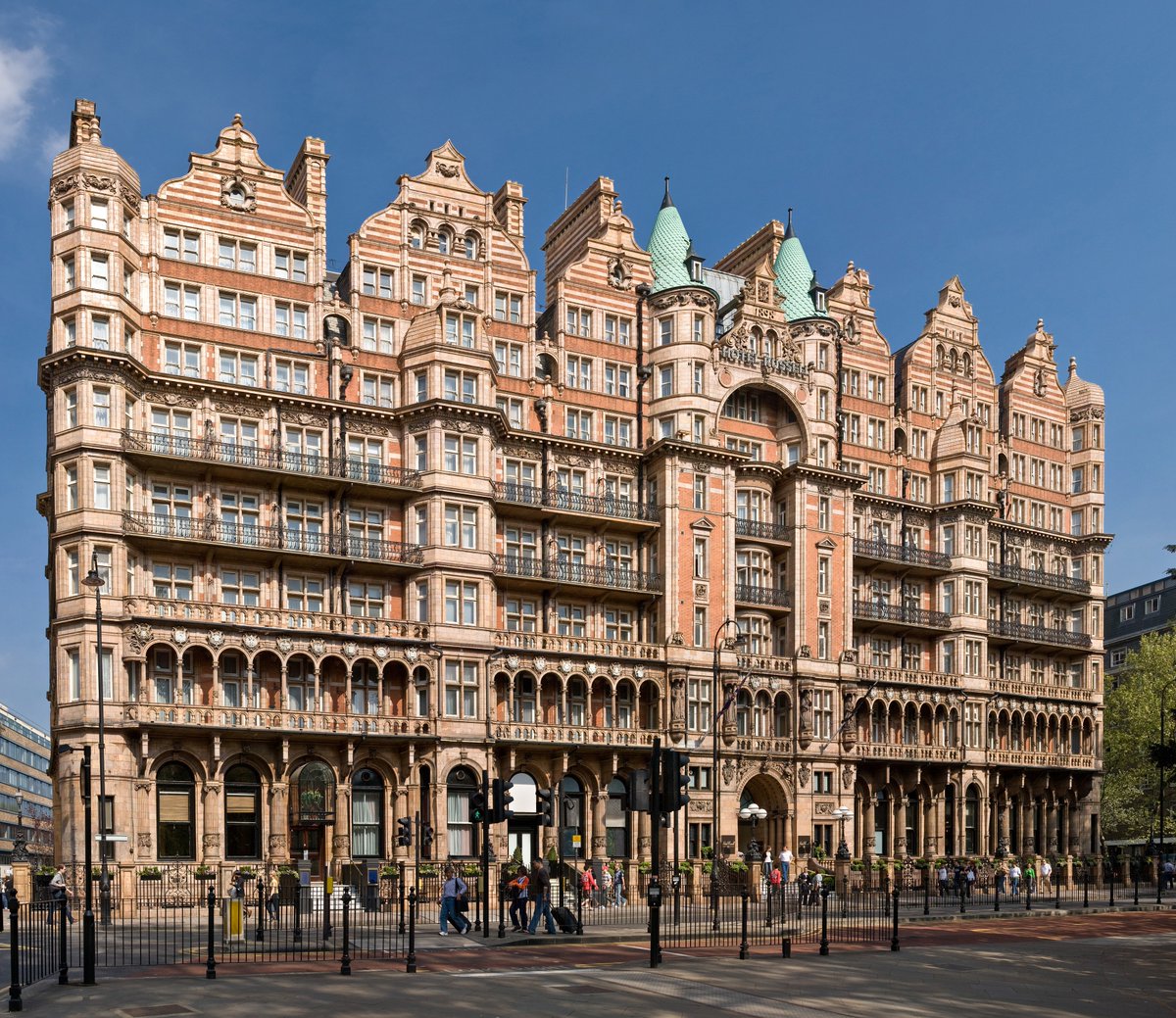
The "Kimpton Fitzroy London" (originally "Hotel Russell", opened 1900) is a grand hotel in Bloomsbury's Russell Square in #London🏴. Designed by architect Charles Fitzroy Doll, it features flamboyant French neo-renaissance style inspired by the Château de Madrid, with red brick, ornate thé-au-lait terracotta cladding, turrets, arches, statues of four queens, and lavish interiors. Doll's elaborate designs influenced the RMS Titanic interiors.
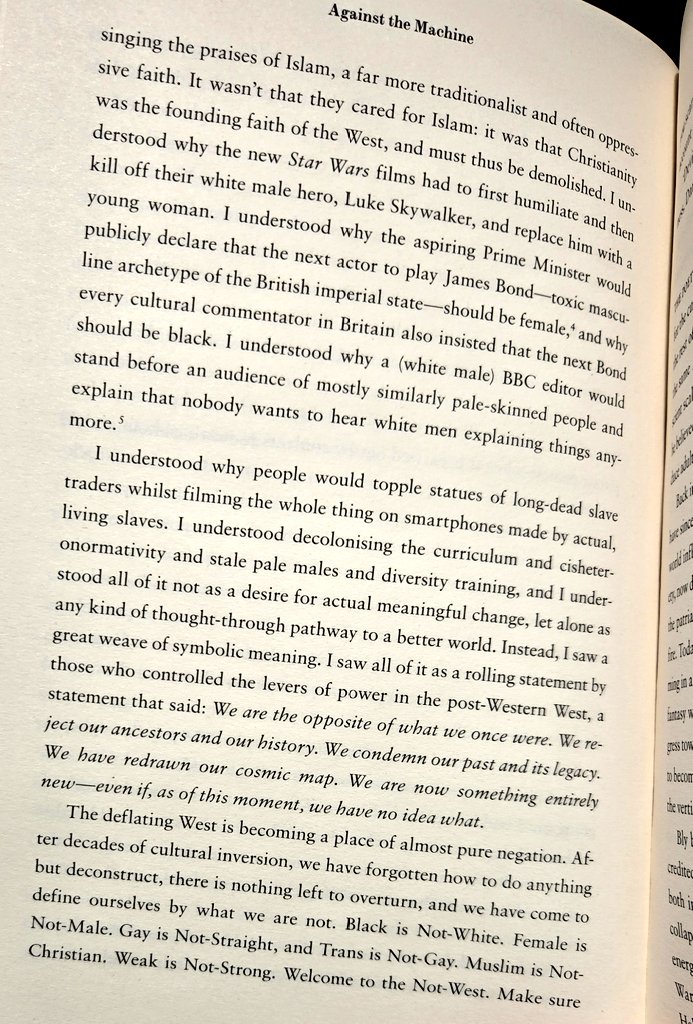
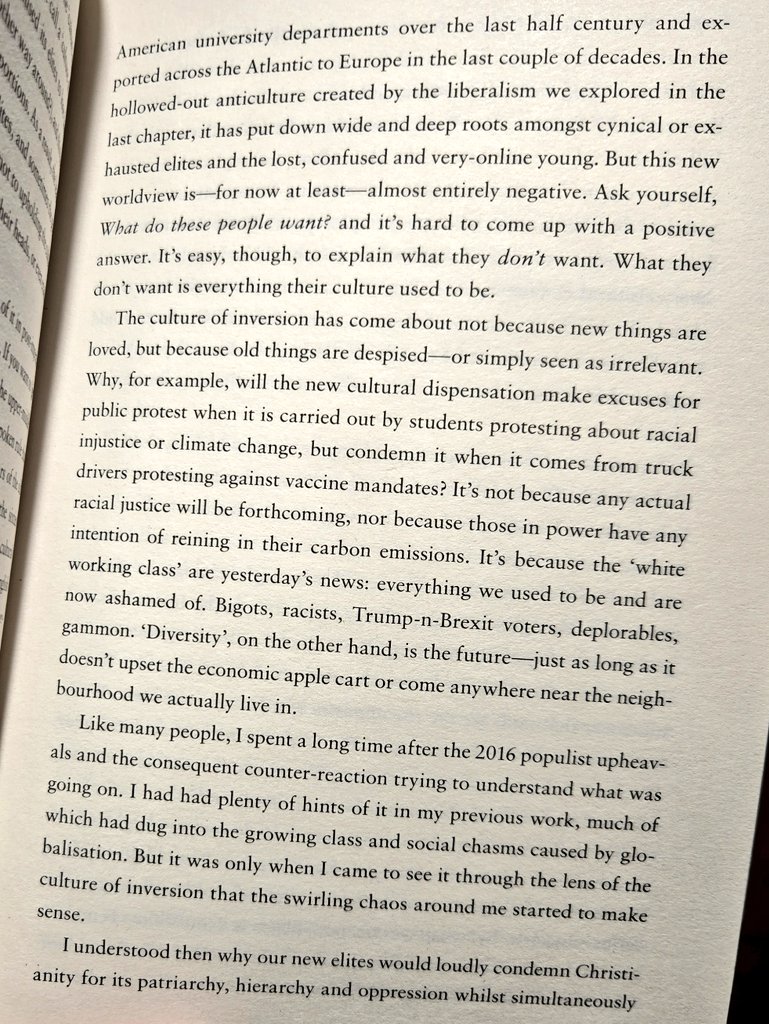
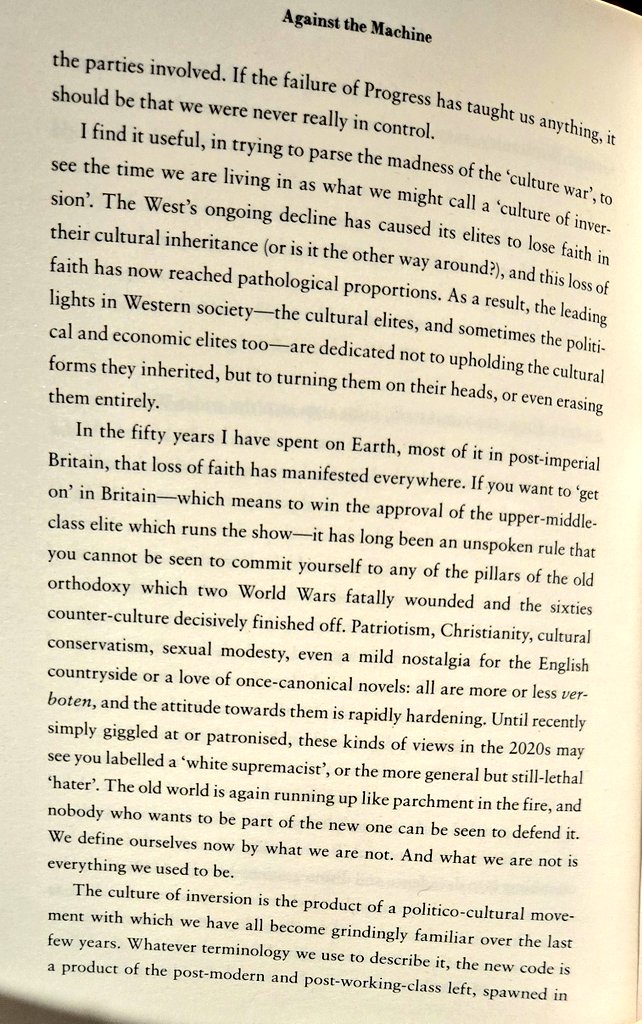
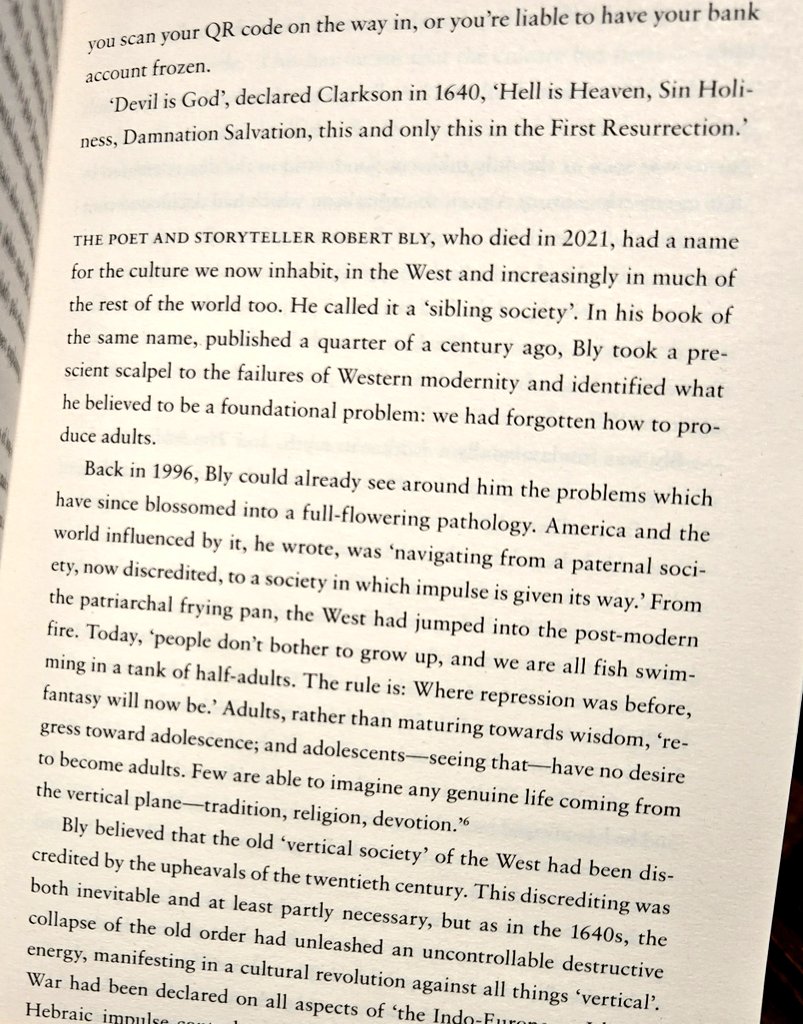
I've been slow to get round to reading Paul Kingsnorth's Against the Machine but it is a formidable piece of writing. The author cut his teeth in environmental and left-wing movements before realising that the ground had shifted and few really sympathised with his own deep commitments to place, culture, and the sacred, very much influenced by Wendell Berry, Lewis Mumford, Jacques Ellul, and Christopher Lasch. He now lives with his family in rural Ireland. And is not on social media! Here he is on our present "culture of inversion":
It’s times like this I’m particularly grateful for the utter incompetence of the British political class over the last thirty years, who decided that running a serious country with its own industry, energy supply, food production and strategic infrastructure was all rather old-fashioned and a bit vulgar in the modern globalised age.
Steel, which we once made in enormous quantities and exported around the world, largely gone so we can import it from China.
Oil refineries steadily shut down because apparently an island nation of seventy million people has no real need to refine its own fuel anymore.
Gas storage scrapped because planning for winter is clearly a paranoid hangover from the twentieth century.
Domestic farming buried under tax, regulation and land policy so that we now import a huge proportion of the food we eat while congratulating ourselves on the virtue of stopping cow farts.
Our nuclear industry, which Britain pioneered, hollowed out and then effectively handed to the French state through EDF Energy, who now run most of the remaining reactors and are building Hinkley Point C, meaning the lights in Britain are increasingly dependent on the industrial policy of Paris.
Large parts of the water system sold off to foreign investors through companies like Thames Water, who have somehow managed to extract billions in debt and dividends while simultaneously turning Britain’s rivers and coastline into an open sewer.
At one point we even invited the Chinese state into the middle of our nuclear power programme through China General Nuclear, because when you are building critical national infrastructure the obvious partner is a strategic rival with very different interests.
Meanwhile enormous chunks of London property, infrastructure and utilities sit in the portfolios of overseas sovereign wealth funds such as the Qatar Investment Authority, while large volumes of the gas keeping the country running now arrive from the Norwegian state energy company Equinor, because clearly a country sitting on the North Sea has no need to worry too much about controlling its own energy supply.
Having spent decades dismantling domestic industry, closing refineries, weakening food production, selling strategic infrastructure and outsourcing energy, we now borrow vast amounts of money, send billions abroad in aid and development projects, and appear genuinely confused when countries that still make steel, refine fuel, control their utilities and guard their national industries suddenly seem to have a great deal of leverage over us.
Still, I’m sure it will all be fine. History is full of examples of great powers becoming stronger by dismantling their own industrial base and outsourcing the basics of national survival to whoever happens to be selling them that week.
But its ok because they're doing ballroom dancing.