@elonmusk@nypost What was the point of pretending that you are pro-human when you think the best we can do is kill the human spirit with the ultimate demotivator?
@elonmusk I am a power user of AI and love the heights it helps me achieve in my profession. However, if Universal High Income is the “best” outcome it will lead to - then let’s get rid of it now, for the sake of humanity.
The most explosive conversation I’ve had this year.
Dr. Ge Bai (Johns Hopkins) lays out the core truth everyone in Washington avoids:
Healthcare isn’t a right, it behaves like a commodity.
Government doesn’t lower costs, it blocks the market that would.
Price transparency only works when physicians are free.
Innovation dies when a nation fears risk.
And America must choose between entrepreneurship or stagnation.
And if you think she’s bold here, she’s hosting @bgurley and @mcuban at Johns Hopkins on December 16 for a live debate on the future of healthcare.
Details here:
https://t.co/eJ0Cdyxbwq
Full video below.
Tax payer money being given BACK to the tax payers’ HSAs is allegedly dumber than inflating the absolute value of the 15% of the insurance carrier? I’m sure being a statist and not alienating large insurance carriers’ interests is good for your business but you cannot expect anyone to seriously consider your take .
Another rich dude who enriched himself by doing precisely what he wanted with his money is going do deny the same freedom to other people? It’s not just hypocritical, it is offensively dumb.
This is dumb. Really dumb. Really Really Dumb.
Why? Because when you give it to Ins Carriers under the ACA, they have to spend at least 85pct of it on care for plan holders.
When sent to people's HSAs, there is no assurance that the money will be spent on healthcare costs at all.
A recipient can save the money and take it out when they turn 65.
MORE LIKELY , people will get that HSA cash, immediately take it out, pay the 20 pct penalty and buy whatever they want
So your tax dollars could be throwing parties !
Does this mean I like the subsidies going to the big insurance carriers ? No.
It means there are better ways to do this.
Whatever we do, taxpayer money HAS TO GO DIRECTLY TOWARDS PAYING or Guaranteeing NECESSARY MEDICAL CARE.
Sending money to people's HSAs is really dumb
I am very excited about this piece coming out! Please check it out (it is open access). The statistical approach was designed and all analyses were carried out by me. Should you need help with statistical approach design, data analysis and scientific writing - please contact me at https://t.co/JKdCD1237F.
https://t.co/4fUDK8EVTF
AI chatbot-guided triage is the future, though I believe it will reach its best potential when connected with smaller private practices where the AI output will have a more rapid and more personalized follow-up compared to large healthcare systems with multiple providers covering each other on the "production line".
https://t.co/RrxktbPJE6
The Death of Patient-Centered Care: A Condensed History, by Dr. Matt Mazurek @YaleMed
"Once upon a time, medicine was less complicated and simple. A patient came to their doctor, and the doctor provided care—personal, affordable, and rooted in prevention. That model began to unravel in 1965, when the passage of Medicare opened the door to runaway costs and the bureaucracy that followed. Washington’s response was predictable: throw more policy at the problem. The Nixon Administration bet on HMOs to contain costs, forcing patients into networks that restricted choice and incentivized physicians to do less, not more. It was the first step away from the patient-doctor relationship and toward a corporate model where the spreadsheet ruled.
The real game changer came in 1982. TEFRA and the introduction of DRGs replaced cost reimbursement with prospective payment. Hospitals that once had the autonomy to manage budgets suddenly became vassals of federal guidelines. Complex patients turned into financial liabilities. Cost-cutting—not care—was rewarded. Administrators, not physicians, became the power brokers in American healthcare.
By the 1990s, HIPAA promised to protect privacy but instead shackled providers with compliance tasks that hindered collaboration and blocked the free flow of information that patients actually needed. Patients couldn’t even sue if their privacy was violated—because HIPAA protects institutions more than people. Then came the HITECH Act, which shoved electronic health records down physicians’ throats. The result? Doctors staring at screens instead of patients, and small practices drowning in costs while big hospital systems thrived.
The Affordable Care Act didn’t “destroy” private practice—it simply accelerated its demise. By pushing consolidation, layering on reporting requirements, and privileging hospitals over independents, the ACA all but guaranteed that the patient-centered model of old would be replaced by the corporate-industrial complex of healthcare delivery.
And yet, policymakers still like to invoke the phrase patient-centered care. But let’s be honest: what we have today is anything but. Patient-centered care isn’t about population health metrics, automated prior authorization denials, or checking bureaucratic boxes. It isn’t about reducing costs for insurers or maximizing margins for health systems. It’s about the one thing we’ve lost: the relationship between a doctor and a patient, rooted in trust, continuity, and individualized care.
If we want to reclaim medicine, we must admit the obvious: half a century of reforms have rewarded institutions and punished relationships. Until we put the patient—not the insurer, not the administrator, not the regulator—back at the center of care, we’re just rearranging the deck chairs on a rudderless ship."
Thank you, Dr. Mazurek!
https://t.co/FNlov53iGl
Too many people skip primary when subsidized because it is run cheaply. Automated call answers, inflexible and much delayed provider input.
Safeguards by subsidizing the HSAs at several levels below certain income is the natural role of a government. https://t.co/4i7P4YjjRe
Excited about this piece coming out. An amazing topic for the world as it is now, and with me in the role of the sole “biostatistician” for the first time 🤩
https://t.co/G7OdWw29Rv
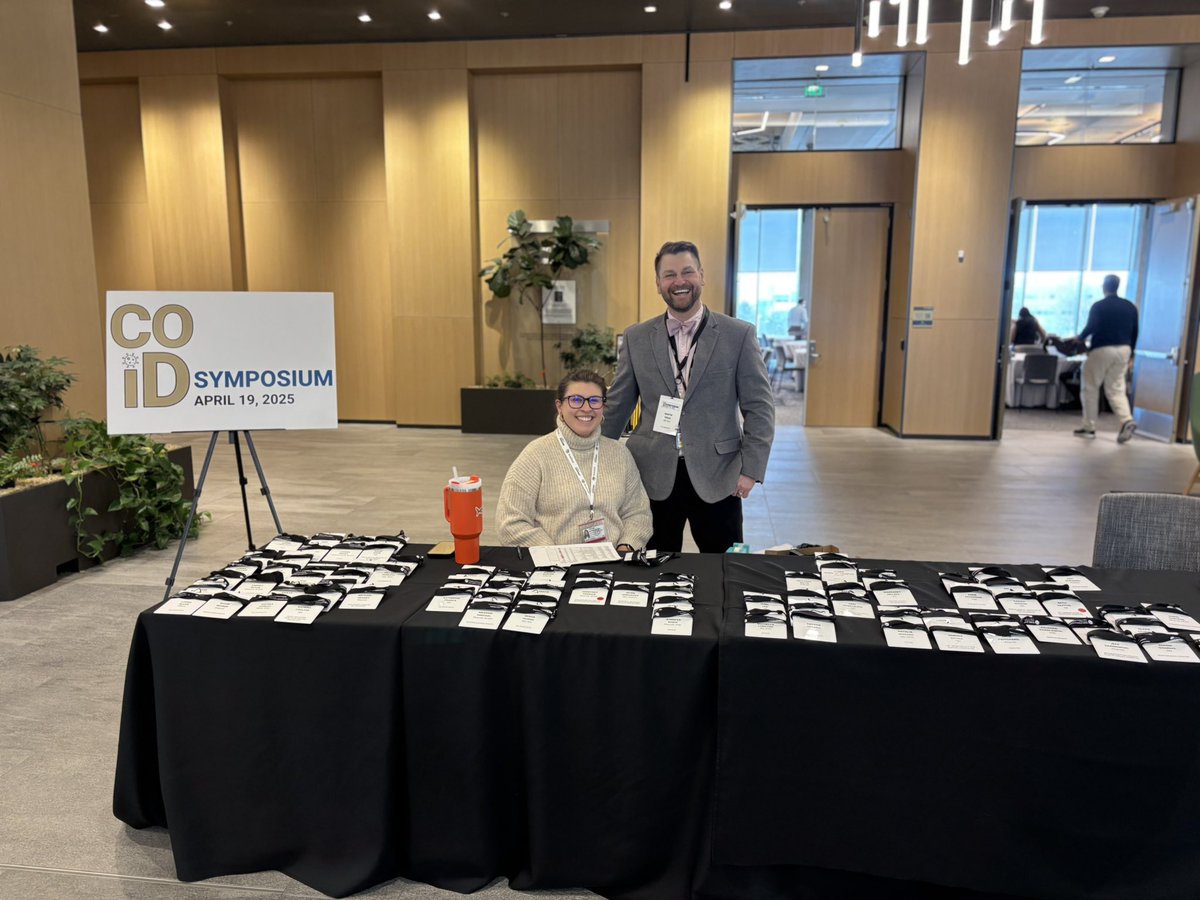
It’s a big day today for Infectious Diseases in Colorado—the first-ever COiD Symposium is underway! We just heard an inspiring opening plenary from Dr. Wendy Armstrong. Thrilled for a full day of learning, connection, and innovation in ID!