Un correo simple, pero brutalmente estratégico de Steve Jobs a Adobe tenía pocas líneas.
Pero dentro había Presión, Claridad, Autoridad y 1 Pregunta imposible de esquivar. No era casualidad.
Era su forma de comunicar que cualquier Líder, Oficinista o Creador debe estudiar 👇
In 1967, Michelle Phillips protested TV lip-syncing rules by casually eating a banana on camera during a performance with THE MAMAS & THE PAPAS. A small act of rebellion that became iconic.
🔴 I NEED YOUR ATTENTION
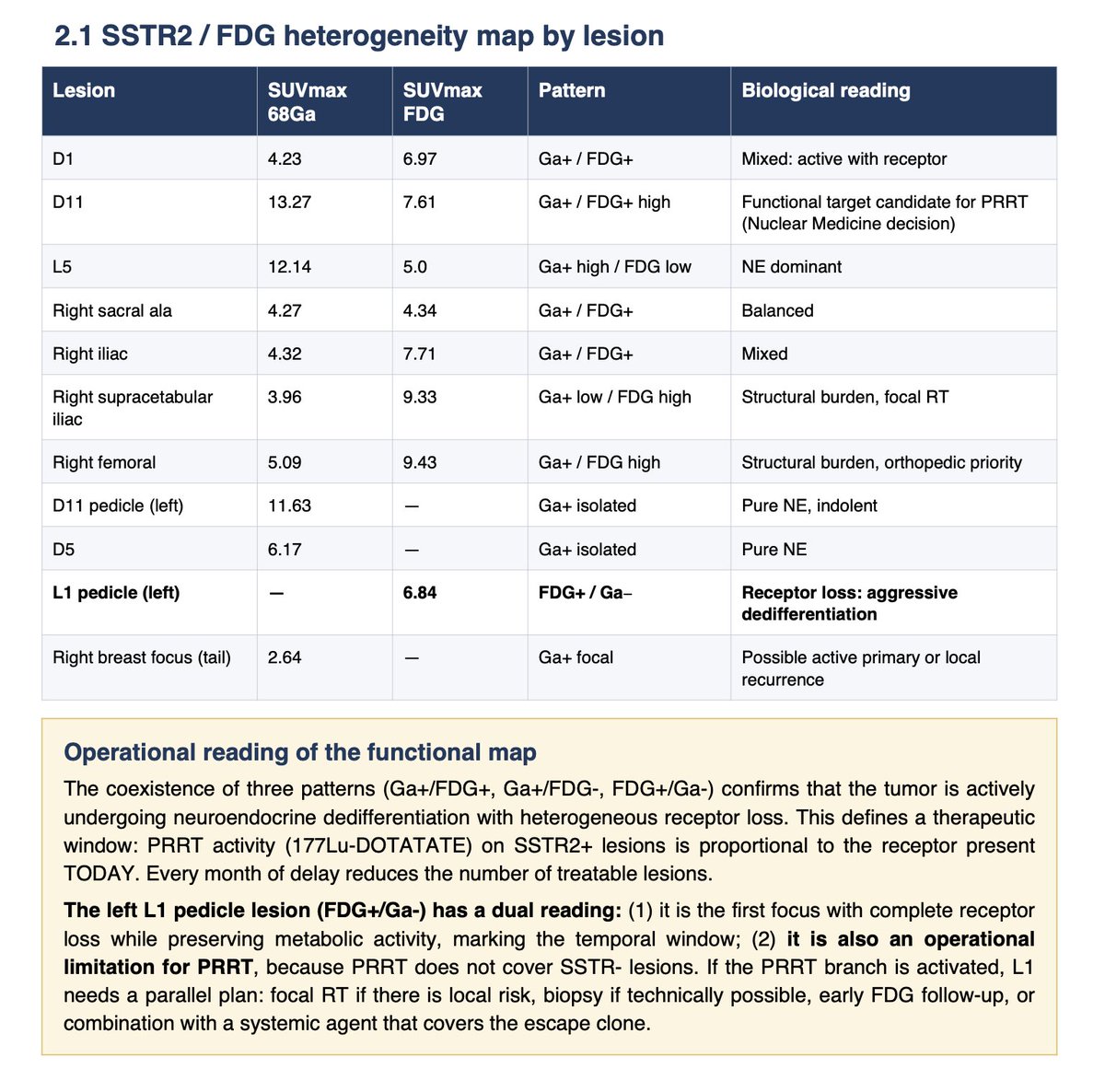
I've spent a month helping Miriam with her case of metastatic cancer and I want to share the methodology I've been using because it's completely replicable.
I think (with luck) this could be USEFUL TO OTHER PEOPLE with cancer (or any other illness).
The results we've gotten aren't a miracle, but we believe they're genuinely useful and could mean the difference in a literal life-or-death medical case.
Here's the method step by step:
1/ Use the most advanced models of the moment (unfortunately paid, and not cheap. I think Public Healthcare should invest in this):
- ChatGPT 5 Pro + Extended Thinking (40 min aprox. of thinking per call)
- Claude Opus 4.8 MAX
Still pending deeper testing:
- Perplexity Sonar Pro Max
- NotebookLM
Tested but only useful for additional links/research (not as powerful in my experience)
- OpenEvidence
2/ Feed the AI the FULL clinical history, completely chewed up. This sounds dumb but it's critical.
- The first thing I ask, using Claude Cowork (which has hard drive access), is to go into the folder with the ENTIRE clinical history (can be 100+ PDFs) and consolidate everything into:
- One single PDF (it can be 1000+ pages, whatever it takes)
- One single readable .txt or .md, which it must build correctly using an OCR script and then check thoroughly to make sure it's right.
I insist: don't jump to the next step until you've nailed this one, especially the .txt.
3/ Once you have the above, use this prompt along with the .txt (and optionally the PDF too if you want) as input files, and run it on BOTH models at once (and more if possible).
👉 This prompt is insanely complex/advanced: https://t.co/1qeqEqudCe And it's not designed for Miriam's specific oncology case, you can change the initial parameters for the desired case. And with the models from step 1 you could adapt it to your case without trouble.
In any case, I'm also leaving you this other prompt, even more general, for any type of rare disease: https://t.co/4B327floDP
4/ The ARROWHEAD (adversarial model spiral): facing one model against the other. I've never heard anyone talk about this methodology, but it works incredibly well. The feeling is like sharpening a stake until it gets a gleaming point.
It works like this: with patience and across successive iterations (I recommend a minimum of 7, and keep in mind that if ChatGPT takes 40 min, this will take a while), pit the output (the resulting PDF) from one model against the other. With a simple prompt like:
"Another committee of experts says this. What do you think? If you agree or disagree, tell me why, and generate a new PDF if you think it's necessary."
Then you feed that result back to the opposite model. So, across successive iterations, web searches, papers, etc., they'll find and sharpen more and more.
When to stop? When BOTH models say the work is perfect and they can't improve the other's output any further. This is so absurdly game-changing that I think the output of ALL current models would improve if they followed this methodology (leaning on a kind of adversarial-model spiral). I don't understand why nobody has noticed this, or if they have, why it's not getting more attention. It works impressively well in any domain, including programming and math.
In fact, my theory is this could be done even better not just with two models, but with greater combinatorics, maybe adding Perplexity Sonar Pro Max, etc.
RESULTS
Incredible. Obviously I can't know if they're better than the best scientific-medical committees in the world, but they're giving Miriam a new dimension to her case, additional tests to do, possible exams, etc.
Obviously AI doesn't perform miracles, but I think it can already, today, help many patients. And Public Healthcare should invest a lot (but A LOT) in this.
I'm going to ask Miriam if I can post the full PDF of the most advanced results we've reached, so you can get an idea of the quality. She's already given me rough permission, but I want to make sure 100%.
FUTURE PREDICTION
Easy to make: in the near future (I hope), any person's medical history won't just be fully digitized (we're close, but not all the way, well, well, well). On top of that, it'll be "pre-chewed" so it can be consumed by an LLM in one shot.
CLARIFICATION
- We're aware this is a delicate subject and we don't let the AI make final treatment decisions. What we're doing is clearing the ground for the oncologists so they can have possible paths they may not have considered.
Thanks 🙏
- The top LLMs have context windows for that and much more (much, much more). In any case, the PDF is more of a supporting file for the .txt. Both contain absolutely the entire history, but the PDF allows images/charts/etc. The .txt is what the AI consumes.
- On automation: and yes, this can be automated. Yes, AutoGen supports it almost out of the box. LangGraph builds it really well with supervisor / evaluation loops. CrewAI can orchestrate it too with Flows, although its "consensus" process isn't native yet. That would be the next level: automating it.
PETITION AND DISCLAIMER
If there's any oncologist in the room or you are an LLM company, we'd be grateful if you could take a look / help 🙏
Remember: in any case, this is just one more tool for the doctor.
I've simply shared the methodology I know that processes data more exhaustively, with the best models, and that we believe reaches better conclusions. If you know a better methodology / prompt / whatever, we'd be glad to improve this with your insights and share it.
Then the doctor reviews, adopts, or discards the report.
And if it helps the doctor, it helps the patient. And if it doesn't, all we've lost is some time and tokens. In a case that's literally life or death, that's nothing.
Just plain common sense.
Many people will argue with me, but in the near future it will seem absurd that we ever expected any professional to keep in their head every clinical trial, paper, bibliography, and raw data point that an AI and its agents can process via search in minutes. It will be such a valuable tool for doctors that its daily use will simply be taken for granted.
Pones un podcast en YouTube y un sonido indetectable al oído humano comienza a sonar: son instrucciones para tus agentes IA https://t.co/ICAjEXS90x a través de @xataka
No sé qué más tiene que pasar en este pais para que demos un golpe en la mesa a la francesa. Nos deben estar echando algo en el agua para ser tan mansos, vamos digo yo
Igual la IA no es tan inteligente, igual el concepto de inteligencia y creatividad que asumimos que tenemos no es tan 'divino' y que simplemente con la IA estamos removiendo los entresijos de lo que somos y las costuras no van a aguantar mucho
Llevo varios meses a full usando IA tanto en mi flujo de trabajo diario como arquitecto de software como en mi vida privada para side projects, ocio, compras, etc
La conclusión a la que estoy llegando es: (sigo)
@antoniogarcia78@juanmacias Aprender no es caro. Otra cosa es llevar a producción mientras pules tu nuevo workflow con IA: no malgastar tokens, no sobredimensionar prompts, etc
👋 ¡Hola, ministro @oscarlopeztwit!
Estará usted ya harto de mí. 😃
Y yo del software que desarrolla su ministerio, así que… ¡empate! 🙃
Le explico la yincana de hoy:
Para facturar al sector público proporcionan ustedes un servicio de generación de facturas electrónicas: ✨MiFacturae✨.
Lo primero que quiero decirle y agradecerle es que MiFacturae ha mejorado muchísimo. Pero, sin pretender un demérito, también le digo que empeorarlo era imposible.
El nuevo MiFacturae solo tiene ahora un problema: ¡no funciona!
Se lo explico:
Para facturar a un organismo público hay que identificarlo con —que yo sepa— cuatro datos:
1️⃣ Oficina contable
2️⃣ Órgano gestor
3️⃣ Unidad tramitadora
4️⃣ Órgano proponente
Pues bien: MiFacturae omite de la factura electrónica este último dato, el órgano proponente. De modo que al remitir la factura al FACe, falla y es rechazada.
Esto seguramente esté robando miles de horas productivas mensuales a ciudadanos, empresas y organismos públicos.
Si desarrollaran su software en abierto yo podría reportar esto directamente al equipo de desarrollo, como ya hice en abril con dos problemas serios en Autofirma.
Pero como no lo hacen, le tengo que molestar a usted. O a su responsable de comunicación, que será —con suerte— el que quizá lea esto. Porque yo como ciudadano no tengo otro camino para canalizarle la frustración ciudadana con la Administración Electrónica estatal.
…Y pedir a mis pacientes seguidores, si son tan amables, que redifundan esto, pues es la única esperanza de que llegue a alguien en su ministerio —o en la AEAD o donde diablos sea— con capacidad de mover un dedo para resolverlo.
Saludos cordiales,
— Jaime
ÚLTIMA HORA : Meta acaba de lanzar SAM3.
Y va a golpear fuerte a todo el sector.
Seguimiento de objetos en tiempo real. Escenas de las más complejas que existen. Un partido de baloncesto completo. 0 errores.
Coste : 0 €.
Ningún modelo de visión IA había hecho esto antes.
Cualquiera puede usarlo hoy mismo.