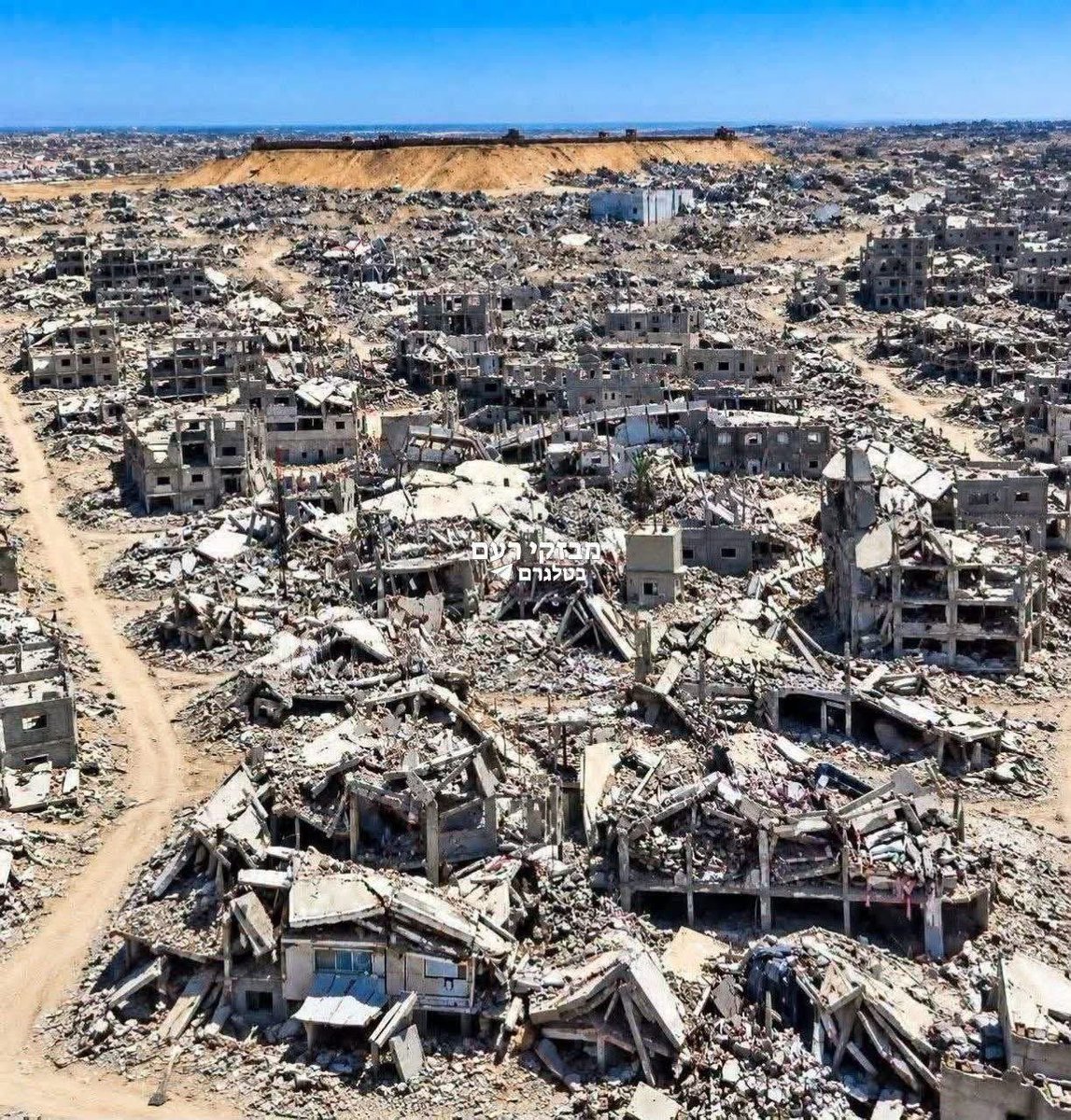
The world hasn’t seen anything like the destruction in Gaza since Second World War.
Gaza is nearly 3 times smaller than Hiroshima, and Israel dropped 223,000+ tonnes of explosives, equivalent of ~15 "Little Boy" ATOMIC BOMBS, on Gaza.
Gaza is nearly the same size as Nagasaki, and Israel dropped 223,000+ tonnes of explosives, equivalent of ~12 "Fat Man" ATOMIC BOMBS, on Gaza.
Gaza is nearly 3 times smaller than Berlin, and Israel dropped over 3 times more explosives than dropped on Berlin, over 25 times than what dropped on Hamburg, and almost 57 times what dropped on Dresden.
Gaza is nearly 5 times smaller than London, and Israel dropped over 12 times more explosives than dropped on London, almost 20 times than what dropped on Paris, and nearly 45 times than what dropped on Warsaw.
The destructions of Gaza cities is more severe than the destructions of European Cities in WWII.
According to Article II of the UN Genocide Convention, genocide involves specific acts committed with the "intent to destroy, in whole or in part, a national, ethnical, racial or religious group."
Wanton devastation not justified by military necessity; deliberately inflicting on the group conditions of life calculated to bring about its physical destruction is also an act of genocide according to Article Il of the UN Genocide Convention.
Doubling down on oil and gas will only lock in vulnerability for decades.
Fortunately, we have a way out.
Renewables are the cheapest, fastest & most secure source of new electricity almost everywhere. They are unstoppable.
"We need an exit ramp off the highway to climate hell.
We have control of the wheel.
The 1.5 degree limit of global warming is still possible.
But we need to fight harder. Now." @antonioguterres
No time to wait. #ActOnClimate
Global warming is set to cross 1.5°C, pushing climate risks and impacts to increasingly dangerous heights, a new UNEP report warns.
Predicted impacts include extreme weather and threats to human health and economies.
Action now can still limit the magnitude and duration of the peak and preserve the possibility of returning to or below 1.5°C through an ‘overshoot, peak, and decline’ pathway
Explore more: https://t.co/kbvezGTyar