MPI Global Fellow. Former UN Special Adviser, founding Director of @mpi_europe. Still migration, still sarcasm, slightly less frequent. All tweets are personal.
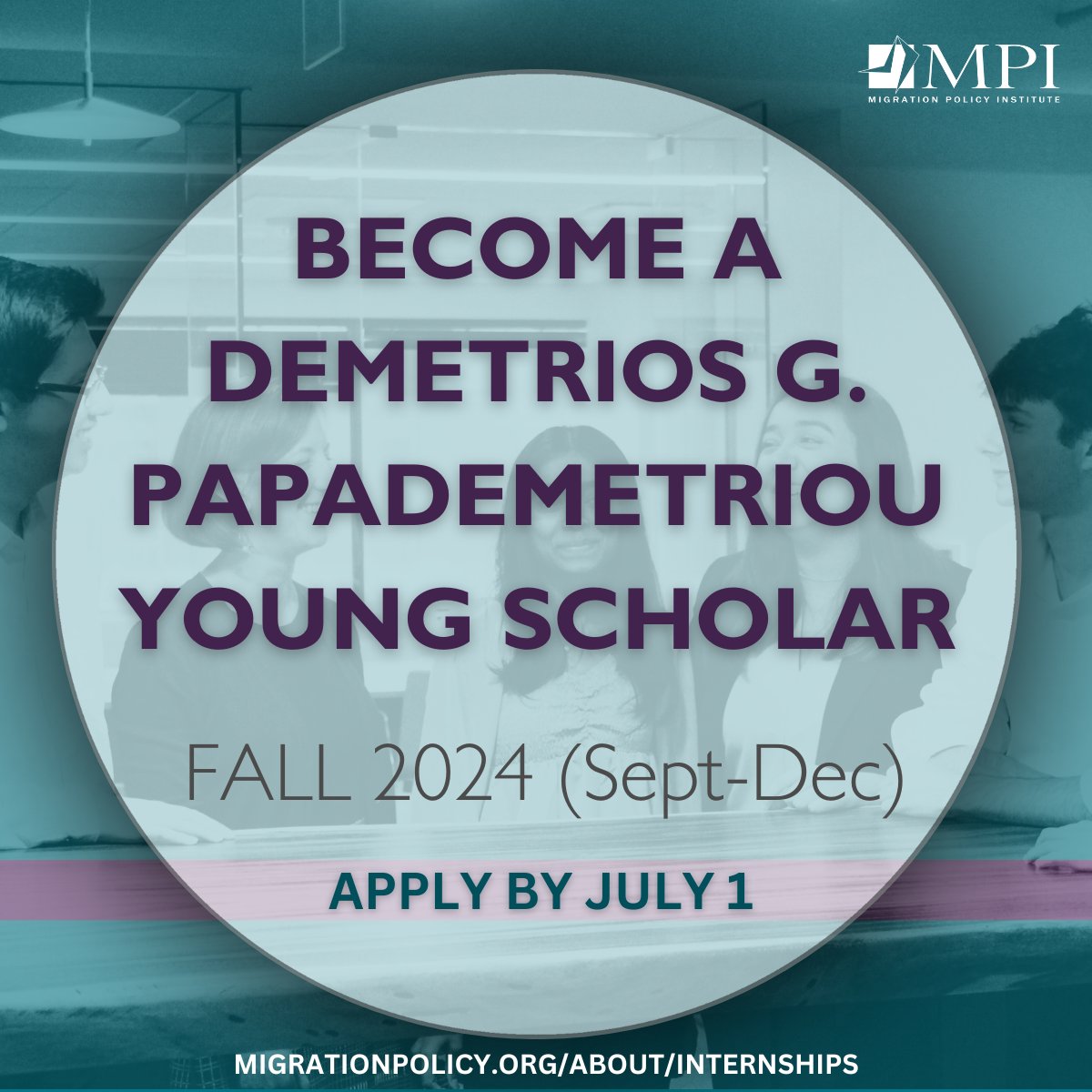
📢We’re hiring our next cohort of interns for Fall (Sept – Dec) 2024!
Become a Demetrios G. Papademetriou Young Scholar & make an impact doing research or communications.
Learn more & apply by🗓️July 1: https://t.co/eiVtLy0rcK
The BBC has endorsed recommendations from former colleague @M_Sumption, who was asked to assess its migration coverage
Smart tips for all, not just BBC reporters:
1: Cover the substance, not just the politics
2: Make sure audiences have enough context to understand the story
This remains an important document for Australia, a milestone in a broader multi-faceted effort to rebuild immigration capability. But it is clear that much of the hard work still lies ahead.
As such, headlines from the government about the extent to which net migration will reduce over the next several years should be viewed with caution. It will remain a balancing act, dependent on prevailing economic winds and other factors beyond domestic control.
It also underplays some of the changing dynamics in the world today, including climate change. While Australia is geographically distant, it will not be immune to trends across the world more broadly, including the impact of any future global health threat.
The strategy does not address what happens post-arrival, or the role and potential of family migration. For more on this, we will have to wait for the Multicultural Framework Review & other consultations (e.g. on recognition of qualifications) due next year.
It rightly recognizes the need for cross-govt collaboration (notably jobs & skills), the relevance of migration to Australia's regional interests, and stronger partnership with states. This can be hard when interests collide (education 👀). It will take sustained commitment.
The strategy is timely. This policy area has in neglect for a decade, despite high salience. There is now a need to reinvigorate the under-loved portfolio by allocating the resources to implement effectively. Otherwise, this paper will remain a well-written statement of intent.
Despite the headlines, the govt has largely avoided the knee-jerk political responses that have tripped up other countries such as setting arbitrary limits. Rather it sets out a mix of policy levers to tighten and shape inflows to better meet needs. Think SKIMS, not liposuction.
This includes reform of Australia's "OG" points system, a revamped talent and innovation visa, revised labour market testing, and development of a multi-annual planning model together with states. 2024 will be very very busy.
All in all 45 measures have been proposed under 8 action areas, including measures to strengthen planning and capability, improve worker protections, and simplify processes. Many of these have yet to be fleshed out, and will be designed and implemented throughout 2024.
The 3-tier system sets out a pathway to permanence for successful temporary migrants, and the ability to switch employers. This contrasts to some other immigration dependent economies, where temporary migration is viewed as a short-term fix, and return the key measure of success.
But a proposed 3-tier "skills in demand" visa offers more nuance. The "core" middle tier will be complemented by a "specialist" high-paid skills tier ($135,000 and over) while lower paid "essential" workers will still be able to fill key job vacancies through a third tier.
Some measures are already in effect: the temp skilled migration wage threshold was raised to $70,000 in July, dampening demand and protecting domestic wage levels.
For example, there are concerns about the number of incoming international students. Rather than set a cap, the proposals focus instead on improving quality - raising language requirements, and stronger regulation of higher risk providers - to promote future employment success.
As in other countries, Australia has been under increasing pressure in 2023 to reduce high levels of net migration in order to address urban infrastructure constraints, notably housing, while still meeting persistent labour and skill needs. A tricky balance to establish.
There is lots to chew over. Governments around the world will be reviewing Australia's new proposals with interest as - despite domestic neglect of the immigration system - the country retains a global reputation for attracting skills.
Today the Australian government published its long-awaited migration strategy. It follows a review of the migration system by a trio of experts, and a rapid review into the exploitation of workers in-country. https://t.co/FoATHoH9wV
Prime Minister Anthony Albanese has announced a new pact with the low-lying island country of Tuvalu, allowing residents facing displacement from climate change the ability resettle in Australia. https://t.co/Q21aBkdbUU