'Je lègue ce dernier poème visuel à tous les jeunes gens qui m’ont fait confiance, malgré l’incompréhension totale dont mes contemporains m’entourent.'
[Le Testament d'Orphée, Jean #Cocteau, 1960]
#cinema@CocteauCinema#litterature
At least 131 deaths and over 500 suspected cases have been reported in the ongoing Ebola outbreak in eastern Congo, the Congolese health ministry said Tuesday as details emerged about the government’s delayed response. https://t.co/WgY2IJBD69
Matisse painted 'Pansies' (1903) during his ‘dark period,' as he went through near financial ruin and family scandal. He wrote of being moved by the pansy's melancholic grace; like Dutch flower painters of the 17thC, he saw the cut flower as a symbol of the vanity of human life.
“… you were happy in spring,
With the half colors of quarter-things,
The slightly brighter sky, the melting clouds,
The single bird, the obscure moon …”
—Wallace Stevens, The Motive for Metaphor
With 'Reading at Supper,' from 1957, we are reminded of the importance Joan Eardley put on finding what she called the story behind human subjects - for her, a truly successful painting had to go deeper than a mere visual record.
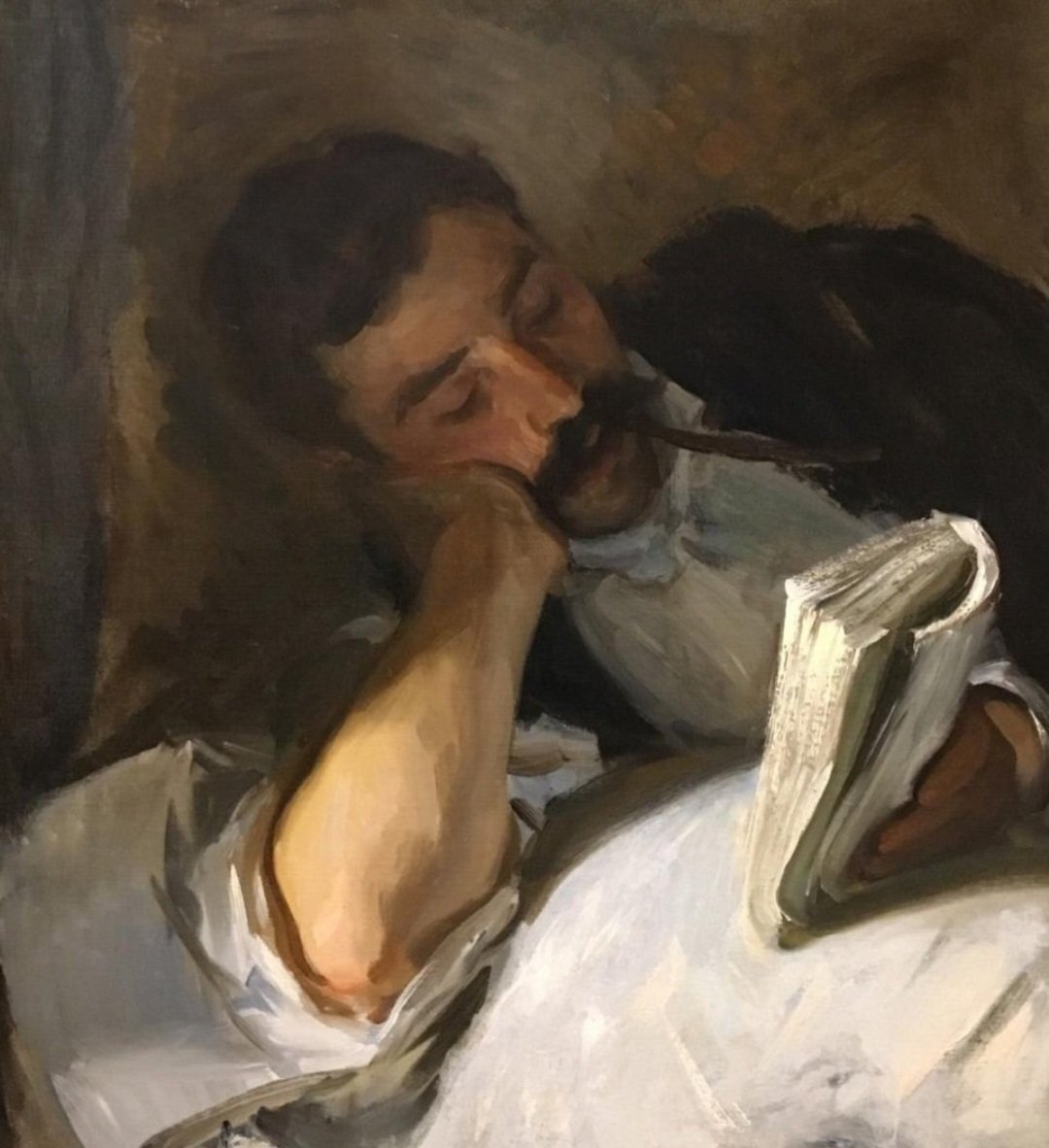
'Man Reading.' (1904) John Singer Sargent's portraits balance looseness and definition, what might be called Old Master-casual; faces and hands rendered just tightly enough to stay alive. The sitter is Nicola d'Inverno, Sargent's Italian valet and a frequent model.
“They say that the system devours everything, that it assimilates everything. That is not true. There are things the system cannot assimilate, cannot digest. One of them, for example, is precisely poetry. In my view, it is unconsumable.”
— Pier Paolo Pasolini