𝗛𝗲𝘆 𝗦𝗮𝗹𝗲𝘀 𝗟𝗲𝗮𝗱𝗲𝗿𝘀! You push harder. You automate emails. People work longer. And the number stays flat. 40-50% of your reps make quota. And you're behind on your revenue plan.
Where do you start? What 𝘥𝘰𝘦𝘴𝘯'𝘵 work anymore is the old battle cry of "Harder, Faster, Longer, Louder."
Maybe it's time to figure out exactly what's holding you back and remove that constraint.
If that sounds even remotely intriguing, here's an eBook that talks about how to determine and remove the constraint to hit your number. Comes with a free diagnostic and link to an also-free bigger one.
𝗖𝗵𝗲𝗰𝗸 𝗶𝘁 𝗼𝘂𝘁 𝗵𝗲𝗿𝗲: ➡️ https://t.co/ElzGO547Fr
𝗢𝗯𝘀𝗲𝗿𝘃𝗲 𝗳𝗼𝘂𝗿 𝗼𝗳 𝘆𝗼𝘂𝗿 𝘀𝗲𝗹𝗹𝗲𝗿𝘀 𝗿𝘂𝗻 𝗮 𝗳𝗶𝗿𝘀𝘁 𝗺𝗲𝗲𝘁𝗶𝗻𝗴.
You'll get four different meetings.
➡️ One opens with a deck to walk through the company info and value prop.
➡️ One runs discovery as taught at a company they left in 2019.
➡️ One asks good questions but never gets to impact.
➡️ One is winging it and is all over the board.
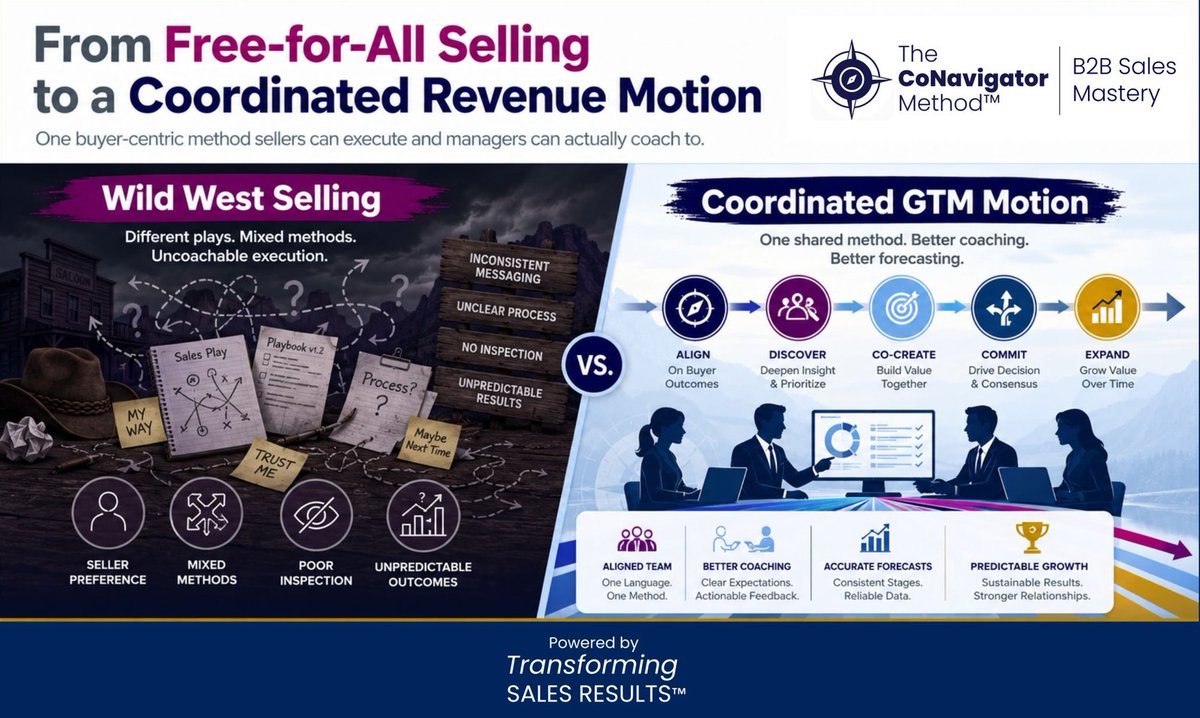
Some are wrong. Some approaches have merit but they execute poorly. The trouble is, it's a free-for-all. They're all different, and that difference is expensive in ways that don't show up on a dashboard.
Here's where it costs you:
➡️ Your managers can't coach to a standard, because there isn't one. So coaching drifts toward what the manager used to do, and effort and attitude, which are the only things left to talk about.
➡️ Deal reviews become storytelling. The seller who tells the best story gets the least scrutiny.
➡️ Forecast accuracy suffers, because "commit" means something different to every person entering it.
➡️ New hires learn by shadowing whoever sits closest, so the variance compounds with every hire you make.
And anything new you roll out lands differently on every rep, so it never fully takes hold. You don't get the 75% adoption needed to reap the rewards of your effort.
A shared method isn't about scripts or compliance. It's about everyone working from the same map, so the coaching, the inspection, and the improvement all compound instead of resetting with each conversation.
When that's in place, the rest gets easier.
➡️ Appointments get set with people who have a real reason to meet.
➡️ Sellers build business cases that motivate buyers.
➡️ Win rates move because qualification and discovery are done consistently and well across the team.
➡️ Account growth stops depending on which rep happened to inherit which logo.
And the revenue plan stops being a hope.
That's the work 𝗧𝗵𝗲 𝗖𝗼𝗡𝗮𝘃𝗶𝗴𝗮𝘁𝗼𝗿 𝗠𝗲𝘁𝗵𝗼𝗱 𝗳𝗼𝗿 𝗕𝟮𝗕 𝗦𝗮𝗹𝗲𝘀 𝗠𝗮𝘀𝘁𝗲𝗿𝘆 can deliver for you. Alignment. Adoption. Mastery. Revenue lifts of 12-34% in 6-9 months, and new-hire ramp time cut by 23-52%.
𝗦𝗲𝗲 𝗵𝗼𝘄 𝗶𝘁 𝘄𝗼𝗿𝗸𝘀: ➡️ https://t.co/FhttBMIh2K
𝗛𝗲𝘆 𝗦𝗮𝗹𝗲𝘀 𝗟𝗲𝗮𝗱𝗲𝗿𝘀! You push harder. You automate emails. People work longer. And the number stays flat. 40-50% of your reps make quota. And you're behind on your revenue plan.
Where do you start? What 𝘥𝘰𝘦𝘴𝘯'𝘵 work anymore is the old battle cry of "Harder, Faster, Longer, Louder."
Maybe it's time to figure out exactly what's holding you back and remove that constraint.
If that sounds even remotely intriguing, here's an eBook that talks about how to determine and remove the constraint to hit your number. Comes with a free diagnostic and link to an also-free bigger one.
𝗖𝗵𝗲𝗰𝗸 𝗶𝘁 𝗼𝘂𝘁 𝗵𝗲𝗿𝗲: ➡️ https://t.co/ElzGO547Fr
𝗕𝗲𝗵𝗶𝗻𝗱 𝗼𝗻 𝗬𝗼𝘂𝗿 𝗥𝗲𝘃𝗲𝗻𝘂𝗲 𝗣𝗹𝗮𝗻? 𝗪𝗵𝗮𝘁 𝗶𝗳 𝗬𝗼𝘂'𝗿𝗲 𝗪𝗿𝗼𝗻𝗴 𝗔𝗯𝗼𝘂𝘁 𝗪𝗵𝘆?
You have a theory. Most do. The question is how soon you'll find out if you're wrong. And, if it will be too late.
Here's the pattern I've watched for thirty years. Revenue comes in short. Leadership diagnoses the problem. Usually in a meeting, and often from whichever symptom made the most noise that week. Pipeline looks thin, so we buy prospecting training. Deals are stalling, so we push on closing. Everyone works harder. Two quarters later, you're having the same conversation.
Why? Because the solution was aimed at something that wasn't limiting performance.
Every sales force has factors that push it forward and hold it back. Before you push harder on the accelerator, you need to take your foot off the brake. The brake is always in one of three places:
➡️ 𝗣𝗶𝗽𝗲𝗹𝗶𝗻𝗲 𝗖𝗿𝗲𝗮𝘁𝗶𝗼𝗻. You aren't starting enough quality conversations with the right buyers.
➡️ 𝗢𝗽𝗽𝗼𝗿𝘁𝘂𝗻𝗶𝘁𝘆 𝗖𝗼𝗻𝘃𝗲𝗿𝘀𝗶𝗼𝗻. The opportunities you do have in place aren't converting enough.
➡️ 𝗔𝗰𝗰𝗼𝘂𝗻𝘁 𝗘𝘅𝗽𝗮𝗻𝘀𝗶𝗼𝗻. You keep your customers but you don't grow them.
Many sales forces have weak spots in all three. That's normal, and isn't the point. The point is which one, fixed first, produces the most revenue in the least time.
So I wrote a guide to help you answer that before you spend anything. 21 pages to help you diagnose the real constraints, using a 12-question self-assessment you can score in five minutes. If you want to explore deeper after that, we can.
Diagnose first, then prescribe.
➡️ 𝗚𝗲𝘁 𝘁𝗵𝗲 𝗴𝘂𝗶𝗱𝗲 𝗵𝗲𝗿𝗲: https://t.co/ElzGO547Fr
A VP of Sales once reached out because his win rates were steadily slipping. He wanted training on negotiation and closing.
After an initial diagnostic, a deeper situation assessment dialogue, and exploring data and observing to confirm our hypothesis, we surfaced the real constraint.
The problem showed up much earlier: weak qualification and high-level discovery meant they were chasing many of the wrong opportunities, then fighting to close deals that should have been disqualified or moved into nurturing status much earlier.
This happens more than people expect. Leaders see a symptom, usually the one that's easiest to measure, and build or buy a fix for it. Meanwhile, the actual constraint sits one layer deeper, impacting everything downstream of it.
𝗥𝗲𝘃𝗲𝗻𝘂𝗲 𝗔𝗰𝗰𝗲𝗹𝗲𝗿𝗮𝘁𝗶𝗼𝗻 𝗦𝗽𝗿𝗶𝗻𝘁𝘀 start with a diagnostic and situation assessment for exactly this reason. Diagnose first, then prescribe. Then spend 90 focused days fixing the constraint that's actually limiting revenue, not the one that happened to catch someone's attention in a QBR.
Three places we look:
➡️ Pipeline Creation: are you setting enough of the right meetings?
➡️ Opportunity Conversion: are you winning the ones you get?
➡️ Account Expansion: are you retaining and growing what you've already won?
Most teams have one constraint doing more damage than the others. Finding it first is what makes a 90-day sprint work instead of just adding activity. Surgical precision beats a baseball bat.
➡️ See how a Sprint works: https://t.co/kY6ubK8Xlt
𝗪𝗥𝗢𝗡𝗚 𝗠𝗘𝗧𝗛𝗢𝗗𝗢𝗟𝗢𝗚𝗬? 𝗢𝗥 𝗕𝗔𝗗 𝗜𝗠𝗣𝗟𝗘𝗠𝗘𝗡𝗧𝗔𝗧𝗜𝗢𝗡?
𝗜𝗺𝗮𝗴𝗶𝗻𝗲 𝘁𝗵𝗶𝘀 𝘀𝗰𝗲𝗻𝗮𝗿𝗶𝗼: You're choosing a sales methodology. You get it down to three vendors who each do a finals presentation. Your buying committee debates and you pick one.
𝗢𝘂𝘁𝗰𝗼𝗺𝗲: A year later, adoption is at 35% and the needle hasn't moved. Not higher win rates. Not better revenue plan attainment. And nobody can tell you why.
➡️ Was it the wrong methodology?
➡️ Or did you not execute well enough?
Sadly, this scenario is not that hard to imagine, is it? I once saw a company spend over $250K on a methodology and 18 months later, they ditched it and bought another one.
Want to get out of this vicious cycle, or avoid it entirely?
I've been down this road. I built 5 sales methodologies, implemented 10 others, and ran 12 Top-Performer Analyses over 16 years. So, I wrote a guide for you, on both.
➡️ 𝗖𝗵𝗼𝗼𝘀𝗶𝗻𝗴 𝗶𝘀 𝗼𝗻𝗲 𝘀𝗸𝗶𝗹𝗹: A methodology has to be good, meaning it has to get results when used, and it has to fit the way you sell and your buyers buy.
➡️ 𝗜𝗺𝗽𝗹𝗲𝗺𝗲𝗻𝘁𝗶𝗻𝗴 𝗶𝘀 𝗮𝗻𝗼𝘁𝗵𝗲𝗿: Manager enablement, developmental coaching, workflow integration, measurement, and accountability.
49 pages, 3 worksheets, about 30 minutes. No cost.
𝗚𝗘𝗧 𝗜𝗧 𝗛𝗘𝗥𝗘:
➡️ https://t.co/GDSCgLb1NK
𝗖𝗥𝗢𝘀/𝗦𝗮𝗹𝗲𝘀 𝗟𝗲𝗮𝗱𝗲𝗿𝘀: 𝗧𝗵𝗲 𝗙𝗿𝗲𝗲-𝗙𝗼𝗿-𝗔𝗹𝗹 𝗠𝗲𝘁𝗵𝗼𝗱𝗼𝗹𝗼𝗴𝘆 𝗶𝘀 𝗛𝘂𝗿𝘁𝗶𝗻𝗴 𝗬𝗼𝘂𝗿 𝗥𝗲𝘃𝗲𝗻𝘂𝗲 𝗡𝘂𝗺𝗯𝗲𝗿
Sorry, but it's true. Here's a bit of straight talk for the senior sales leaders in the crowd.
🔹Content lifted from three copyrighted sales methodologies
🔹Mixed in with stuff from four different books
🔹And a bunch of individual tips and tricks gathered over the years from a dozen sources
That's not a sales methodology. It's a collection of individual preferences. And if this describes how your sales force goes to market, you are shooting yourself in the foot.
Here's why it costs you. When every seller runs a different play, managers can't inspect execution consistently. They can't separate skill problems from deal problems. Forecasts become a collection of opinions. Then we bitch about how few sellers make quota.
Your managers can't coach to the above goat rodeo. That's not on them. It's the system they were handed.
The CoNavigator Method gives sellers one buyer-centric approach for creating pipeline, converting opportunities, and growing accounts. It gives managers a shared language, observable behaviors, and a system they can actually inspect and coach to.
And yes, it moves the needle on the metrics that matter most.
🔹Most see a lift of 12-34% in 6-9 months.
🔹At one company, 106 sellers grew sales 25% with 9.8% higher margins.
Intrigued enough to explore?
➡️ 𝗥𝗲𝗮𝗰𝗵 𝗼𝘂𝘁 𝗵𝗲𝗿𝗲: https://t.co/DJEA6Z6iYv and we'll chat to see what makes sense for you.
Here's some enablement straight talk for a Thursday afternoon.
An enablement team can do everything wrong, and the sales force can deliver growth because they have a great, category-defining product. Not maximum potential growth, but still growth.
An enablement team can do everything right and still not drive results, because of a lack of top-down support and because the sales leadership team doesn't execute well enough.
An enablement team, with a product that meets market needs, with an aligned sales leadership team that executes with discipline, and alignment across the entire GTM team with a focus on the customer, can produce absolutely phenomenal results.
I don't think that enablement will produce the best-possible results as a profession, until more senior leaders get this.
High-performance is a result of alignment of leaders, systems, process, methodology, tools, training, coaching, management, and more. With a highly qualified enablement leader in place who can help orchestrate this alignment, enablement has a far better chance of making an impact. But it's not a solo journey. Enablement can't do it alone. It's an ecosystem.
I have personally worked in a perfect storm in a $10B company and delivered $398M YOY lift, signed off by the CFO, President, and CEO against measurement systems we agreed on before we started. We fixed hiring, onboarding, training, coaching, sales management systems, tools, process, methodology, comp. We blew the doors off.
I have also left a company in utter frustration after 18 months of not being able to make a dent. It's where I coined the term "Master of Disaster," meaning constant over-reactions to the last thing that went wrong, changing direction and priorities constantly. No plan stuck for more than a month or two.
Fortunately, I have a lot more success stories than crashes, but my point is... it's an ecosystem, a shared responsibility, a team where everyone needs to play their part. And if you don't get that, well, you will never reach your maximum revenue potential.
I and my unpopular opinion are now signing off for the day. Think about this one... it's worth mulling on.
She hit quota about half the time. Pitched features. Wore "Hope Goggles" into every meeting.
Nine months later: #1 in the company.
Not a better script. A different way of selling.
https://t.co/mkimWkGaPc
@Calmoceansales For anyone following along, the Goldratt/Theory of Constraints discussion occurs in one block, roughly 17:06 to 21:25.
@Calmoceansales, it was interesting to see your approach of reducing waste---almost a bit more of Lean than TOC, but equally effective and fun to see.
Here’s my latest blog post. It’s Goldratt’s “Theory of Constraints,” applied to sales.
The idea is simple: one step limits the output of the whole flow. Improving the other steps doesn’t help. Most sales organizations respond to a soft quarter with a “Harder, faster, longer, louder” battle cry, which is exactly the wrong thing to do.
In this post I share three zones where sales constraints live, what they look like, and how to tell which one to fix first.
🔹𝗥𝗘𝗔𝗗 𝗠𝗢𝗥𝗘 𝗛𝗘𝗥𝗘 ➡️ https://t.co/rJO1ImXzwy
@Calmoceansales Ha! That's cool, Michael! I'm a bit stunned (I didn't think many people made the dot connection--nice to see.) This one has been sitting in Drafts for months and I finally got it out. I'll check it out.
𝗪𝗔𝗡𝗧 𝗧𝗢 𝗜𝗡𝗖𝗥𝗘𝗔𝗦𝗘 𝗥𝗘𝗩𝗘𝗡𝗨𝗘 𝗜𝗡 𝟵𝟬 𝗗𝗔𝗬𝗦?
Diagnose the primary revenue constraint before choosing the solution.
Revenue performance is often limited by its most consequential root cause.
The biggest constraint may sit in Pipeline Creation, Opportunity Conversion, or Account Expansion. Improving another area may create activity without materially lifting revenue.
𝗣𝗿𝗲𝗺𝗮𝘁𝘂𝗿𝗲 𝘀𝗼𝗹𝘂𝘁𝗶𝗼𝗻𝘀 𝘄𝗮𝘀𝘁𝗲 𝗿𝗲𝘀𝗼𝘂𝗿𝗰𝗲𝘀
🔹 Companies often invest in training, coaching, technology, AI, or process improvement before confirming the cause. A sound solution aimed at the wrong constraint is still the wrong investment.
𝗙𝗼𝗰𝘂𝘀𝗲𝗱 𝗶𝗻𝘁𝗲𝗿𝘃𝗲𝗻𝘁𝗶𝗼𝗻 𝗽𝗿𝗼𝗱𝘂𝗰𝗲𝘀 𝗴𝗿𝗲𝗮𝘁𝗲𝗿 𝗶𝗺𝗽𝗮𝗰𝘁
🔹 Revenue Acceleration Sprints identify the primary constraint first, then concentrate a 90-day intervention where it can improve performance the most.
Start with the 𝙎𝙖𝙡𝙚𝙨 𝙀𝙛𝙛𝙚𝙘𝙩𝙞𝙫𝙚𝙣𝙚𝙨𝙨 𝘿𝙞𝙖𝙜𝙣𝙤𝙨𝙩𝙞𝙘:
🔹 29 questions
🔹 About 8–10 minutes
🔹 No cost
𝗝𝗨𝗠𝗣 𝗥𝗜𝗚𝗛𝗧 𝗜𝗡 ➡️ https://t.co/Z99kVt90hN
#Distributor#CEOs and #SalesLeaders:
Your top rep just gave 4 months' notice instead of 4 years. Do you know every account relationship (and dollar) that walks out with him?
The silver tsunami has a date attached. Here's how to build a transition plan before you need one 👇
https://t.co/FaFvgRPF1L
Check out this article to learn how #lifesciences L&D teams can create greater business impact by translating existing organizational data into strategic learning priorities and stronger field performance. https://t.co/f0ii6jWaFC
#LTEN#LearningAndDevelopment