LA's home. Chicago's where the heart is. Writer + founder of Armed Mind. Go Blue, go Cubs, and go People Watching. Judging your tweets, and also the Webbys.
#FFIDP CJ Allen made his Colts' debut with a bit of mixed results. I looked at Allen's 18 snaps. Here's what I was looking for IDP value:
-Run diagnosis
-Downhill trigger
-Functional in coverage
https://t.co/rD5tzjhZFr
You are witnessing one of the greatest seasons in Chicago Cubs history with Pete Crow-Armstrong. Savor this ride. You may never see it again. This is once-in-a-generation stuff. Hell, once ever stuff.
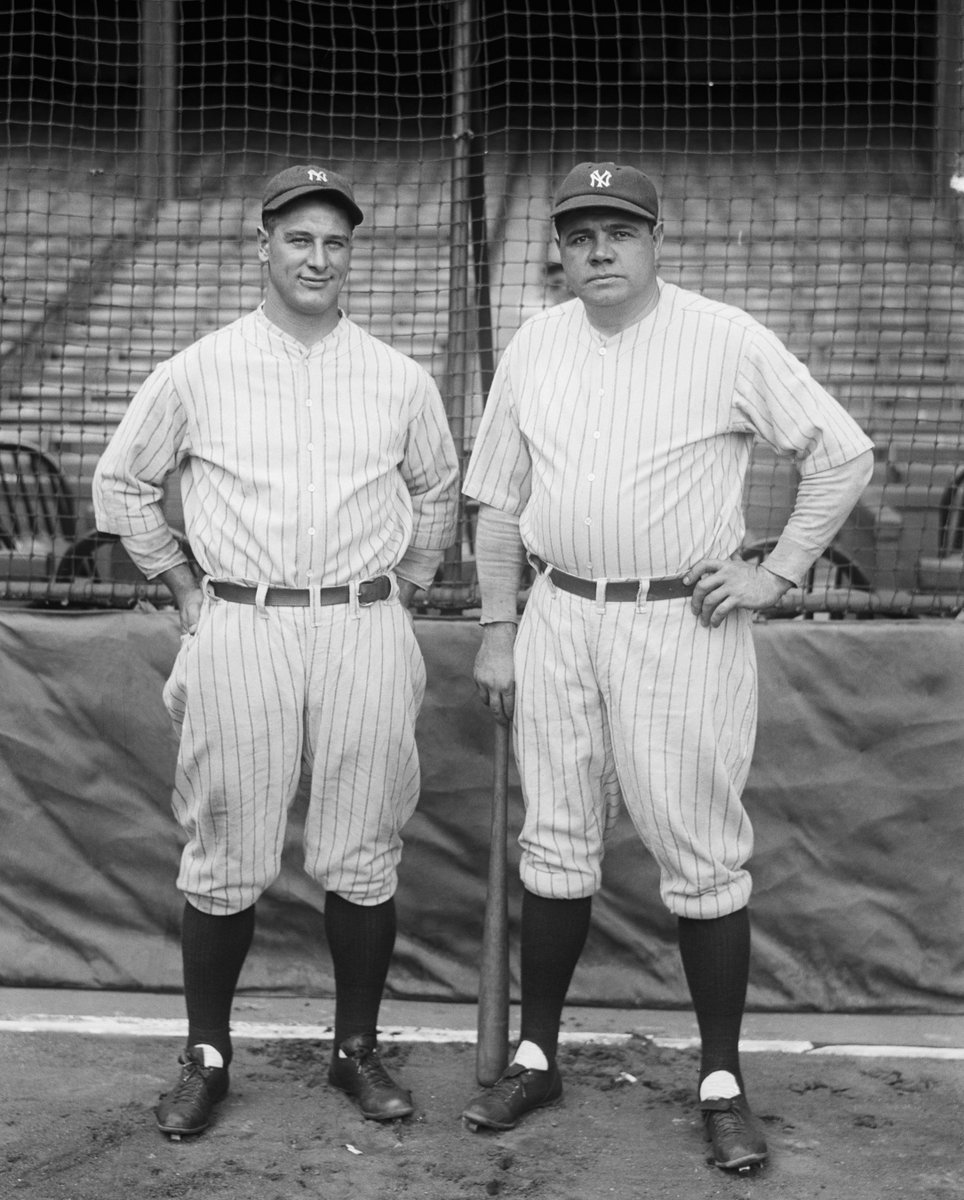
Pete Crow-Armstrong of the @Cubs is one of three players in MLB history to have a month with:
.375+ batting average
.775+ slugging pct
80+ total bases
15+ walks
10+ home runs
5+ stolen bases
The others are Babe Ruth (June 1920, July 1920, May 1930) and Lou Gehrig (June 1930).
Conan O'Brien used his Harvard University commencement speech to argue that humility and the human connection matter far more than any diploma.
"I always recognize the enormous role of luck in my life. Refusing to see how luck has played a role in anyone's success is simply ignorant. Many people are happy to mistake a lucky poker hand for their own brilliance, and fighting that human instinct has kept me sane.
"I honestly believe that community, spontaneity, and a real commitment to humility has helped me build a rich life that means much more to me than any diploma. And believe me, I'm not saying the goal is to renounce accomplishments, but rather to metabolize them. If you carry your victories lightly, other qualities –- kindness, originality, courage, humor, and humanity –- have room to emerge.
"Maybe the greatest lessons I've learned along these lines have been through my 24 travel shows. I have degraded myself in Cuba, Ghana, Korea, Armenia, half of Europe, Argentina, Thailand, Mexico, and Greenland, where I visited a real estate office and tried to buy the country. When I travel to another land, every quality I have discussed -- community, adaptation, and a sincerely humble approach -- are all necessary. When you don't speak the language, no one truly cares where you went to college, and you have no choice but to make friends.
"It's on these travels that I learned a great lesson: let yourself be bad at things. I have been a bad dancer in every country I have visited. But the people laugh because it turns out everyone everywhere is related to at least one terrible dancer. For me, humility on these trips can easily lead to humiliation, which is also a useful tool.
"Three weeks ago, I visited Amsterdam, dressed up as Van Gogh, and forced my way into the Van Gogh Museum, where I started loudly demanding a cut of the merchandising because I made no money during my lifetime. Guards forcibly ejected me. I was roundly mocked by patrons for my pathetic display. But I did see a lot of smiles. And not one person said, now that's a Harvard grad.
"In Tokyo, I met with a teacher of Japanese etiquette who volunteered I wasn't her type. And when I asked her why, she just said, 'face.' In Ghana, after accepting a royal invitation, I was kicked out of the Ashanti Palace by the Queen Mother, because her favorite soap opera was starting.
"I understand that I am preaching modesty and connection at a time when this is not in style. We are living through a period of extreme narcissism. Our current leadership in Washington believes that empathy is a weakness and that our nation stands supreme and alone. Add to that, everyone here today has a phone in their pocket that is algorithmically programmed to celebrate you and you alone by making you the protein-maxing hero of your own special journey.
"Much has been written about how isolated and siloed we've become, but for me, the antidote is quite simple. By de-emphasizing what makes us special — in your case, a prized degree — we can really find one another, not as an exercise in virtue, but as a path towards greater laughter, love, and real growth."
May 8th and the Cubs have just won 10 in a row for the SECOND time this year.
Savor this. Truly. It’s so memorable. You may never see it again. Unreal.
Ahora sí hablemos en serio de la foto. Este es un trino para interesados en fotografía, astrofotografía y el que quiera ¿Por qué esta foto es increíble? Algún conspiranóico, dándoselas de suspicaz, preguntó que por qué esta foto tomada por el comandante del Artemis II se veía más opaca que la foto tomada por la tripulación del Apolo 17 en 1972. Bueno. Acá viene lo emocionante. Esta fotografía hubiera sido imposible tomarla con una cámara análoga; y no cualquier cámara digital puede tomarla. El archivo original de esta foto está disponible para su descarga en la página de la NASA. En las propiedades del archivo se puede ver con qué cámara fue tomada y los ajustes de exposición que se usaron. Hasta el serial de la cámara. Esto, primero que todo, garantiza que la foto que estamos viendo no fue creada digitalmente, ni con IA, sino capturada por una cámara real por un humano. Sé que no es suficiente argumento para los conspiranóicos, pero ni modos. Esa que está ahí es la Tierra. Ahora sí lo interesante. ¿Por qué se ve como más opaca que la del 72? porque resulta que en la cara de la tierra que vemos en esa foto, está de noche; si hacen zoom pueden ver el brillo de la iluminación nocturna. Pero ¿cómo, si es de noche, puede verse como si fuera de día? Porque la foto se hizo con un altísimo ISO de 51200! El ISO es la sensibilidad del sensor a la luz. Con la mayoría de cámaras digitales, con ISOs de más de 6400, el ruido es tanto que la foto se ve prácticamente ilegible. Pero la cámara que tiene el comandante Reid Wiseman es una NIKON D5, que no es una cámara muy nueva; tiene 10 años de haber sido lanzada. Pero su sensor es reconocido por garantizar una calidad decente de imagen con ISOs altos. Y eso, para los que siempre preguntan cómo se hace una buena foto del cielo, es fundamental ¿Por qué? Pues para poder tomar fotos de los astros sin tener que bajar mucho la velocidad de exposición. Porque si bajas mucho la exposición apra que entre más luz, queda capturado el movimiento de los astros y de la rotación de la Tierra, cuando estás en la Tierra. Así que un iSO tan alto hizo posible que Wiserman pudiera disparar a una velocidad de 1/4 de segundo. Que es baja, pero no tanto. Es digamos, el límite para la astrofotografía. Por eso esta foto tiene ruido, porque de todas formas es un ISO altísimo.
Pero lo que más me emociona a mí, es que la tomó con un lente 14 -24mm F2.8. Es decir, en terminos coloquiales, que esta foto no tiene zoom. Para que lo dimensionen: cuando uno quiere tomar una foto de la Luna desde la Tierra que salga así de "cerca" tiene que usar un lente de unos 400mm de distancia focal. Wiserman usó un ¡gran angular de 22mm! Es decir que él estaba viendo la Tierra asi de grande frente a sus ojos. Porque la foto no fue recortada en edición y eso lo sabemos porque en las propiedades del archivo siempre aparece cuando una foto fue editada. El archivo está limpio, tiene la resolución original de la cámara. La tierra era inmensa frente a su mirada. Hermoso.
Pero para mí lo más mágico de esta foto, incluso más que las auroras boreales, es que se ve como la luz de sol, que está del otro lado de la tierra, ilumina nuestra atmosfera. Y eso es magia pura, porque esa atmosfera tiene una composición milimétricamente perfecta para permitir que la vida, tal y como la conocemos, sea posible. Esta foto, es un regalo precioso para la humanidad.
Les dejo al link para que descarguen la foto en alta resolución y el pantallazo de las propuedades del archivo.
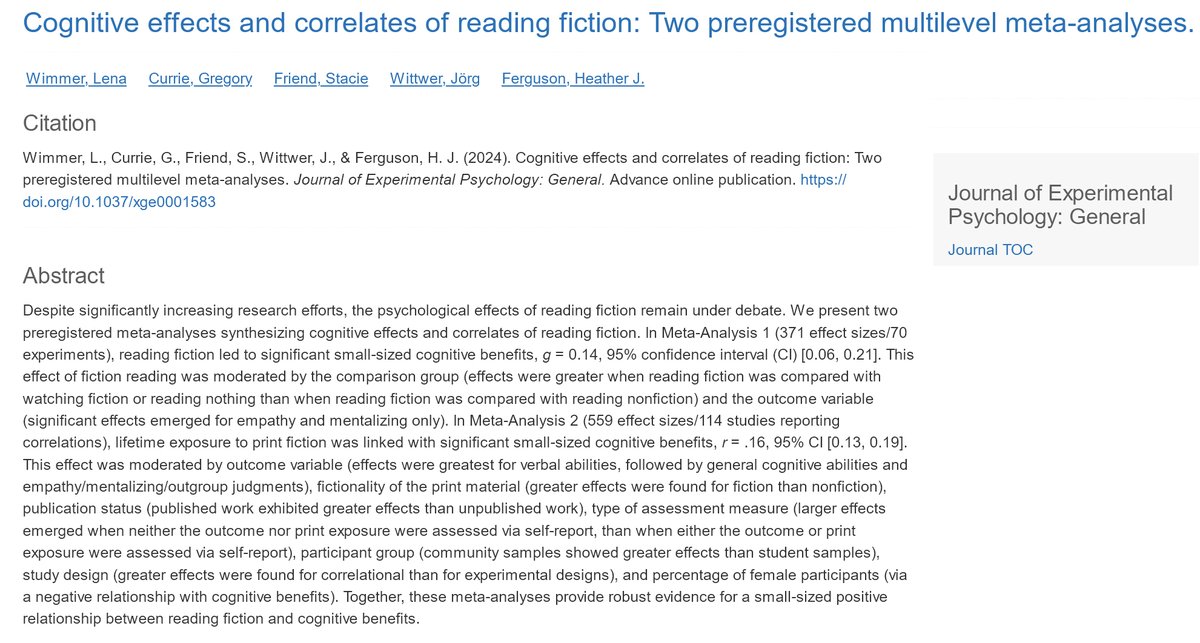
Reading fiction has small but meaningful benefits for empathy.
70 experiments: concern for and understanding of others grow more through reading novels than watching shows and movies.
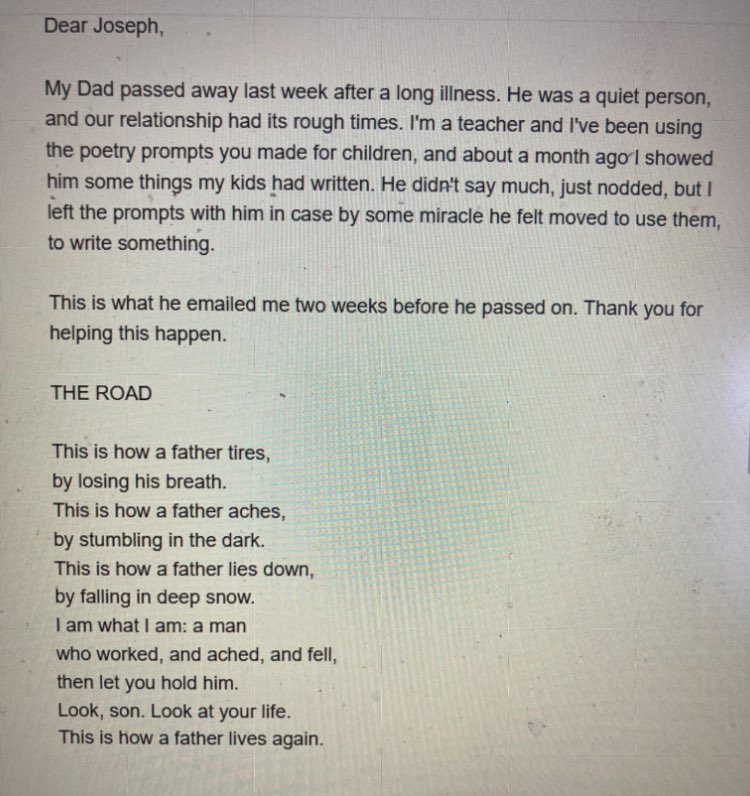
Immersion in words about imaginary worlds can help us see realities beyond our own.