With AI Engineering skills, you actively shape the build: You influence what gets built, and drive the build loop. Here're key skills to do this. https://t.co/sysOYdzuZY
My full interview with Tibo (@thsottiaux)
0:45 Tibo's Lessons from Google DeepMind
4:22 Building OpenAI’s Relentless Culture
7:23 Astra & Next Gen Models
11:18 How Fast AI Changes Developer Workflows
14:27 ChatGPT & Codex Merging
20:25 OpenAI vs. Anthropic
23:37 Why OpenAI Keeps Resetting Limits
30:25 Recursive Self-Improvement
32:00 Dangers That Caused "The Pause"
34:13 Will Ultra Fast Become the Default?
43:20 Why Everyone Needs to Try AI
Claude Code and Claude Design now sync both ways.
Run /design-sync to pull your design system into your repo and build against your real components, or push what you've built back into Claude Design and keep editing on the canvas.
Created with GPT Image 2.0 on ChatGPT
Peompt: A creative 3D illusion artwork of a cute young girl stepping out of a spiral notebook page placed on a wooden desk. The notebook has lined paper with handwritten text at the top. The girl looks semi-realistic 3D cartoon style, soft wavy brown hair, natural makeup, sweet smile, wearing a pastel crop top and high-waisted light grey jeans with white sneakers. Her lower body appears sketched in pencil on the notebook while the upper body looks realistic and popping out of the page.
GPT Image 2 on Chatgpt
Prompt: Please transform the entire image into a single Decorative Folk Flat Illustration with Doodle elements. Use a bold and playful color palette, completely different from the original image. Simplify all details into clean, flat shapes with a handmade, slightly imperfect feel, as if drawn on a sheet of white paper. The overall style should look cute, childlike, and whimsical
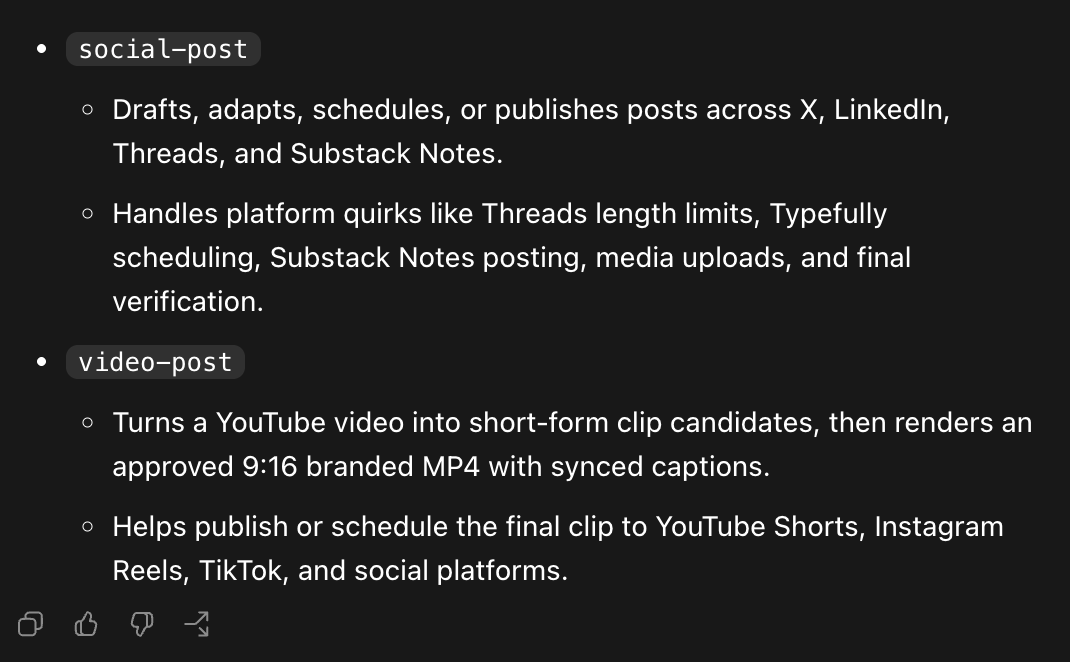
I make all my social media posts via Codex now.
It's pretty incredible how much time you can save when you chain together skills and browser use.
Should I make a video on how to do this?
Lovable 的设计负责人 Felix Haas 在社交媒体上分享了一篇关于"AI 时代高效团队"的观察,七条经验总结,来自这家增长速度惊人的 AI 创业公司内部视角。
几条有意思的观点:
第一,别像员工一样等安排。影响力最大的人不问"这归谁管",看到问题直接上手。主人翁意识不是靠分配的,只能靠自己拿。
第二,招人看态度不看简历。技能当然重要,但光有技能几乎不能预测一个人能不能成事。真正跑出来的人靠的是好奇心、韧劲和学什么都愿意学的心态。在 AI 时代,这一点比过去更明显。
第三,好奇心和沉迷 AI 是两回事。真正用好 AI 的人不是天天刷资讯,而是不断去试那些没人让他试的东西,追那些可能根本走不通的想法。大多数人不会这么做,但少数坚持的人,回报是指数级的。
第四,让资深的人重新动手。这是 Haas 觉得最有意思的现象:经验丰富的管理者重新变成了 builder(建造者)。AI 让个体贡献者的杠杆效应急剧放大,一个深度使用 AI 的资深工程师或设计师,可能是当下公司里最强大的组合。
第五,自我意识是速度的敌人。Haas 说他从没见过自我意识让公司变快,但见过它让公司变慢。最快的团队不太在意谁拿功劳,只在意什么方案有效。
第六,先发布再迭代。一周的内部讨论,抵不上一天的真实用户反馈。最强的团队不追求发布前完美,而是追求尽快学到东西。发布本身就是他们学习的方式。
这些观点单独看并不新鲜,不过 Lovable 这两年发展的确实不错,2024 年上线,8 个月做到 1 亿美元年收入,2025 年底完成 3.3 亿美元 B 轮融资,估值 66 亿美元,是欧洲增长最快的 AI 公司之一。
尤其是“让资深的人重新动手”这一条,可能是 AI 时代最容易被忽视的组织变化。当 AI 工具足够强大,过去被提拔到管理岗、远离一线的高手,重新获得了亲手做事的能力和动力。