I am getting lots of incoming questions about the public execution of Nidal Hasan, mostly because I have been outspoken on wanting public executions for over a decade.
My position is simple: Executions should be public and brutal, not private and medicalized. They are the ultimate example of the state's monopoly on violence, and the only way to keep that from running out of control is to confront voters with the trade they have made every single time, that they might have appropiate confidence or revulsion in the institution.
This is not new thinking. George Washington thought the same. The way we have shifted from hanging to firing squads to doctors quietly injecting chemicals that send our worst gently off to sleep is awful and dystopian, a total short-circuiting of important feedback mechanisms. It makes needless executions more likely, not less so. People who demean this as barbaric or yucky miss the whole point. It doesn't somehow become torture or inhumane (as the UN is suddenly claiming) just because we decline to hide the act behind a curtain.
And then there are those who suggest any revel in the death of those who truly deserve it is an indicator of a broken or diseased mind. To the contrary. It is normal, good, and aligned with our natural and national order. That it has not been done here in 60 years is an indictment in and of itself.
And that is without even getting into the fact that men were not hung for stealing horse, but that horses may not be stolen.
"I would to God that one of the most attrocious in each State was hung in Gibbets, up on a gallows five times as high as the one prepared by Haman. No punishment, in my opinion, is too great for the Man, who can build his greatness upon his Country’s ruin."
- George Washington, 1778
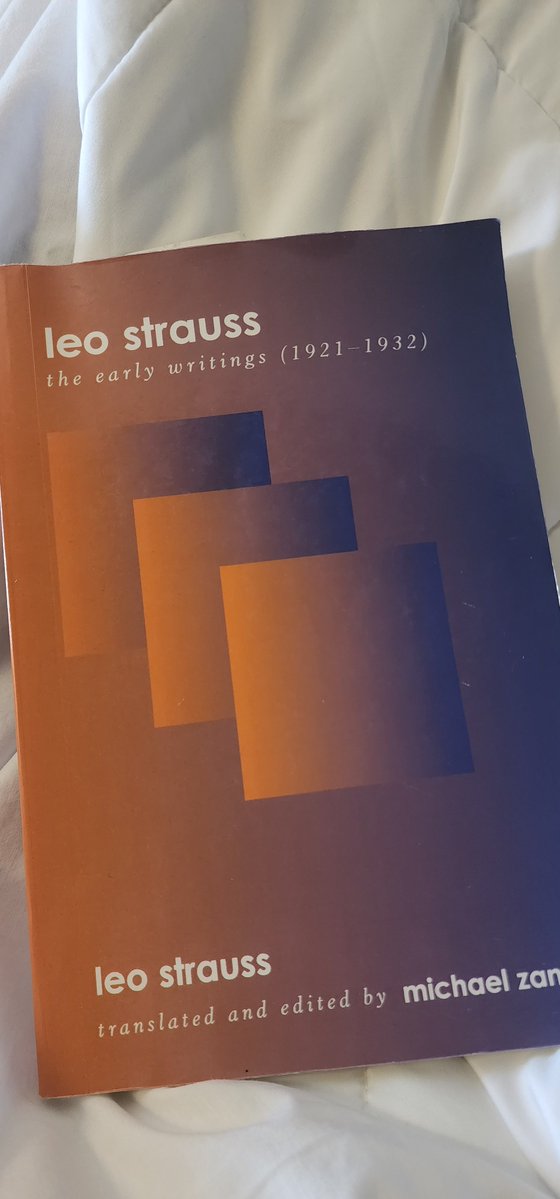
Leo strauss was a zionist
Zionist starts with z
Z is the symbol of Russian special operation
Woody allen made a Russian comedy/parody
Woody allen is JEWISH
Larry David starred in a woody allen movie
Larry David's ancestors had SLAVES
Plato defended slavery
Connect the dots fool
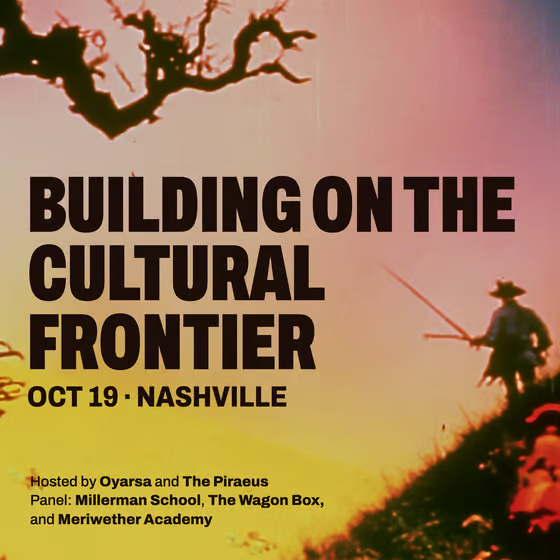
Excited to announce that the Piraues will be teaming up with Oyarsa to host our 1st ever in-person event NEXT Monday, October 19 at noon in Nashville (afternoon of the 4th Thiel lecture)!
"Building on the Cultural Frontier" will be a lunch and panel discussion featuring leaders from our rapidly growing grassroots movement—citizen activists, independent scholars, and entrepreneurs working to revitalize Western culture and education outside of mainstream institutions.
The panel will introduce you to these leaders and their projects, discuss their visions for the future, and show you how to get involved.
Nick Gallo (@nickmgallo) will lead the discussion with the following panelists:
➤ Michael Millerman (@millerman) of The Millerman School, an online school of political philosophy teaching Strauss, Heidegger, Plato, and others, to discuss his vision of enriching political and philosophical discourse outside academia.
➤ Paul McNeil (@pbdmcniel) of The Wagon Box Inn (@thewagonbox) in Story, Wyoming, to discuss his vision of connecting online communities at real-world hubs, like the Wagon Box, which can serve as a model for similar projects across the country.
➤ Warren Steury(@NWSteury), founder of Meriwether Academy (@meriwetheracdmy), a Nashville-based men's group to discuss his vision for building men's civic organizations and boys' schools to revive the ideal of the American man.
➤ Tyler Mathews (@tchevezmathews), founder of Oyarsa (@oyarsanetwork), a St. Louis-based men's group to discuss his vision of connecting grassroots cultural groups with local business owners and entrepreneurs, and how St. Louis can serve as a model for other cities.
Discussion will be followed by a social hour. Light lunch is provided. Look forward to seeing you all there!
@xian_futurist I said it "appears to be", posted the source I thought he was misquoting, and then posted the correct source when I found it. All of this separately from the interpretation of the passage.
Fuentes claims that Harry Jaffa once said that Leo Strauss's life work is the protection of the Jewish people. That appears to a fabricated quote or paraphrase (you can correct me if I'm wrong). Jaffa does write something about "the essential purpose of Leo Strauss's life and work," namely, that it was to secure the recognition of "the authority of the moral order based upon the dignity of man, supported both by reason and revelation"; "Whether the ultimate reason for choosing the moral virtues was obedient love of the living God, or the goodness of the life of autonomous reason, was less important than their agreement upon the moral order which must inform the life of decent society. From this perspective revelation and reason, Jerusalem and Athens, were in agreement. For this reason Strauss was committed no less to the defense of Jerusalem than of Athens." Defending Jerusalem alongside Athens, revelation alongside reason, because of their kinship in securing "the authority of the moral order based upon the dignity of man" is quite different from saying that your life goal is the protection of the Jewish people. https://t.co/DNpxTazdSo
It doesn't make sense to say that everyone who reads Leo Strauss agrees on all the important points just by virtue of the fact that they all read Leo Strauss. For instance, I wrote my dissertation/1st book "Beginning with Heidegger" to explore the different receptions of Heidegger's work across the (geo)political and ideological spectrum -- the people I discussed (and many others, besides) all consider Heidegger to be the greatest thinker of our times, and yet they disagree pretty fundamentally on political, social, and philosophical matters nonetheless. So a "guilt by association" approach to Heideggerians just wouldn't make much sense. Schmitt in my opinion is similar. Not only was he popular on the anti-liberal left, he was also studied by Pinchas Rosen of the Israeli supreme court, by Taubes, and by Strauss, who thought Schmitt was still too...liberal. You can't really make sense of that kind of thing on a "guilt by association" basis. You can only make sense of it by debating the substance of the work, the substance of its reception, etc. I do grant that schematic presentations and overviews can be helpful but they're not decisive. I have used schematic overviews myself when talking about Left and Right Heideggerians, but my goal in doing that was to open a space for Right Heideggerians in an academic environment where if anyone was taught who was influenced by Heidegger, it was his leftist interpreters. (etc etc etc. I am posting a lot about this topic because it is a good one).
fyi (not that it matters, and who the hell cares anyways lol) but some "straussians" don't like me and the resident straussian at the university of toronto when I was there not only quit my dissertation committee but actively spent years trying to sabotage the new one
I guess I'm done "defending" Strauss for the day. If it's a genuinely interesting topic for you, I have infinite videos, essays, etc, or you can listen to Strauss lectures directly at the Strauss Center Archives, or look at the digital transcripts of them, or read his books, etc. If it's the kind of thing you want more of my own opinion about, maybe I'll make a video when I'm in the mood, or you can invite me to write something for you (for pay), etc. The best source is "the horse's mouth" but people often do benefit from and want, and need, an interpreter. The best thing that could happen from Fuentes's little rant (ending, rather ludicrously and with an infantile ragebait that I thought I once heard lament in his own followers -- guess that didn't last long -- with the words "you like Jabotinsky, well we like Hitler") is that someone who listens to him reads Leo Strauss directly and gets into the matter (i.e. die Sache -a term I picked up when I learned German to read Heidegger, jk) of political philosophy itself. Actually the best thing that could happen is that I sell a bunch of courses and also save some souls.
A lot of people are "connected" to Leo Strauss because smart people read books written by smart people and discuss them, even while disagreeing, sometimes radically.