My life got a lot better when I viewed every problem as a skill issue. Out of shape? Skill issue. Ugly bank account? Skill issue. Anxious thoughts? Skill issue. I affirmed to myself these would go away if I got better. And magically, they did, once “I” did.
The hardest part of rebuilding your life is realizing nobody is coming to save you. Not your parents. Not your partner. Not your potential. Not the perfect plan you keep pretending you need before you finally start. At some point, the fantasy has to collapse. You either become the person you’ve been waiting for, or you stay exactly where you are.
Maturing is realizing that La La Land is actually a happy ending. It is not about two people staying together forever, it is about two people meeting at the right time, changing each other's lives, and leaving with more than they came with. Mia became the woman she dreamed of because Seb believed in her, and Seb built the club he always wanted because Mia reminded him not to give up.
Their love was not wasted. It was a bridge, carrying each of them to the lives they were destined for, proof that not every love is forever but every love can mean something. And sometimes the most honest ending is not holding on, but walking forward with gratitude for what was given.
There's a physicist at Stanford named Safi Bahcall who modeled this exact principle and the math is wild.
He calls it "phase transitions in human networks." When you're stationary, your probability of a lucky event is limited to your existing surface area: the people you already know, the places you already go, the ideas you've already been exposed to. Your opportunity window is fixed.
When you move, your collision rate with new nodes in a network increases nonlinearly. Double your movement (new conversations, new cities, new projects) and your probability of a serendipitous encounter doesn't double. It roughly quadruples. Because each new node connects you to their entire network, not just to them.
Richard Wiseman ran a 10-year study at the University of Hertfordshire tracking self-described "lucky" and "unlucky" people. The single biggest differentiator wasn't IQ, education, or family money. Lucky people scored significantly higher on one trait: openness to experience. They talked to strangers more, varied their routines more, and said yes to invitations at nearly twice the rate.
The "unlucky" group followed the same routes, ate at the same restaurants, and talked to the same 5 people. Their networks were closed loops. No new inputs, no new collisions.
Luck isn't random. Luck is surface area. And surface area is a function of movement.
The lobster emoji is doing more work than most people realize. Lobsters grow by shedding their shell when it gets too tight. The growth requires a period of total vulnerability. No protection, no armor, soft body exposed to the ocean.
That's the cost of movement nobody posts about. You have to be uncomfortable first. The new shell only hardens after you've already moved.
people wonder why adults in their 30s suddenly start picking up hobbies like running, hiking, tennis, and golf.
the answer is simple for a lot of people. they weren’t born privileged. their teens and early twenties were spent surviving not exploring. now that there’s a little more time and a little more room, they’re finally getting to become the people they always wanted to be.
So I have been thinking about folks between 28-35.
It has become obvious to me that this phase of life is one of the most misunderstood and emotionally demanding seasons anyone will ever pass through.
At this age, life quietly removes the training wheels. You are no longer seen as young and figuring it out, yet you don’t fully feel established. Expectations rise from every direction. Family expects stability. Society expects progress. Your peers seem to be doing better online. And you expect answers from yourself that are not yet clear.
This is the age where comparison becomes dangerous. You start measuring your life against timelines that were never designed for you. Someone is married. Someone bought a house. Someone relocated. Someone is already tired of a career you are just entering. And without warning, pressure creeps in, not because you are failing, but because you are becoming more aware.
Between 28-35, many people are not lazy or unserious. They are simply overwhelmed. This is the stage where reality replaces motivation. Where dreams meet bills. Where talent meets structure. Where passion demands discipline. You are forced to confront gaps in your skills, mindset, finances, and emotional health.
It is also the age where isolation becomes common. Friends drift. Circles shrink. Conversations become transactional. You are surrounded by people, yet feel alone. And when there is no strong sense of purpose or progress, escape starts to look attractive, whether through distractions, unhealthy habits, or quiet resignation.
But this phase is not a curse. It is a construction site.
It is the age where you must stop relying on potential and start building systems. Where you must upgrade skills, not for applause, but for survival and relevance. Where you learn that no one is coming to save you, yet you are more capable than you ever realized.
If you are between 28-35 and feel lost, tired, or behind, it does not mean something is wrong with you. It means you are awake. Growth at this stage is rarely loud. It is often lonely, uncomfortable, and slow. But it is also foundational.
This season rewards those who stay honest with themselves, invest in learning, choose better environments, and keep moving even when clarity is incomplete.
Girls in their 30s be like, “OMG I’m so behind,” but meanwhile they’ve healed their inner child, stopped people pleasing, left that toxic job, started therapy, learned to enjoy their own company, travel when they want, and actually like themselves now. Like sis. You’re not behind at all. You’re evolving.
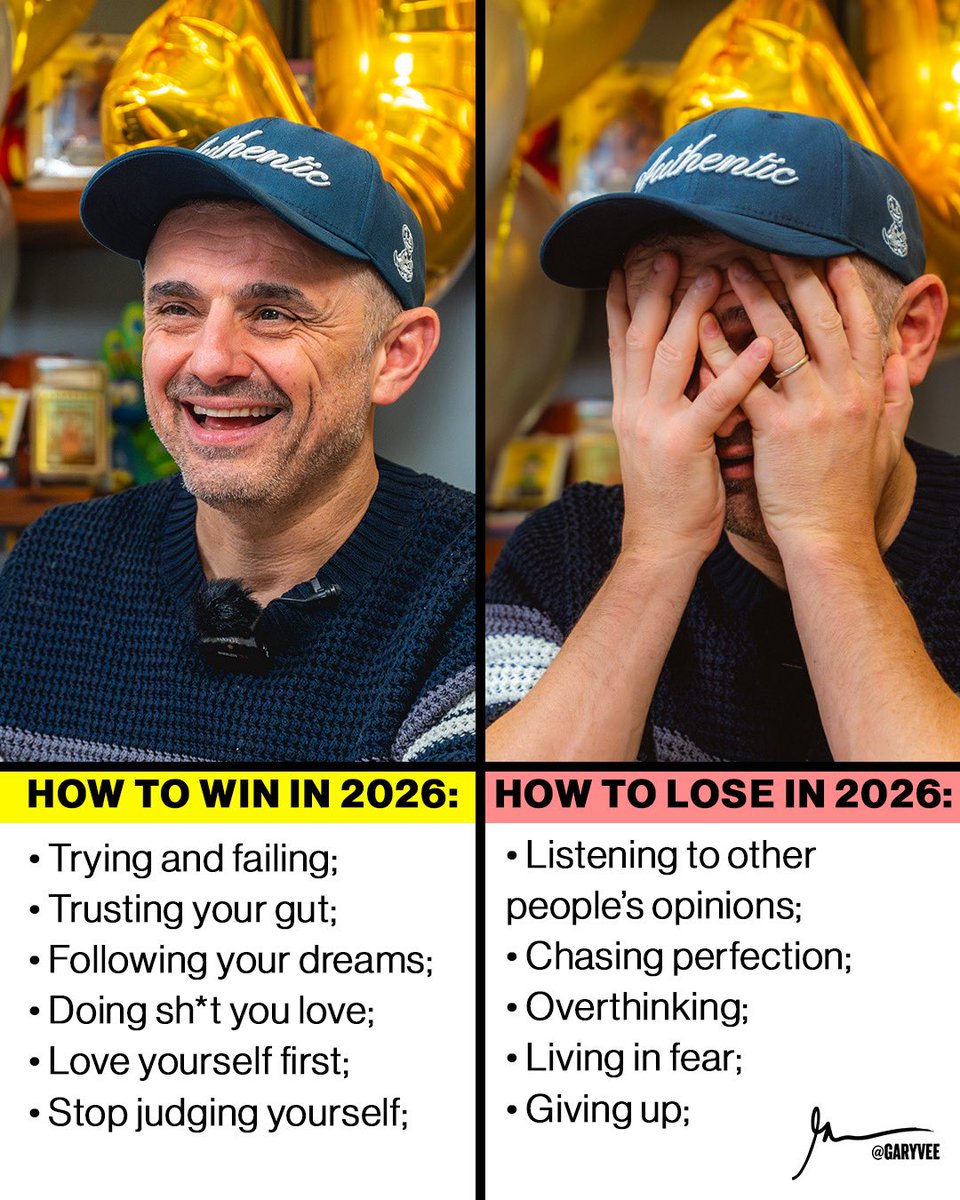
Who wants to actually win 2026? Who just tired of what happening the last 1-2-3-10 years?
If this is your year and you’re ready to be accountable, intentional, and most of all .. -action oriented and lacking fear … please reply in the comments with a simple -> me
i spent years walking into rooms like i was sorry for existing. slouched shoulders, head down, avoiding eye contact. trying not to be seen because I’d rather not be seen than to have someone see me and reject me.
then one day i caught it in real time. saw myself doing it again and honestly got disgusted. i had to change it. so i started practicing. every single day. walking into rooms differently. back straight. eyes forward. moving like i belonged even when i wasn’t sure i did.
people responded immediately. they made space for me when i walked by. listened when i spoke instead of talking over me. started asking my opinion on things. conversations that used to exclude me suddenly included me. opportunities appeared that the smaller version of me would’ve been invisible to.
all because i finally let myself take up space.
Not having hobbies will get u attached to people easily, you will find yourself not being able to leave tables that no longer serve you, because you are afraid of being alone/lonely.
Try and eevate your life because you're either gonna outgrow people or they are going to outgrow you. Make money too so that you don’t make decisions based on hunger. Once again make money.
Sorry to break it to you but you literally have to face your fears and slaughter them.
Otherwise you will live a small life that you do not want.
You literally have to view your biggest fears and attack them head on.
You have to fall into the abyss to find your way out.
The easy path does not exist.
There is no get out of jail free card.
You have to allow yourself to die a spiritual death over and over again in order to reinvent yourself into the person you are actually supposed to be.
And you have to be painfully honest with yourself and the people around you.
It’s horrible but it’s truly the only way.
Sorry to break it to you but you literally have to face your fears and slaughter them.
Otherwise you will live a small life that you do not want.
You literally have to view your biggest fears and attack them head on.
You have to fall into the abyss to find your way out.
The easy path does not exist.
There is no get out of jail free card.
You have to allow yourself to die a spiritual death over and over again in order to reinvent yourself into the person you are actually supposed to be.
And you have to be painfully honest with yourself and the people around you.
It’s horrible but it’s truly the only way.
Worry feels productive because it burns energy.
That’s the whole scam.
You’re lying in bed at 02:11, phone face down, room lit by that little blue charger light, and your brain is doing laps like it’s training for something. You can literally feel it in your chest, that tight electric hum. It feels like effort. It feels like you’re “on it.”
But nothing is moving.
No email is being sent. No plan is being written. No call is being made. No decision is being made. You’re just marinating in the same loop, again and again, like your mind thinks repetition counts as progress.
It doesn’t.
Worry is passive procrastination dressed up as responsibility. It’s your nervous system trying to convince you that suffering equals solving. Like if you punish yourself hard enough with anxiety, life will notice and give you a pass.
It won’t.
What worry actually does is turn your brain into a room full of smoke alarms. Loud, constant, and useless. You can’t hear anything else. You can’t think clearly. You can’t pick a next step. You just sit there, sweating, refreshing your own dread.
the most insulting part is how moral it feels. People act like worrying means you care. That if you don’t worry, you’re reckless. Cold. Naive.
half the time worry is just fear that hasn’t decided where to stand.
It’s the mind saying, I don’t want to feel powerless, so I will at least feel distressed.
Distress is a kind of control. It’s familiar. It’s something you can generate on demand. Action is risk. Action means you might find out the truth. Action means rejection is possible. Action means failure becomes real instead of imagined.
So you worry.
You worry about your bank account instead of opening the spreadsheet. You worry about your health instead of booking the appointment. You worry about the relationship instead of asking the question. You worry about your career instead of sending the application. You worry about the message you should reply to, and the longer you wait, the more terrifying it gets, and the thread becomes a live wire.
Worry is safer than doing the thing because worry keeps the situation in the imaginary realm where you can keep believing you still have options.
I know that sounds harsh, but it’s true.
There’s this moment right before action where your body tries to stop you. That micro-freeze. The tiny nausea. The urge to check your phone, get water, tidy the desk, do anything except the actual next step. That’s the moment worry wants you to choose.
Because worry keeps you in a loop where you can feel “busy” without changing anything.
Action is a door. Once you open it, you can’t pretend you don’t know what’s on the other side.
That’s why “reject worry” is actually a power move. Not because anxiety is stupid. Because anxiety is loud and selfish. It wants the whole steering wheel. It wants to drive your entire day with a single message: danger, danger, danger.
The problem is, it doesn’t know the difference between danger and discomfort.
screams at both.
It screams when you’re actually at risk, and it screams when you’re just about to do something that would make you grow up a bit. It screams when you’re about to change. When you’re about to be seen. When you’re about to commit. When you’re about to leave. When you’re about to ask for what you want.
It treats the unknown like a predator.
you have to make a choice. Not a motivational choice. A practical one.
Do I want to stay in the feeling, or do I want to change the facts.
Because facts are the only thing that calms a mind long-term. Not affirmations. Not pep talks. Facts. Evidence. Movement.
This is why action clarifies. It reduces the unknown. It turns a foggy catastrophe into a solvable shape.
A problem that lives only in your head can be infinite. It can expand forever. It can eat your whole week with zero resistance. But the second you take one real step, the problem gets smaller because it becomes specific.
You send the email. Now you’re waiting for a reply.
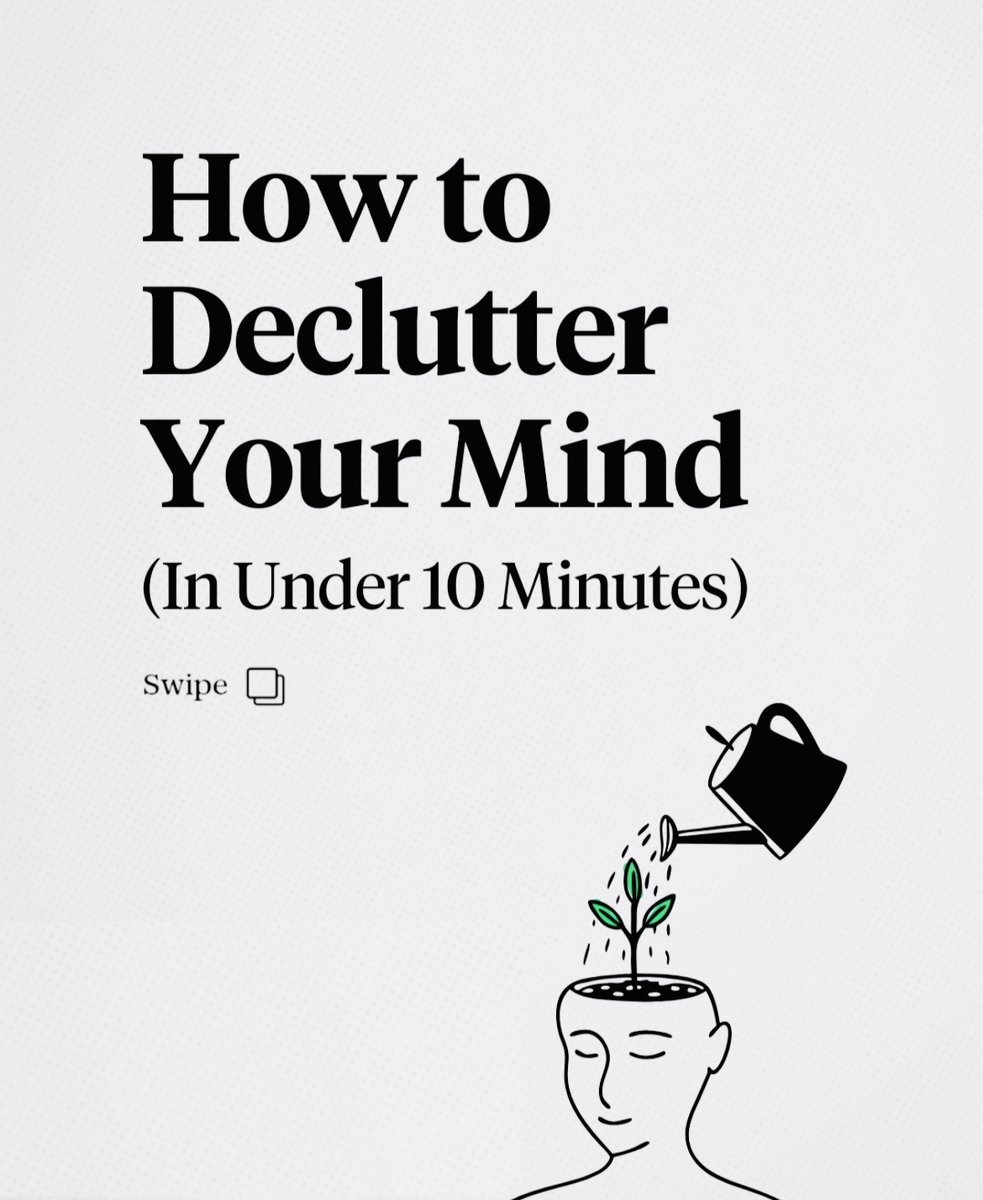
Mental clutter is expensive.
It slows decisions.
It drains energy.
It kills focus.
Clarity doesn’t come from thinking more—it comes from removing what doesn’t matter.
Here’s how to clear your mind (in under 10 minutes):
nobody's coming to save you.
you either grab life by the throat and take what you want or you wait around hoping someone hands it to you.
the sooner you realize your life is solely in your hands, the sooner everything changes.
stop waiting. start taking.