The imagery of wealth, old-money nobility, and bizarre pet photoshoots in the NORMAL music video acts as a layered satirical critique of ultra-celebrity culture, highlights how public perception strips away an individual's humanity, replacing it with an untouchable, historical caricature.
There is performance of Excess here: Eating in this setting is not for survival or nourishment; it is an elaborate, highly visible performance. by staging a wildly excessive banquet overflowing with wine glasses and gourmet food, BTS is commenting on the perceived privilege of superstardom.
There is Aftermath too: In the narrative arc of the MV, these grand, chaotic celebrations quickly cut to the quiet, messy morning-after. This contrast emphasizes that behind the untouchable royal facade lies a group of ordinary people dealing with isolation once the cameras shut of.
The dog photoshoots are a direct nod to European aristocracy and early photography trends, where the ultra-wealthy commissioned formal portraits of their hounds to signal immense status. Just like the monarchs of 'the days back in the day', modern global idols are effectively trapped within their own golden cages. They are forced to perform elite, curated versions of domesticity for an audience
The bathroom is the equalizer: all individuals are human at the end of the day and have to do this mundane humanly task.
Royalty represents the ultimate historical paradox: absolute power combined with zero personal freedom. The MV was shot at Quinta da Francelha estate.
Normal tells its story in three acts.
It begins with celebration.
The rooms are overflowing with people, music, laughter, dancing, birthday cake, and conversation. Every frame feels alive. They're completely immersed in the moment, celebrating the simple joy of existing together. It's messy, loud, and wonderfully imperfect—the kind of night where time dissolves because you're surrounded by the people who make you feel at home.
But every celebration has a morning after.
The next time we see them, everything has changed.
The noise has disappeared. The room is almost silent. They're scattered throughout the space, each sitting alone despite occupying the same room. No one is performing anymore. The adrenaline has faded, leaving behind nothing but exhaustion.
Taehyung's bruises become impossible to ignore. Whether they're literal or symbolic almost doesn't matter. They tell us the same thing: the night left its mark. Every member looks worn down, carrying traces of something the audience never fully witnessed. The joy was real, but so was the cost of living through it.
And yet, the story refuses to end there.
In the final act, they're transformed once again.
They're dressed in immaculate black suits, standing shoulder to shoulder for what appears to be a formal portrait. Their posture is composed. Their expressions are calm. Beside them stand dogs, introducing an unexpected sense of warmth and quiet after everything that came before.
That's why I think the ending is the emotional core of the video. It doesn't erase the celebration, nor does it deny the exhaustion. Instead, it acknowledges both before showing us what comes next.
Because life doesn't stop after the party ends. You wake up tired. You carry the bruises no one else notices. You straighten your jacket. You stand in front of the camera.
You smile.
The photograph becomes the memory everyone else keeps but only the people inside that photograph know everything that happened before the shutter clicked.
Maybe that's the irony behind Normal. We often think of "normal" as a single emotional state—as happiness or sadness, celebration or grief, success or exhaustion. But this music video suggests that normal has never been one thing. It's the entire cycle. The highs. The lows. The silence after the music ends. The resilience required to get dressed the next morning and face the world again.
After thirteen years, perhaps that's what BTS are trying to say.
Life isn't defined solely by standing ovations, nor by the bruises left behind once the crowd goes home. It's defined by the willingness to experience both—to embrace the joy, endure the aftermath, and still find the strength to stand beside the people you love when the camera starts rolling again.
Maybe that is what it truly means to be normal.
In the last page of hyyh notes jungkook finds himself being upside down, in a place beyond time!
The merry go round is upside down in space? BTS are stuck in rooms but doors are open unlike fake love MV while seokjin is in the opposite side. they are finally finding freedom...
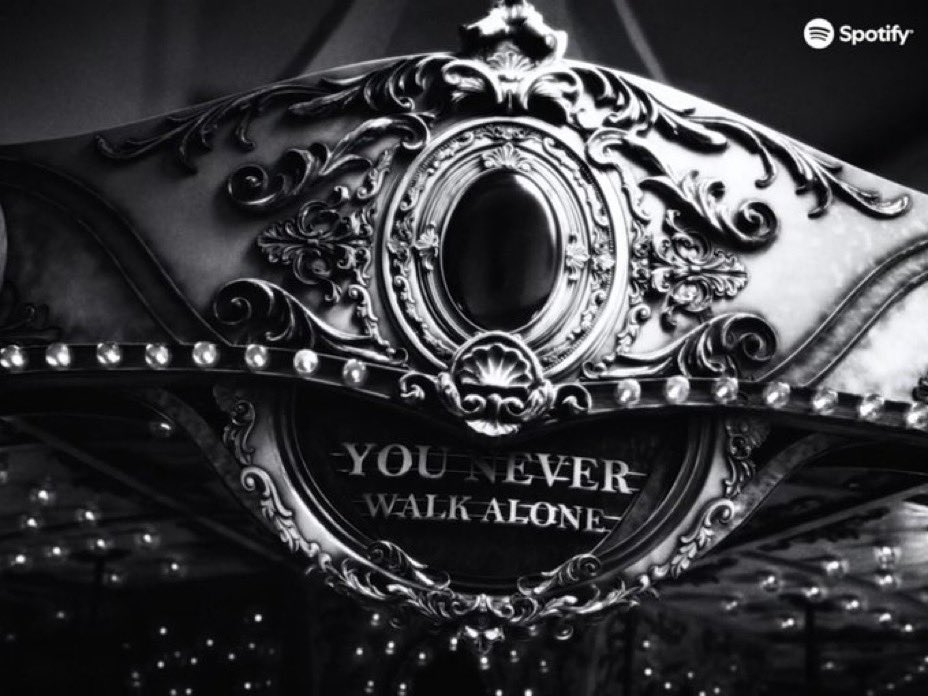
bts adding this is VERY important. merry go round emphasizes that while you may feel you are moving forward in life (growing up, achieving success) you are still anchored to the same heavy anxieties. the horse vertical movement mimics life’s temporary highs and lows but the horizontal trajectory never actually leaves the circle. growing up does not mean being free from anxiety and pressure. this is bts telling us that you are NOT alone when it comes to that kind of struggle.
In this mv, Members showed them reflecting on the years they spent separated from their real world, while asking whether the cycle that shaped them is a prison or a home.
I thought it in 3 parts.
1. The literal layer: military service
The endless corridors, identical rooms, flickering lights, repetitive movement, monochrome palette, and the carousel all mirror military life.
A merry-go-round moves constantly but never truly goes anywhere.
You wake up. Repeat the routine. Another day passes. Repeat.
The ride keeps moving, but you have no control over its speed or direction.
This is why the military imagery and carousel imagery feel fused together.
2. The psychological layer: each member confronting his own "shadow"
This is where the Jungian theory and Fake Love connections become important.
The rooms don't feel like physical locations.
They feel like internal spaces.
RM → awake room, insomnia, endless thinking.
Jimin → chasing the carousel/old memories.
Yoongi → storm, flying papers shows chaos, public scrutiny.
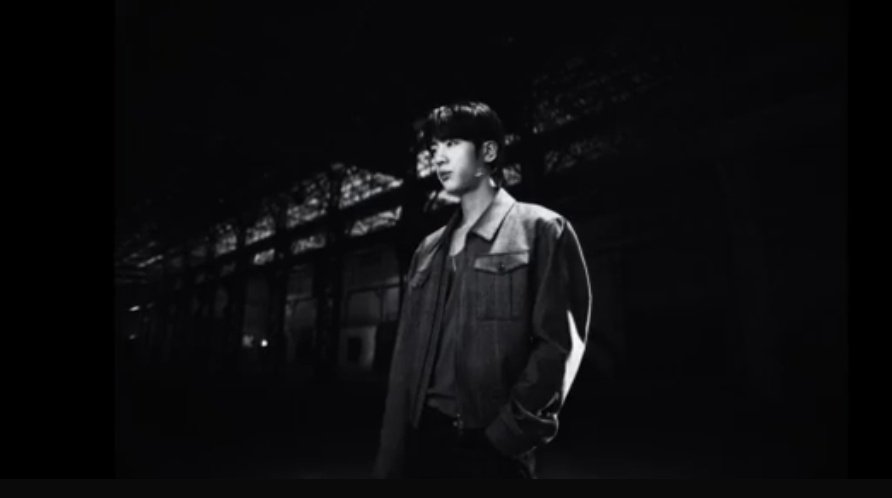
Jin → crossing the corridors while darkness follows him as if He's trying to get rid of smtg (pain/past self or pathetic memory) but it keeps following him. Cause The black liquid is probably not a monster.
It resembles what Jung calls the shadow: fear, guilt, loneliness, grief, exhaustion,entment.
You can leave the room.
But the shadow follows.
Notice how it never truly defeats them.
It simply exists.
That's a very BTS message.
Not "we conquered pain."
More:
★We carried it with us and kept moving.
3. The meta layer: BTS's entire career as a loop. This is where HYYH, Spring Day, YNWA, Fake Love, Monochrome, Proof, and even the solo era connect.
The carousel isn't just military service.
It's BTS itself.
A cycle of:
★debut
★growth
★success
★sacrifice
★separation
★reunion
★new beginning
over and over.
The spaceship, infinity imagery, doors, corridors, alternate rooms, and references to past eras suggest BTS are traveling through their own history.
Not escaping it.
Revisiting it.
BTS constantly open doors themselves.
Throughout their career:
HYYH
Wings
Love Yourself
Map of the Soul
Proof
now Merry Go Round
doors appear whenever a new chapter begins.
The message seems consistent:
★Nobody opened these doors for us. We walked through them ourselves.
In Merry Go Round, the doors feel like eras, memories, and possible futures.
Each room contains a different version of BTS.
Jin and Taehyung
This is the most interesting part.
If viewed through HYYH:
Taehyung is often the first to sense something is wrong.
Jin is the one burdened with correcting the timeline.
In Merry Go Round, it almost feels like a passing of responsibility.
Taehyung disappears as Jin arrives.
Not because they're enemies.
Because their roles are changing.
Almost like:
"I've been holding this place while you were gone. Now you're back."
Considering Jin was the first member discharged, this reading works both symbolically and emotionally.
Why Jimin follows the carousel?
Not because he's trapped.
Because he's afraid of losing what the carousel represents.
The carousel is:
BTS
youth
memories
togetherness
He isn't chasing a ride.
He's chasing a promise.
The same promise from Spring Day:
No matter how long winter lasts, we'll meet again.
The actual ending
This is where I disagree with the "they escaped the loop" theory.
I don't think they escaped.
I don't think they wanted to.
The final message feels closer to:
★We discovered that the loop itself wasn't the enemy.
The military years ended.
The loneliness ended.
The waiting ended.
But BTS will always be riding another merry-go-round:
new albums, new eras, new challenges, new universes.
The difference is that now they're riding it together again.
That's why the MV feels strangely hopeful despite all the darkness.
The ending doesn't say:
"The ride stopped."
It says:
"We're all back on it now."
& for BTS, that is home.
as soon as jin stepped out of the military he was already meeting fans, planned a whole tour, did an encore, filmed run jin and pushed out two albums while the members were away. everything he did was so armys wouldn’t be bored. he deserves so much credit for that










![bts_bighit's tweet photo. [#오늘의방탄]
260506 BTS visited the National Palace in CDMX
#방탄소년단 #BTS #BTSatTheNationalPalace https://t.co/DjwO71Vf5U](https://pbs.twimg.com/media/HHrcIQXbcAA66Ea.jpg)


