I can't tell you how disheartening it is to see the constant efforts to dehumanize Jews.
We are told that the bread we've always eaten is actually Palestinian, and people are going to "reclaim" it from us.
We are told that the Holocaust, a concerted effort to kill all Jews in Europe, wasn't really about us, or it was fake, or we deserved it but we are also evil Nazis.
We are told that our ancient artifacts in the Levant mean nothing and prove nothing. Our traditions mean nothing and prove nothing.
We aren't allowed to have our history, we aren't allowed to have our pain, we aren't allowed any historical facts that might suggest we as a people exist.
It's so tiring.
From Tax Records to Energy Bills. The State's Reach Grows Longer
Most people accept that the taxman needs to know what they earn. Far fewer would agree that their private financial information should be shared with energy companies. Yet that is precisely the possibility opened up by Labour's Energy Independence Bill, introduced to Parliament on 4 November by Energy Secretary Miatta Fahnbulleh.
The Bill contains a provision expanding the sharing of personal information between government departments and licensed energy companies. HMRC income records and other sensitive data could help determine who qualifies for assistance with their energy bills. The Government insists existing privacy safeguards will remain. These powers deserve far more scrutiny.
At present, the Digital Economy Act 2017 permits certain information to be shared to help households experiencing fuel poverty. The new Bill would extend that arrangement to cover households facing high energy costs or living in properties that are difficult to heat. It would also widen the range of energy sector bodies eligible to receive information.
The Government argues that this would help identify struggling households missed by existing schemes. There is merit in that argument. Pensioners, working families and others can face serious hardship without qualifying for means-tested benefits. But recognising that problem does not automatically justify giving private companies greater access to information collected by the state.
The Government's impact assessments contemplate future schemes in which households better able to pay could bear more of the cost of subsidising others. Depending on how such schemes are funded, customers excluded from assistance could face higher bills. No income threshold or surcharge has been announced, and these arrangements would require further legislation. Parliament is being asked to create powers whose eventual financial consequences remain uncertain.
Consider the principle involved. Income tax is collected under the authority of Parliament. Citizens are legally obliged to disclose their earnings, and HMRC is entrusted with protecting that information. Expanding its use beyond taxation and established public purposes changes the relationship between the individual and the state. Such powers should require a compelling justification, clear limits and proper democratic oversight.
Why should an energy supplier need access to personal income information when HMRC could establish eligibility and provide a simple confirmation? What safeguards would prevent unnecessary disclosure, excessive retention or future uses beyond the original purpose? And if ministers eventually decide that households with higher incomes should contribute more, what scrutiny would Parliament exercise over the rules?
These questions matter because the Bill would allow important details to be settled later through secondary legislation. Once Parliament grants broad powers, future ministers may have considerable freedom to decide how they are exercised. Existing data protection law offers safeguards, but safeguards are only as strong as the limits placed upon the powers themselves.
Britain already has an expensive and complicated energy system. Households face standing charges, environmental levies and costs arising from successive government decisions. The prospect of income-related contributions would add another question about who pays, how much and on whose authority.
Helping vulnerable households is a legitimate duty of government. Protecting the confidentiality of citizens' financial affairs is another. Parliament must ensure that pursuing the first does not needlessly compromise the second.
Before granting these powers, MPs should demand precise answers about what information will be shared, who will receive it and how future schemes will be funded. The public should not have to surrender more financial privacy simply to keep the lights on.
Miatta Fahnbulleh.
If this video is recent & if from Gaza, then Eyal is clearly wrong as these people, these obviously starving and unhealthy men, can be seen "literally" experiencing an "ongoing genocide".
Those of you who have eyes are morally obliged to use them to see.
Hey
@grok
What is the biggest lie people are told about Israel?
Be precise.
Tell me the top 3 lies.
Don't give me a diplomatically correct reply.
Give me the truth.
My Fight, My Hope, My Life:
Charlotte’s Journey with Brain Cancer
Told in the first person by Charlotte’s mother
18.2.97 - 24.2.16
The Final Day of Radiotherapy
22.11.2013
Overnight, I had become quite unsteady on my feet. The reality is that all this treatment has taken a tremendous toll on me, both physically and mentally. I feel utterly exhausted.
As Mum wheeled me towards my final session, she quietly whispered in my ear:
“Hang in there, this is the last one.”
Mum helped the nurses position my frail, weakened body onto the treatment table. I could barely lift my head to get it into position so that the mask could be secured to the table.
Tears rolled down my cheeks. I turned towards Mum, only to see that she was crying too.
Mum eventually left the room, and I knew she would be heading straight to the toilets to have a cry of her own. She has always told me that whatever pain her children are going through, she feels it a thousand times more deeply in her heart.
Those words have never felt truer than they did today.
I've struggled to take all my medication so have missed some doses.
I also saw the dietician, who has now recommended oral nutritional supplements to help improve my intake. My body has been through so much, and I know there is a long road ahead to regain some strength.
At 4.00 pm, I was finally told I could go home, with the advice that if I experienced any problems, I must attend our local hospital immediately.
For now, there was only one place I wanted to be: home, in my own bed, with my beautiful Nala curled up beside me.
Radiotherapy is finally over.
I know this isn't the end of the journey, and there will be difficult days ahead, but today I have reached another huge milestone.
I have made it through something I never imagined would be so physically and emotionally challenging.
Hopefully, this is the worst of it. Hopefully, from here on, there are better days to come.
One day, one step and one little victory at a time.
Charlotte’s BAG directly funds research at Charlotte’s Lab, King’s College Hospital, London The big difference with Charlotte's is simple: we self-fund everything. No salaries/overheads/advertising/merchandise If your thinking of donating to a brain tumour charity pop a pound in Charlotte's BAG
We have now raised 15% of our next £100k target thank you to those who donated. Here's to the next 5%
https://t.co/qGIjBOl3aq
March 2012, Toulouse.
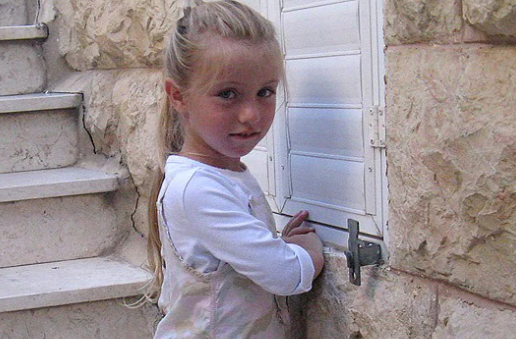
Myriam Monsonego, 8, the principal's daughter, was outside her Jewish school.
A jihadist chased her, grabbed her by the hair and shot her in the head.
Never forgive. May her memory forever be a blessing. 🕯️
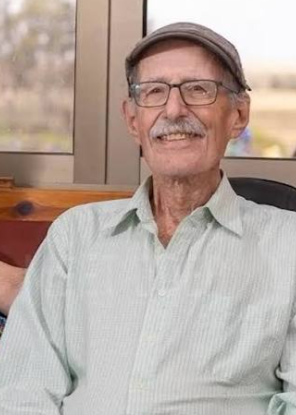
Oded Lifshitz, 83, spent years driving sick Gazans to Israeli hospitals.
On October 7, they dragged him from Nir Oz into Gaza. After more than 500 days, he came home in a coffin. This is who they are.
Never forgive.
May his memory forever be a blessing.
🕯️
A former Labour minister declared that flying the England flag is “not British” because it offends non-Muslims entering a church or synagogue.
According to him, the St George's Cross and Union Jack victimise everyone except the Muslims he refuses to name.
Why won’t he name the community he serves? Is he too frightened? And what is the response to him?
As a non-British Jew, I will say what he refuses to: the Union Jack and St George's Cross are not symbols of hate. They are the flags of the country that defeated real fascism and still stands for something. Anyone offended or victimised by the British flags has no place in Great Britain.
Stay out or seek asylum in Pakistan where you can feel at home.
Jewish and Christian British patriots must denounce the statements he made. Do not stay silent while they dismantle your country in front of you.
Britain must stay British.
Hey @grok, I’m going to ask you a series of questions in one post. Please answer all of them fully and in detail.
Who created the PLO?
When was it created?
What did clause 24 of the original 1964 PLO charter state?
What was the stated goal of the PLO in its original 1964 charter regarding the State of Israel?
Who ruled Gaza and the West Bank in 1964?
When Egypt and Jordan controlled Gaza and the West Bank, did either government establish a Palestinian state in those territories?
Did any Arab state recognize a Palestinian state in the West Bank or Gaza between 1948 and 1967?
What did the PLO change clause 24 to after 1967?
Why did the PLO not claim a Palestinian state in 1964, but begin claiming one only after 1967?