@IEA’s 2023 Net-zero roadmap highlights that “#carboncapture and storage” has been one of the unmet expectations. Here is a quick review of #CCUS development landscape and its significance in Pakistan’s net zero planning by SDPI’s energy analyst @Uba1drehman_7 🔽
@IEA’s 2023 Net-zero roadmap highlights that “#carboncapture and storage” has been one of the unmet expectations. Here is a quick review of #CCUS development landscape and its significance in Pakistan’s net zero planning by SDPI’s energy analyst @Uba1drehman_7 🔽
The Way Forward for Pakistan
💡Capacity building
📲Technology & knowledge transfer
🗣️cross-country partnerships
🫂 Leveraging existing platforms
📜update strategies to account for evolving techs.
📑long-term strategy for CCUS
💵Exploring financing models
👥De-risking finance
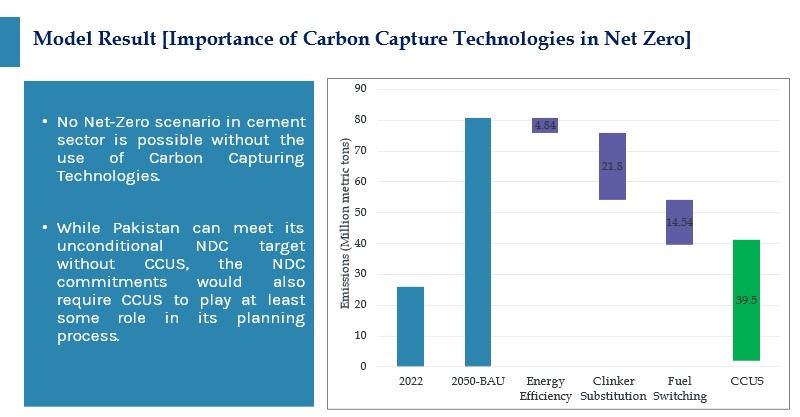
An overview of carbon capture importance in Decarbonizing Pakistan’s Cement sector
“No Net-Zero scenario in cement sector is possible without the use of Carbon Capturing Technologies”.
Climate Justice concerns over CCUS/CDR
🏭Extending the life of polluting industries
⏰Enabling the BAU Practices
👥Siting of CCUS/CDR projects in over-burdened communities.
🧿Offsetting emissions instead of mitigating.
#ClimateJustice#justenergytransition
The industrial sector (especially hard to abate sectors) also pose significant opportunities; however, the current economic turmoil has limited the fiscal mobility of this sector to finance this transition.
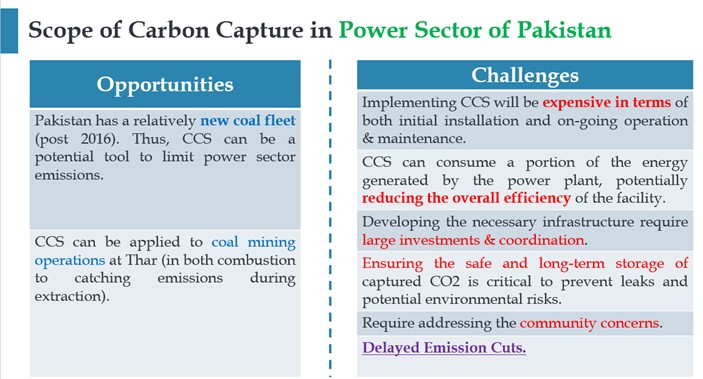
While power sector of Pakistan does provide opportunities, high technology cost of #CCS is expected to limit it at least over the short-term.
Still, Pakistan has a young #coal fleet and CCS can be applied to both generation and mining regions operations, particularly in Thar.
While the #NDCs of Pakistan define both adaptation and mitigation measures, there are no defined plans for carbon capture or storage in either, medium-, or long-term.
Further, the #NDCs do not provide a well-defined plan for emission reductions in the Industrial sector.
While #Pakistan does not have a #netzero target, it is in the process of developing the LT-LEDs.
Based on the country’s updated #NDCs, it is aiming to reduce 50% of its projected emissions based on international financing and 15% using its own resources.
#UNFCCC#COP28UAE
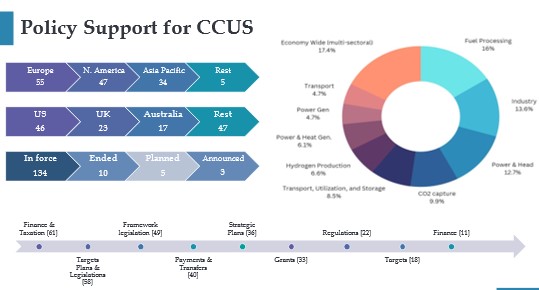
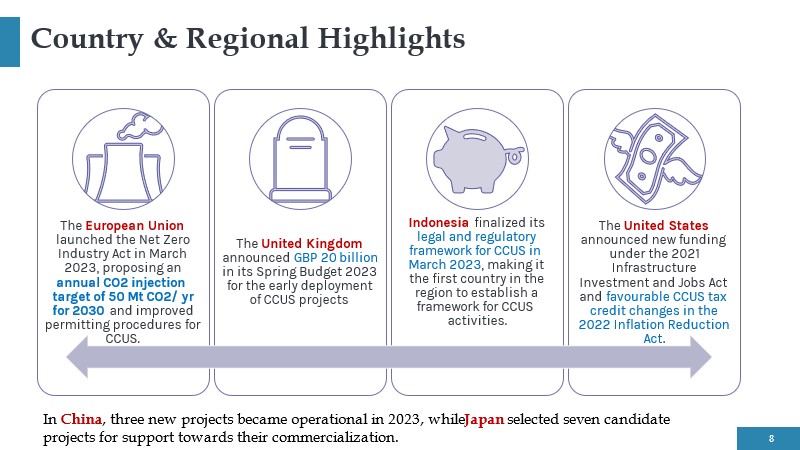
Policy and Regulatory support for #CCUS
🏙️Focused Region: Europe & North America
🇺🇸Leading country: United States of America
💵Highest supporting interventions: Finance & Taxation schemes.
#NetZeroRoadmap#netzero#NetZeroBy2050
The role of Carbon removal is however extremely important in all #IPCC pathways for achieving #ParisAgreement's 1.5-degree target.
Existing power and industrial facilities, if left #unabated will emit 600 billion tons of carbon over the next 50 years.
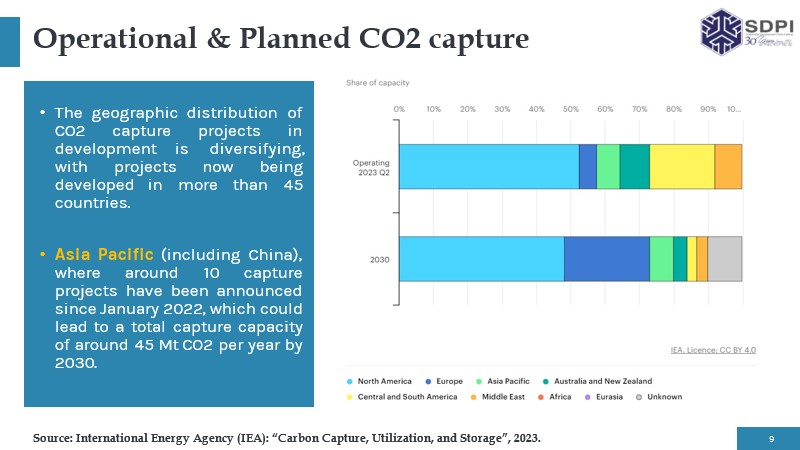
Against #Netzero demand of annual reduction of 1.2 GtCO2 by 2050 through #CCUS, the progress at current pace would enable only 1/3rd of the net-zero requirements.
However, the industry is getting momentum in recent years, with around 500 projects in development.
@NetZeroWatch
Against #Netzero demand of annual reduction of 1.2 GtCO2 by 2050 through #CCUS, the progress at current pace would enable only 1/3rd of the net-zero requirements.
However, the industry is getting momentum in recent years, with around 500 projects in development phase.
@IEA’s 2023 Net-zero roadmap highlights that “#carboncapture and storage” has been one of the unmet expectations. Here is a quick review of #CCUS development landscape and its significance in Pakistan’s net zero planning by SDPI’s energy analyst @Uba1drehman_7 🔽
In collab w @SDPIPakistan, 🇩🇰 will try to unlock pathways to support implementation of #CarbonMarkets in 🇵🇰. We’ll try to develop framework for inclusive strategy to expedite SDGs & capacity building needs. Join inception workshop tom at 12:00 https://t.co/X3BacyxsLO