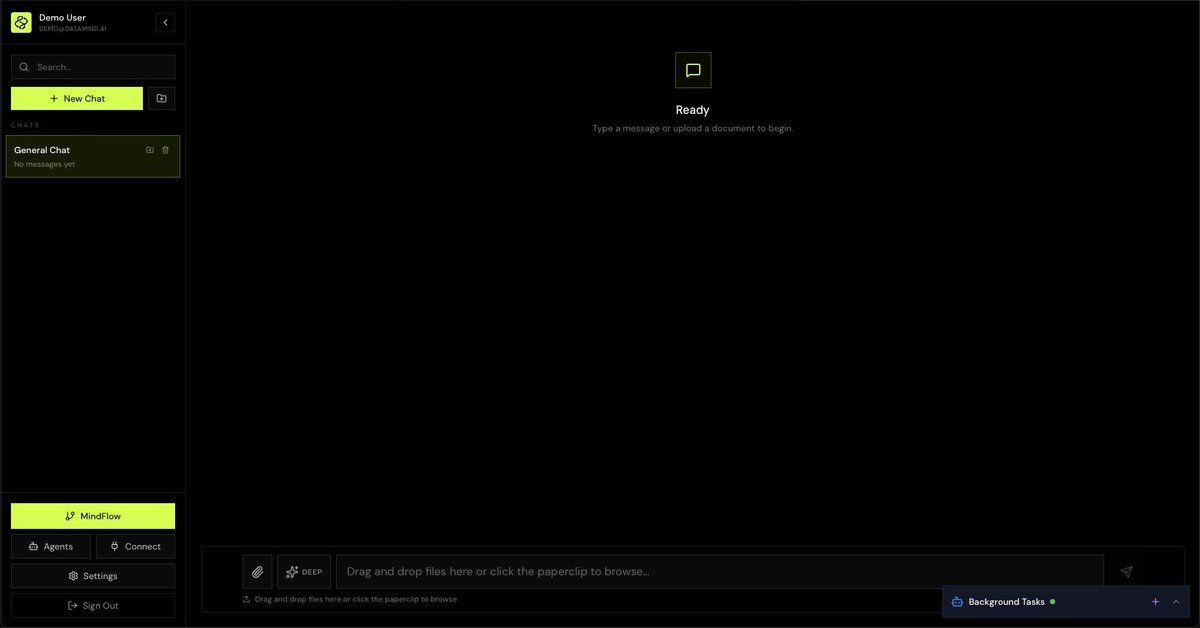
week 2 of scout selling scout. 313 outreach touches, 28% opens, 3 positive replies - up from 245 touches and 1 positive last week.
shipped a load of changes to how scout handles email review this week - inline coaching/confidence scoring etc.
essentially scout now tells you which emails need your attention, flags weaknesses in the copy, and helps you write your own version with research guidance - net effect is less time reviewing and better emails going out consistently.
biggest wins : first free signup this week and a positive meeting booked with a new user.
two weeks in with minnimal budget and the product is generating its own pipeline.
small wins are still wins.
Seeing Claude Opus 4.6 crack test encryption got us thinking: security layers needs to assume AI will try to outsmart the system. Spent the weekend redesigning our validation pipeline with adversarial scenarios in mind. AI vs AI defense is the new reality.
#AI#BuildingInPublic
With Scout 1.0 complete, we're now opening the sign-up page for the beta!
Scout is an AI-powered lead researcher and outreach strategist designed to save you hours of manual prospecting:
🔍 Deep research on potential leads -from pain points to growth indicators
✍️ Plans and writes custom outreach tailored to each lead
📨 Send and track all your marketing comms in one place
📊 Engagement tracking and sentiment analysis to plan your next move
Stop spending hours on LinkedIn hunting for prospects. Let Scout do the research while you focus on closing.
Join the beta 👇 (link in the commets)
We built https://t.co/A4CRKA7tCr - a multi-agent AI system that handles lead gen from research to outreach.
No templates. No spray-and-pray. Each prospect gets a tailored approach based on real intelligence.
v1.0 is now ready for beta testing!
Here's the full demo 👇
scout v1.0 is officially wrapped! 🎉
our b2b outreach agent system is ready for beta testing.
over a month in planning and development and we @mirasystemsltd have our first shippable SaaS product.
see the video below for a quick overview of the product to see whether you'd be interested
beta sign up sheet following shortly!
The new MIRA Systems site is live — and it's not a brochure.
Generate your AI Integration Plan. Talk to MIRA, our on-site AI agent. See what practical AI automation actually looks like.
Take a look 👇
https://t.co/xSPwZOHd6M
Cold outreach is broken.
Generic templates. Spray and pray. Hours of manual research.
We're fixing it.
https://t.co/A4CRKA81rZ — AI-powered sales intelligence that researches, scores, and writes personalized outreach in minutes.
Coming soon from @mirasystemsltd 🚀
Been building an AI agent system that automates B2B outreach research
6 specialized agents working together:
→ scrapes company websites
→ scores lead quality (ICP/timing/signals)
→ plans multi-touch sequences
→ writes personalised messages (email/linkedin/phone)
Everything happens in background with real-time progress tracking
Went from "CSV upload freezes UI for 10 minutes" to "processes 5+ leads while you browse other pages"
Redis job queues + multi-agent pipeline + supabase
Still v1.0, ironing out bugs, but it's alive 🚀
Most RAG systems fail because teams focus on retrieval.
The database is 20% of the system.
The real complexity:
- Chunking strategy
- Re-ranking layer
- Context assembly
- Cache architecture
Retrieval solved. Orchestration isn't.
Build the pipeline first. Add retrieval last.
Been building "agentic AI" systems. The learning curve isn't technical.
You expect autonomous systems. You build predetermined workflows with LLM components.
You expect agents to figure things out. They execute exactly what you programmed.
The learning: stop trying to build AGI. Build smart automation with clear boundaries.
That's what actually ships.
Agentic AI in demos: completes complex tasks autonomously.
Agentic AI in production: completes simple tasks with 3 fallback layers and a human checkpoint.
The gap is where most projects die.
Building autonomous content systems in n8n taught me something counterintuitive.
The hard part isn't the AI nodes. It's preserving original data while passing through 12+ workflow steps without corruption.
Merry Christmas all!
Advice:
Splitting the MCP server into individual prompt files changed something fundamental.
Each function now has its own alignment space. The model stays consistent across API calls without drift.
Simple architectural choice. Significant stability gain.
Two ways AI companies fail in production:
1. Pretend AI can do everything
2. Treat it as glorified autocomplete
The middle ground - knowing exactly where the human-machine boundary sits - is where enterprise AI actually works.
Merry Christmas! 🎅🏼
Here’s a new n8n tip for your holiday automations:
Split large workflows into sub-workflows called via webhook.
Easier to test. Easier to version. And you can tune timeouts independently.
We run over 10 workflows this way. The orchestrators stays clean.
Split the MCP server into individual files for each prompt function.
Expected it to complicate things. Instead: better alignment, even through API calls.
The model maintains consistency when prompts live in discrete, focused spaces rather than one monolithic system.
AI content scoring at 0.3 temperature. Generation at 0.7.
Counterintuitive but it works. You want creativity in what you make, consistency in how you judge it.
Most systems do the opposite.
The systems that work in production treat AI as one capable component—not the hero.
Enterprise AI success is system design, not model selection.
Building AI that works means building everything around it first.
#EnterpriseAI#AIDeployment#AIIntegration#SystemsArchitecture
The hardest part of enterprise AI isn't the AI.
We're in the final stretch with our first client—a system that automates their workflow end-to-end. The build revealed something worth sharing.
You can have the best LLM available. If your orchestration fails, your workflow stops. If your error handling is weak, you lose trust. If your interface confuses people, adoption dies.