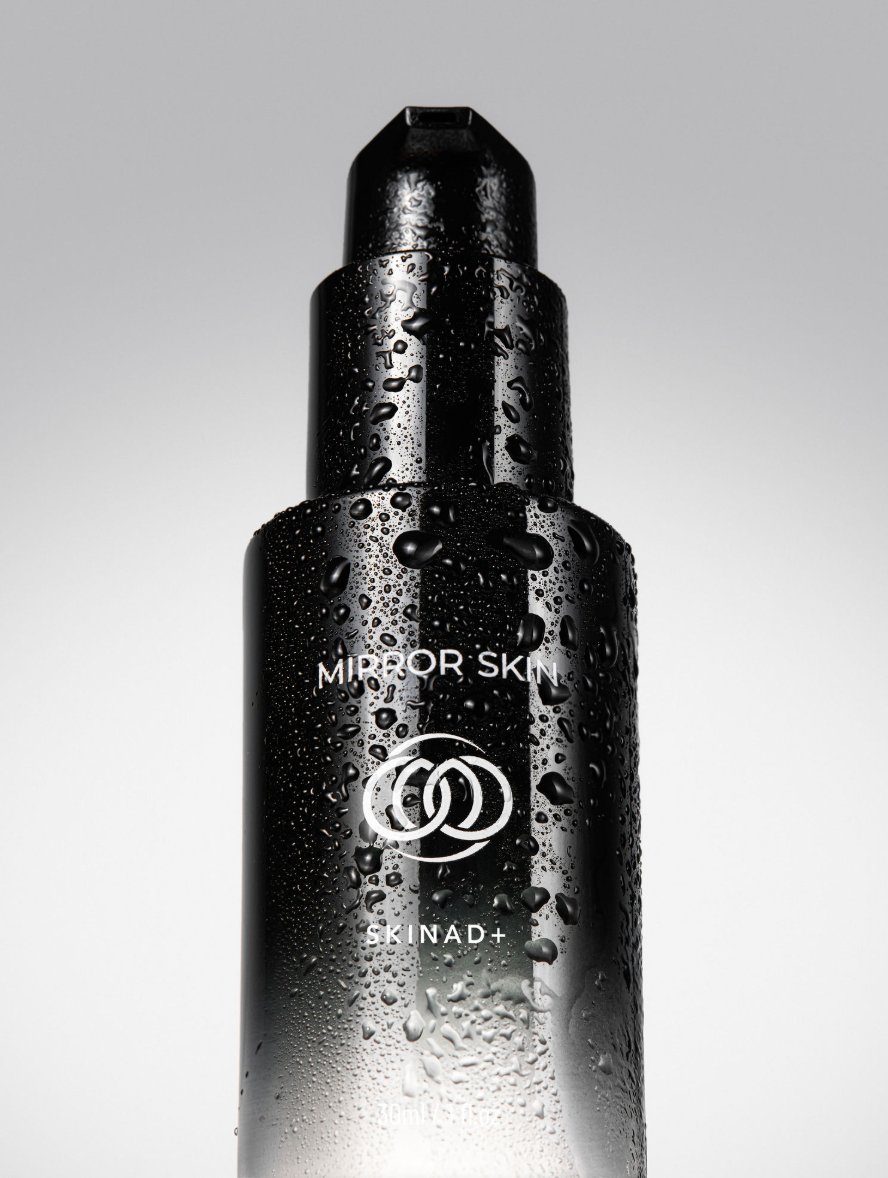
Great question! Can and should definitely use both the Copper Elixir and SKINAD+ as they hit different functions:
There are nuanced answers, but also some simple plays:
Play 1 — The usual way
• Morning: SKINAD+
• Night: Copper
This is the basic “energy in the AM, repair in the PM” routine.
Play 2 — The UV-protection way
• Morning: Copper (GHK-Cu is great during the day)
• Night: SKINAD+ (your skin isn’t getting any NAD at night unless you put it there)
GHK-Cu helps your skin handle daytime stress and recover from UV exposure.
Play 3 — Use them together
You can also use both in the same routine.
Just apply one, let it absorb, then apply the other. Easy.
Free play:
SKINAD+ is flexible — use it whenever you feel like your skin needs a splash of freshness. Morning, night, mid-day… doesn’t matter.
Do whatever fits your routine.
There’s no wrong move here.
Great question! Can and should definitely use both the Copper Elixir and SKINAD+ as they hit different functions:
There are nuanced answers, but also some simple plays:
Play 1 — The usual way
• Morning: SKINAD+
• Night: Copper
This is the basic “energy in the AM, repair in the PM” routine.
Play 2 — The UV-protection way
• Morning: Copper (GHK-Cu is great during the day)
• Night: SKINAD+ (your skin isn’t getting any NAD at night unless you put it there)
GHK-Cu helps your skin handle daytime stress and recover from UV exposure.
Play 3 — Use them together
You can also use both in the same routine.
Just apply one, let it absorb, then apply the other. Easy.
Free play:
SKINAD+ is flexible — use it whenever you feel like your skin needs a splash of freshness. Morning, night, mid-day… doesn’t matter.
Do whatever fits your routine.
There’s no wrong move here.
This is likely mediated by local release of GHK peptide
As you damage the tissue, GHK is released. GHK is found repeated in the collagen chain
GHK then up regulates genes involved in skin repair and collagen synthesis
I personally dermastamp face/hair and apply topical GHK-cu
Microneedling is crazily effective for skin aging
The small needles cause microtrauma, triggering collagen synthesis and skin repair - up to 400% increase in collagen synthesis
Full video: https://t.co/QF1tJfoGqm
Paper: https://t.co/HSQeGSyoPw
Microneedling is crazily effective for skin aging
The small needles cause microtrauma, triggering collagen synthesis and skin repair - up to 400% increase in collagen synthesis
Full video: https://t.co/QF1tJfoGqm
Paper: https://t.co/HSQeGSyoPw
10x more serious than competitors
WHAT ACTUAL RESULTS LOOK LIKE:
Users report visible changes in 2-3 weeks (not 8-12 like failed formulations).
The difference between 1% and 10%+ bioavailability is night and day.
no one on x is talking about this.
growth factors for the skin. actual biologic signaling proteins.
– increase fibroblast proliferation
– stimulate type I and III collagen synthesis
– promote angiogenesis (new blood vessels = nutrient delivery)
– accelerate keratinocyte migration and differentiation
– restore epidermal thickness
– reduce transepidermal water loss (TEWL)
– enhance wound healing at the cellular level
– suppress inflammatory cytokines like IL-6 and TNF-α
– reverse UV-induced cellular senescence
they regulate cellular behavior at the gene expression level. they bind to specific receptors on the cell surface and trigger cascades—MAPK, PI3K/Akt, JAK/STAT pathways. the stuff that tells your skin to repair, regenerate, rebuild.
we’re talking about epidermal growth factor (EGF), transforming growth factor beta (TGF-B) platelet-derived growth factor (PDGF), fibroblast growth factor (FGF), vascular endothelial growth factor (VEGF).
in youth, these are abundant. they orchestrate skin turnover. barrier function. structural integrity.
with age? they decline. wounds heal slower. collagen breaks down faster than it builds. skin thins.
topical growth factors restore that signaling. they don’t exfoliate. they educate.
they’re used in wound care. post-laser recovery. stem cell therapies. and slowly—quietly—they’re entering the skincare world.
anti-aging isn’t about attacking the skin. it’s about reminding it how to function.
growth factors = the ultimate beauty biohack.
My personal red light anti ageing protocol is very similar to Greg’s steps:
- Ingest plenty of gelatine and vitamin C through the day. I add another 1-2g of acerola powder as a supplement daily.
- Soak a face mask in green tea and let it sit on my face for 15 mins. Dry it out.
- Apply Copper peptide GHK-Cu prior to light therapy.
- Red light therapy for 20mins
- During red light: thyroid massage (link below) and Big 6 lymph drainage protocol by @stopchasingpain
- Finish with vitamin E (a must) and progesterone (luteal phase) application prior to sleep.
I suspect an ideal red light protocol would be something like:
- Ingest 30g of collagen peptides 30 minutes prior to red light therapy along with 80mg of vit C
- Apply a topical solution of green tea and let it sit for 15 minutes
- Blot it off
- Red light
- Ghk-cu topical application after
Why it might work:
- Collagen peptides provide the raw material for collagen synthesis in your body + create a signal to initiate collagen synthesis
- Red light therapy creates a lot of reactive oxygen species, but the EGCG in green tea buffers this, which greatly accelerates the process
- Ghk-cu stimulates fibroblasts which which are responsible for collagen and elastin production
Have not tried, but I want to and suspect this would work amazingly well.
💡 Copper peptide Cu-GHK supercharges collagen production when paired with red LED light
In human skin cells, CuGHK + red LED increased collagen synthesis by ~70%, procollagen by 30%, and stimulated growth factors by 230%
You can apply GHK topically
Study: https://t.co/tGD9PleLgA
GHK video: https://t.co/N8kHwm3N4P