Through a thoughtful interview on Mwelekeo TV, Mercy Otieno and Veronicah Okola reflect on how financial knowledge and mentorship can guide youth toward better economic choices.
Read more:
https://t.co/SLBfeebxzK
William Kamket mourns death of youngest son.
A heavy mood has settled over the home of Tiaty Member of Parliament William Kamket following the death of his youngest son, Bill Ballot Kassait Jnr.
The loss has left the family in deep grief, with those close to them describing a quiet and painful atmosphere.
Visitors have continued to arrive at the home, including friends, leaders, and colleagues, all hoping to offer comfort during this difficult time.
Many admit that words often feel inadequate in the face of such a loss. The once lively environment around the family is now described as calm and silent, with the absence of the young boy strongly felt in every corner.
Bill’s mother, Immaculate Kassait, who serves as the Data Protection Commissioner, was visibly shaken during a prayer gathering held at their home. She appeared overwhelmed and exhausted, at times sitting quietly as others tried to console her.
Among the leaders who visited early was Kapseret MP Oscar Sudi, who spoke softly about the pain of losing a child.
He noted that such grief is something no parent should have to endure.
Interior Cabinet Secretary Kipchumba Murkomen and other leaders also sent messages of support, encouraging the family to remain strong.
Schools used to have debates every Wednesday during club meetings:
"Rural life is better than urban life."
"Day schools are better than boarding schools."
"The government is better than the opposition."
"Mr Speaker, Sir, I urge my opponents to cross the floor."
These debates were simulating parliamentary debates.
This taught students,
• Public speaking skills.
• Communication skills.
• Negotiation skills.
• Critical thinking skills.
In addition, these school debates, coupled with the GHC subject, were a form of civic education.
But the education system destroyed these activities because it created students who were politically conscious and enlightened.
The system wants you to remain ignorant so that it can control you.
Bring the school debates back!
Schools took physical activities seriously.
PE lessons were mandatory.
Schools gymnastics competitions were mandatory for all schools.
Monday, Wednesday and Friday were evenings of a mandatory cross-country run.
Nowadays, children are sedentary, fat and physically sick.
Senegal stripped of AFCON title as CAF awards Morocco 3-0 victory
Morocco have been officially declared winners of the 2025 Africa Cup of Nations after the Confederation of African Football overturned the final result against Senegal.
The decision follows events during the match in Rabat, where Senegal players walked off the pitch in protest after a late VAR decision awarded a penalty to Morocco’s Brahim Díaz.
The final had reached a tense moment when the penalty was given, prompting strong protests from Senegal’s squad, also known as the Lions of Teranga.
The players left the field, halting the game and creating confusion among officials and fans.
Although Sadio Mané later led his teammates back to continue the match, the incident had already been reported for disciplinary review.
CAF later ruled that Senegal’s actions broke competition rules, specifically Articles 82 and 84 of the AFCON regulations.
As a result, the governing body decided to overturn the match outcome and award Morocco a 3-0 win by forfeit.
This ruling cancels Senegal’s performance in the final and hands the title to Morocco.
The decision also removes what would have been Senegal’s second AFCON title, marking a disappointing end to their campaign.
For Morocco, the ruling confirms their status as champions despite the match ending in controversy rather than a clear result on the pitch.
The outcome has sparked debate across African football, with fans and analysts questioning both the officiating decision that led to the protest and the disciplinary action taken afterward.
Mudavadi rules out compensation for Kenyans affected in Russia-Ukraine war
Musalia Mudavadi has said the government will not compensate Kenyans who were killed or injured in the Russia-Ukraine war, stating that their involvement was not under any official state arrangement.
While speaking in Moscow, he explained that those who joined the conflict did so on their own, and not through a government-backed programme.
He, however, assured that Kenya is willing to support citizens who wish to return home. He also urged Kenyans to be cautious and avoid being lured into such risky opportunities abroad.
Families of those affected, including at least 10 reported dead and many others injured, have continued to demand accountability from the government.
They argue that more should be done to protect citizens, even when they travel or work outside the country.
“This was not a government of Kenya contract and it cannot therefore be part of the compensation… they were voluntary engagements with the Russian government,” he said.
Mudavadi did not give a clear timeline on when more Kenyans would be brought back home, saying the process depends on distress calls received from those still trapped in the war zones.
“It will depend on the distress calls we get…” he noted.
Lawmakers who accompanied him to Russia said they plan to introduce new laws to address the issue once they return to Kenya.
At the same time, efforts to secure the release of Kenyans reported to be prisoners of war remain uncertain, with new reports suggesting more citizens could still be held in Ukraine.
Sergey Lavrov also maintained that those who joined the Russian military did so willingly and must follow formal procedures to end their contracts.
“All Kenyans, as well as other nationals who signed contracts, did it voluntarily. The contracts did not have any provision for repatriation. When the contracts are effective, they can terminate this contract, but this is done under the Ministry of Defence,” said Lavrov.
Catch up on today’s top stories from Kenya’s leading newspapers; Daily Nation, The Standard, Taifa Leo, People Daily, The Star, The Weekly Review, and Business Daily.
Here’s what’s making headlines this 18th of March, 2026
Ruto and Gachagua trade sharp personal jabs as political rivalry intensifies
The political contest between William Ruto and Rigathi Gachagua has taken an unexpected turn, with both leaders shifting from policy debates to personal attacks.
What began as a rivalry over leadership and governance has now become a public exchange of sharp and sometimes humorous insults.
Speaking at an opposition event in Kiambu, Gachagua drew laughter from the crowd when he mocked the president’s apparent weight loss, questioning how much wealth was enough and joking about his physical appearance.
His remarks quickly spread, adding a lighter but controversial tone to the political contest.
Less than a day later, President Ruto responded strongly. He defended his lifestyle, saying his discipline allows him to stay focused and alert.
He then turned the criticism back on his opponents, accusing them of overeating and lacking fitness.
In a series of pointed remarks, he suggested they should exercise more and take better care of their health, even joking that they fall asleep during meetings.
The exchange signals a clear shift in tone. Both leaders appear ready to engage in direct and personal confrontations, moving away from discussions about policies and national issues.
President Ruto made it clear he is prepared for this approach, though he insisted most of his time remains focused on serving Kenyans.
This style of politics is not new globally, where personal attacks are often used to influence public perception and draw attention.
However, in Kenya, such exchanges are becoming more visible, especially in a fast-moving digital space where statements quickly reach large audiences.
Gachagua pushes back against Ruto criticism over government share claims
A political dispute between Rigathi Gachagua and William Ruto has continued to draw attention after the former deputy president rejected claims that he demanded a share of government positions.
During a public address, Gachagua defended himself against criticism that he had pushed for influence and appointments within government.
He argued that such discussions are normal in coalition politics and should not be treated as wrongdoing.
According to him, political alliances often involve negotiations to ensure that leaders and communities that supported the coalition are represented.
Gachagua also claimed that leaders connected to the opposition party Orange Democratic Movement are reportedly seeking similar arrangements within government structures.
He said that if such conversations are happening behind the scenes, then it is unfair for him alone to face criticism for raising the same issue openly.
He added that the discussion about political inclusion should be handled honestly and transparently.
In his view, coalition governments around the world regularly involve talks about sharing responsibilities and representation among different political groups.
Gachagua maintained that his position was aimed at ensuring fairness for those who supported the ruling alliance.
The remarks come at a time when tensions within the ruling coalition have been increasing, with speculation about shifting alliances and political strategies ahead of the next elections.
Some political observers believe the disagreement reflects deeper struggles over influence, loyalty, and control within the country’s leadership.
Gachagua also rejected attempts to portray him as the main cause of internal disagreements.
He urged leaders to be open about discussions taking place within government circles and said the conversation about inclusion should involve all stakeholders.
President Ruto has previously insisted that his administration is focused on development and service delivery rather than political bargaining.
The exchange highlights the ongoing political rivalry and changing alliances shaping Kenya’s political ground as the next electoral cycle approaches.
Questions around professional compliance have entered the conversation as the legal battle between JILK Construction and East African Breweries Limited continues in court.
Read more:
https://t.co/3oMHvCEU4c
Businesswoman and politician Agnes Kagure is gaining ground in the Nairobi governor contest, positioning herself among the leading candidates ahead of the 2027 race.
Read more:
https://t.co/ybacFYmHB6
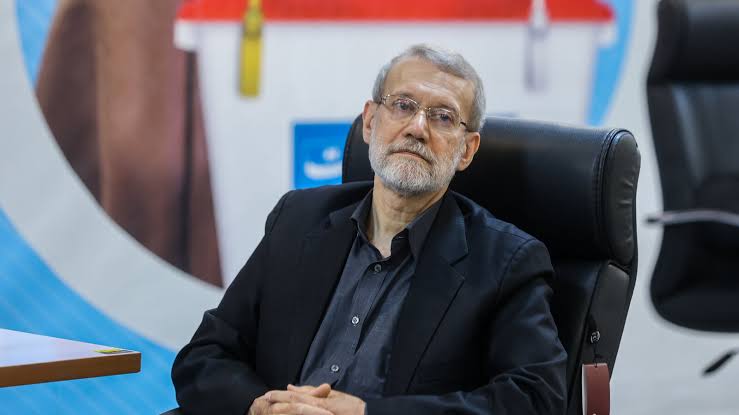
Israel reports killing of Iran’s Ali Larijani as regional fighting continues
Tensions in the Middle East have continued to rise after Israel claimed it had killed Iran’s national security chief, Ali Larijani.
Israeli Defence Minister Israel Katz said the operation took place overnight, but Iran has not confirmed the report.
Earlier, Israel’s military also said it had killed Gholamreza Soleimani, who led Iran’s Basij paramilitary force, during a strike on Tehran.
These developments come shortly after the reported killing of Iran’s supreme leader, Ayatollah Ali Khamenei, in late February, an event that triggered a wider regional war.
Following his death, Mojtaba Khamenei was named as his successor, though uncertainty remains about his condition and whereabouts.
US President Donald Trump said there is still no clear information on whether he is alive.
The conflict has spread across several countries, with strikes reported in Tehran, Baghdad, and parts of Lebanon.
In Beirut, Israeli strikes hit residential areas linked to Hezbollah, causing damage and forcing emergency teams to respond.
The fighting has led to many deaths and forced millions of people to leave their homes, especially in Iran and Lebanon.
The situation has also affected global oil markets. Iran’s actions around the Strait of Hormuz have disrupted shipping, causing oil prices to rise sharply.
The waterway is important for transporting a large share of the world’s oil, and ongoing attacks on tankers have made it difficult for vessels to pass.
In response, the United States has called on its allies to help secure the route. However, several countries, including the United Kingdom and Germany, have shown reluctance to join any military operation.
British Prime Minister Keir Starmer said efforts are ongoing to find a solution, but ruled out a NATO mission.
Kenya to receive increased rainfall in several regions from Thursday
Weather conditions across Kenya are set to change this week, with more rainfall expected in many regions as the days progress.
The Kenya Meteorological Department has indicated that rains will begin lightly earlier in the week before becoming heavier from Thursday.
Several parts of the country are likely to receive showers, especially in the afternoons and at night, sometimes accompanied by thunderstorms.
Areas expected to be affected include the Highlands both east and west of the Rift Valley, the Lake Victoria Basin, the Rift Valley, the South-eastern lowlands, and coastal regions.
Counties such as Nairobi, Nyeri, Kiambu, Murang’a, and Meru are among those in the Highlands East that may see increasing rainfall as the week continues.
Similar conditions are expected in western and Rift Valley counties like Kakamega, Kisumu, Nakuru, and Narok, where the rains are also forecast to intensify from Thursday.
In the South-eastern lowlands, places like Machakos, Kitui, Makueni, and Kajiado are also expected to receive rainfall.
Coastal counties including Mombasa, Kilifi, Kwale, and Lamu may experience showers that are likely to become more frequent later in the week.
Residents in Nairobi and surrounding areas should expect a mix of weather, with possible morning rains in some places and wider afternoon to night showers.
In regions around Lake Victoria and the Rift Valley, the week may start with sunny intervals before shifting to wetter conditions.
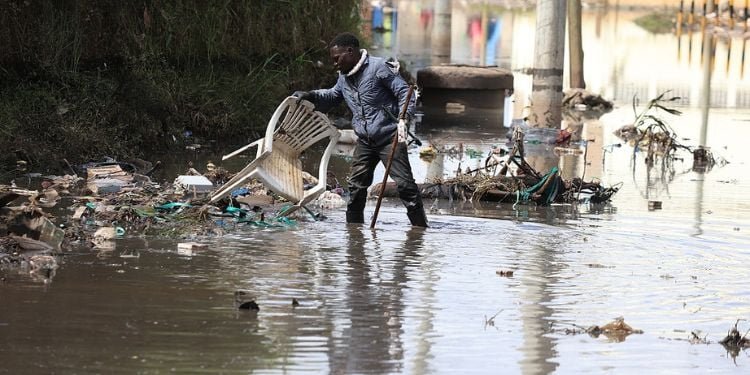
The weather department has warned that some areas could experience heavy rainfall at times, which may lead to localized flooding.
People living in flood-prone areas are advised to remain alert and follow daily weather updates.
Meanwhile, parts of North-Eastern and North-Western Kenya are expected to remain mostly sunny and dry during this period.
The Kenya Red Cross confirms ongoing efforts to locate those trapped after a building collapse in Shauri Moyo amid heavy rains.
Read more:
https://t.co/sQkCR48VTG