🎬 It’s NESRI Friday!
Getting around campus just got easier. 🛺🎓
For students across our tertiary institutions, moving from hostels to lecture halls, libraries, laboratories and other parts of campus is part of everyday university life.
Through the Campus Mobility Project, the Federal Ministry of Education, under the leadership of Dr. Maruf Tunji Alausa, CON @DrTunjiAlausa, Honourable Minister of Education, is supporting safer, easier and more accessible movement across our campuses with the deployment of electric tricycles to participating institutions.
It is another way we are improving the student experience under President Bola Ahmed Tinubu, GCFR’s Renewed Hope Agenda for Education, ensuring that the transformation of education is felt not only in the classroom, but across campus life.
Last year, we deployed 240 e-trikes to 12 universities, providing each institution with 20 tricycles and a dedicated charging station.
This year, we’re taking it even further. 🛺⚡
An additional 540 larger, 9-seater e-trikes are being deployed to 36 universities across Nigeria, reaching six institutions in each geopolitical zone.
🎥 This week’s NESRI Initiative Documentary takes us on campus to see the Campus Mobility Project in action.
👀 Seen one on your campus? We want to see it!
📸 Snap a picture with one of the e-trikes, tag us and tell us your university. Better still, tell us how the e-trikes are making campus life easier for you.
▶️ Watch the full documentary now on the FME NESRI YouTube Channel — https://t.co/OK9506AAx2
Every Friday, a new NESRI story. See the transformation. 🇳🇬
There has never been a Minister of Education in Nigeria who understood the problems of education in the country better than this man, in my humble opinion.
Yesterday, I joined key stakeholders at the launch of the Renewable Asset Management Company (RAMCO), a significant step towards ensuring that Nigeria’s investments in renewable energy deliver sustainable value for generations.
Across our education system, renewable energy infrastructure is already transforming our institutions, providing reliable and cleaner power to universities and teaching hospitals through initiatives such as the Energising Education Programme.
However, building this infrastructure is only one part of the equation. We must also ensure that these assets are professionally managed, maintained and financially sustainable throughout their lifespan.
RAMCO provides an institutional framework to do exactly that: protecting publicly funded renewable energy assets, strengthening their long-term performance and creating opportunities to mobilise and recycle private capital into new energy infrastructure.
For the education sector, this is particularly important. Reliable power means better-equipped laboratories, uninterrupted research, stronger digital learning infrastructure and a better teaching and learning environment for our students and educators.
I commend the Honourable Minister of Power, Mr. Joseph Tegbe, and the Managing Director/CEO of the Rural Electrification Agency (REA), Dr. Abba Aliyu, for their leadership in driving this important initiative. I also commend MOFI, InfraCorp and all partners for building a framework that will help protect our renewable energy investments and ensure they continue to deliver value long after commissioning.
As we expand renewable energy infrastructure across our tertiary institutions, we must equally build the systems that ensure these investments continue to work, deliver value and serve our institutions for decades to come.
@MSIngawa Same thing happened to me but in my case they asked me to drive to their den. I had to force my way to the conoil immediately after the roundabout where I shouted that they are thieves and people started rushing to help
I am deeply honoured to receive the Most Egalitarian Minister of the Year award at the African Iconic Women Recognition Awards (AIWRA). This recognition means everything to me because quality education has always been at the heart of every policy decision we make at the Federal Ministry of Education.
Sincere appreciation to the organizers for finding me worthy. I dedicate this award to my family, whose support never wavers, and to my incredible colleagues at the Federal Ministry of Education who show up daily to ensure that no Nigerian child is left behind. We still have work to do, and this only strengthens my resolve.
It was an honor to join HE the Governor of Jigawa, Malam Umar Namadi FCA @uanamadi, on a courtesy visit that felt deeply personal. As a daughter of Jigawa, returning home in service to the nation and seeing the real progress of the AGILE Project was both humbling and encouraging.
From 1,360 rehabilitated classrooms to 694 motorized boreholes and over 75,000 sets of furniture distributed across schools, the impact on children's daily lives is visible and measurable.
Over 11,000 adolescent girls are now benefiting from life skills programmes supported by trained mentors, and 100 senior secondary schools are equipped with digital learning tools, preparing our learners for the future. The conditional cash transfer programme continues to reduce the financial barriers keeping girls out of school, while 27 alternative education centres are already turning vulnerable and out-of-school girls into confident, skilled young women.
Jigawa has been selected as a pilot state for the LUMINAH 2030 Initiative, and that choice was deliberate. The commitment here is consistent, visible, and deeply felt. Every girl deserves the opportunity I had and even more. If hope can rise here in Jigawa, it can rise across Nigeria.
I paid a courtesy visit to His Excellency, the Executive Governor of Kano State, Alhaji Abba Kabir Yusuf, at Government House Kano. The visit was to celebrate the remarkable progress of the AGILE Project in Kano state, where 49 new secondary schools worth ₦23 billion have been approved, over 1,358 schools have received improvement grants, and 74,452 adolescent girls have benefited from conditional cash transfers totalling nearly ₦2.98 billion.
Digital education has also taken a strong leap forward, with 81,866 students across 100 schools now equipped with ICT infrastructure worth over ₦3.45 billion. We are asking the World Bank to support Phase II school construction, release additional school grants, and approve the establishment of four Adolescent Girls' Digital Hubs across Kano's three senatorial districts. Kano State has also been selected as a pilot state for the LUMINAH 2030 Initiative, a national programme designed to restore education and hope to out-of-school and vulnerable girls in communities like Albasu, Tsanyawa, Madobi, and Minjibir.
To every girl out there, work hard and achieve your full potential. The President has already created an enabling environment for you through NELFUND tuition payment support and a monthly subsistence allowance, so there is no reason to give up on your dreams. If LUMINAH succeeds in Kano, it will prove to the whole nation that no child is too far to reach and no dream is beyond realization.
Nigeria’s education reform is gaining momentum with a clear shift toward a knowledge-based economy, focused on equipping students with practical, 21st-century skills. Overall, the reforms aim to close skill gaps, improve learning outcomes, and align education with real-world demands.
KEY HIGHLIGHTS
Strategic Shift:
Moving from a resource-based to a knowledge-driven economy through skills-focused education.
Six Priority Areas:
- Technical & Vocational Education (TVET/TIBET)
- Data & Digitization
- Out-of-School Children
- Quality Assurance
- STEM/Medical Sciences
- Curriculum Review
Curriculum Overhaul:
- Reduction in subject load at primary level to improve learning effectiveness
- Transition from rote learning to problem-based learning
- Strong focus on literacy and numeracy fundamentals
Skills Development Drive:
- Identification of 25 high-demand skills gaps
- Goal for every graduate to have at least one marketable skill
Massive Youth Engagement:
- Over 1.3 million applications within two weeks of launching the skills portal
- 70,000 youths currently in training
Digital Skills Demand:
High interest in tech skills like SQL, reflecting demand for data-driven careers.
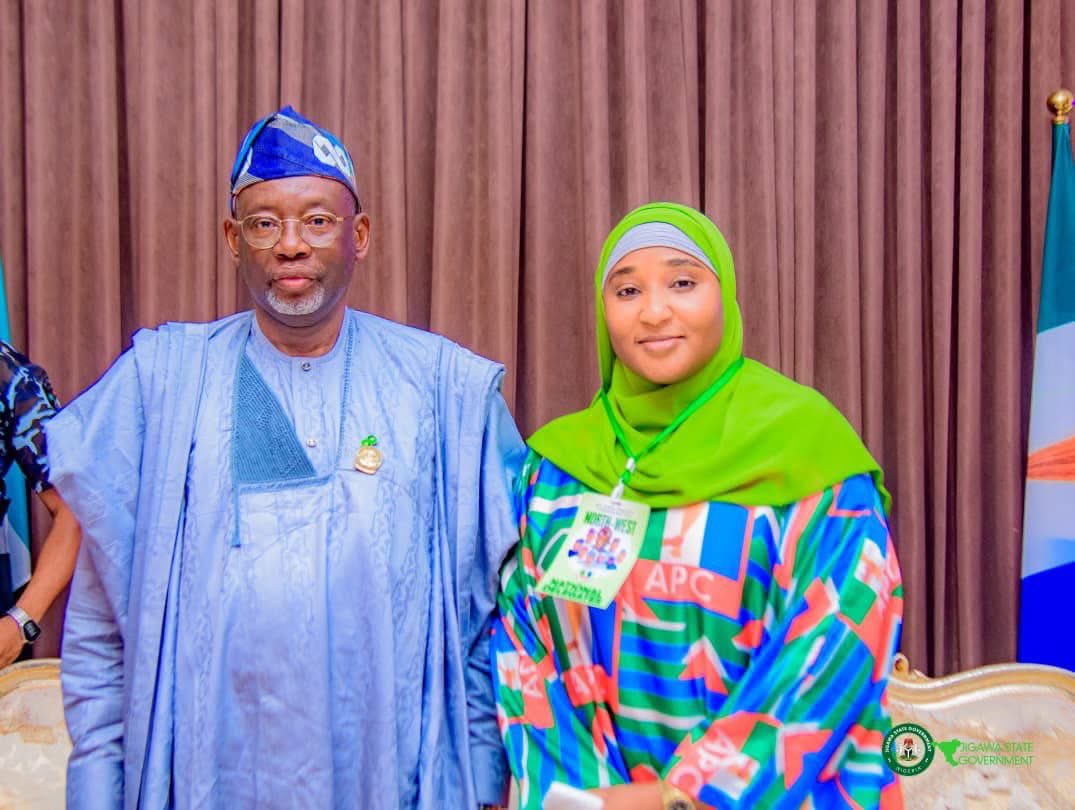
Yesterday in Kaduna, I joined fellow members of our party, the All Progressives Congress for the North West Zonal Congress, an event marked by calm, mutual understanding, and a spirit of cooperation. Through thorough consultations, we arrived at a consensus and successfully elected new zonal leaders.
I extend my congratulations to the newly elected leaders and affirm that the road ahead demands focused, visionary, and steady leadership. Together, we remain resolute in strengthening our party, deepening our collective unity, and honoring the trust that our people have placed in us.