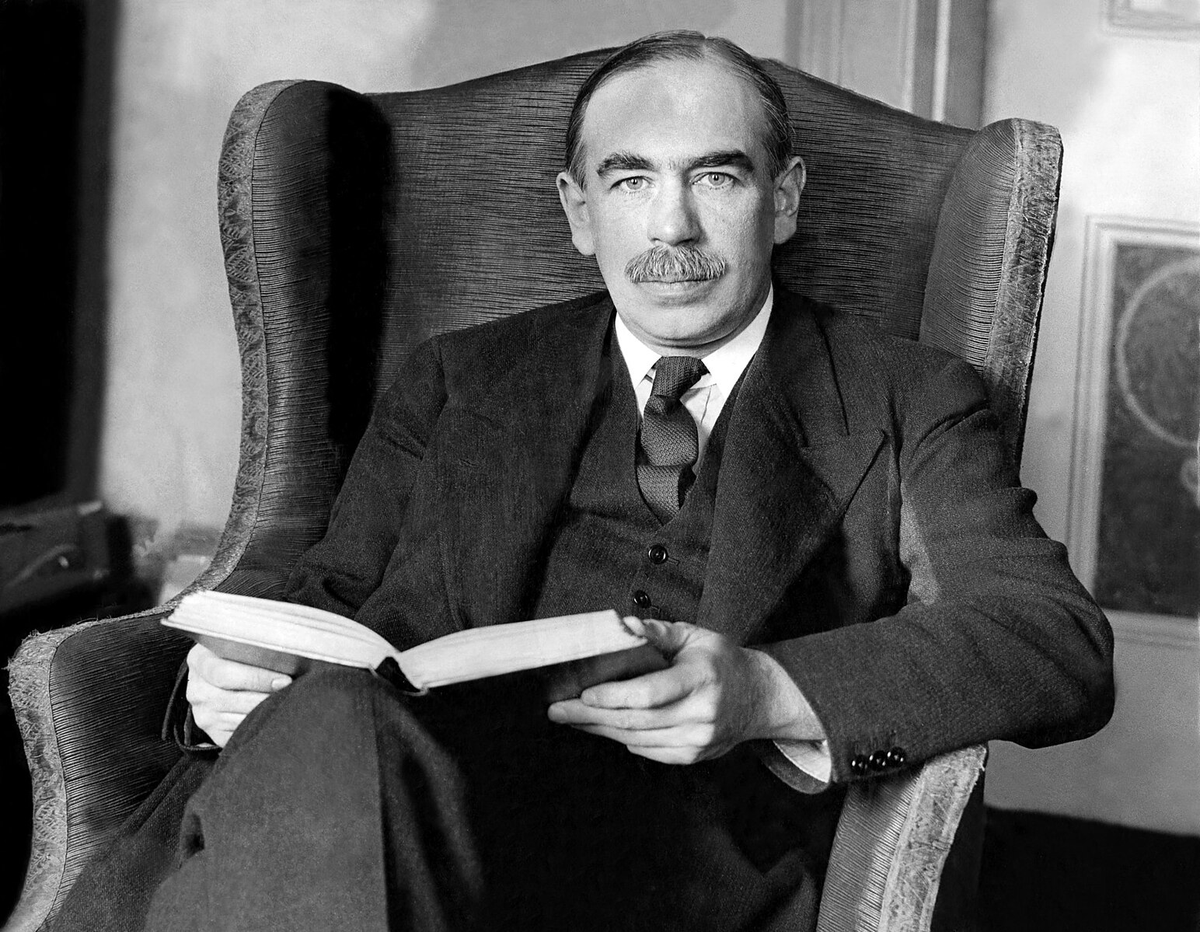
Keynes built his entire system on a confusion a first-year student should catch: he treated saving and investment as enemies. Pull a dollar out of consumption and stuff it under the mattress, and the whole economy supposedly seizes up. Demand collapses. Workers get fired. The "paradox of thrift" arrives, and Keynes hands you the policy prescription: spend, borrow, dig holes and fill them back in.
You're meant to believe that thrift is a vice. That the prudent man saving for his children's education is sabotaging his neighbors. This is a remarkable inversion, and it's wrong from the foundation up.
What actually happens when you save? You forgo a steak dinner tonight, and you lend that money out through your bank or your bond purchase. That capital flows to a firm building a factory, a baker buying a second oven, a fishing fleet building more boats so it can catch more fish next year. Böhm-Bawerk explained this in the 1880s with his fishermen: you eat less now so you can construct the net that feeds you far more later. Saving is the raw material of every roundabout production process that ever raised a wage.
Keynes saw spending as the engine of prosperity. He never asked where the factories came from. He treated consumption as the cause of prosperity when consumption is the reward you collect after the capital structure has done its work. A society that consumes everything it produces stays exactly where it is forever, like the man who eats his seed corn and wonders why spring brings no harvest.
This "cure" poisons the patient. When central banks suppress interest rates to "stimulate demand," they sever the signal that coordinates saving with investment. Entrepreneurs read cheap credit as genuine thrift and build projects no one saved to complete. Then the bust arrives to liquidate the malinvestment, and the same economists who caused it demand more of the cure. Greenspan ran this script after 2001. You watched the result in 2008.
Saving was never the disease. It was the only medicine, and Keynes taught us to spit it out.
The U.S. is betting that AI will transform its economy and supercharge U.S. power. China is industrial output-pilled, wagering that dominance of advanced manufacturing will enhance its geopolitical leverage. My latest for the @FT
https://t.co/t1kNR8bcwR
Some governments tell you you have to "declare" that you "own" Bitcoin.
Now, how the heck do you do that, exactly?
In short, knowing a Private Key allows you to request that the network apply a specific alteration to the timechain that "moves" sats from one address to another.
But how can knowledge be equivalent to ownership in any legal sense?
And what happens if you utter the Private Key in court? Remember - the twelve magic words in a seed phrase are not a password - they ARE the key!
Now the entire court will be "guilty" of "owning Bitcoin."
And how do you prove that everyone else on Earth DOESN'T know the same twelve words?
Under man-made law, Bitcoin ownership is paradoxical. Under Natural Law, the keyholder simply IS the owner. No declaration is required, and no state is needed to validate it.
Study Praxeology! Read Rothbard!
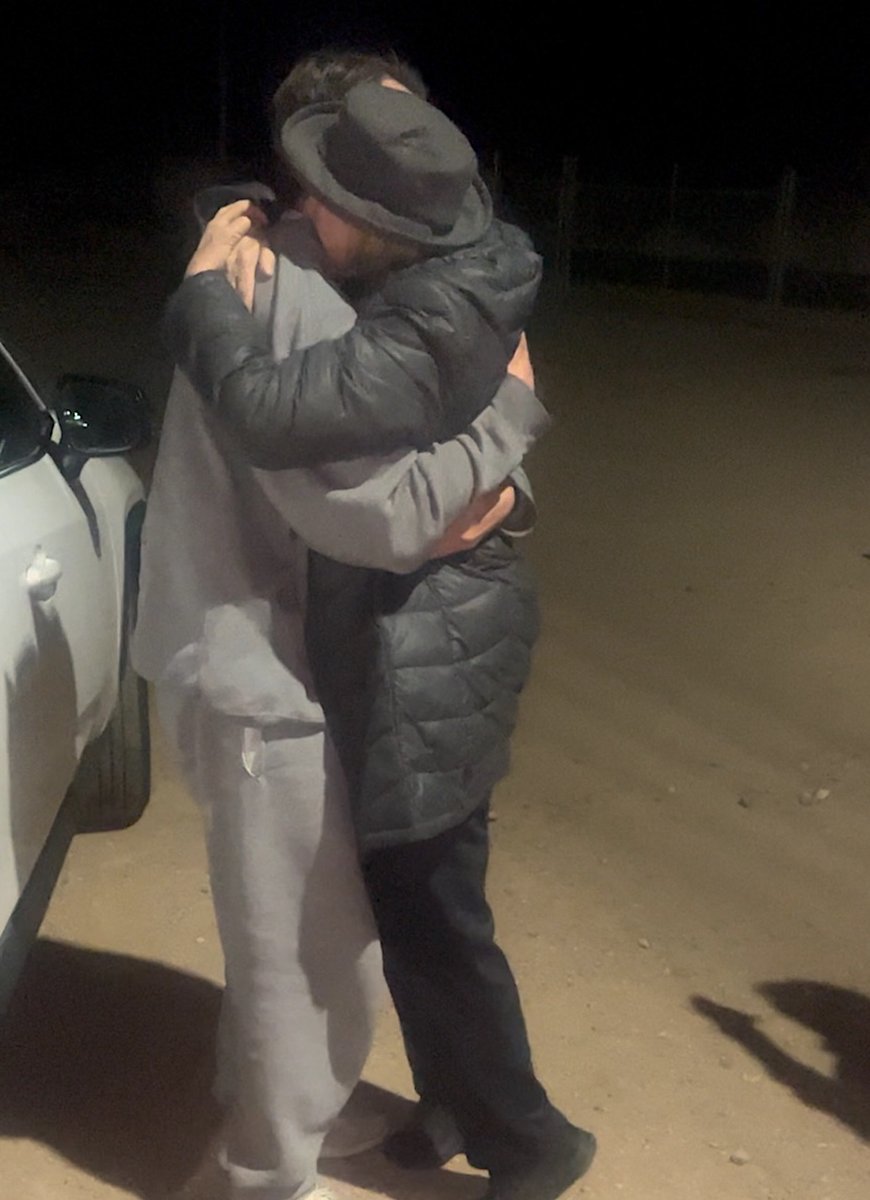
Thanks to @realDonaldTrump's pardon, Ross got to hug his wife, mom, dad & sister outside the walls of prison. The past 36 hours have been a complete whirlwind and we keep pinching ourselves to make sure we're not dreaming.
So much gratitude, love, and hope for what's to come.
Thank you for all your messages! We can't reply to everyone but know it means so much to us. ❤️
Ross was just granted a FULL AND UNCONDITIONAL PARDON by @realDonaldTrump. Words cannot express how grateful we are.
President Trump is a man of his word and he just saved Ross's life. ROSS IS A FREE MAN!!!!!
Newcomers to Bitcoin may not understand why old timers care so much about Ross Ulbricht. Let me explain.
He embodied the ethos of early Bitcoin more than anyone. He was an entrepreneur who created a thriving marketplace.
He believed in radical freedom, including the freedom to trade anything with anyone else so long as it was peaceful and voluntary.
He regularly wrote about his views on freedom and why he built the first truly successful Bitcoin business - the Silk Road. He wanted to created a better world and believed his principles deeply.
Politicians like Schumer targeted both Silk Road AND Bitcoin as criminal enterprises that needed to be shut down.
When he was convicted the judge and the establishment threw the book at him. He was a first time, non violent criminal and they locked him up and effectively threw away the key.
In the early Bitcoin community we all felt how unjust this was. It was like they were locking up one of our own out of spite for what we all believed was a peaceful revolution.
Now tens of millions of people own Bitcoin and many just because of Number Go Up. Never forget there was a deeper purpose here and that getting rich is a nice side effect of that greater purpose.
Fix the money, fix the world.