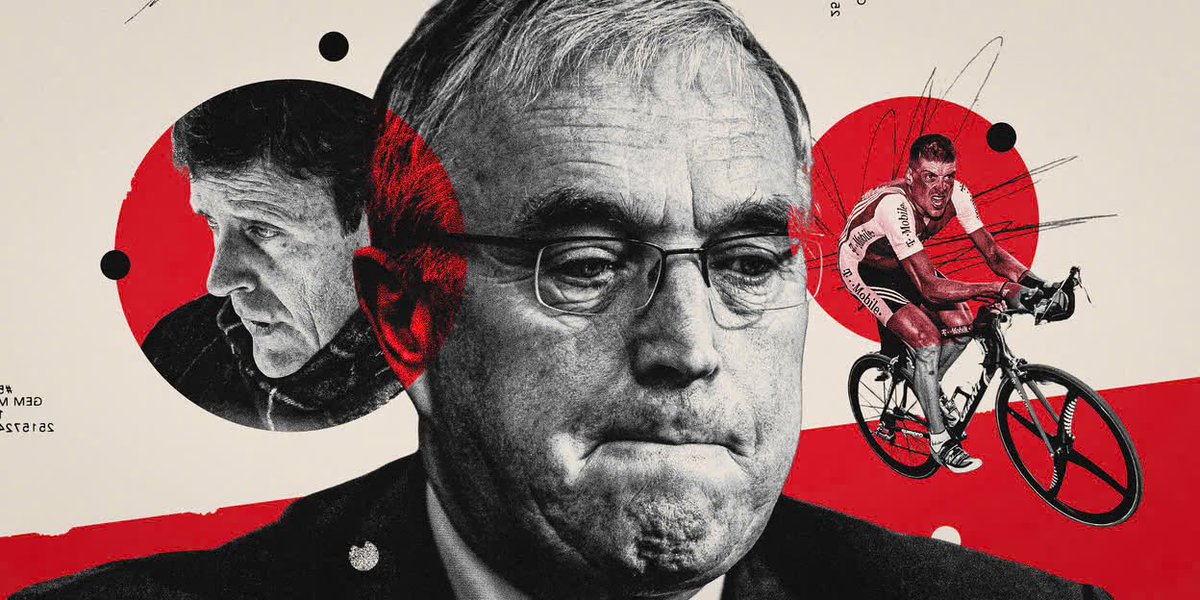
THE PEP FILES. PART 2: Operación Puerto & The Cycling Blood Brother
Chapter 1: The Raid at Calle Zurbano (2006)
In May 2006, Spanish Civil Guard agents raided an apartment on Calle Zurbano in Madrid. Inside, they uncovered a massive clandestine laboratory operated by sports physician Dr. Eufemiano Fuentes.
Police seized 211 bags of blood and plasma, high-speed centrifuges, anabolic steroids, EPO, and sophisticated refrigeration units used for autologous blood transfusions. Codename Operación Puerto, sent shockwaves through world sport.
Initially framed as a cycling scandal, Fuentes dropped a nuclear bomb during a live interview with Radio Nacional de España:
"I am angry that I am being scapegoated. I also worked with footballers, tennis players, and track athletes. If I were to identify all my clients, Spain’s World Cup, European Championship, and Champions League titles would have to be returned."
Chapter 2: The Second Office They "Forgot"
When Spanish authorities executed their search warrants, they conveniently targeted only Fuentes’ Madrid apartment.
According to investigative reports by cycling experts and French journalist Stéphane Mandard (Le Monde), Fuentes had a fully equipped medical facility also in Las Palmas. Spanish law enforcement never raided that office, leaving years of physical client files, ledgers and freezer units completely untouched.
Mandard famously revealed that he personally viewed physical "seasonal preparation plans" drafted by Fuentes for La Liga powerhouses, complete with coded symbols representing blood draws, EPO schedules, and recovery cycles aligned with Champions League knockout rounds.
Chapter 3: The Judge Who Ordered the Fire
When the trial finally opened in 2013 under Madrid Judge Julia Santamaría, Fuentes stood up in open court and offered to identify every single blood bag: "I will match every single coded name to the athlete."
Instead of seizing the chance to clean up global sports, Judge barred him from naming non-cycling athletes, invoking "doctor-patient confidentiality."
When WADA and the International Tennis and Cycling federations formally begged the court for access to the blood bags to run DNA tests, the judge denied their petition. Her official court order was staggering: Order all 211 seized blood bags to be immediately destroyed by state authorities.
The Spanish judiciary effectively ruled that protecting those identities was more important than exposing a state-wide doping ecosystem.
Decision heavily criticised by Rafael Nadal.
Chapter 4: Black-Market Receipts
Despite judicial suppression, the money trial leaked into the public record:
In 2013, former Real Sociedad president Iñaki Badiola publicly confessed that his club paid over €327,000 annually in undeclared black-market funds directly to Fuentes’ clinic for unauthorized performance products.
As late as 2013, Fuentes publicly claimed that Real Madrid still owed him unpaid debts. Real Madrid responded by threatening legal action, claiming any financial record linking them to Fuentes was merely "reimbursement for travel expenses"
Chapter 5: The Cycling Blood Brothers - Pep & Alberto Contador
Guardiola’s connection to this medical universe wasn't purely academic, his closest personal ally in elite endurance sport was Spanish cycling icon Alberto Contador.
Contador’s team, Liberty Seguros, was at the absolute epicenter of Operación Puerto (managed by Manolo Saiz, who was arrested alongside Fuentes).
When Contador tested positive for the banned anabolic agent Clenbuterol during his 2010 Tour de France victory, the sports world condemned him. Pep Guardiola did the exact opposite.
During official FC Barcelona press conferences, Guardiola repeatedly used his global platform to defend Contador, publicly attacking anti-doping authorities, claiming Spanish athletes were victims of international witch hunts, and declaring: "I know Alberto, he is clean, and he will prove his innocence."
Files will continue tomorrow…
Topics to study to expands your MIND:
1. Authority bias
2. Emotional regulation
3. Game theory
4. Chaos theory
5. Anti fragile theory
6. Entropy
7. Dopamine systems
8. Hedonism
9. Nihilism
10. Body language
11. Emotional intelligence
Pick one topic research a lot before you go to bed Instead of watching doomed short videos.
By Jan 1 2027 you’re entire personality will change.
THE PEP FILES. PART 1: The Italian Trap & The Unbending Court
Chapter 1: The Flawless Spanish Shield
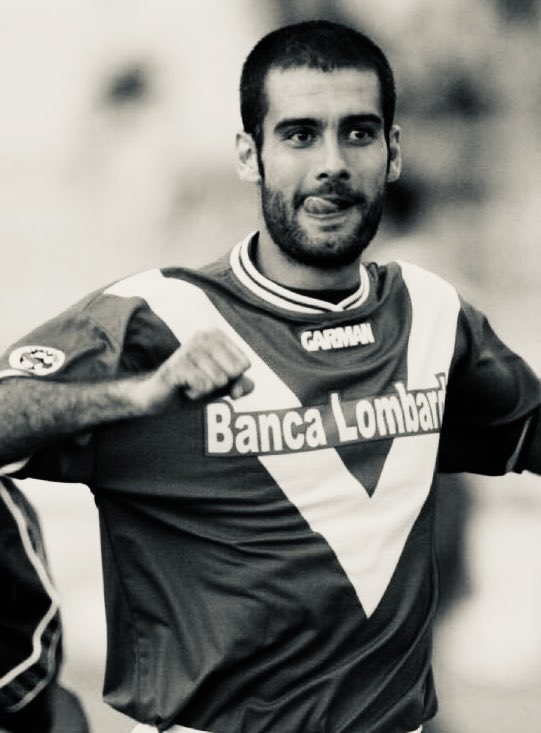
For 11 seasons and 382 matches, Pep Guardiola was the undisputed heart of FC Barcelona. He lifted 16 major trophies, anchored the national team, and dominated European football. In Spain, his drug testing record was spotless, not a single flag, anomaly, or suspicious sample.
Then came the summer of 2001. Guardiola left Barcelona for Italian side Brescia.
Just two matches into his Serie A campaign, against Piacenza and Lazio, his urine samples triggered an immediate alarm: Positive for Nandrolone, a heavy-duty anabolic steroid designed to accelerate recovery, increase muscle mass, and boost stamina.
How does a player spend over a decade in La Liga completely undetected, only to fail a test the second he crosses the border into Serie A? Did Pep suddenly start doping at 30 years old? Or was he using the exact same protocols he used in Spain, only to run headfirst into a legal system that actually checked?
Chapter 2: Why Spain Kept Him Clean?
During the late 1990s and early 2000s, Italian football operated under the strict oversight of the Italian Olympic Committee (CONI) and fearless public prosecutors like Raffaele Guariniello. Italian authorities used lower detection thresholds for steroid metabolites, performed unannounced training ground raids, and treated sports doping as a federal criminal offense.
Spain, by contrast, had no centralized anti-doping agency. La Liga relied on soft, predictable post-match urine tests.
No Out-of-Competition Testing: Testers only checked players after matches. Anyone using calculated clearance windows, micro-dosing schedules, or "seasonal preparation plans" during recovery breaks was virtually immune on Spanish soil.
Legal Immunity: Until 2006, doping was not a crime in Spain. Courts could not issue police search warrants for club pharmacies or seize medical files, while Spanish testing labs faced intense international criticism for a lack of transparency.
Chapter 3: The Doctor Pipeline & The Multivitamin Defense
Cornered by the Italian Football Federation (FIGC), Guardiola held a press conference declaring his innocence: "A machine says I have taken nandrolone, but I know I didn't."
His defense was the classic athlete playbook: "contaminated multivitamins."
Who supplied those multivitamins? Dr. Ramon Segura, a professor of physiology at the University of Barcelona and Guardiola's personal physiologist.
Segura’s name was already red-hot. Just seven months earlier, Dutch midfielder Frank de Boer tested positive for Nandrolone at FC Barcelona under Segura's care. In fact, the 2001–2002 Serie A season saw a sudden wave of Nandrolone busts: Guardiola, Jaap Stam, Edgar Davids, and Fernando Couto, all pointing to supplement protocols arranged by a tight network of sports doctors.
The FIGC rejected Guardiola's excuse, handing him a 4-month ban and a €50,000 fine. Italian criminal courts went further: in May 2005, a judge in Brescia sentenced Guardiola to a 7-month suspended prison sentence.
Chapter 4: The Great (Lucky) Escape (2007–2009)
Guardiola spent eight years fighting the ruling. In October 2007, an Italian appeal court quietly acquitted him on a scientific technicality, accepting arguments that extreme physical strain could cause human bodies to naturally produce trace nandrolone metabolites, or that testing margins at the time allowed for false positives.
The legal drama reached a tense climax in May 2009. Right as Guardiola was guiding FC Barcelona through their iconic treble-winning season, CONI’s anti-doping prosecutor formally reopened the case, calling the acquittal "unacceptable" and summoning Pep back to court.
By September 2009, CONI threw out the appeal due to expired procedural deadlines. The case was buried forever.
In 2008, Pep Guardiola took over as head coach of FC Barcelona. What happened next is a story for another day..
The Spectre of Pep by @Jon_Mackenzie is, without exaggeration, one of the best football books I’ve ever read. Essential reading for anyone who wants to understand the modern game and where it might be heading. I’ve made it compulsory reading for our first-team coaches.
Poker rooms with a Curaçao gaming license include ACR, Ignition, Champion, RedStar, TigerGaming.
It's likely that BetOnline and SportsBetting . ag rooms also have Curaçao gaming licenses.
https://t.co/DnenViisZC
The relational football of José Alberto López’s Racing Santander, one of the most exciting teams to watch.🧠🎥
▫️Relationalism
▫️Players close together
▫️Short distances
▫️Diagonal connections
Racing Santander are one of the best teams in Europe when it comes to relational football. One of the strongest alternatives to positional play.🟢⚪️
Bookmakers absolutely do not care about losing money to players with restricted stakes.
In fact, they actually need PRO bettors.
We are the ones who shape the market, and we are part of the reason why Bet365 makes so much money.
Without limits, this industry would be dead.
Instead, bookmakers release their odds.
Then we PRO bettors back them at small limits, helping the market move towards the correct prices.
And then recreational punters come in, bet with no value whatsoever, and lose their money.
That is the betting ecosystem.
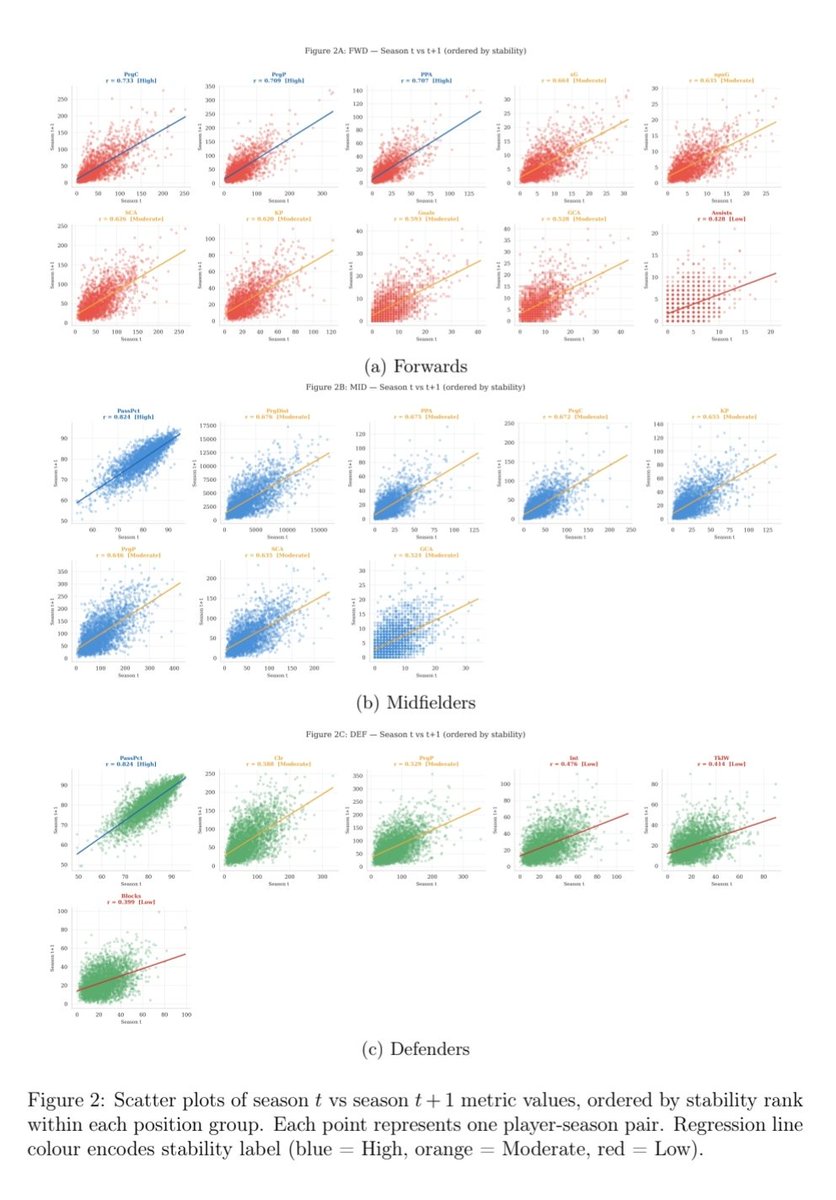
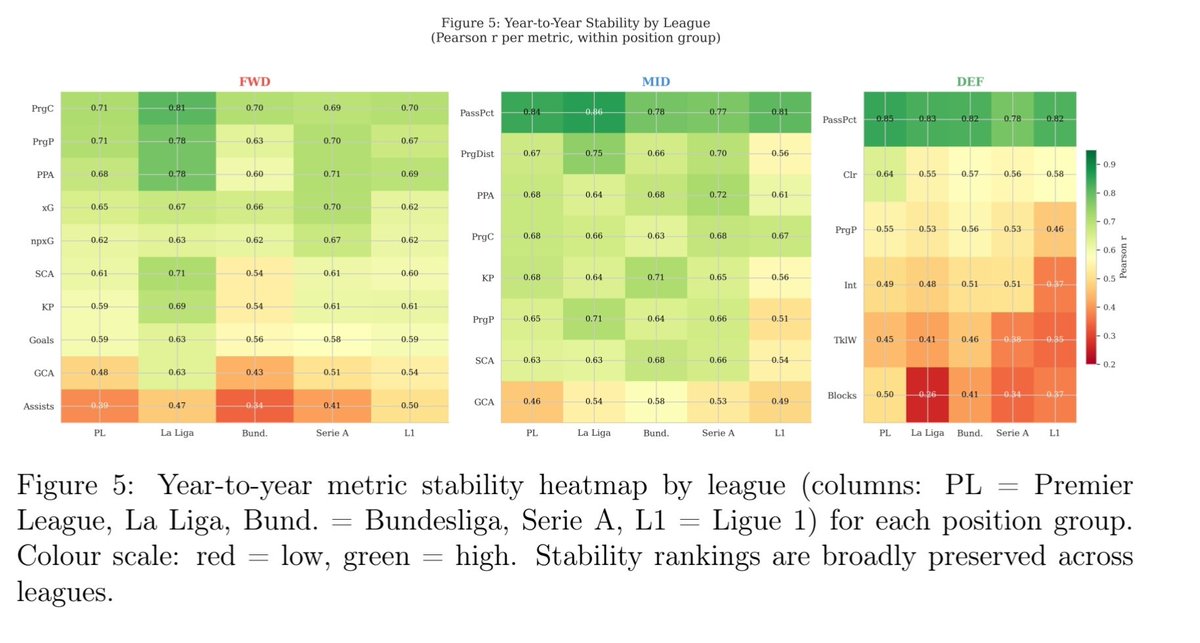
Football metrics are not equally repeatable.
A player can rank highly in one metric this season and be likely to do so again next year. In another metric, the same ranking may contain much more noise.
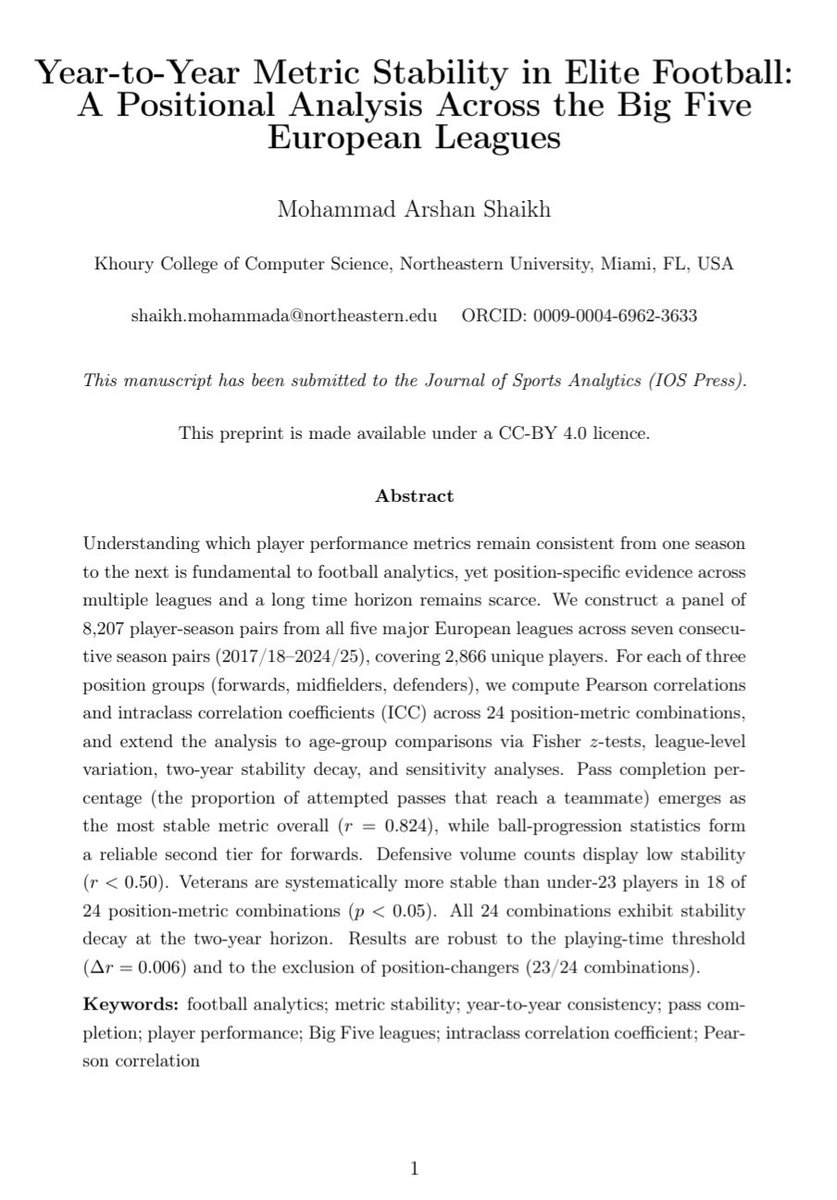
A new preprint analysed 8,207 player-season pairs across the Big Five to see which metrics persist from one season to the next.
For forwards:
Progressive carries: 0.733
Progressive passes: 0.709
xG: 0.664
Goals: 0.593
Assists: 0.428
Defensive volume was even less stable:
Interceptions: 0.476
Tackles won: 0.414
Blocks: 0.399
But stability is not the same as quality.
Pass completion was the most stable metric for midfielders and defenders (0.824), but that persistence can also reflect role, team style and context.
This matters when reading player profiles.
A radar gives every axis similar visual weight, while the underlying metrics may have very different levels of persistence.
For FBPlot, that raises an interesting question: can a player profile show not only what happened, but also how much confidence we should place in each part of it?
Thanks to Mohammad Arshan Shaikh for sending this over. I previously wrote about another of his papers on cross-league player projection.
Paper: Mohammad Arshan Shaikh, Year-to-Year Metric Stability in Elite Football: A Positional Analysis Across the Big Five European Leagues.
Книжки, які ви найчастіше обирали протягом серпня 👀
1. Розвідка: анонімності не існує.
2. Гемінґвей нічого не знає.
3. Проце�� присутності.
4. Найкраще «найгірше», що могло статися.
5. Оповідь Служниці.
6. ТИ ПІД КОНТРОЛЕМ.
7. Спитайте Мієчку.
8. З країни рижу та опію
9. Якщо зі світу зникнуть коти.
10. Мої друзі.
Скільки зі списку прочитано?
#топмісяцясенс
football-docs v0.10.0 is out! source docs are regularly checked for drift and the MCP gets an update when there's a meaningful amount of change. this is one of those times.
what is football-docs? it's a searchable index of football data provider documentation for your AI coding agents, so we're all on the same (and latest) page.
a few highlights:
- wyscout's specs were recently updated, documenting a few meaningful changes: player position percentages in advanced stats do not sum to 100%, by design. roles under 10% of playing time get dropped, only the top 3 are returned, and the percentages use floor rounding. If you renormalise them to 100, your minutes-by-role chart will be wrong
- skillcorner docs now carry dynamic events v3
- transferroom replaced its docs app and repackaged access
- databallpy 0.8.0 removed Match, TackleEvent and the standalone feature functions
also in this release: sportmonks' v3 endpoint reference, taking the index to 2,295 searchable chunks (+487) across 23 providers and tools.
learn more here (+ how to install):
https://t.co/ciZ25ucxyT
To be happy, you must eliminate two things: the fear of a bad future and the memory of a bad past.
- Seneca
Seneca (4 BC–65 AD), the Roman Stoic philosopher and advisor to Emperor Nero, believed that much of human suffering is self-inflicted.
In Letters to Lucilius, he wrote, “we suffer more often in imagination than in reality,” suggesting that fear of future misfortune often causes more distress than the misfortune itself. To Seneca, anxiety over what might happen reflected a failure to accept fate and the natural order. The Stoics taught that events beyond our control should be met with calm and reason. What matters is not always what happens, but how we choose to respond.
Seneca also warned against becoming prisoners of the past. In On the Shortness of Life, he argued that people waste their limited time by dwelling on what has already happened or constantly worrying about what comes next. The past is fixed and beyond our control, and repeatedly reliving it through regret or resentment only takes us further away from the present.
This did not mean forgetting the past or abandoning plans for the future. Rather, Seneca believed that becoming emotionally trapped by past suffering or future fears robs us of tranquility. His philosophy emphasized living according to reason, accepting mortality, and recognizing time as our most valuable possession.
For Seneca, freedom from fear and regret was not indifference. It was the ability to master our thoughts, focus on the present, and remain in control of our response to whatever life brings.