❗️Imagine an invisible network stretched across the entire world — thousands of computers connected by delicate threads of code. They exchange pulses of data, train artificial intelligence, run applications… and all of it happens without the oversight of Silicon Valley giants.
❗️Unlike traditional blockchains that endlessly grind through meaningless mathematical problems, wasting electricity and creating nothing of real value, $QUBIC works differently.
❗️Here, every moment of computation matters. The computers work with purpose: training AI, analyzing data, running applications, and more. No middlemen, no transaction fees — only results. All of this is made possible by a special technology called the tick chain, which beats like the heart of the system every single second.
❗️QUBIC is faster than any blockchain you’ve ever known. It updates in sync with time itself — tick… tick… tick… and with every beat, the future is born.
❗️❤️Want to dive deeper into this world? Subscribe so you won’t miss a thing❤️❗️
🚨 Exciting update from the $QUBIC team!
🚀 We’ve got the first draft of the Doge protocol implementation ready for Qubic Doge Mining.
Check it out and review: https://t.co/Z9qU7PRPUm
Demo/test implementation of testminer here: https://t.co/zfmRqMp6YD
We need your feedback to move forward:
1 Which Doge pool should we start with?
2 Does the proposed communication scheme work for you, or need tweaks?
Let’s connect Doge & Qubic!
#Qubic #Doge #CryptoMining
Let’s cut through the $QUBIC noise for a second.
I’ve seen some theories floating around about 'scams' or 'rent-extraction.' If you analyze Qubic through the lens of traditional blockchain models, you’re missing the point entirely. In reality, when you actually look at the tech, what some call 'red flags' are the pillars of an architecture engineered for raw power.
1/ The TPS "Deception"?
People get triggered by the 15M TPS figure. Let’s be clear: that’s the network’s raw Gossip Protocol capacity (how fast data moves). The current "Tick" is the throttle. Qubic is building a 10-lane highway before the cars are even built. Most chains choke under pressure; Qubic is over-engineered for a digital tsunami. That’s not gaslighting it’s foresight.
2/ The Arbitrator is a Feature, not a Bug.
Is it centralized? Yes, by design. It’s there for Efficiency. While other chains rot because of lazy or unaligned validators, Qubic’s Arbitrator forces a "work or get out" incentive. It’s a "Landlord" model because this is professional infrastructure, not a charity. It’s built to perform, not to win a decentralization beauty contest.
3/ The Aigarth / $QUBIC Symbiosis.
Critics say: "Holders don’t own the AI." True. But here’s the Alpha: The AI can’t function without burning the $QUBIC you hold. You don’t own the brain; you own the oxygen it breathes. If Aigarth becomes a standard for decentralized AI, the burn mechanism makes your stake the ultimate scarce resource.
4/ Why the Hate?
Because Qubic is "Bare Metal" C++. It’s hard. It doesn't have VCs waiting to dump on you, and it doesn't have an easy EVM to copy-paste. It’s a raw, high-stakes experiment by one of the few true OGs left (CfB).
The Bottom Line: Qubic isn't for everyone. It’s aggressive, it’s extractive, and it’s experimental. But I’d rather bet on a hostile, high-performance machine than another boring "community" coin that leads nowhere.
If you get it, you get it. If you don't, you're probably looking at the wrong project. 👊
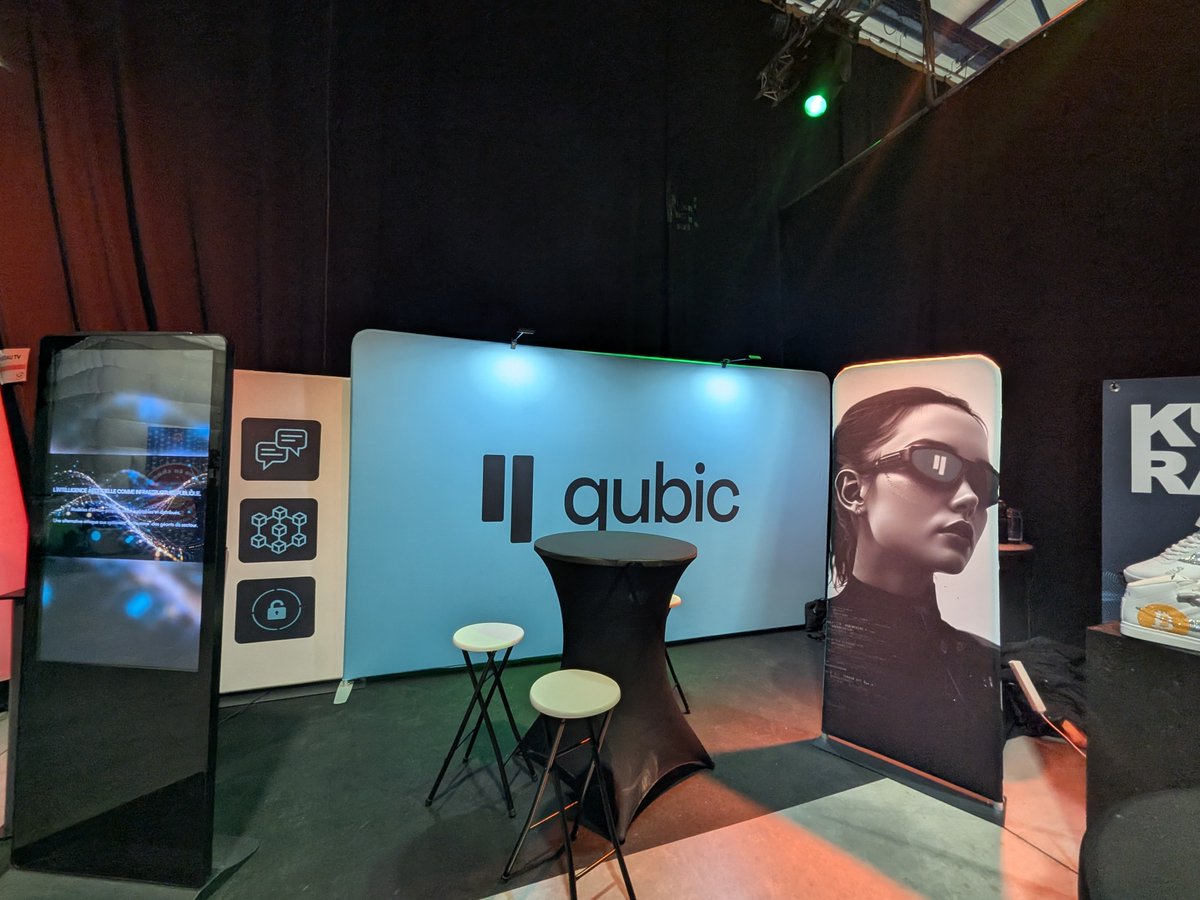
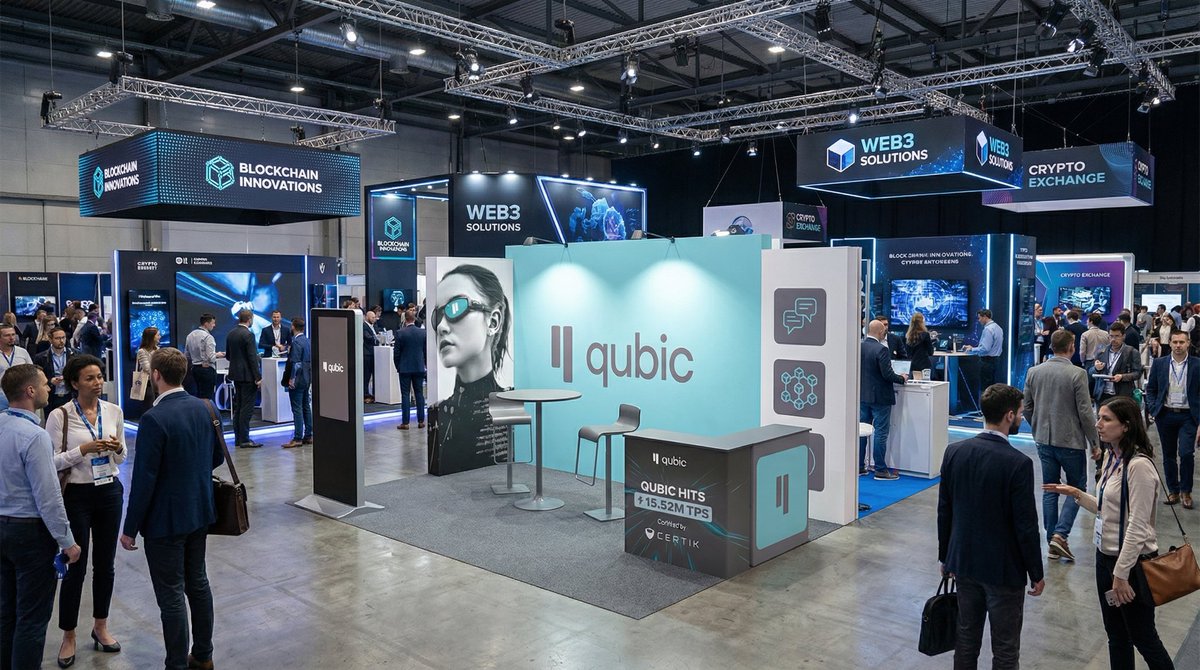
🔥Nous y sommes !
L'équipe @_Qubic_ France est présente et en pleine forme au @CXR2026 🎉
Venez nous voir sur notre superbe stand!
On est là tout le week-end pour,
Discuter
Échanger
Expliquer
Et faire de belles rencontres 🤩
#CryptoXR#CXR#CXR2026
🚀 On y sera ! $Qubic sera présent au @CXR2026 à Auxerre du 15 au 18 janvier !
On a hâte de vous retrouver pour parler crypto, IA et Web3 🔥
📍 Venez nous voir sur notre stand :
🎁 Goodies exclusifs
🎮 Jeux concours avec des lots à gagner
Vous venez ? 👀
🎟️ https://t.co/jSKPRprsN9
#CryptoXR #CXR #CXR2026
Deep Dive: Why @_Qubic_'s "Oracle Machines" Are Not What You Think
We often hear that Qubic is "just another L1". That’s false. Digging into the outsourced-computing repo reveals that Qubic is building something much vaster. Let's talk about Oracle Machines (OMs).
Why is this a revolution?
On most blockchains, an oracle is just a "pipe" delivering the Bitcoin price. On Qubic, it’s different.
According to the technical documentation, OMs are autonomous software agents that bridge the gap between:
The Real World (stock market data, weather, sports results...)
Aigarth (Qubic's AI) and our Smart Contracts.
The Secret Sauce: Outsourced Computing ⚡️
The key takeaway from the GitHub is this: OMs aren't just for reading data. They enable Outsourced Computing.
Concretely, this means a Qubic Smart Contract can request an external machine to perform a complex calculation (one the blockchain couldn't handle alone) and return the result in a certified manner.
What this changes for $QUBIC:
Real AI: Aigarth can "see" the world through OMs to learn and evolve.
Zero Latency: Thanks to the Bare Metal architecture, we aim for near-instant execution, far from the slowness of classic Oracles like Chainlink on Ethereum.
New Use Cases: This opens the door to dApps that are impossible elsewhere (scientific simulation, complex algorithmic trading, real-time supply chain management).
The code is there. The infrastructure is being built. We aren't just a crypto; we are a global computer.
https://t.co/NxlgubrdgK
Imagine what people could do with Oracle Machines on $QUBIC
Blockchain oracles act as secure bridges between blockchains and the real world, fetching off-chain data (like prices, weather, or events) and feeding it into smart contracts without compromising decentralization or security. This unlocks a wide range of applications, from DeFi to enterprise solutions. As of late 2025, with advancements in decentralized oracle networks, they’re powering billions in value across ecosystems. Here’s a breakdown of key things you can do with oracles, drawn from leading implementations like Chainlink and others:
DeFi and Financial Markets
• Secure price feeds for lending, borrowing, and trading: Oracles deliver tamper-proof market data to protocols like Aave, Synthetix, and Compound, enabling accurate valuations for billions in locked value and preventing exploits from bad data.
• Derivatives and synthetic assets: Use oracles for real-time options pricing, futures settlements, and creating tokenized real-world assets (e.g., stock derivatives on blockchain).
• Cross-chain interoperability: Fetch data from other blockchains to enable seamless swaps or liquidity pools.
Insurance and Risk Management
• Parametric insurance payouts: Trigger automatic claims based on verifiable events, like weather data for crop insurance (e.g., Arbol uses oracles for climate-based policies) or flight delays for travel coverage.
• Risk assessment: Integrate real-world metrics (e.g., IoT sensor data) to underwrite policies dynamically, reducing fraud and speeding up settlements.
Supply Chain and Logistics
• Provenance tracking: Oracles pull in real-time shipment data (e.g., GPS, temperature sensors) to verify authenticity and compliance, as seen in Oracle Blockchain Platform’s enterprise solutions for connecting suppliers and distributors.
• Transparent auditing: Automate compliance checks for global trade, ensuring tamper-proof records of goods movement.
Gaming and NFTs
• Verifiable randomness (VRF): Generate fair, unpredictable outcomes for loot boxes, NFT minting, or gameplay (e.g., PancakeSwap for rewards or Aavegotchi for virtual pet battles).
• Dynamic asset generation: Use external data to influence in-game events or NFT traits based on real-world inputs like sports scores.
Automation and Off-Chain Compute
• Trigger smart contract actions: Monitor conditions off-chain (e.g., time-based or event-driven) and execute on-chain functions automatically, as in Synthetix for liquidations.
• Hybrid computations: Combine on-chain security with off-chain efficiency for complex tasks like AI model training or ad fraud detection (e.g., Theta Network verifies viewership data).
Enterprise and Regulated Applications
• Secure data feeds for traditional finance: Banks like DZ BANK use oracles (integrated with cloud tech) for smart derivative contracts, blending blockchain with legacy systems.
• Broader Web3 expansion: Enable regulated smart contracts in sectors like healthcare or energy, where oracles ensure data sovereignty and auditability.
In 2025, oracles are evolving toward AI integration (e.g., feeding real-time data for decentralized ML models) and zero-knowledge proofs for privacy, making them foundational for mass adoption.
Projects like Chainlink, Pyth, and emerging ones (e.g., QUBIC’s Oracle Machines for high-TPS AI/DeFi) are pushing boundaries DYOR for specifics, as vulnerabilities like data manipulation remain a focus for ongoing improvements. If you’re thinking of a particular blockchain or use case, I can dive deeper!
Rudy listen to me.
After analyzing the latest updates on QUBIC’s Oracle Machines (OM),
which are now entering their final design and testing phase with a focus on high-quality, practical integration to bridge real-world data to smart contracts and the decentralized AI Aigarth, I’ll estimate a realistic target for the market cap.
These oracles aren’t just bolt-ons: they natively embed into the QUBIC protocol for quorum-based data validation, enabling dynamic apps like reactive DeFi, automated insurance, or real-time AI training on a chain hitting 15.5M TPS with zero fees.
$QUBIC ’s current market cap sits at around $170 million (price ~$0.0000014 USD, total supply 159.58T tokens). That’s undervalued compared to oracle projects like Chainlink (LINK), which commands ~$10-12 billion today with a similar focus but less native AI integration and ultra-high TPS.
Standard 2025 predictions remain conservative (price ~$0.000001-0.000002 USD, or 160-320M mcap), but community hype around the oracles and the AI/uPoW narrative (where mining trains useful AGI) signals explosive potential: 50-100x if the AI story takes off, targeting 10-20 billion in 2 years. With the 2025 altseason underway and Tier-1 listings on the horizon, the OMs could spark massive adoption in DeFi/AI especially with buzz about enabling smarter mining like Dogecoin via block-skipping oracles, unifying global compute power.
My personal estimate: A realistic post-OM launch target (mid-2026) would be $2-5 billion market cap, assuming solid execution and an AI bull market. That’s conservative versus the hype (up to 20-30B if QUBIC becomes “the decentralized brain of Web3”), but grounded in comparables and the current runway (<$200M). Beyond that, it’ll hinge on real adoption of oracle-powered smart contracts.
DYOR it’s speculative! ❤️🔥 but very realistic