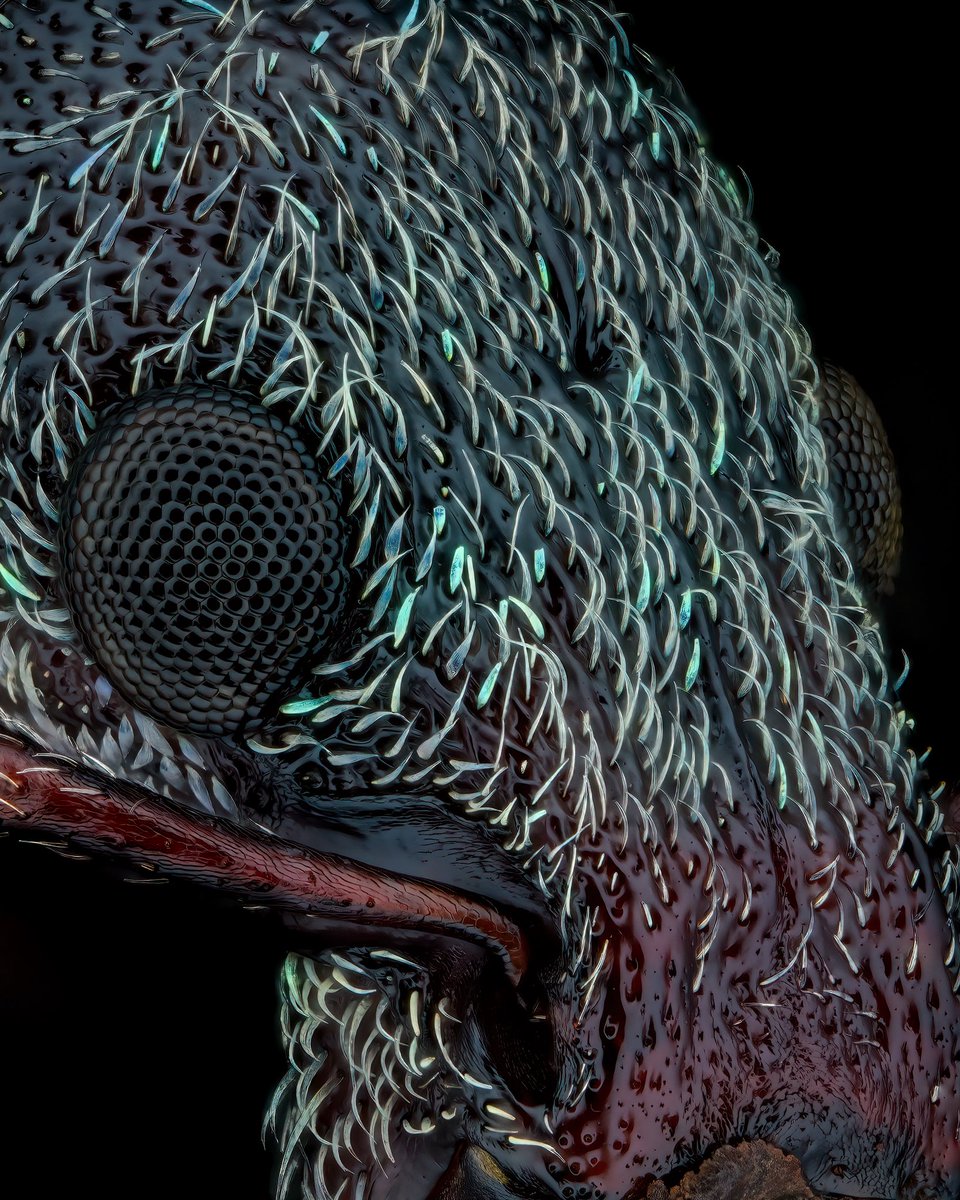
Argynnis paphia, the silver-washed fritillary.
This one is a rehydrated 50 years old specimen from an old collection.
Normally, the eyes look like small soccer balls, but in this case, I didn’t manage to recreate the „lifelike“ effect. Nevertheless, I felt this image was worth showing. I am often asked how long it takes me to create an image. I cannot give a blanket answer to that, as it depends on the magnification, the condition of the insect, and the desired look. On average, it takes between 3 and 10 hours, including image processing—though nowadays, most of that time is spent cleaning and preparing the insect.
Discovering the Sycamore Lace Bug
Have you ever searched for lace bugs hidden beneath the bark of plane trees? These delicate creatures often go unnoticed, tucked away in quiet crevices of the Platanus. I was delighted to find this beautiful specimen of Corythucha ciliata. If you look closely at the second image, you’ll spot it right in the center: a perfectly preserved dead find, though with a slightly damaged head. Even in its imperfect state, it is a wonderful treasure. The intricate, lace-like wing patterns and fragile structure make it an ideal subject for the coming winter studio sessions — perfect for detailed macro photography, scientific illustration, or careful study. Nature continues to surprise and inspire, even in the smallest forms.
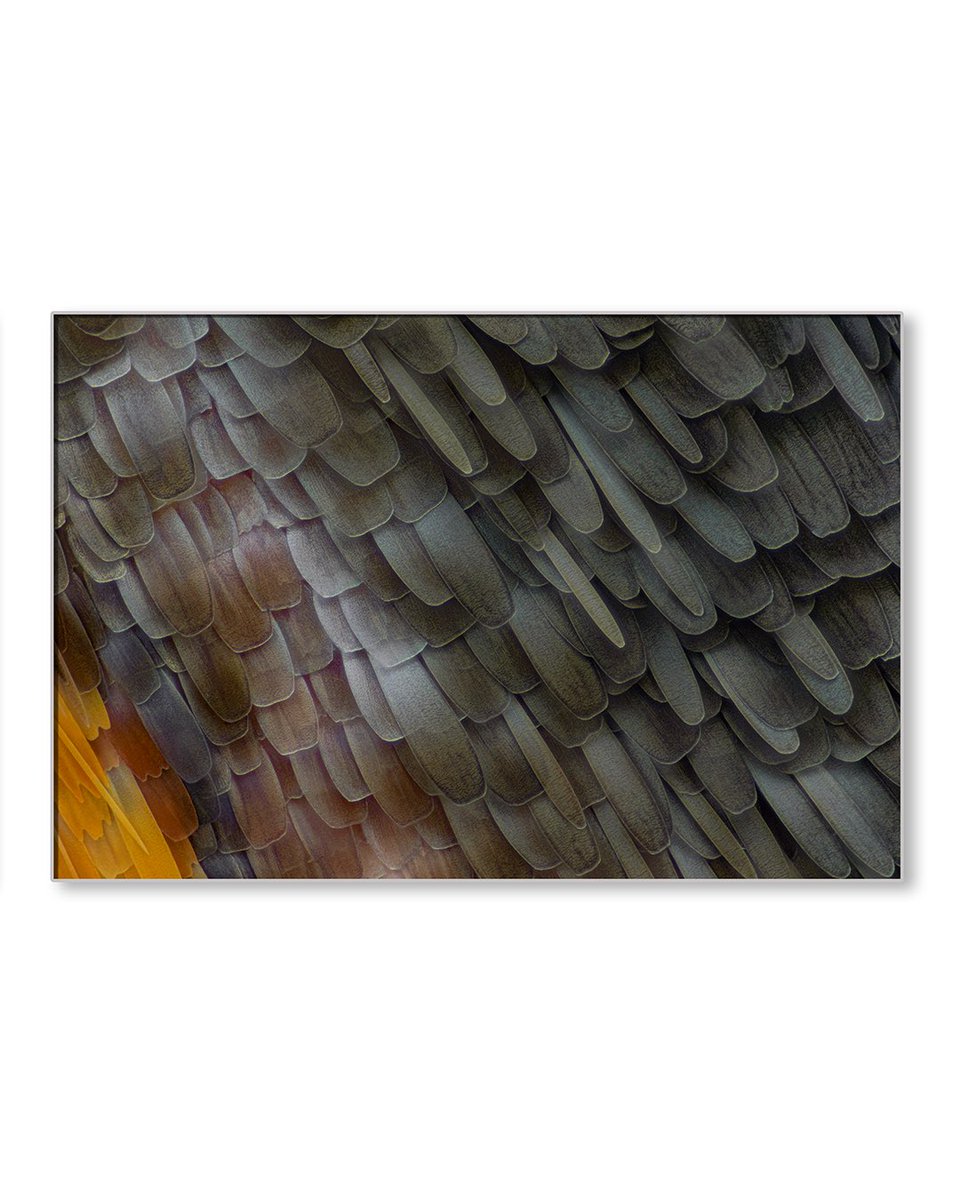
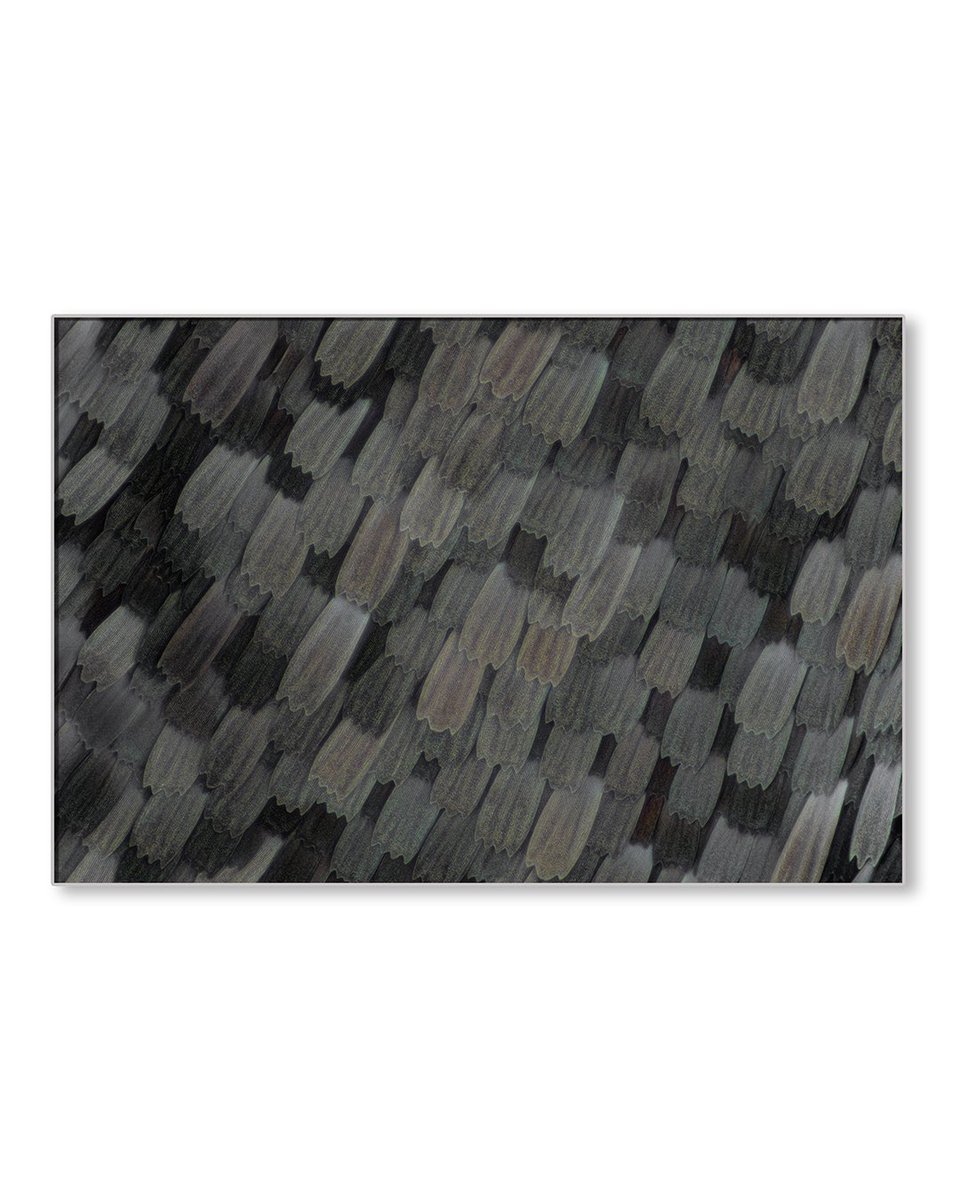
Hummingbird hawk-moth, Macroglossum stellatarum.
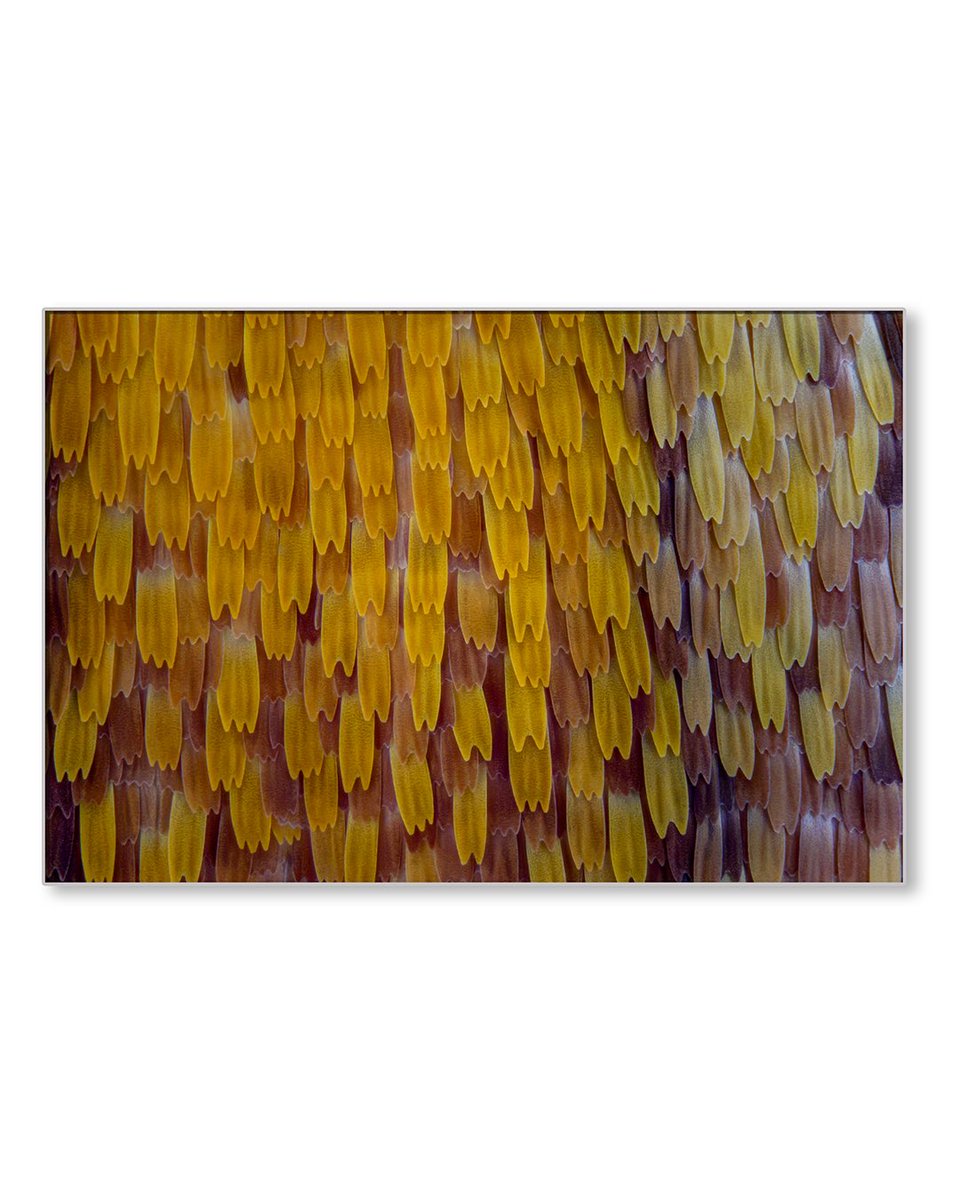
Three magnified excerpts from the wings reveal a hidden world that often escapes the naked eye. What appears as a simple surface transforms into a landscape of intricate structures, delicate scales, and subtle variations in light and texture.Seen up close, the wing is no longer just a tool for flight, but a composition of patterns and micro-architectures, shaped by evolution with remarkable precision. These details, invisible in motion, become a reminder that even the most familiar creatures carry within them an abundance of unseen beauty. In breaking the whole into parts, the ordinary becomes extraordinary—an invitation to look closer, and to rediscover the richness hidden within the smallest forms of life.
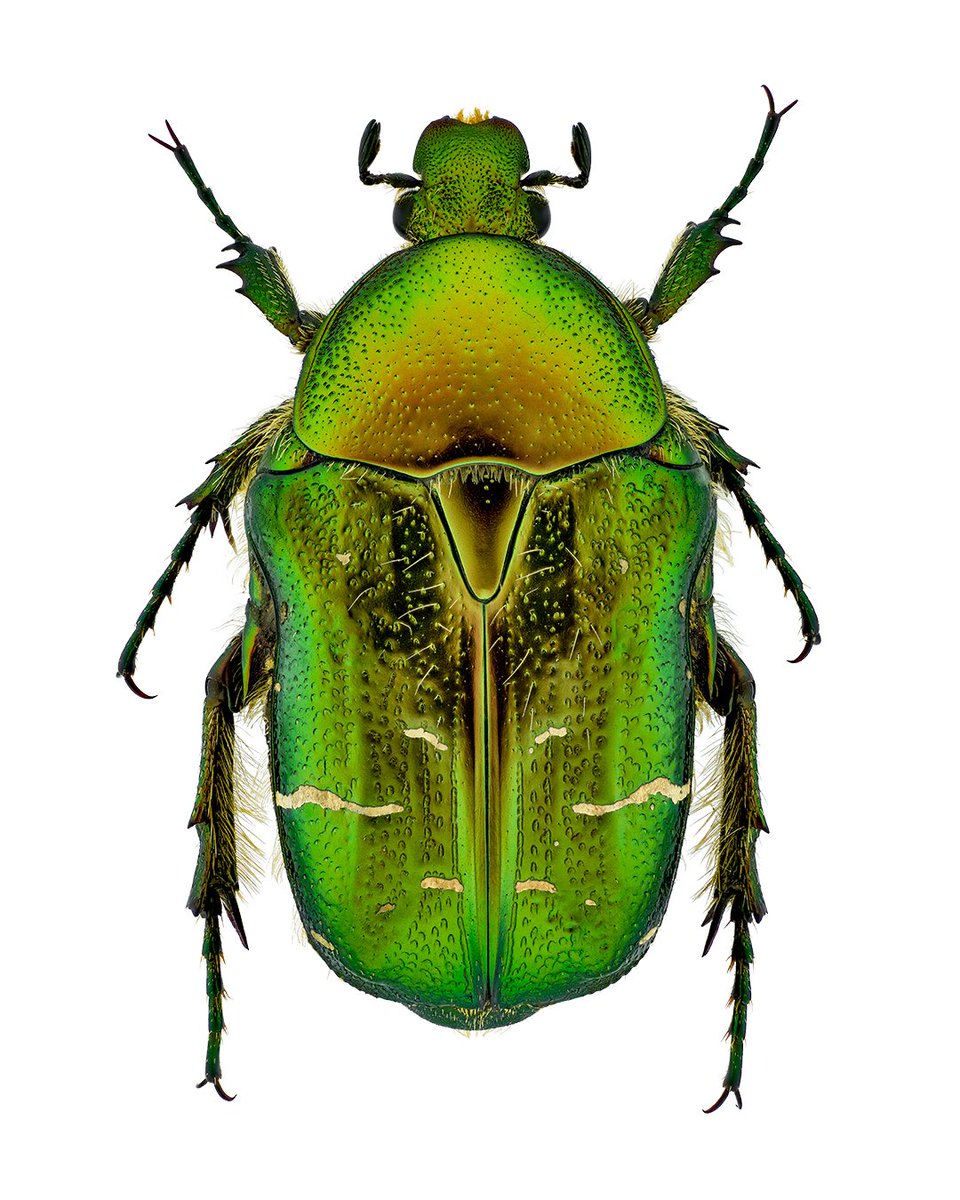
Rose chafer, Cetonia aurata.
At first glance, it might seem like nothing more than a claw.
Yet look closer and you see a masterpiece of evolution — intricate, powerful, and perfectly engineered for its purpose.
This ultra-high-resolution image of the claw of Cetonia aurata (the Rose Chafer) was created using the Stack and Stitch technique: a combination of focus stacking and panoramic stitching. The final photograph is assembled from 3034 individual images, revealing details far beyond what the naked eye can perceive.
Just a claw — or a wonder of nature?
Despite fighting malfunctioning equipment, I captured one of my most surreal videos ever.
That’s the moon crossing in front of the sun. You can see mountains on the lunar limb as it transits the chromosphere.
Captured using a specially modified telescope from Utah in 2023.
A baby rainbow tripod fish near Cozumel, Mexico. Adult tripod fish are found at depths of up to 4,720 m (15,486 ft), while juveniles inhabit surface waters and gradually descend as they mature.
📽: Frida Yolotzin
Three Green Bees from three different subfamilies from the Amazon! 💚🐝
The rainforests of Peru harbour some of the most incredible metallic bees in the world, like these ones! 🤩
Sweat Bee (Temnosoma sp.)
Cuckoo Bee (Ctenioschelius sp.)
Kleptoparasitic Orchid Bee (Exaerete sp.)
This video illustrates the "levante" phenomenon on the Rock of Gibraltar.
The "levante" is an east wind carrying moisture from the Mediterranean. When it encounters the rock's steep terrain, it rises, cools, and condenses, creating clouds, mist, and fog.
📹 Met Office
We zoom deep into a single region of the wing from the Oleander Hawk-moth (Daphnis nerii). Every individual scale is visible, tiny overlapping scales that create the moth’s signature olive-green and pink patterns. Nature’s finest brushwork 🌱
Extreme macro revealing the intricate world of wing scales on the Green Hairstreak (Callophrys rubi). This delicate butterfly is the only diurnal species in Germany whose wings feature these vivid metallic green scales on the underside. Unlike most butterflies, where color comes from pigments, the shimmering emerald green here is created purely by structural coloration. Tiny, precisely arranged microscopic structures in the scales act like natural diffraction gratings, refracting and interfering with light to produce this intense iridescence that changes subtly with the angle of view. A breathtaking hidden universe visible only at extreme magnification. Nature’s own masterpiece of optical engineering.
At first glance, they all display the same striking black-and-yellow warning colors. But only one of them belongs to the stinging Hymenoptera. In the center: a real hornet. Around it: seven insects from completely different orders — butterflies and moths (Lepidoptera), beetles (Coleoptera), and flies (Diptera). These harmless species have evolved to wear the warning pattern typical of stinging Hymenoptera through a remarkable strategy called mimicry. By adopting the bold colors that predators associate with a painful sting, they gain protection without possessing any venom or stinger themselves. A single unpleasant encounter with a wasp, bee, or hornet is often enough for predators to avoid anything bearing this color scheme. This gives the mimics a significant survival advantage. Defenseless insects survive by borrowing the dangerous reputation of stinging Hymenoptera. Nature’s most elegant deception, captured in one striking lineup.
Starting at 12 o clock ending in the center:
1. Death’s head hawk-moth (Acherontia atropos)
2. Hornet mimic hoverfly (Volucella zonaria)
3. Hornet clearwing (Sesia apiformis)
4. Common yellow swallowtail (Papilio machaon)
5. Wasp beetle (Clytus arietis)
6. Batman hoverfly (Myathropa florea)
7. Hornet (Vespa crabro)
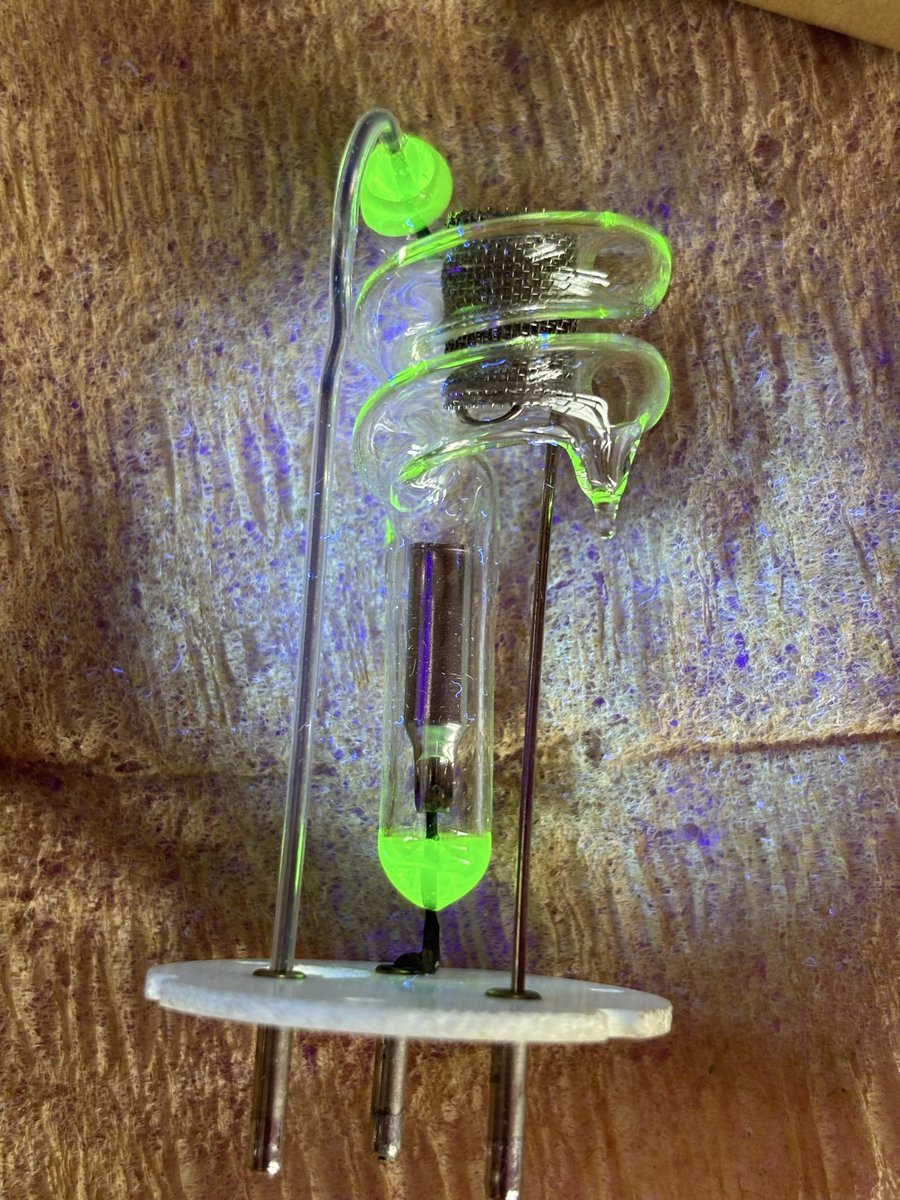
This xenon flash tube actually uses uranium glass seals and there’s a really cool engineering reason behind it.
Uranium doped glass expands at nearly the same rate as metal when it heats up, which makes it ideal for forming strong vacuum tight seals where metal electrodes pass through the glass envelope. That matching expansion prevents stress fractures and leaks, especially in devices that experience rapid heating and cooling during operation.
Inside this tube, things can get intense so a high-voltage trigger pulse ionizes the xenon gas, turning it into a conductive plasma. Once that happens, a charged capacitor dumps its energy through the tube in a microsecond scale burst. That rapid discharge is what creates the extremely bright high intensity flash.
These types of uranium glass seals in tubes were most commonly used in the 1940s-1970s when engineers were optimizing materials for reliability in high energy vacuum devices like flash tubes and early lasers.
They’re not really used anymore, though. Modern manufacturing moved away from uranium glass mainly because of regulatory concerns around radioactive materials, even though the radiation levels are typically very low. On top of that, better alternatives were developed like using borosilicate glass, aluminosilicate glass and other types of specialized glass-to-metal sealing alloys (such as Kovar) that achieve the same or better thermal matching without the stigma or handling restrictions.
So while this green glowing uranium glass seal looks futuristic, it’s actually leftover technology from an era when engineers used radioactive materials to solve tough problems.☢️
Orange tip (Anthocharis cardamines)
A harbinger of spring.
It‘s a diurnal butterfly belonging to the family Pieridae, distributed across large parts of Europe and Asia. Males are distinguished by their bright orange forewing tips, whereas females display predominantly white wings with grey-black markings.
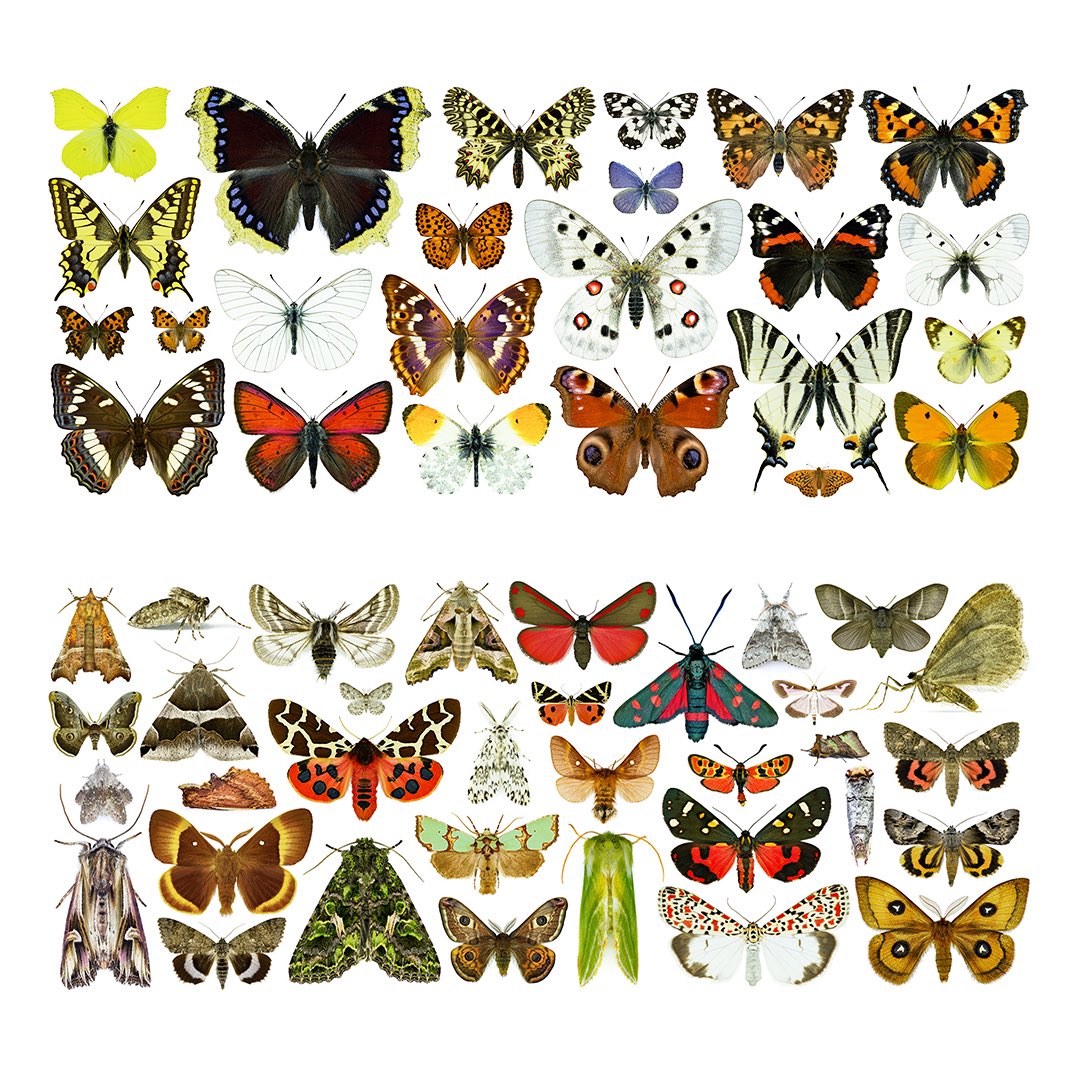
Butterflies and moths may look very different at first glance, but a closer look reveals something surprising. Even in their coloration, the night-flying moths are in no way inferior to the day-flying butterflies. In fact, many moths are far more colorful and vibrant than most people expect.
Both butterflies and moths belong to the order Lepidoptera. The name comes from the Ancient Greek words “lepis,” meaning scale, and “pteron,” meaning wing — referring to the tiny scales that cover their wings and give them their characteristic colors and patterns.
While they share the same scientific order, they are traditionally divided into butterflies (often called “Tag(day)falter” in German) and moths (often called “Nacht(night)falter”). This separation is mainly based on their activity patterns: butterflies are typically active during the day, while most moths fly at night. However, the distinction is not always strict, as some moths are active in daylight and some butterflies prefer dusk or dawn.
Nature shows us once again how diverse and beautiful even the “hidden” creatures of the night can be.
The Uropyia meticulodina moth doesn't have curled wings; instead, it mimics a curled dried leaf with its pattern and shading
A 3 dimensional illusion allowing it to hide in plain sight
📹Kazuo Unno
A 132-year-old rifle just standing in the Nevada wilderness.
In November 2014, archaeologists at Great Basin National Park unexpectedly stumbled upon a 132-year-old Winchester Model 1873 lever action rifle leaning against a tree. Park archaeologist Eva Jensen had stumbled across it on a rocky outcrop above Strawberry Creek during an archaeological survey.
The cracked wood stock, weathered to gray, and the brown rusted barrel blended into the colors of the old juniper tree in a remote rocky outcrop, keeping the rifle camouflaged for more than a century.
The rifle is a Winchester Model 1873, chambered in .44-40 Winchester, a model sometimes known as "the gun that won the West." The serial number corresponds in Winchester records with a manufacture and shipping date of 1882.
The bottom of its stock was buried in 4 to 5 inches of accumulated soil and vegetation, and a round of ammunition stored in its buttstock dated between 1887 and 1911. A team of researchers took the firearm to a local hospital to be X-rayed, and while the chamber and tube magazine were not loaded, the X-rays revealed a live .44-Winchester cartridge hidden inside the buttstock.
A former curator at the Buffalo Bill Center said Model 1873 rifles were so valuable that the owner simply could not have intended to leave it, stating "you just don't leave a gun like that there." The rifles sold for $35 to $50 in the 1880s and can now fetch up to $15,000 depending on their condition.
To this day, park officials still don't know who it belonged to or why it was left against the tree, and no sales or ownership records have ever been found.
The rifle is now on permanent display in the Baker Visitor Center of Great Basin National Park, along with the cartridge found in it.