That guitar tone was an accident. Chasing a ZZ Top sound, Dire Straits left a wah pedal parked half-open and a studio mic that had drooped overnight, pointing at the floor.
They never could recreate it. The riff that defined MTV, built by mistake.
That guitar tone was an accident. Chasing a ZZ Top sound, Dire Straits left a wah pedal parked half-open and a studio mic that had drooped overnight, pointing at the floor.
They never could recreate it. The riff that defined MTV, built by mistake.
Stateside, a man with three small children at a brewery looked at my hakama and said, very softly, the words "Cowboy Bebop."
He said them like a password.
I nodded. I had to. The way one nods at a fellow warrior across a battlefield. Slow. Once.
He sat down at my table without asking. His wife at the next table did not look surprised. She has lost him to this conversation before.
"My dad," he said, "let me stay up for the 12:30 a.m. block. I was eleven. Had school the next day. He sat on the couch and pretended to read the paper so my mom would let him stay up too."
I told him this sounded like a religious vigil. He nodded as if I had finally said it correctly.
"He didn't even like cartoons. He just liked that I liked something."
The man took a sip of his beer. He looked at the ceiling. He was no longer at the brewery. He was on a brown couch in 1999 in a house he did not live in anymore.
I asked him what he loved most. He did not hesitate. "The cool ones. The samurai ones. The ones where the guy doesn't talk much."
I told him I do not talk much.
He pointed at me with the neck of his bottle and said "exactly," as if this proved a thesis he had been defending in his head since 1999.
A second man came over from the bar. Champloo shirt. He had heard "Cowboy Bebop" from across the room, the way a dog hears a can opener.
"You guys talking about Toonami?"
A third man appeared at the end of the table. He was holding a flight of beers. He did not know any of us. "Cowboy Bebop?" he said. He sat down. Nobody asked him to.
The wife of the first man finally came over. "You guys are not having this conversation again."
"Babe," the first man said, with great patience, "this is the actual samurai."
"He's a samurai," the third man confirmed, to his own wife, who was not there.
I had said it once, at the door, and they had taken it as a fact and stopped checking. The most American thing that has ever happened to me. They did not need a sword. They needed the word.
The first man's oldest daughter came over. Maybe ten. She tugged her father's sleeve. "Daddy. Is he a real one."
The father looked at me. The whole table looked at me.
I looked at the girl. I told her, with the truth I owe a ten-year-old at a brewery in Wisconsin on a Sunday, that yes, I am a real one, and her father was correct.
The father did the thing fathers do. The ceiling thing. The pretending-to-read-a-sign thing. The thing his father did on the couch in 1999.
The second man, in the Champloo shirt, said quietly, "Tell her about the show, dude. Tell her why."
The father turned to his daughter. He took a breath like a man about to recite a sutra he had learned by accident.
"Honey," he said, "when I was a little kid, my dad let me stay up past my bedtime to watch a cartoon about a samurai who didn't talk much. And I remember every single one of those nights. And someday, if you want, we'll watch them. Just you and me."
The ten-year-old, who had not asked for any of this, said, "Okay, Dad."
Three grown men at a brewery in Wisconsin had to look at the ceiling at the same time. I have not seen a coordinated salute that clean in my country.
The father raised his glass. "To Toonami."
I raised mine. "To Toonami."
The third man, who still did not know any of us, raised his entire flight. "To my dad," he said. "He let me stay up too."
The samurai shows here were never about samurai. They were the only language a generation of American fathers had for saying I see what you love, and I will sit up with you while you love it.
I bowed in the car on the drive back. To no one. I bowed anyway.
My gosh I love this Aussie who has discovered simple American eateries that are as common as crazy talk from Congress. We really are blessed in the USA for things we take for granted.
We were thrilled to have you aboard the International @Space_Station, @FreddyLA7! Life up here literally orbits around strong international spirit and solid teamwork, just like the World Cup. @NASAJohnson and Houston were honored to host you. Enjoy your trip north, and safe travels! 🚀⚽️
@japan_nobunaga The ubiquitous red chalice of a multitude of feasts and celebrations for the young and old. Available in other colors too, btw! A treasured tradition and inviting symbol of fun, family and mutual connection across this great land!
A summer gathering: music, the scent of grilled meats, and in every hand, a crimson vessel. I had glimpsed it before, but now its omnipresence struck me.
The red cup. It was at the barbecue. It was at the graduation party. It was at the tailgate, the birthday, the garage gathering of unclear purpose. Different houses, different feasts, same chalice. By the third event I understood I was looking at national regalia.
"Why always this red cup?" I asked my neighbor Gary.
"Solo cup? I don't know, man. It's just the cup."
It's just the cup. The way one might say: it's just the sun.
I investigated the vessel. It is sturdy beyond its station. It does not betray you when squeezed. Its color announces FESTIVAL across any lawn. And molded into its side: lines. Rings, at mysterious heights.
"Gary. What do these lines mean?"
"Those are just from the mold, I think."
I presented my findings, gathered from the scrolls of the internet: the lines are said to be measures. One for spirits. One for wine. One, near the top, for beer. A drinking doctrine, hidden in plain plastic, riding in every sleeve of two hundred.
"Huh," said Gary, examining his cup like a stranger he had known for thirty years.
In my land, sacred vessels are kept in cedar boxes, wrapped in cloth, handled twice a year with held breath. Here, the chalice is stacked by the hundred at the supermarket, crushed underfoot at dawn, and present at every important moment of a citizen's life anyway. Graduations. Reunions. Victories. The cup attends them all.
A chalice does not require gold. It requires only that everyone raise it at once.
I keep one now. Washed. Dried. Reused. Gary says that is not really how they work.
It is how mine works.
USA. A breakfast counter. The waitress recommended the biscuits and gravy, and when the plate arrived, I thought something had gone wrong in the kitchen.
I say this with shame. The dish looked like a construction site after rain. Pale mounds. Gray ladle-fall. Speckles I could not identify.
In my land, the eye eats first. A meal is arranged like a garden. This meal was arranged like weather.
"Is it… finished?" I asked, carefully.
"Honey, that's what it looks like."
The man beside me was already eating his. He did not look up. "Just try it."
I am a man who has charged hillsides at dawn. I raised the fork. I tried it.
I must now formally apologize to the biscuits, the gravy, the waitress, the kitchen, and the entire breakfast tradition of the American South.
It was magnificent. Warm. Peppered. The biscuit drank the gravy the way a field drinks rain — THAT is why it is shaped like that, you fool — and every mound I had insulted was a soft fold of comfort that my homeland, in eight hundred years, never once thought to invent.
"Well?" the waitress asked.
"I judged it," I confessed. "By its appearance. I am ashamed."
"Everybody does, hon."
Everybody does. A national dish that forgives you for doubting it. It expects the doubt. It waits for you on the other side of it.
Do not judge the gravy by its face. Judge yourself, for hesitating.
I order it every Saturday now. I no longer see the construction site. I see only the garden.
It was a garden the whole time. The eye must be trained.
"Name for the waitlist?"
I straightened. This man would carve my name into the record of the evening. It deserved my full voice.
"Nobunaga."
He smiled, clicked his pen, and called past me into the room:
"BONANZA! Party of one!"
Bonanza.
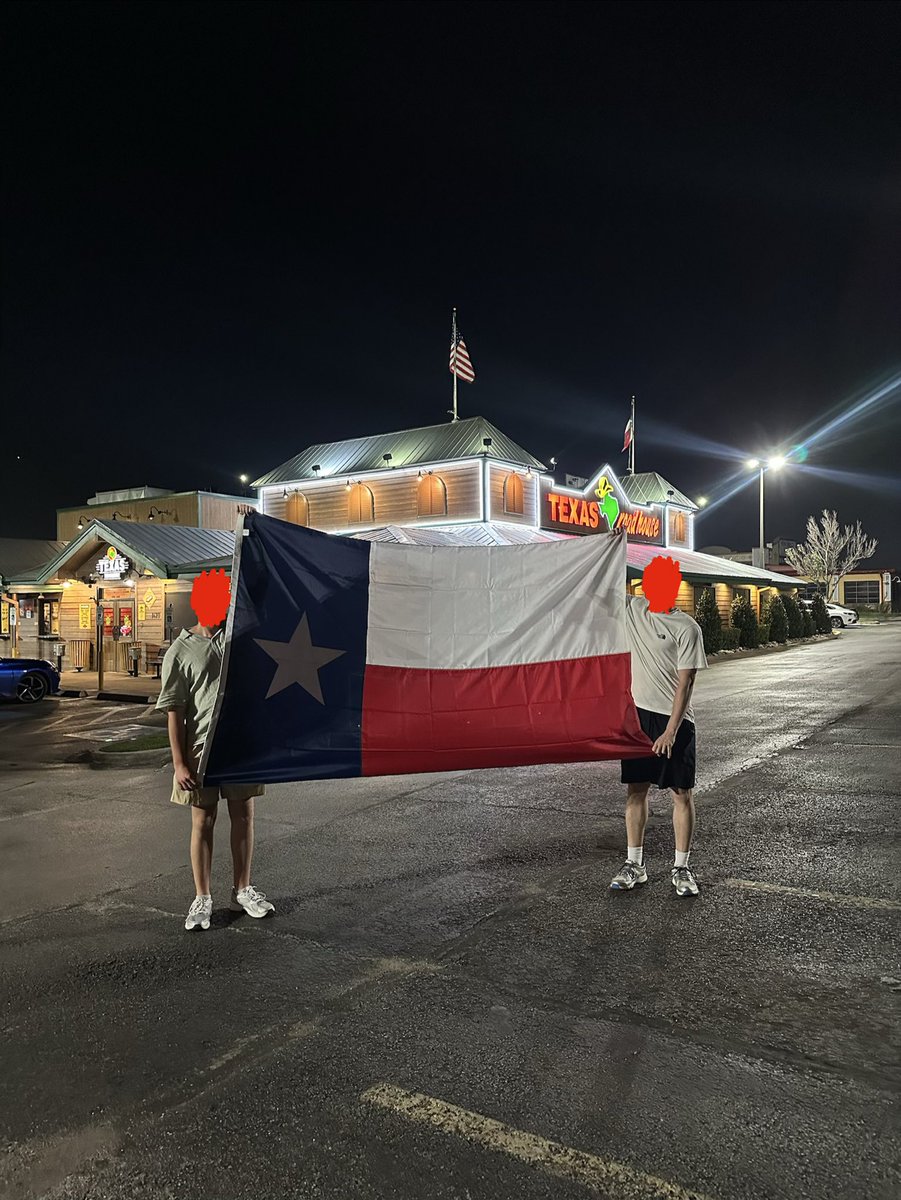
I have led ten thousand men. I have burned temples. And tonight a steakhouse will seat me under the name of a cowboy from an old television show.
He handed me a small black disc. "It'll buzz when your table's ready, Bonanza."
I took it like a medal.
The truth, because a samurai does not lie: it stung. For one breath, eight hundred years stung.
Then I decided. If this room would have a Bonanza, it would have a magnificent one.
I held the disc before me in both hands, like a hawk awaiting its moment. When a small child stared at it, I knelt and let her behold the sacred device, and told her, solemnly, that it would soon wake with fire. She gasped. Her father thanked me, unsure for what.
A couple had been waiting longer than I. So when my disc at last erupted — buzzing, glowing, alive — I rose, walked over, and pressed it into their hands. "Your need is the greater. Go. Bonanza yields his table."
The host blinked. "Sir, that's — that's not really how the —"
"Bonanza insists."
They went, laughing, blessing my strange name. And I waited again, with the patience of a man who has all the time in the world and a brand-new name to be worthy of.
When they called me a second time, the whole room had heard the story. A dozen strangers turned to watch Bonanza, party of one, walk at last to his table.
I paused at its center, raised a glass of water to them all, and said, with the gravity of a man addressing history:
"A great name opens doors. A kind one is remembered after the door has closed."
The waiter wiped his eye. "...welcome to the steakhouse, Bonanza."
Best meal of my life.
I have not corrected them once.