MIT Center for Sustainability Science and Strategy
@mit_cs3
@mit_cs3 improves understanding of sustainability challenges & helps decision-makers address global change, enhancing wellbeing for current & future generations
MIT researchers--many CS3-affiliated--have developed a new technique to streamline the creation of fast, reliable and adaptable #AI models for #climate prediction, upping the usefulness of fast and adaptable #climate#emulators for #policy formulation. https://t.co/Qzt32MKUjc
Maine's 18M acres of #forest offsets >= 60% of its greenhouse gas #emissions annually. But use of large forest areas as #carbon sinks is more complex when businesses also depend on them for timber, says MIT Prof/CS3 faculty affiliate Catherine Wolfram. https://t.co/WLZIVDg3yL
In a Climate One podcast on costs/benefits of clean #energy, MIT Prof./CS3 faculty affiliate Christopher Knittel argued that we should continue to subsidize rooftop solar in a way does not lean harder on those homes that cannot install #solar. https://t.co/w7KwktBk9W
Our November e-newsletter spotlights a CS3 study that pinpoints US states where #climate#adaptation measures are most urgently needed. Other topics include #ocean#carbon sequestration, #FoodSecurity, #methane#emissions, and climate fingerprinting. https://t.co/p3Zdkkblw3
Tipping points: What they mean, how we can use them to our advantage, & why many scientists hate using the phrase. A new podcast with MIT CS3 Principal Research Scientist Jennifer Morris & Senior Research Scientist/Deputy Director C. Adam Schlosser. https://t.co/pA8YuaGAs7
Two CS3-affiliated MIT professors named as project principal investigators-- Catherine Wolfram (carbon border adjustment strategy) and Christopher Knittel (energy #affordability) --for two of eight new MITEI Future Energy Systems Center projects. https://t.co/FTpa3xSv5N
This new Q&A with @eapsMIT Research Scientist and CS3 affiliate Jonathan Lauderdale explores how #ocean#carbon sequestration changes under different glacial conditions, and how that may influence larger #climate patterns. https://t.co/svBeU0xS8b
The size of the hole in the #ozone layer last month, measuring 10.6 million sq. miles, was especially large. However, longer term trends show that the ozone hole is slowly recovering as expected, says MIT Professor/CS3 faculty affiliate Susan Solomon. https://t.co/NM5XokhMHy
A new MIT CS3 study pinpoints U.S. states with the steepest warming trends, indicating where #climate adaptation measures are needed most. #sustainability
https://t.co/AuB14S2sPs
Climate 'fingerprint' research shows that human influence on the Earth's #climate system is 'incontrovertible,' according to new review co-authored by MIT Prof./CS3 faculty affiliate Susan Solomon.
https://t.co/tpaKiyiZni
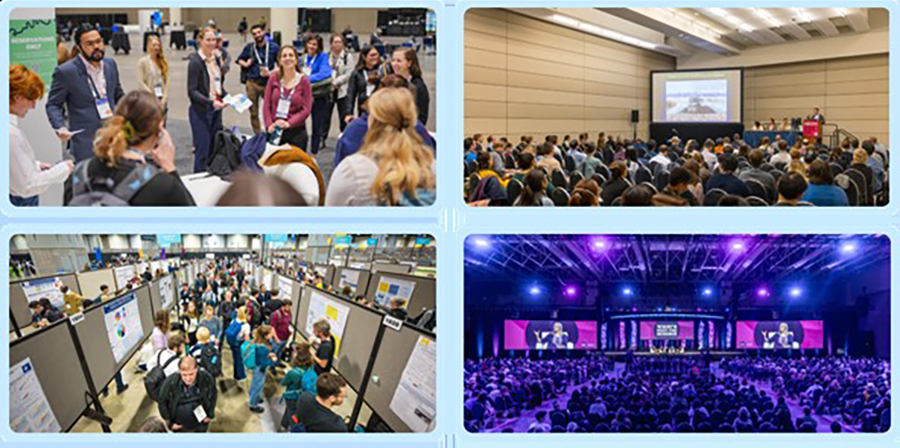
From Earth system modeling to #climate#resilience, MIT CS3 presentations and sessions at the 2026 American Geophysical Union (AGU) Fall Meeting will explore multiple #sustainability challenges and solutions.
https://t.co/DNXhrgNkLw
A paper co-authored by MIT Prof./CS3 faculty affiliate Christopher Knittel argues that revoking fuel economy standards does not save consumers money. https://t.co/1T48LFelcz
A new way of simulating #wind turbines in the field shows how tweaking turbine operation could unlock tens of thousands of dollars per turbine everyyear, finds study co-authored by MIT Professor/CS3 faculty affiliate Michael Howland. https://t.co/OE8CzE9DZ4
Presenting the October 2026 MIT CS3 e-newsletter. In this issue: Predicting large disparities in access to #food, water & #energy in 2050; putting #nuclear waste into perspective; mapping extreme weather risks; #carbon pricing; & #ozone depletion.
https://t.co/u7cAwPxD2T
MIT researchers, including several affiliated with CS3, are advancing tools to help evaluate a location’s vulnerabilities to flooding, cyclones, humid heat waves, or other #climate-related events. #ExtremeWeather#Resilience https://t.co/C50uoLWAdG
MIT Professor/CS3 faculty affiliate Haruko Wainwright believes the risks posed by radioactive wastes cannot be properly assessed without also considering the hazards of chemical wastes. #nuclear#sustainability
https://t.co/6aEnT4zbhg
Team of economists led by MIT Prof./CS3 faculty affiliate Catherine Wolfram finds that a group of countries could set up a shared #carbon pricing scheme that cuts ~1.5% of global greenhouse gas #emissions & raises nearly $200 billion/year in public money. https://t.co/JPJY217HfJ
@eapsMIT Prof./CS3 faculty affiliate Susan Solomon joins Cleo Abram’s “HUGE* If True” to discuss her 1985 research uncovering how chlorofluorocarbons were depleting the ozone layer, which led to the Montreal Protocol that banned the use of those chemicals.
https://t.co/ZuDdPHeM0k
The future of #affordability: In some world regions, the poorest people may spend about 50% of their #income on #food, while the richest spend about 5%, finds study co-authored by MIT CS3 and @mitenergy Principal Research Scientist Jennifer Morris. https://t.co/HzttvYlOuW
Presenting the September 2026 e-newsletter of the MIT Center for Sustainability Science and Strategy. In this issue: Assessing regional economic impacts of different #decarbonization pathways; and #climate risk, #adaptation and #innovations. https://t.co/T16LUEqyRp