(Revised with correct figure for Middle Eastern imports.)
Japan’s April naphtha imports fell 47% y/y.
Middle East plunged 79%, while:
• U.S. up 210×
• Peru up 16%
• Algeria entered as a new supplier
https://t.co/WNSLAUPVuN via @NikkeiAsia
Middle Eastern naphtha to Japan fell 47% in April. The replacements:
• U.S. (up 210×)
• Peru (up 16%)
• Algeria (new)
https://t.co/zNFyOCaRow via via @NikkeiAsia
Japan is scrambling for naphtha — the plastics feedstock behind syringes and catheters that underpin surgeries, dialysis and chemotherapy.
https://t.co/zNFyOCaRow via @NikkeiAsia
The U.S., Peru and India are the few reliable alternative sources of naphtha Japan can turn to as Middle Eastern supply falters.
https://t.co/zNFyOCaRow via @NikkeiAsia
China and the U.S. dominate drug innovation. To stay in the race, Japan may need to allow higher prices for new drugs — even if that means higher costs for patients, a delicate balance for policymakers.
https://t.co/S1lM0LCnsk via @NikkeiAsia
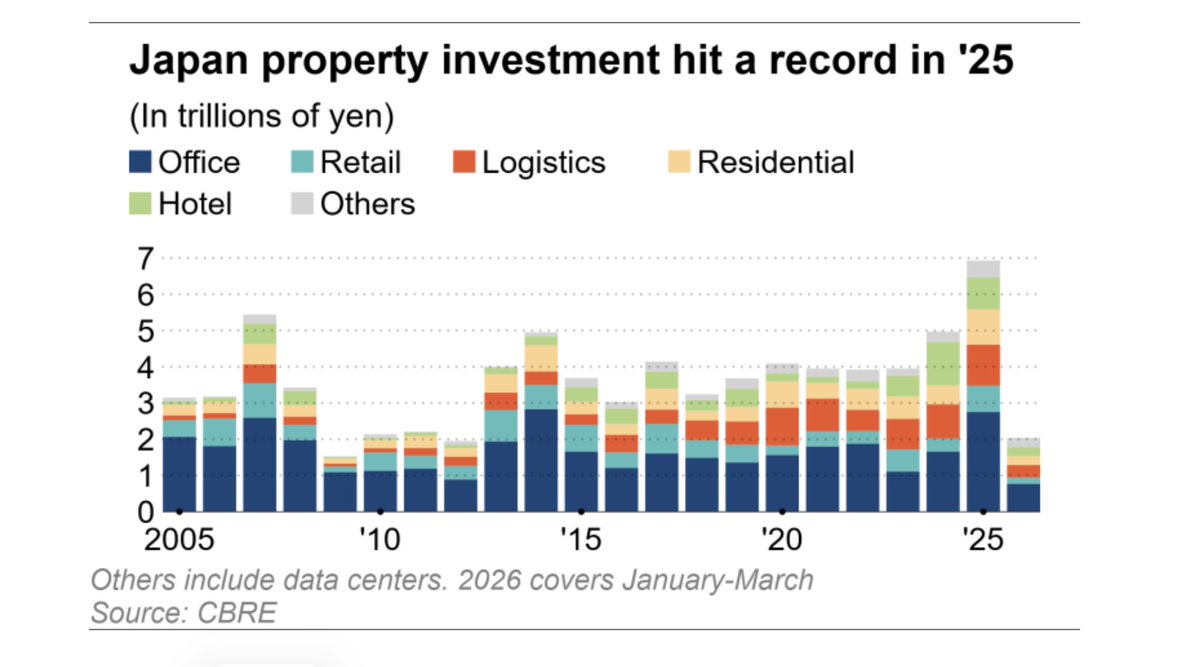
Japanese companies often hold prime real estate as a legacy of decades of operations. As managers weigh whether to keep or diverset these assets and focus on core businesses, more are opting for asset‑light models.
https://t.co/hYEhUAQ3nX via @NikkeiAsia
Producing and developing together is just as important as training and exercising together. The strength of our 🇺🇸🇯🇵 deterrence is dependent on our ability to innovate and manufacture systems at scale and at speed. The excellent tour of @MHI_Group’s interceptor missile production facilities provided a chance to talk Alliance capabilities with @ModJapan_jp Minister @shinjirokoiz.
Shareholder pressure is forcing Japan’s asset‑heavy companies to unload underused warehouses -- and private equity knows a bargain when it sees one. Buyers like Blackstone are snapping them up as fast as they hit the market.
https://t.co/hYEhUAQ3nX via @NikkeiAsia
Japan’s defense buildup increasingly depends on partners willing to engage with Tokyo as true co‑developers. BAE, Rolls‑Royce and Leonardo already play that role. Saab is now making the case that it should be next.
https://t.co/PCEPt91Gqi via @NikkeiAsia
Japan’s latest takeover battle pits Sweden’s EQT against Line‑Yahoo for control of .Kakaku.com, the operator of restaurant‑review site Tabelog.
https://t.co/fI0VJWOSiv via @NikkeiAsia
Olympus CEO Bob White marked his first year in office with a 20% jump in the share price — though the stock has only returned to where it stood when he took over. The harder work of making Olympus bigger & more profitable still lies ahead.
https://t.co/TtFE49dEsM via @NikkeiAsia
It’s too early to call a regime change, but Kioxia’s surge may signal that Japan’s market leadership is starting to tilt away from legacy automakers and toward semiconductor names.
https://t.co/CUc2HjF9QJ via @NikkeiAsia
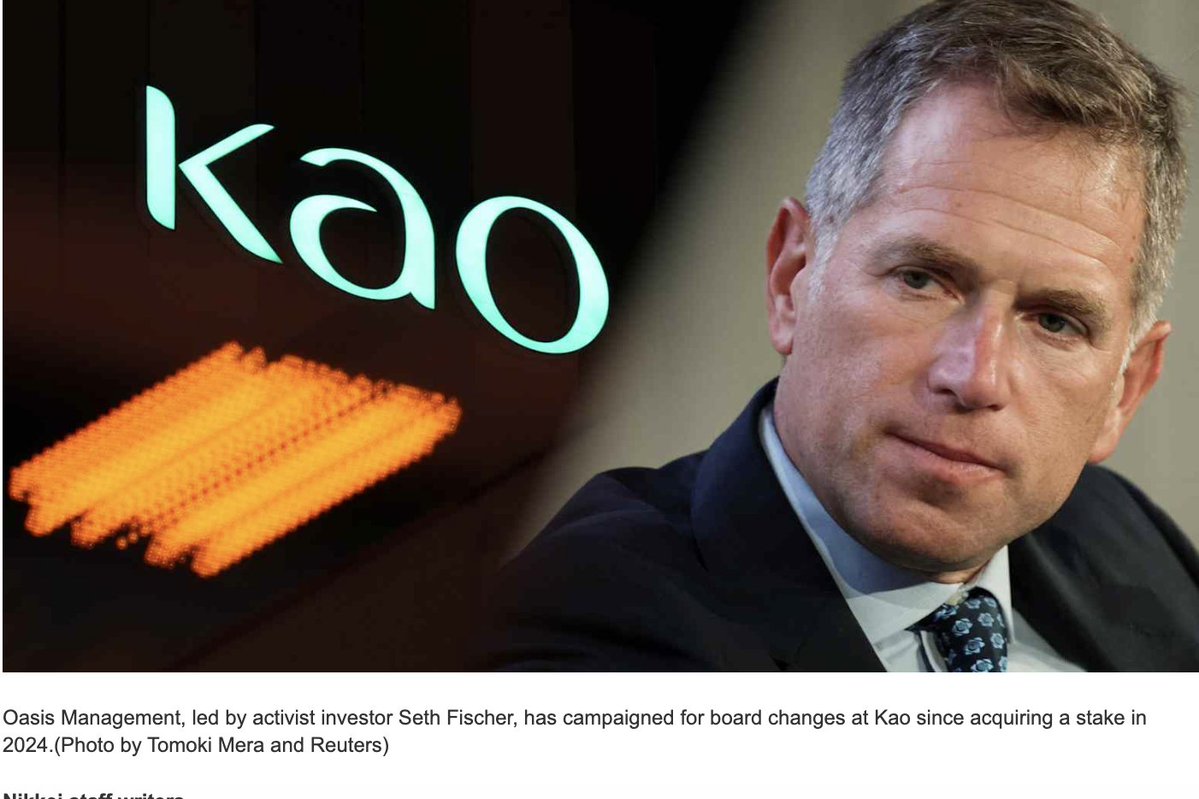
Oasis’s bid for a supply‑chain probe at Kao was voted down, but it marks a new front for Japanese shareholder activism, which has mostly focused on operational or governance issues.
https://t.co/PLkrp6RVna via @NikkeiAsia
Oasis’s bid for a supply‑chain probe at Kao was voted down, but it marks a new front for Japanese shareholder activism, which has mostly focused on operational or governance issues.
https://t.co/PLkrp6RVna via @NikkeiAsia
Shareholder activism is heating up as AGM season nears in Japan. Elliott has laid out a sweeping cost‑cut plan for Daikin, while UK fund Palliser is urging SMC, the industrial‑automation heavyweight, to buy back shares.
https://t.co/U46hJEKtXz
Elliott has taken a 3% stake in Japan's Daikin and is pushing the air‑conditioner giant to pursue a ¥1 trillion share buyback and review — and potentially sell — its chemical and filter operations.
https://t.co/joIAYKskfc
via @NikkeiAsia