@RamboVanHalen Not to compete with your excellent book that I love, but a new book on the making of "Ferris.." just dropped 6/9, excerpt here........https://t.co/EMqFPJq1qC
In Traditional Chinese Medicine, there is a secret, invisible door on your back, directly opposite your belly button that you should spend time breathing from and into. Feel where your belly is and follow it around to the back. Massage and tap this point to make contact and feel it expand and contract.
Add deeply comforting warm water here (in your minds eye) as you breathe into it, like a funnel is opening a door that is either locked or very nearly closed and sits barely ajar. Just see it warm up and recognize your breath and illuminate this door. Over time the door energetically opens.
If you want to know more about this point, it is known as the Mingmen (命门), the “Gate of Life.”
In classical thought it holds our ministerial fire : the deep + foundational warmth that animates all our organ systems, especially our kidney Yang, but it also protects and anchors our kidney Yin.
When you breathe into it, a few things are happening at once :
The diaphragm descends and the back body expands. Most people breathe forward into the chest or belly, but the posterior body - the kidneys, lumbar fascia, deep spinal muscles, often stay tight and unmoving throughout our life. Directing breath to our mingmen point gently inflates that whole back field and softens chronic tension and ‘guarding’ (which is very common in people with adrenal fatigue, fear states, or long term depletion)
It warms and activates our entire kidney system. In TCM, the kidneys govern our vitality, reproductive + vital, core essence (Jing), our bones, brain and willpower. Breathing into it softly restores warmth where there may be a cold lack of circulation + stagnation.
It anchors and grounds our nervous systems downward. This is why it’s used in Daoist practices for anxiety, dissociation and scattered qi, as it moves our energy away from the upper body, mind and head. The body starts to feel heavier in a good way, more rooted into order and itself.
Over time, breathing here hydrates our deep tissues, as the kidney system rules over our fluids and marrow.
Further, this gentle breath expansion with breath improves the flow of blood and fluid, including through the fascia and around our spine, which can subtly nourish the yin over time.
If someone has excess heat rising upward, agitation, insomnia, or dryness from burned out yin, breathing into the Mingmen is often used very subtly : imagine fogging up a mirror behind your navel, letting the back body widen without force. If done too aggressively, it can feel stimulating instead of nourishing, and I say this doubly for those who are depleted or who have chronic illness. Go slow to be able to work with it often. Do daily.
How to feel it :
The simplest way to feel it is to place one hand on the lower belly and one on the lower back, and let your inhale expand into both hands at once, like a sphere is inflating through the center of your body. Over time, the back hand starts to move more, and that’s when mingmen begins to “wake up” and open. This is a practice that take time.
Regular practice will bring you into a grounded state, calm your adrenals and spirit and slowly open the door of life.
My teacher always tells me : “This is the door your ancestors come through. ”
Enjoy it, treat it like a somatic practice where you breathe as instructed and feel your adrenals settle out and even lower (your adrenals can absolutely melt and settle and lower) while you’re working on the bigger picture of opening the door. A practice of subtle connection.
@SecretSunBlog I missed all of it, instead of getting laid by these beauties, I was chanting Hare Krishna and hustling books in airports, the 90's is another story.
The mainstream monotheist religions claim to offer eternal bliss, escape from equally eternal damnation, a life made important on a cosmic scale, and the rest of it. What they ask, in turn, is absolute submission and adoration -- in theory, to a deity; in practice, too often, to a tradition and an all too human hierarchy -- but even in the best case, it's an utterly unequal relationship in which you are nothing, the deity is everything, and you alternate between squirming in the dust as you consider your failure to do everything the deity requires of you and beaming like the sun because the deity cares for even so insignificant a worm as you.
None of this is true of classic polytheism. The gods of polytheism are not omnipotent, not omniscient, not omni-anything. They are far greater, wiser, better, etc. than human beings, but it's not the absolute difference in kind that most monotheists claim for their gods -- it's simply a difference of degree. Thus polytheists treat their gods as you would treat a much wiser and more powerful friend: with respect, with reverence, with love, but not with the total self-abnegation the theologians of monotheism insist their deity deserves. You exist; the gods exist; it is possible for you to establish friendly relationships with them. That's the basis for polytheist faith.
Is that sufficient? That's a personal value judgment that you alone can make. Myself, I think the monotheist theologians are wrong; I think that they've been engaging in what Alfred North Whitehead used to call "metaphysical flattery," inflating their god to absurd dimensions; I think their god is a real god, but not necessarily a close fit to the portrait of him that they've painted. I also have serious doubts about the moral goodness of any deity that would behave the way that Christian theologians in particular insist their god behaves. To me, it's more honest and more genuine to speak to the Divine in its many forms as a friend, to listen much more often than I speak, and to recognize my own failings (which are many) without wallowing in the sort of theatrical self-loathing so common in the mainstream religions.
Oh, and I don't believe that any act of mine can give my life cosmic significance. I'm far from sure the gods themselves are of cosmic significance. It's one of the interesting features of the old pagan faiths that the gods don't create the cosmos -- the cosmos gives birth to the gods -- and like us, they must contend with a universe they didn't make.
@lauramatsue You can already see it on youtube, longtime 'content creator's' are burnt out, there's only so much digital interfacing our souls can take, gen Y is terrified of AI, robotics, if they can truly peel away from digital addiction in number's, go inwards, the golden age will begin.
I think the new trend will be disappearing into a life of offline solitude, rather than oversharing your entire life in a desire to be a famous influencer
@SecretSunBlog I know Chris, I allowed my son to go to Evergreen College where he promptly got high jacked by the DSA Marxist cultist's, 20 years later, he's still spending all is free time with DSA, to end 'capitalism', this socialist's utopian wet dream is the ultimate mind control.
How people respond to kindness is a good test of who they are.
One person wil appreciate it, even cry if they’ve been so unloved in life.
Another will take the act for granted, having not a single thought of gratitude.
And another will smirk like a wolf sensing weakness.
I think people should be treated per their type. Be kind to the kind, be firm with the unkind.
Some people seem mean/scary, but they’re just armored up with trauma defense mechanisms. In some cases, kindness can pierce through & touch them.
But that’s quite rare, and it’s easy to confuse them with the true predators.
True pedators can’t be changed. They can’t be rehabilitated. You can try, but you’ll just bleed. This is well-known in abnormal psychology.
Psychopaths/sociopaths like that are missing something (spirit). They have no conscience, no goodness, and they exploit the goodness in others.
The New Age movement, modern Christianity, and progressive leftism all disarm people with excuses of karma, martyrdom, give til it hurts, or suicidal empathy to tenderize the meat for the predators.
The greatest act of kindness one can do for such predators is putting them down like the sick animals they are.
Spirits are real.
You can engage with them.
You already are without realizing it.
Most of magic is just making deals with spirits.
It gets easier to produce the effects you desire once you’ve experienced this personally.
@postmugglism Us veteran's of 'intimate' Sasquatch interactions in WA State understand they're Shamanic/shapeshifting/Spirit's with Fae behavioral overlap, learning magical practice's to go to next level of interaction is the way forward, we already leave favored offerings, aka 'gifting'.
All over the Western industrial world, it’s the same situation — a ruling elite that can’t lead and won’t get out of the way is trying to cling to power by any means necessary in the teeth of rising populist dissent, and it never seems to occur to them that making a peaceful transition impossible just guarantees that the transition won’t be peaceful.
My waiter had dementia and forgot my order.
I visited a cafe in Japan that ONLY hires people with Dementia. It's called the Cafe Of Mistaken Orders.
Sometimes the servers bring you the wrong food, never bring your order, or sit down and join you instead.
But the point of this cafe is to be a place for dementia patients to feel needed and have purpose.
And this cafe is working. Japan has discovered that being socially connected actually slows down the progression of dementia.
So now there are 8,000 dementia cafes all over Japan!
The U.S. should be more like Japan. We should keep elders out of nursing homes, find ways to give them purpose, and part of society until their last days.
@RamboVanHalen Doing a quick look at national media headline's of Mayor's race, you'll notice a pattern of calling it 'wacky' 'weird' 'strangest ever', it's exactly like the 60's, 70's when the establishment couldn't handle the creative onslaught of folks giving them the finger.
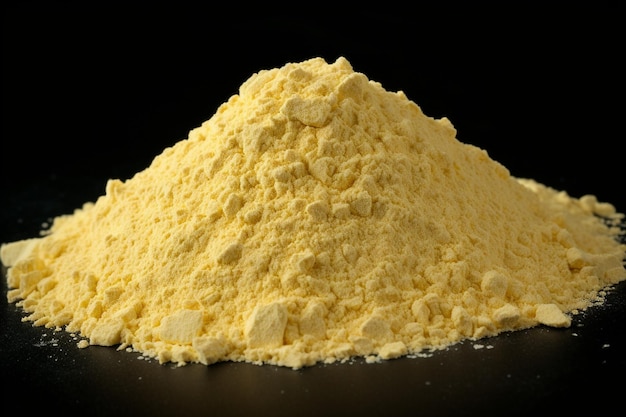
Growing up in Texas, we never walked through wet grass anywhere east of Dallas without spreading sulfur on our shoes and ankles. It it just what one did. I asked my mother about this and she said she learned it from her Aunt. It works like magic. Ticks and chiggers hate the smell and stay away. To my amazement, people in New England don't seem to know about this strategy or dismiss it as a "folk" remedy not based on science. Do we have here another case of lost knowledge?
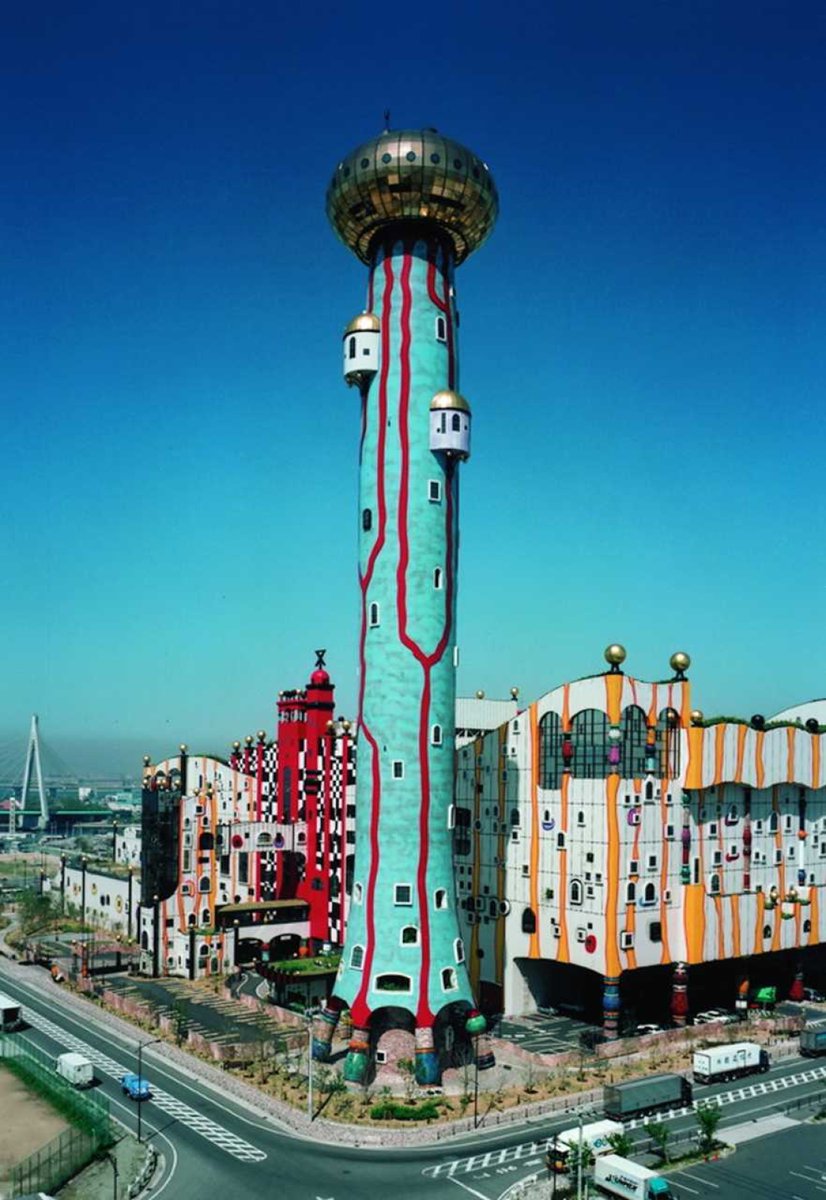
Friedensreich Regentag Dunkelbunt Hundertwasser is the best modern architect you've never heard of.
His philosophy was simple. As he said:
"The straight line is godless and immoral."
If there's any building you can think of, he made it look like something from a dream...
Sir Kenneth Clark’s opening short clip on civilization’s fragility and the decline of the Roman Empire.
“What happened? Well, it took Gibbon nine volumes to describe the decline and fall of the Roman Empire. And I shall not embark on that. But thinking about this almost incredible episode does tell one something about the nature of civilization.
It shows that however complex and solid it seems, it is actually quite fragile. It can be destroyed.
What are its enemies? First of all, fear — fear of war, fear of invasion, fear of plague — fears that make it simply not worthwhile constructing things, or planting trees, or even planning next year’s crops.
And fear of the supernatural, which means you don’t question anything or change anything. The late antique world was full of meaningless rituals, mystery religions that destroy self-confidence.
And then boredom, the feeling of hopelessness which can overtake people with a high degree of material prosperity. There’s a poem by a modern Greek called Cavafy, a poem in which he imagines the people of some late antique city waiting every day for barbarians to come and sack it. And then finally the barbarians move off somewhere else and the city is saved. But the people are disappointed. It would have been better than nothing.
Of course, civilization requires a modicum of material prosperity, enough to provide a little leisure. But far more it requires confidence — confidence in the society in which one lives, belief in its philosophy, belief in its laws, confidence in one’s own mental powers.
The way that stones at a bridge are laid is not only a triumph of technical skill. It shows vigorous belief in discipline and law. Energy, vitality.
All great civilizations — or civilizing epochs — have had a weight of energy behind them.
People sometimes think that civilization consists in fine sensibilities and good conversation and all that. Well, these can be among the agreeable results of civilization. But they are not what makes a civilization. And a society can have these amenities and yet be dead and rigid.
So if one asks why the civilization of Greece and Rome collapsed, the real answer is: it was exhausted.”
Clark was filmed seated on the rocks beside the Pont du Gard aqueduct in France. The full 11 hour series can be found on YouTube. https://t.co/o9Dbb1C96J
@SecretSunBlog Question is, whose buying up all the Mullah's extensive real estate holdings in London now? Could be a fun little connect the dots game.