A Guinness World Record! ✅🏅
The TeraByte InfraRed Delivery (TBIRD) system designed and developed by @NASA and @MITLL achieved the fastest data connection between a satellite in orbit and a receiving station on the ground. https://t.co/A2F8EOA6Kz.
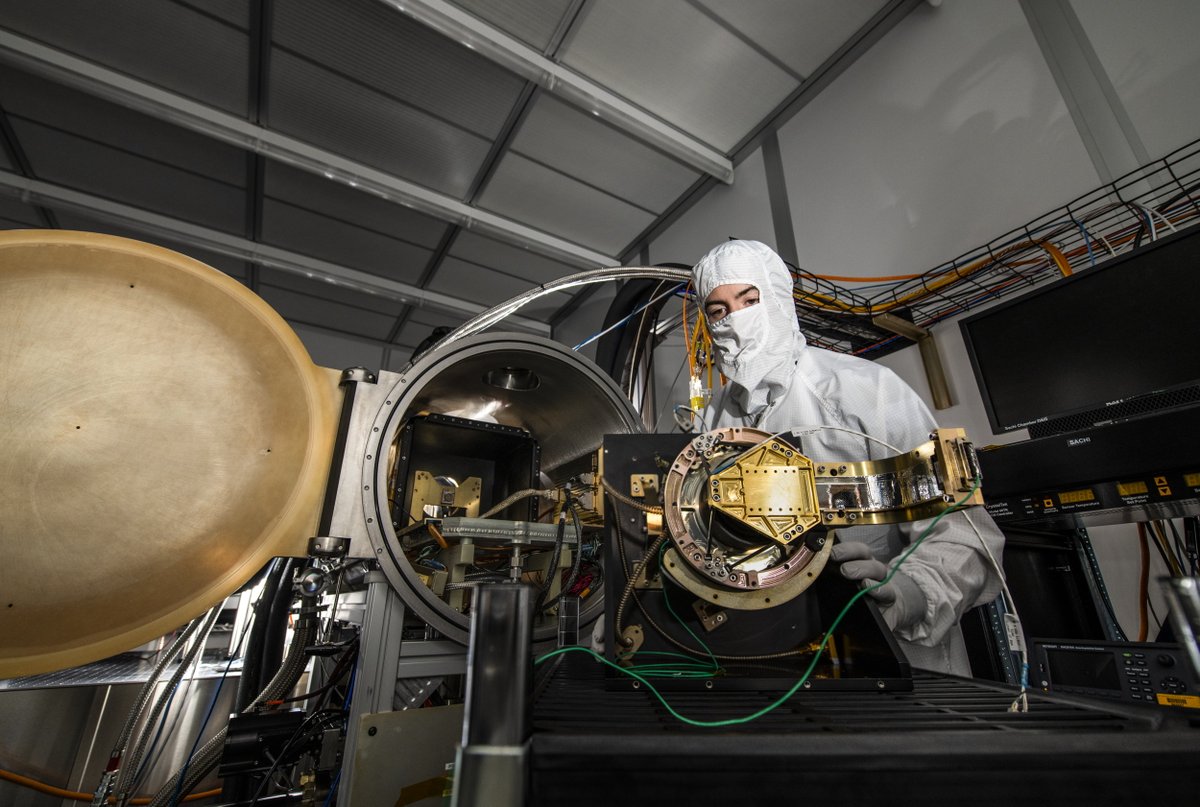
Researchers from @FermiLab and @MITLL trapped ions using in-vacuum cryoelectronics, reducing thermal noise and boosting sensitivity— a breakthrough on advancing scalable quantum computers. https://t.co/jicDKCrkOV
@MITLL leads DARPA TRACTOR program testing to develop scalable, repeatable methods for converting large C codebases to memory-safe Rust, enhancing security, performance, and code quality. https://t.co/8uFiXyC2f7
Researchers at Fermilab and @MITLL reached an important advancement toward building scalable quantum computers. The breakthrough was enabled by a partnership between @QuantumSciCtr and @QSAcenter, two @energy national quantum research centers. @doescience
https://t.co/yShoA2YqLT
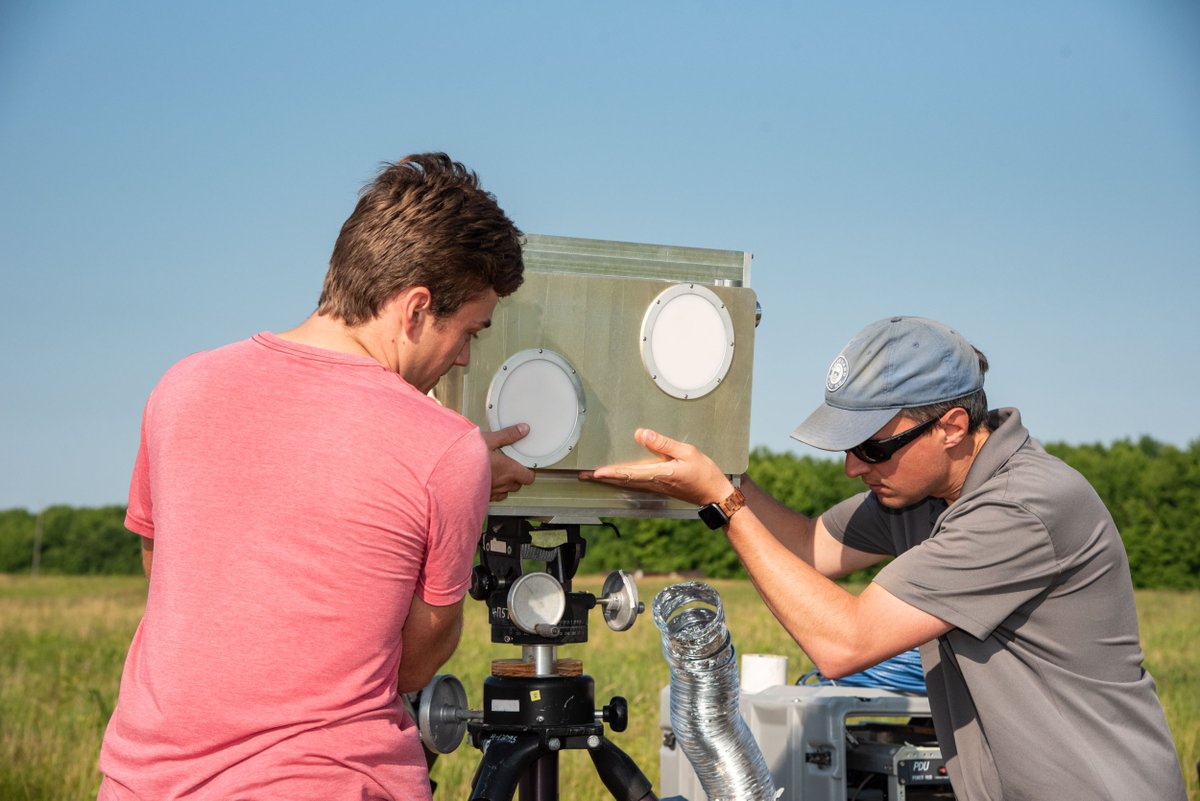
Imagine a world where autonomous systems navigate complex terrains with ease and precision. Researchers at @MITLL are seeking to augment autonomous system terrain understanding with hyperspectral imaging. https://t.co/lEDKdz0sWT
DYK: In Feb 2025, @MITLL's SĀCHI sensor payload was successfully launched on Japan's QZS-6. Due to aligned interests in space security, this US–Japan partnership provides space domain awareness (SDA) sensors to be hosted on board Japanese satellites as part of the QZSS.
Following the Persian Gulf War, vulnerabilities in the Patriot missile system prompted @MITLL to partner with the BMDO on the Theatre Critical Measurements Program (TCMP). The inaugural launch, TCMP-1B, took place at Wake Island on January 28, 1993. #MITLLHistory
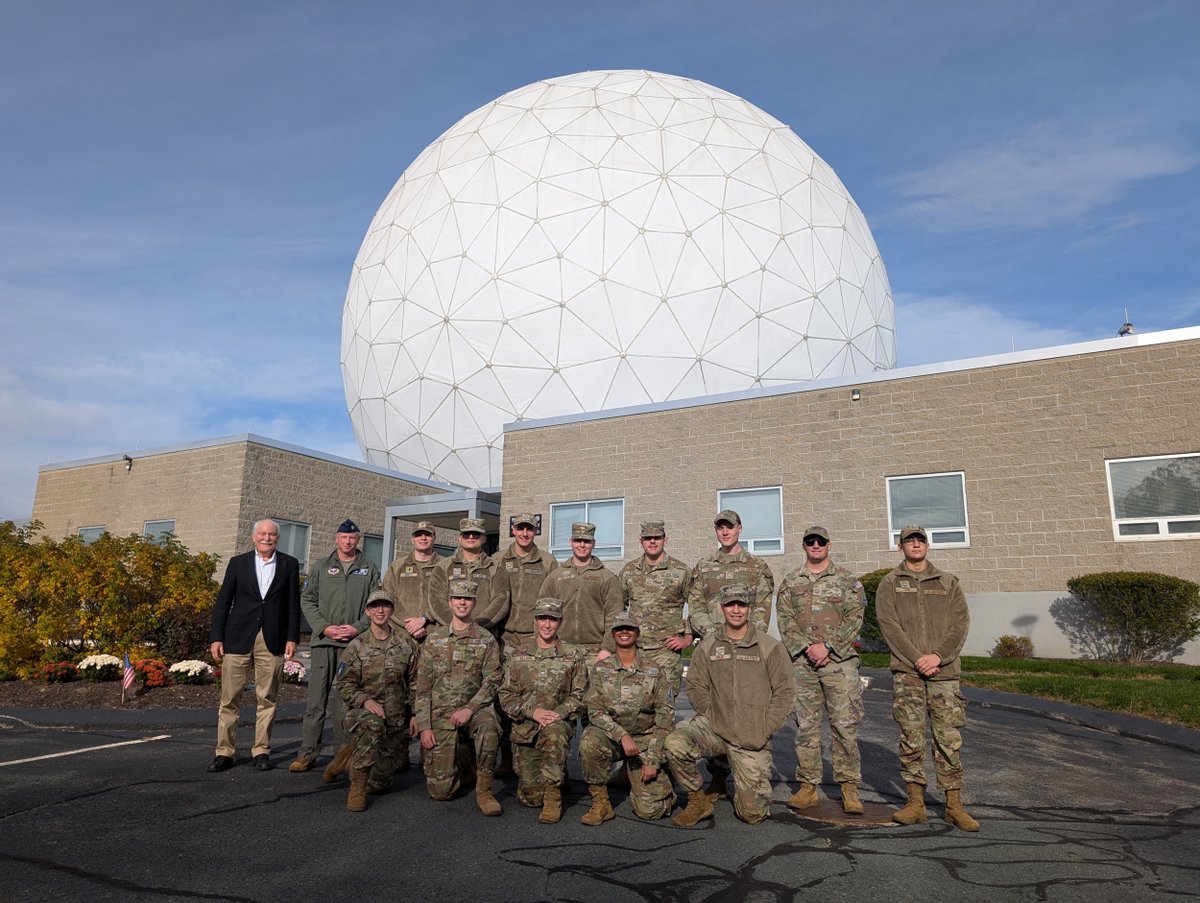
Members of the Air Force ROTC program from across New England visited the Lincoln Space Surveillance Complex to learn more about radar and space situational awareness. https://t.co/fSh951TjES
A new technique could improve the scalability of trapped-ion quantum computers, an essential step toward making them practically useful. https://t.co/OyZLxBLDGp
Image credit: Michael Hurley and Sampson Wilcox
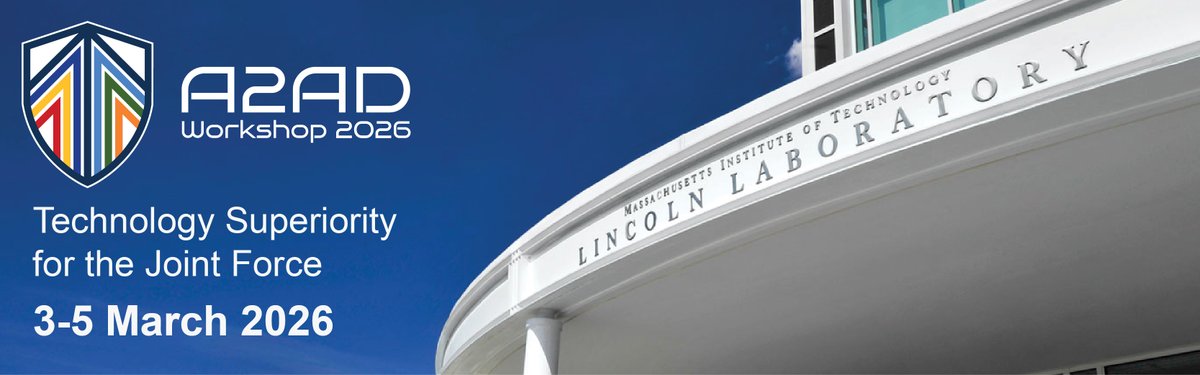
🗓️ March 3-5, 2026: Join us for the A2/AD Systems and Technology Workshop! The workshop will provide an overview of the A2/AD challenges facing the DoD and Intelligence Community and examine systems, tactics, and technologies to counter emerging threats. https://t.co/CEkMV3A8DC
Researchers propose a roadmap for using transcranial focused ultrasound, a noninvasive way to stimulate the brain and see how it functions. https://t.co/kUNHCRJ6S4
An advanced radar and communications system engineered to have a low probability of detection is helping U.S. Army units evade adversaries seeking to detect radio-frequency (RF) energy emitting from radars. https://t.co/Cpbstg2OHE
#OTD January 10, 2010: @MITLL developed the high-power MARTI, which was launched and engaged by the Airborne Laser (ABL) system. In this photo, the project team performed final preparations on the instrumented MARTI rocket payload before flight testing. #MITLLHistory
Lincoln Laboratory's comprehensive literature study reveals that most explainable AI systems lack human validation, raising concerns about their claims of interpretability. https://t.co/wODoJpKyFW
#OTD January 6, 1956: 59th Governor of Massachusetts, Christian Herter arrived at Lincoln Laboratory to discuss the new SAGE computer and was briefed on SAGE technology by Laboratory leadership. #MITLLHistory
At Lincoln Laboratory, R&D begins with a difficult problem which we believe technology can solve. Our researchers work in interdisciplinary teams that leverage the latest technical advances to develop innovative solutions. Learn more about our impact. https://t.co/Ve9V5TuYGn
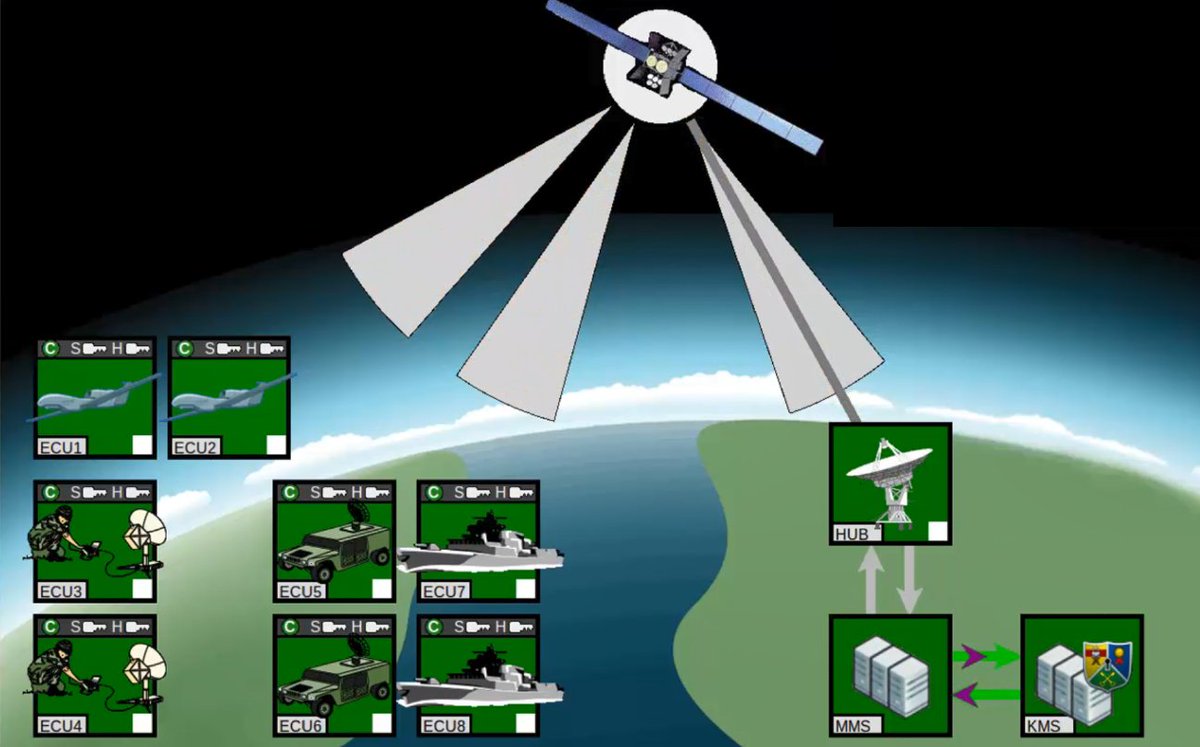
DYK: Researchers at Lincoln Laboratory developed the PATS KMS Prototype to address the critical challenge of securely distributing cryptographic keys for military satellite communications (SATCOM) during terminal jamming, compromise, or disconnection. https://t.co/DLlP8IaT5Q
Researchers at MIT Lincoln Laboratory have developed an innovative "bumpless" approach to fabricating 3D integrated circuits. This approach can help boost data-processing speeds and power efficiency, paving the way for next-gen AI applications. https://t.co/usKWuHcJ37
The U.S. Department of Labor has recognized Lincoln Laboratory with the 2025 HIRE Vets Platinum Medallion Award for its demonstrated commitment to hiring and retaining a veteran workforce.
Since 2012, Dan Hogan has been a software engineer at the Laboratory, developing real-time software and systems for sensors, aircraft, communications, and navigation. Learn more about his Laboratory story: https://t.co/dttT0wbZW2
ICYMI: Healey-Driscoll Administration and Northeast Microelectronics Coalition award $10.2 million to supercharge microelectronics industry across Massachusetts: @MITLL was awarded a $3,900,000 grant. https://t.co/6dac8wwAO1
📸: Joshua Qualls/Governor's Press Office