Doctoral student @ardekani1 research group, @PurdueME.
Interested in complex fluids and flows in biological systems. Previously @UHengineering. Views are my own
What’s the best mixing technique to form lipid nanoparticles? 🧪Hand pipetting, microfluidics, impinging jets, vortex mixers — each creates LNPs that look and behave differently.
Read more on our team's investigation, part of the Eli Lilly–Purdue Research Alliance, and in collaboration with
@ANSTO
Preprint out now: https://t.co/J3lBJZpbe0
Our takeaway: flow regime, not just formulation, dictates how LNPs self-assemble. Mixing conditions shape the very structure and performance of the nanoparticles. Scaling up from bench to manufacturing means rethinking how we mix, not just what we mix.
Read more on our team's investigation, part of the Eli Lilly–Purdue Research Alliance, and in collaboration with @ANSTO
Preprint out now: https://t.co/95duSXaAoI
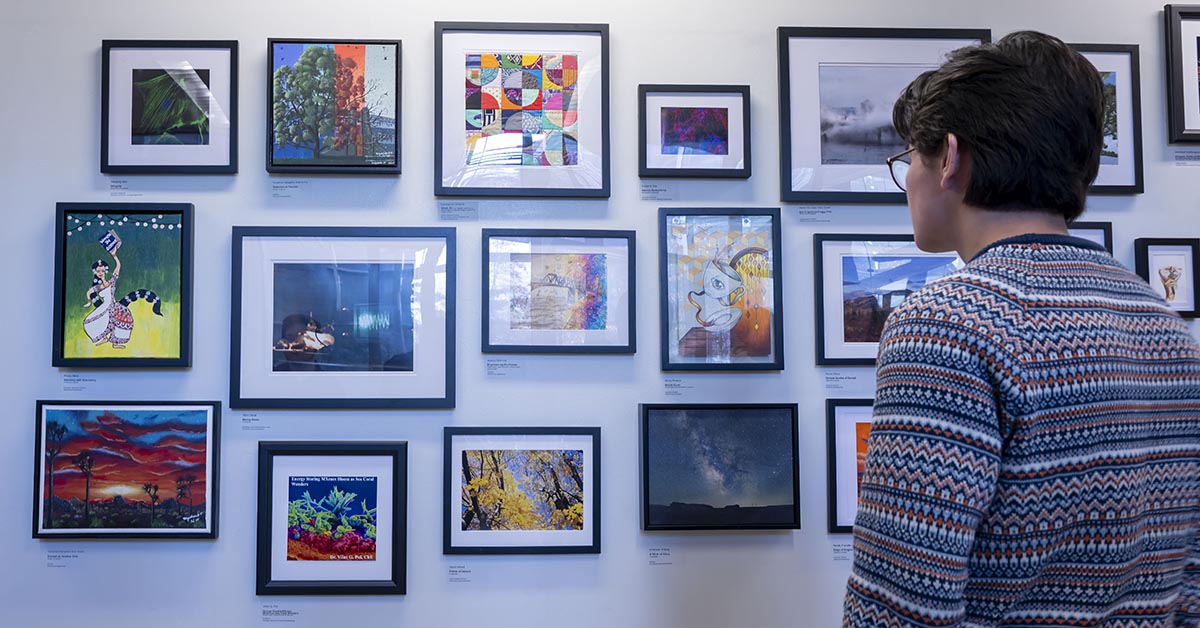
Our Vibrant Community Art Exhibition featured amazing works of creativity by Purdue Engineering staff, faculty, and students, each piece telling a story of imagination, innovation and connection.
If you missed the reception, the artwork is on display at Armstrong Hall. Congratulations to our artists and thank you to the Vibrant Arts Committee!
#PurdueEngineeringIsVibrant
💉 Why do injections work better in some places than others?
A new study from Purdue BME dives beneath the skin to find out. By analyzing how tissue from the breast, belly and neck responds to stress, researchers uncovered major differences in stiffness, thinning and lipid content across regions and depths.
These insights could lead to smarter, more personalized drug delivery—tailored to where, how and who it's being delivered to.
🧪 Study by Harsa Mitra, Evelyn Nonamaker, Ria Corder, Luis Solorio and Arezoo Ardekani
📖 Annals of Biomedical Engineering
🔗 Read more: https://t.co/stNgXrVA24
#PurdueBME #BiomedicalEngineering #DrugDelivery #InjectionDesign #SkinMechanics #ResearchImpact
Physics-Informed Neural Network-Based Inverse Framework for Time-Fractional Differential Equations for Rheology https://t.co/7rkyVVLi3z #mdpibiology via @Biology_MDPI
Why do injections perform differently depending on where they're given, and how could we improve their effectiveness?
To shed light on these questions, researchers studied how the skin's viscoelastic properties – including how it stretches, deforms, and returns to shape – vary across different anatomical sites and depths.
Using shear rheology and lipid content analysis, the team examined skin from the breast, belly, and neck, revealing that responses to stress and strain vary significantly by tissue depth, sex, and location. They observed strain-stiffening and shear-thinning at high strain amplitudes, and found that lipid levels play a key role.
These findings highlight the limitations of some preclinical models and point to new ways to tailor drug delivery methods across patient populations.
𝗥𝗲𝗮𝗱 𝗺𝗼𝗿𝗲: https://t.co/BzAZV50wbV
𝗦𝘁𝘂𝗱𝘆: Rheological and Lipid Characterization of Minipig and Human Skin Tissue: A Comparative Study Across Different Locations and Depths
𝗔𝘂𝘁𝗵𝗼𝗿𝘀: @MitraHarsa, Evelyn Nonamaker, Ria D. Corder, Luis Solorio, and Arezoo M. Ardekani
@LifeAtPurdue@PurdueEngineers@PurdueBME@PurdueME
𝗦𝘂𝗯𝗺𝗶𝘁 𝘆𝗼𝘂𝗿 𝗺𝗮𝗻𝘂𝘀𝗰𝗿𝗶𝗽𝘁: https://t.co/Gyz8DNneUg