Economics research to revitalize labor market opportunities for workers without a college degree. Led by @DAcemogluMIT, @davidautor and @baselinescene.
Can AI be expected to behave "responsibly"?
In this episode of the Power and Consequences podcast, @baselinescene and Gary Gensler discuss the evolving meaning of "responsible AI" and whether policy can promote both innovation and the public good.
https://t.co/9XXcisCKP7
In the latest episode of their podcast, @baselinescene and Gary Gensler discuss the Chinese economy. What should we expect from President Trump's talks with President Xi later this week? Who will be the world’s most influential country in the years ahead?
https://t.co/PRwxdX72o1
On Wednesday, May 13 from 12-1 PM EST, @baselinescene and other MIT scholars will discuss the new book, "Priority Technologies: Ensuring US Security and Shared Prosperity" at @AEI, moderated by @MichaelRStrain.
Register to attend in-person or virtually: https://t.co/nXBveR6XAc
We're hiring a postdoc at MIT!
The Postdoctoral Associate will work closely with @DAcemogluMIT and @baselinescene to conduct research on the history, social implications and future of technology.
Learn more and apply by June 15: https://t.co/HNDVJ8V5PS
How will AI affect workers with and without a college degree?
Co-director @baselinescene explains how AI could change the dynamics of the college wage premium.
The new book "Priority Technologies," with a foreword by co-director @baselinescene, dives deep into six sectors where advances in technology can support national security and create good jobs.
https://t.co/w9kW6AzX6v
📢 We're on Substack!
Subscribe to our newsletter, The Work Ahead.
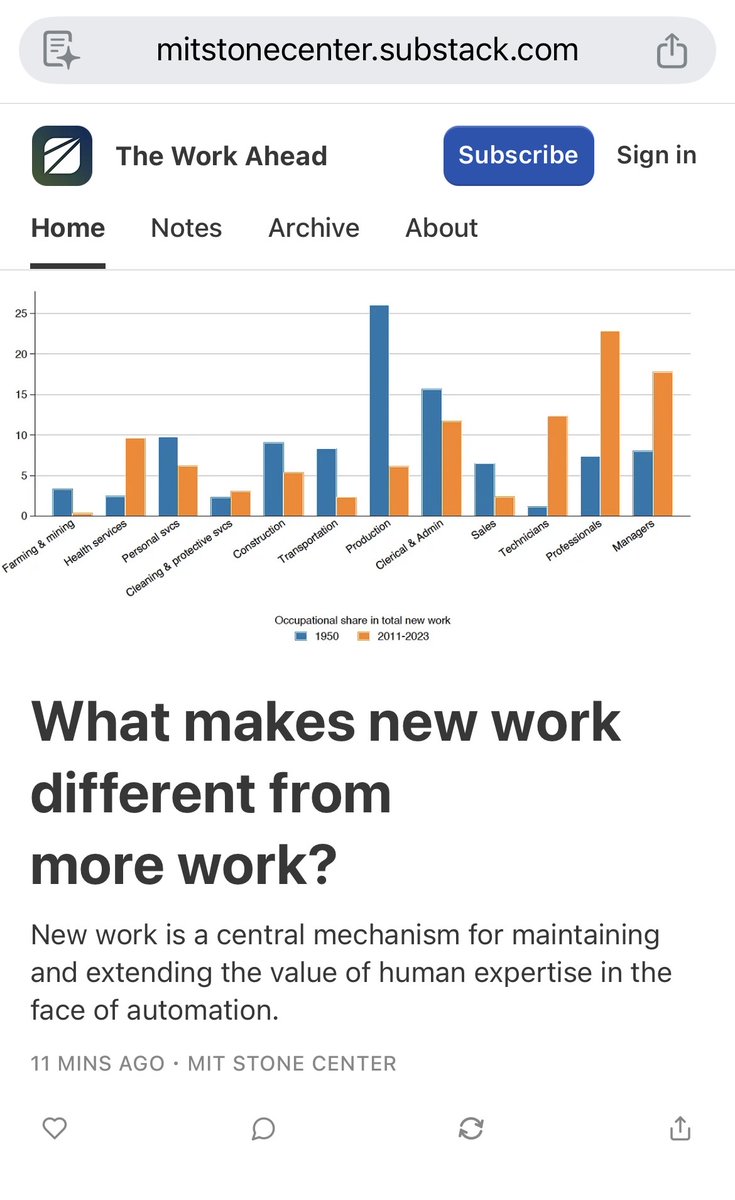
The first post explores recent research from @davidautor & co-authors on what makes new work different from more work — and why new work is a key force offsetting the effects of automation.
https://t.co/LaPbFmcZ6W
Why don't the wealthy pay more taxes?
In the latest episode of their podcast "Power and Consequences," co-director @baselinescene and former SEC chair Gary Gensler discuss the history of the US tax system, and its implications today.
Listen here: https://t.co/mhYISSCJK7
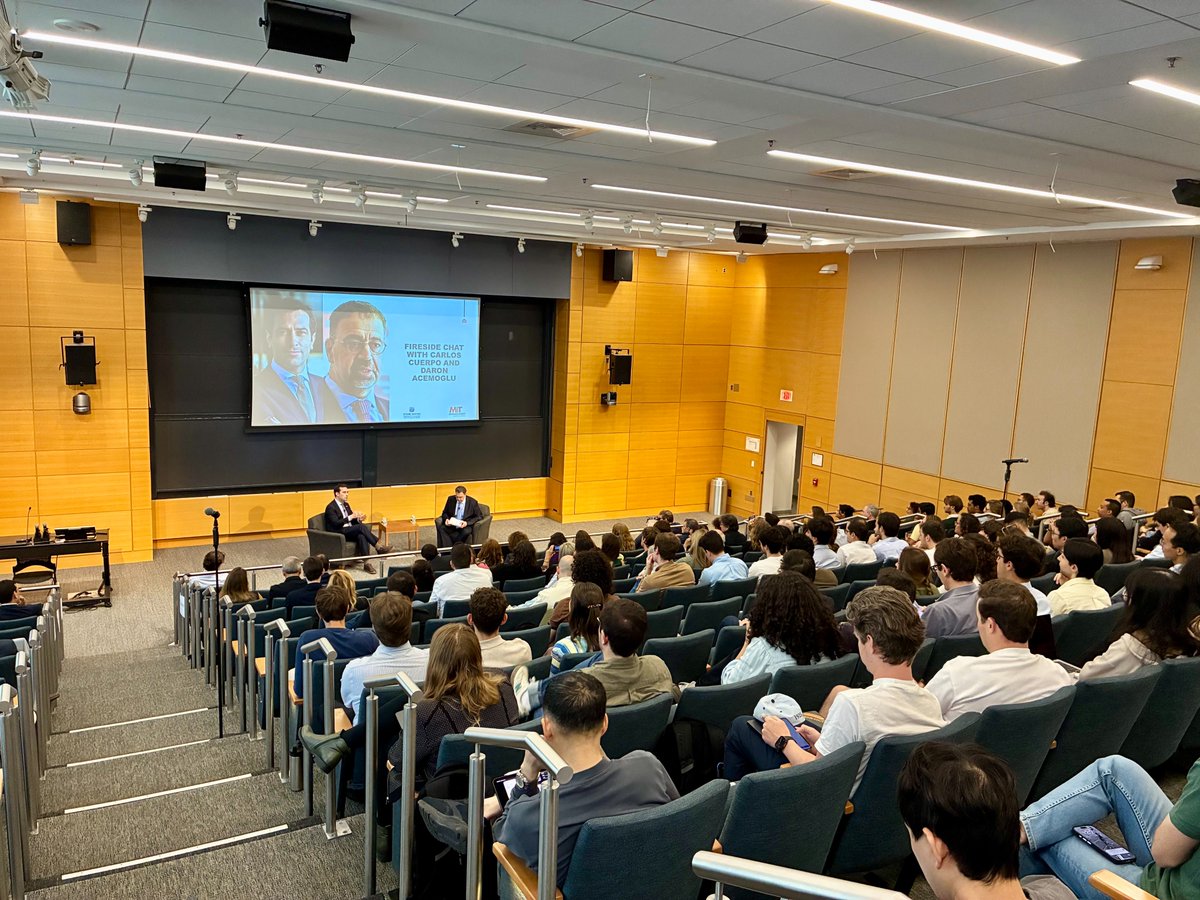
Last week, the Stone Center and @MITSloan welcomed Deputy Prime Minister of Spain @carlos_cuerpo to MIT for a fireside chat with @DAcemogluMIT.
They discussed Europe's financial and energy policy, the implications of global wars, AI, and more.
Watch: https://t.co/sWvfahD67U
What does a pro-worker application of AI look like in practice?
Co-director @davidautor describes Schneider Electric's Electrician's Assistant tool, which provides real-time field support to electricians and electrical engineers, making their expertise more effective.
The IMF recently revised its global growth projections downward, expecting the Iran war to slow the global economy and raise inflation. Co-director @baselinescene discussed these predictions on @NPR.
https://t.co/b5j1avgesZ
On the latest episode of their podcast, co-director @baselinescene and Gary Gensler discuss AI: whether we're in a boom or a bubble, what history can teach us about how AI will impact jobs, and how US policymakers should respond.
Listen here: https://t.co/278KuJ7z55
On Wednesday, April 15 from 12-1 PM ET, join the Stone Center and @MITSloan for a fireside chat with @carlos_cuerpo, Spain's first Deputy Prime Minister and Minister of Economy, Trade and Business, and co-director @DAcemogluMIT.
Watch the livestream: https://t.co/8uOPceyDx8
What is the definition of "pro-worker AI"? Co-director @DAcemogluMIT explains: pro-worker AI creates new, complementary tasks for workers to do, rather than purely automating tasks.
On this week's "It Turns Out," I talk with @davidautor@MIT about how - a generation after millions of manufacturing jobs went to China - a slew of white-collar jobs may be headed in the same direction.
How did this happen? Autor argues, in part: "The American political system has the attention span of a squirrel on cocaine."
https://t.co/WUkf1wNnjX
https://t.co/QrKFwSW6jm
@MITshapingwork@mitpress
On The Good Fight podcast, @davidautor and @Yascha_Mounk discuss what lessons the US failed to learn from the China trade shock, how AI will reshape the job market, and more.
https://t.co/hV4FLY6Z2e
Co-director @baselinescene & others submitted an Amicus Brief to the Supreme Court.
The brief argues that US companies should be liable if their technology is used to surveil workers or suppress wages in ways that violate human rights.
https://t.co/gP7ojX2MIK
(1/) At least 18% of US workers today are employed in jobs that didn't exist pre-1970. But “new work” is not the only way for new jobs to emerge – jobs are also created when an existing occupation expands. How do these jobs in new work compare with more jobs in existing work? 🧵
(7/) These findings highlight the importance of new work in counteracting job displacement from automation. New work not only creates new jobs, but these jobs tend to require specialized expertise and pay higher wages.