🚨ChatGPT has a feature called "Sites."
99% of users don't know it exists.
It's quietly becoming one of the most useful features in ChatGPT.
Here's how it works—and 7 practical ways to use it: 👇👇
Sam Altman, CEO of OpenAI:
“You don’t need to write prompts anymore.”
In a 38-minute session with Stanford students, he breaks down how to use ChatGPT far beyond the basic prompts most people rely on.
A friend sent me the recording last night, so I decided to watch the entire thing.
Honestly, it made me realize I was probably using only a small fraction of what ChatGPT is actually capable of.
Watch the full talk.
Then check the guide below to learn how to build a system that can prompt itself.
Goldmine for AI Engineers! 📌
If you're learning AI, ML, LLMs, or AI agents, don't waste hours jumping between random tutorials.
These are 10 repositories I'd actually keep bookmarked - from Python fundamentals to ML, LLMs, agents, and production AI.
1. Python - 100 Days
jackfrued/Python-100-Days
A 100-day Python learning path covering fundamentals, data analysis, web development, and more.
GitHub:
https://t.co/nWuXaIqSeX…
2. Generative AI for Beginners
microsoft/generative-ai-for-beginners
A practical introduction to building Generative AI applications.
Covers:
• LLM fundamentals
• Prompt engineering
• RAG
• AI agents
• Fine-tuning
• AI application development
GitHub:
https://t.co/b7dJATzScb…
3. LLMs From Scratch
rasbt/LLMs-from-scratch
Want to understand what's actually happening inside an LLM?
Build one step by step.
Covers:
• Tokenization
• Embeddings
• Attention
• Transformers
• Training
• Fine-tuning
GitHub:
https://t.co/SpXPaLhpNb…
4. Machine Learning for Beginners
microsoft/ML-For-Beginners
A structured 12-week, 26-lesson curriculum covering classical machine learning.
A good starting point if you want ML fundamentals before jumping into LLMs.
GitHub:
https://t.co/ybt4udqqA6…
5. OpenAI Cookbook
openai/openai-cookbook
A collection of practical examples and guides for building applications with OpenAI models.
Useful when you want to move from:
Learning → Building
GitHub:
https://t.co/LmO1GS9pcg…
6. Stable Diffusion
CompVis/stable-diffusion
Interested in generative image models?
This repository contains the original Stable Diffusion implementation and research code.
GitHub:
https://t.co/D10rP9kbIX…
7. AI Agents for Beginners
microsoft/ai-agents-for-beginners
A practical course for understanding and building AI agents.
Covers:
• Agentic AI
• RAG
• Agent frameworks
• Tool use
• Multi-agent systems
GitHub:
https://t.co/kZyStiHX5i…
8. AI for Beginners
microsoft/AI-For-Beginners
A structured 12-week, 24-lesson introduction to AI.
Covers:
• Neural networks
• Computer vision
• NLP
• Deep learning
• Classical AI
GitHub:
https://t.co/tziz925fwB…
9. LLM App
pathwaycom/llm-app
Focused on building practical LLM applications.
Explore:
• RAG
• AI pipelines
• Enterprise search
• Real-time data
• Vector search
GitHub:
https://t.co/cwZTQ6xRjw…
10. Segment Anything
facebookresearch/segment-anything
A foundation model for promptable image segmentation.
Worth exploring if you're interested in computer vision and multimodal AI.
GitHub:
https://t.co/97q7w8U6hz…
Don't bookmark all 10 and forget about them.
Pick based on where you are:
Python → Python-100-Days
ML → ML-For-Beginners
AI Fundamentals → AI-For-Beginners
LLMs → LLMs-from-scratch
Generative AI → Generative-AI-for-Beginners
Agents → AI-Agents-for-Beginners
Building → OpenAI Cookbook / LLM App
Computer Vision → Segment Anything
Pick one.
Build something.
Then move to the next.
21 of the 52 official Claude Code prompts don't involve writing any code.
They're sitting in Anthropic's own docs. Almost nobody clicks through.
One of them is written from a PM's point of view, word for word: "I am a PM. Walk me through what happens when a user clicks Export to PDF, from the UI down to the result."
Another reads an ad-performance CSV, finds the underperforming headlines, and generates 20 new variations that stay under 90 characters.
Another turns meeting notes into Linear tickets with acceptance criteria attached.
The name is doing the damage. "Code" filters out every single person who'd get the most out of it on day one.
What it actually is: an agent with a terminal, file access, and the patience to read every file in a folder before it answers you. The folder doesn't have to be a repo. Point it at contracts, transcripts, exports, a pile of PDFs nobody's opened since March. The prompts hold.
And the engineering ones are sharper than what most people are typing:
→ "what would break if I deleted the retryWithBackoff helper?"
→ "review my uncommitted changes and flag anything that looks risky before I commit"
→ "the checkout endpoint started returning 500s an hour ago. check the logs, recent deploys, and config changes, then tell me the most likely cause"
That last one is a full incident triage in one sentence.
43 of the 52 ship with the example values already filled in. You're not writing prompts. You're swapping filenames.
The best thing Anthropic has published this year is a page in the docs with no link on the homepage.
12 AI TOOLS THAT MAKE A $0 BUDGET FEEL LIKE $1M 💸
You don’t need an expensive AI stack to build, create, research, and automate.
1. **https://t.co/3x8ezt3egJ** — Research, write, code & solve complex tasks
2. **https://t.co/Yx88I70euJ** — Build and deploy AI agent workflows
3. **https://t.co/DpMTTI8skI** — Research markets, competitors & ideas
4. **https://t.co/rQd3dIXJ4P** — Create AI-generated music
5. **https://t.co/oseego40j2** — Build brands and visual concepts with AI
6. **https://t.co/FYuOPbL8vd** — Create AI-powered voice content
7. **NotebookLM** — Turn messy sources into useful insights
8. **https://t.co/9n1rB1jB8y** — Create faceless video content faster
9. **https://t.co/nqXIi7z2aE** — Repurpose long-form content into fresh ideas
10. **Runway** — Generate and edit professional videos
11. **Descript** — Edit podcasts and videos like a document
12. **HeyGen** — Create AI avatars and multilingual videos
Save this list 🔖& Follow:@novaXsignals
The cost of building with AI keeps getting lower.
Three stages separate someone who writes a good prompt from someone who builds a system that actually works in production, and most people stop at the first one.
Prompt engineering is a single shot: a system prompt and a user message go into the context window, the LLM processes it once, and an assistant message comes back. Nothing gets curated. Nothing loops. It works until the task needs information or judgment the prompt itself cannot hold.
Context engineering adds a step before the model ever runs: curation. Docs, tools, memory files, instructions, domain knowledge, and message history all exist as candidates, and only some of them make it into the actual context window the LLM sees. The model can now return a tool call instead of just an answer, and the tool result feeds back into that same pool of candidate context for next time. The skill here is not writing a better prompt. It is deciding what does not belong in the window.
Harness engineering turns that single curated call into a loop. The LLM checks whether it is done. If yes, it returns the final answer. If no, it makes a tool call against real tools and environment, search, code execution, bash, file I/O, web, APIs, gets a result back, curates that result into the message history, and runs again. Long-term memory sits alongside the whole loop, feeding it and getting fed by it. The loop keeps running until the task is actually finished, not until the first response comes back.
Each stage did not replace the one before it. Harness engineering still needs curated context, and curated context still needs a well-written prompt underneath it. The difference is what gets added on top.
Bookmark this before you call prompt engineering the whole job.
CLAUDE'S NEWEST MODEL JUST BUILT A FULL BRAND WEBSITE AND IT LOOKS LIKE A $15K AGENCY JOB
No designer, no copywriter, no dev team. One product photo in, a full branded site out.
This is Claude Fable 5, and it didn't just slap text on a template. It built an entire story around the product:
a "What's Inside" section breaking down every ingredient a "Why The Jar Matters" section that sells the packaging itself real product photography placed like a real brand shoot smooth scroll animations tying every section together
Nobody wrote this copy by hand. Nobody picked these colors in Figma. One model looked at a product and built the entire site, section by section, like it already knew what a $15k brand launch looks like.
This is the model most people haven't even touched yet, while it's already outputting work agencies charge real money for.
the founders using Fable 5 for their launch pages right now are skipping the entire design phase everyone else still pays for.
Andrew Ng just released a free 2-hour course on complete Harness Engineering
How to go from one prompt to a reliable system of agents that can run, test, and improve themselves:
09:14 - Build your first agent from scratch
33:11 - Master agent loops
1:02:46 - Turn loops into reliable workflows
1:30:15 - Build agents that improve their own work
1:49:05 - Run the complete system without supervision
Model → Harness → Reliable Software
Most agent tutorials stop once the model can call a tool
This one shows you how to build the infrastructure around it within the first 20 minutes
Most people are still prompting one agent at a time
Andrew Ng is already teaching the layer above:
Harnesses that give agents context, tools, tests, and feedback
Watch this brilliant course and build the harness
Then read the full architecture below ↓
People are increasingly turning to artificial intelligence for financial advice, but will following it improve their financial standing? https://t.co/Lsqb1dY5Yx
A TRADING FLOOR DOES NOT GRADE A BOOK BY ITS EQUITY CURVE, AND THE NUMBER IT GRADES BY IS THE ONE RETAIL NEVER PULLS UP
The blotter gets one grade.
PF = sum of wins / sum of |losses|
Add every winning fill, add every losing fill, divide. No story survives that division and no screenshot argues with it.
Strip the math away. Winners averaging 1.8% against losers averaging 1.2% put the book near 1.5, and desks start asking questions anywhere under 1.25.
On screen 400 fills build the cloud dot by dot, losers clustered at short holds, winners stretched out long. The equity curve hides that shape completely.
Minara dragged this off the trading floor. Type the idea in plain English and it picks the factors, writes the Python, and hands you the backtest with Sharpe and drawdown in the open.
One sentence to a live, backtested strategy & every number, drawdowns included, sits in the article. Bookmark it & Read it ↓
I found an interesting way to avoid making a single model do all the coding work
fable-orchestrator — ★525
It’s a skill for Codex that splits the task into three roles:
▸ Fable plans the work and makes the final decision
▸ GPT-5.6 Luna writes the standard implementation
▸ DeepSeek V4 Flash handles repetitive iterations and bulky loops
The logic works like this:
task → plan from Fable → several limited sub-tasks → parallel implementation → result verification → final evaluation
→ the powerful model doesn't waste context on every minor tweak
→ fast models handle the straightforward parts of the work
→ Codex retains the role of a runtime that gathers evidence and verifies the code
The most interesting thing here isn't the specific models, but the architecture itself: first separating responsibilities, then assigning only limited tasks to the agents
Important note: this isn't a ready-made "one-click" multi-agent program. The repository requires a pre-configured Codex Router, OpenCode Go agents, and a local `Fable` alias. There are no independent quality benchmarks in the repository yet
I’ve left the link in the first reply ↓
Building an app has never been easier.
Making people actually love using it is different.
A collection of apps we’ve designed.
Now available to take new design projects 🙌
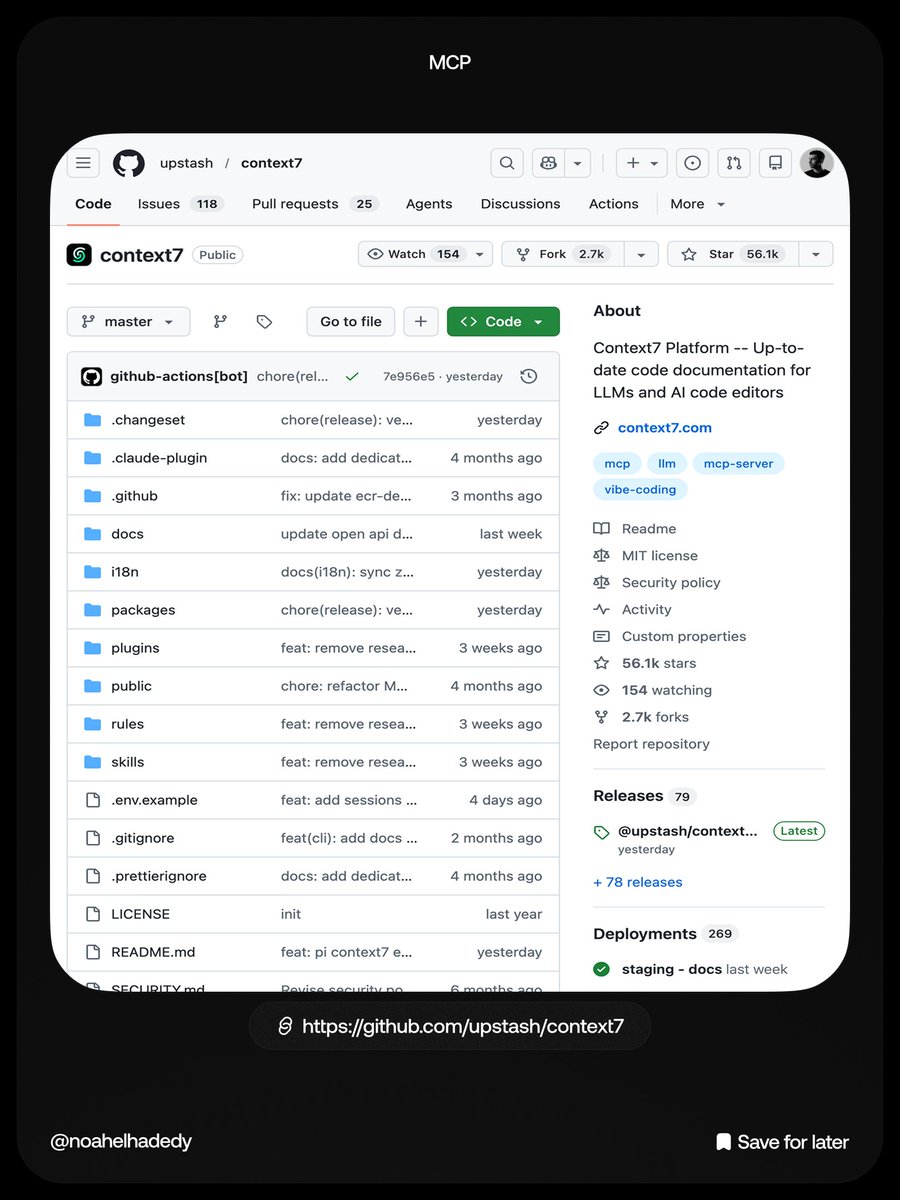
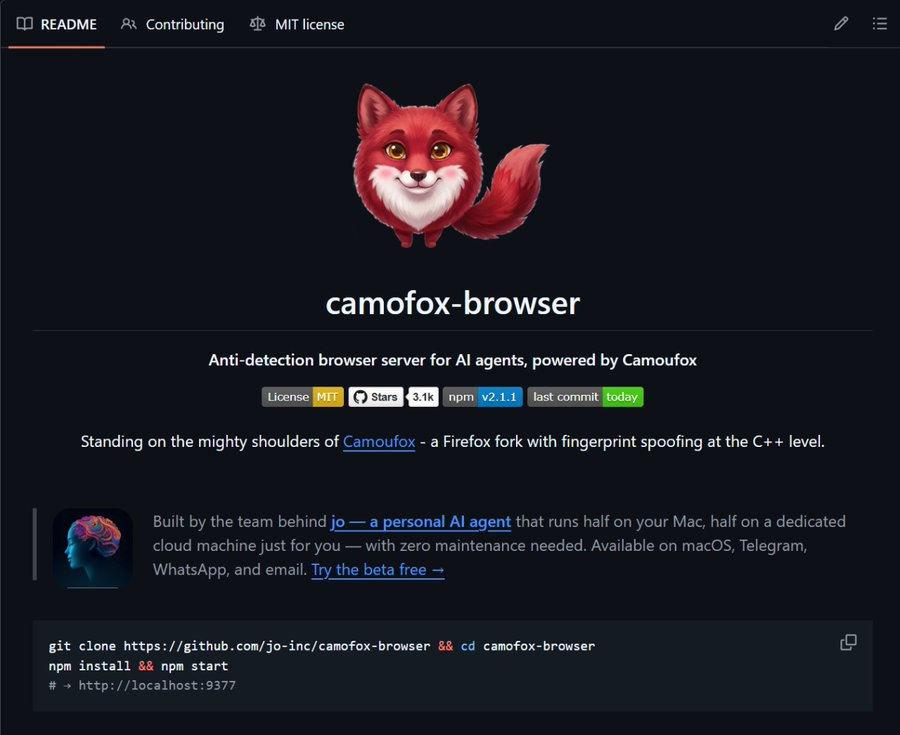
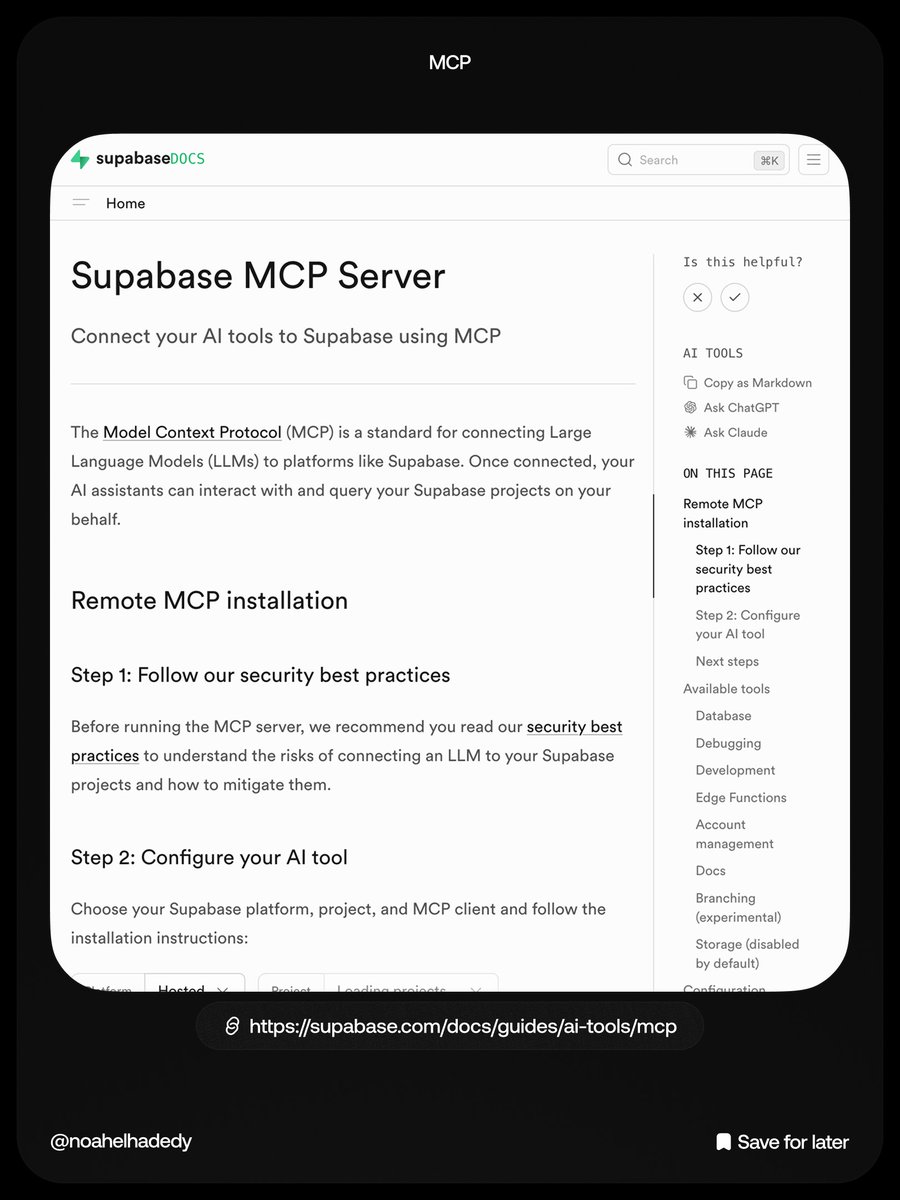
MCP for developers
1. https://t.co/C2ssLzzTez
2. https://t.co/1e5tB1Xhy3
3. https://t.co/sDAOAWLtmy
4. https://t.co/vvAGBNmyEp
5. https://t.co/PicNqyq2AI
6. https://t.co/Cv9rJUkPvr
7. https://t.co/pKxDcJkar3
8. https://t.co/f7oufIgAzk
9. https://t.co/DNfNK7p7wP
10. https://t.co/76VdFdh4DG
Save this list for your next project.
STUDIO X is live, and it’s free.
A bold Framer template built for creative studios, design agencies, and independent designers.
Dark, typography-led, and made to give your work the space it deserves.
9 pages. 2 CMS collections. 4 breakpoints.
Remix it. Make it yours. 👇🏻
ANTHROPIC JUST OPEN SOURCED THE ENTIRE WALL STREET WORKFLOW AND FIRMS ARE NOT GOING TO BE HAPPY ABOUT IT.
DCF models. LBO models. Equity research reports. Merger analysis. KYC checks.
All of it. Free. On GitHub.
Here is what just became available to anyone with a laptop.
Direct connections to Bloomberg, FactSet, S&P Global, Morningstar, and PitchBook.
Real Excel models with live formulas and sensitivity tables built automatically.
CIMs, IC memos, earnings reports, and buyer lists drafted on demand.
PE due diligence, GL reconciliation, and NAV tie-outs running as production agents.
This is not a chatbot wrapper that summarizes financial news.
These are production agents that own entire financial workflows end to end.
The kind that investment banks and private equity firms pay $50,000 to $500,000 per year in software licenses to run.
Now it is a one-line Claude Code plugin install.
19,800 GitHub stars.
Apache 2.0 license.
100% open source.
Think about what this actually means.
A junior analyst at a bulge bracket bank spends 80% of their 100-hour week running models, drafting memos, and compiling data across Bloomberg and FactSet.
That entire workflow just became a Claude Code agent.
The banks charging clients $500 an hour for analysis that this system produces in minutes are not going to tell you this exists.
The boutique advisory firms charging $50,000 retainers for due diligence work that these agents handle autonomously are not going to promote this repo.
But it is already live.
19,800 people have already starred it.
The window where knowing this gives you an edge over every analyst, associate, and advisor still doing this manually is open right now.
Star it. Fork it. Deploy it this weekend.
Bookmark this before your next financial model.
Follow @cyrilXBT for every open source release that disrupts an overpriced industry the moment it drops.
Surprising people don't know these 10 AI agent GitHub repos.
I've briefly explained with the link for each.
1. 𝗕𝗿𝗼𝘄𝘀𝗲𝗿 𝗨𝘀𝗲: 𝗚𝗶𝘃𝗲 𝗔𝗴𝗲𝗻𝘁𝘀 𝗪𝗲𝗯 𝗕𝗿𝗼𝘄𝘀𝗶𝗻𝗴
• Lets AI agents navigate websites, click buttons, fill forms, extract information, and complete browser-based tasks.
• Useful when your agent needs to interact with the web like a human.
Link: https://t.co/ircAVNX2DA
2. 𝗠𝗲𝗺0: 𝗚𝗶𝘃𝗲 𝗔𝗴𝗲𝗻𝘁𝘀 𝗟𝗼𝗻𝗴-𝗧𝗲𝗿𝗺 𝗠𝗲𝗺𝗼𝗿𝘆
• Adds a persistent memory layer to AI agents.
• Helps agents remember user preferences, past interactions, and useful context.
Link: https://t.co/c3Ge7MCH8u
3. 𝗖𝗼𝗺𝗽𝗼𝘀𝗶𝗼: 𝗚𝗶𝘃𝗲 𝗔𝗴𝗲𝗻𝘁𝘀 1,000+ 𝗧𝗼𝗼𝗹𝘀
• Connects AI agents with thousands of tools and integrations.
• Handles authentication, tool discovery, context management, and execution.
Link: https://t.co/8JCXYi7vHx
4. 𝗘2𝗕: 𝗚𝗶𝘃𝗲 𝗔𝗴𝗲𝗻𝘁𝘀 𝗦𝗲𝗰𝘂𝗿𝗲 𝗖𝗼𝗱𝗲 𝗘𝘅𝗲𝗰𝘂𝘁𝗶𝗼𝗻
• Provides isolated environments where AI agents can safely execute code.
• Useful when agents need to work with real developer tools.
Link: https://t.co/Kz8S490f8r
5. 𝗠𝗖𝗣 𝗦𝗲𝗿𝘃𝗲𝗿𝘀: 𝗚𝗶𝘃𝗲 𝗔𝗴𝗲𝗻𝘁𝘀 𝗘𝘅𝘁𝗲𝗿𝗻𝗮𝗹 𝗖𝗮𝗽𝗮𝗯𝗶𝗹𝗶𝘁𝗶𝗲𝘀
• Provides Model Context Protocol servers for connecting agents with tools, files, services, and external systems.
• Helps agents interact with the world beyond the LLM.
Link: https://t.co/4cqkLDjJzQ
6. 𝗟𝗮𝗻𝗴𝗚𝗿𝗮𝗽𝗵: 𝗚𝗶𝘃𝗲 𝗔𝗴𝗲𝗻𝘁𝘀 𝗦𝘁𝗮𝘁𝗲𝗳𝘂𝗹 𝗢𝗿𝗰𝗵𝗲𝘀𝘁𝗿𝗮𝘁𝗶𝗼𝗻
• Helps build stateful and long-running agent workflows.
• Supports persistence, branching, human oversight, and complex workflows.
Link: https://t.co/DYtrTeePSt
7. 𝗢𝗽𝗲𝗻𝗔𝗜 𝗔𝗴𝗲𝗻𝘁𝘀 𝗦𝗗𝗞: 𝗕𝘂𝗶𝗹𝗱 𝗠𝘂𝗹𝘁𝗶-𝗔𝗴𝗲𝗻𝘁 𝗪𝗼𝗿𝗸𝗳𝗹𝗼𝘄𝘀
• A lightweight framework for building agent-based applications.
• Includes tools, handoffs, guardrails, and tracing.
Link: https://t.co/HjF4A6q2dd
8. 𝗣𝘆𝗱𝗮𝗻𝘁𝗶𝗰 𝗔𝗜: 𝗕𝘂𝗶𝗹𝗱 𝗣𝗿𝗼𝗱𝘂𝗰𝘁𝗶𝗼𝗻-𝗥𝗲𝗮𝗱𝘆 𝗔𝗴𝗲𝗻𝘁𝘀
• A type-safe framework for building AI agents.
• Useful for structured outputs, validation, and flexible model selection.
Link: https://t.co/fuTOvRvCly
9. 𝗠𝗶𝗰𝗿𝗼𝘀𝗼𝗳𝘁 𝗔𝗴𝗲𝗻𝘁 𝗙𝗿𝗮𝗺𝗲𝘄𝗼𝗿𝗸: 𝗕𝘂𝗶𝗹𝗱 & 𝗢𝗿𝗰𝗵𝗲𝘀𝘁𝗿𝗮𝘁𝗲 𝗔𝗴𝗲𝗻𝘁𝘀
• Supports building and deploying individual agents and multi-agent workflows.
• Works with Python and .NET.
Link: https://t.co/XuNcc3P5VW
10. 𝗟𝗹𝗮𝗺𝗮𝗜𝗻𝗱𝗲𝘅: 𝗖𝗼𝗻𝗻𝗲𝗰𝘁 𝗔𝗴𝗲𝗻𝘁𝘀 𝘁𝗼 𝗞𝗻𝗼𝘄𝗹𝗲𝗱𝗴𝗲
• Connects agents with documents and enterprise knowledge.
• Useful for retrieval, document understanding, and knowledge-driven agent workflows.
Link: https://t.co/NYdn3kTmmv
You don't need to learn all 10 at once. Start with the ones that match what you're trying to build.
✅ Repost this for others in your network who can benefit from this.