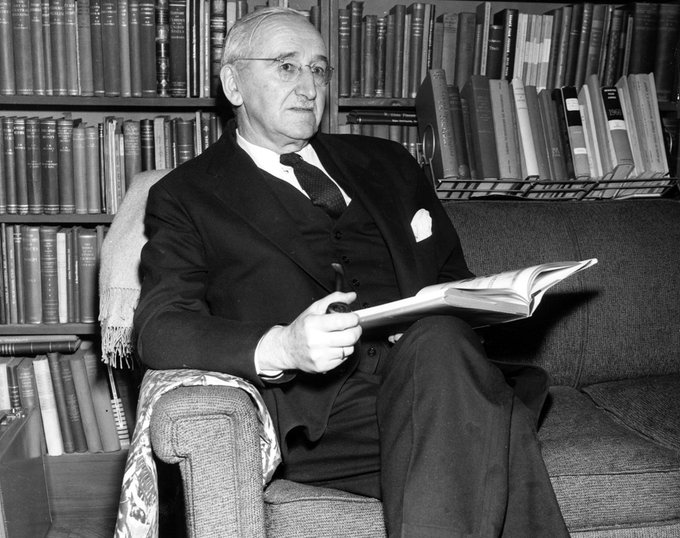
Great thoughts about #TRUST by the one and only Tony Deden:
"Trust cannot be manufactured. It must be earned. It emerges slowly—through consistency, clarity, and moral courage. And it vanishes quickly—through duplicity, evasion, or shallow opportunism.
And above all, we must reward trust—deliberately and visibly. Not just in outcomes, but in process. In an age when short-term performance is often mistaken for integrity, we must remember that character compounds more slowly, but far more enduringly.
When uncertainty rises and institutions falter, it is trust—not trendlines—that preserves continuity. It is trust that enables action without perfect knowledge and cooperation without constant supervision. In that sense, trust is not a luxury. It is a form of capital. And in the end, it may be the only one that truly endures.
Trust is perhaps the fundamental First Principle."
After 20 years of research and 19 editions of In Gold We Trust, this might be the most elegant case for gold I've come across.
Michael Weeks of Edelweiss nails it — not by arguing what gold promises, but by cataloguing what gold spares you from:
No duration risk. No credit risk. No liquidity risk. No dependence on cheap energy, cheap credit, or cheap trade. No balance sheets to blow up. No cash flows to dwindle. No management to misallocate capital.
Gold demands no counterparty's faith — only a safe place to store it.
This "via negativa" approach to portfolio construction resonates deeply with our philosophy.
It rests on a simple recognition: the risks you eliminate by holding gold may matter far more than the returns you project without it.
We're working around the clock on the 20th anniversary edition of In Gold We Trust Stay tuned. This one's going to be special.
#Gold #InGoldWeTrust #IGWT2026 #SoundMoney #ViaNegativa @ttmygh@IGWTreport #Edelweiss
Sound advice from Tony Deden:
"Governments and politicians lie. The press lies. Treating official narratives as solid ground, especially in war, is a mistake. In wartime, truth is obscured by design."
@FoxCastlehold Agreed, but I’ve become more pragmatic about this with time. It always depends on incentives and intent.
Distance from the dog and pony show is healthy if your business model allows it, but outside/minority capital demands genuine respect and accountability.
Most discussions about precious metals end up somewhere between insanity and inanity - between crank conspiracies or stupid speculations about price.
How refreshing to hear two *sane* men discuss something so important to so many!
Worth a listen - and a subscription.
1/ The latest episode of The Grant Williams Podcast with my very special guest Simon Mikhailovich (@S_Mikhailovich) is now available to all subscribers at https://t.co/HhjieTMyJk
@xmjEE We continue to write privately (just for shareholders) but the Journal will stay dormant until we can support it properly.
Our only ‘public’ appearances in 2025 were interviews w/ Grant Williams and a podcast w/ Tim Price.
@lhamtil Agreed. A few industries come to mind:
Flavor and Fragrance
Fasteners
Animal Pharmaceuticals
Industrial Gases
Confectionary
Specialty Chemicals/Materials (areas w/ technical niche & customer orientation, not the expensive commodity producers)
New Post: I list what I think are the traits of an ideal industry (eg pricing power, recurring revenue, economically agnostic), and offer a case study of such an industry.
Enjoy!
https://t.co/ABPRxbcEse
Near-record inflows into gold etfs last year… mean etfs absorbed ~20% of annual mine supply or <0.4% of global stocks.
Jewellery + Industry + Bar & Coin demand was still *double* ETF + Central Bank buying for the year.
We often focus on financial flows - that’s where the data and the drama is - but is that where the story is?
@lhamtil Bosch > Haber for food production.
1) Bosch took Haber’s process from a lab bench to an industrial scale.
2) Bosch then did the same thing for urea (Bosch-Meiser) turning ammonia into a modern, usable fertilizer.
NH3 is the feedstock - urea feeds the world.