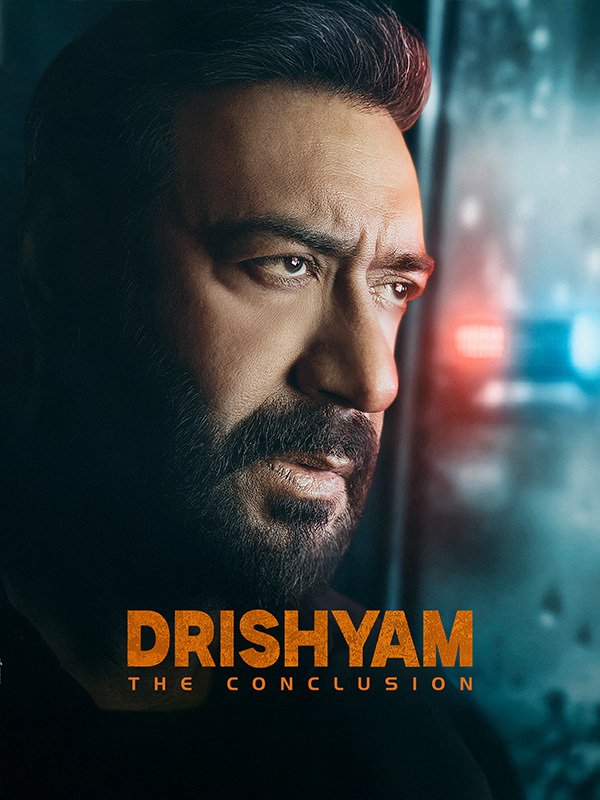
🎬 Drishyam 3: The Conclusion
Vijay Salgaonkar’s biggest battle is no longer hiding the truth. It’s living with the life he built around the lie.
Drishyam 3 has one enormous responsibility: find a way to end Vijay Salgaonkar's story and Abhishek Pathak understands that challenge and wisely avoids simply repeating the formula of the first two films. Instead, the film leans into consequences, paranoia, family and the psychological weight of Vijay’s secret, while retaining the franchise’s familiar cat-and-mouse tension.
Ajay Devgn once again does more with silence than most do with dialogue. His Vijay feels older, more vulnerable and far less invincible this time.
Jaideep Ahlawat is an excellent addition, bringing a new energy to the investigation and creating an intriguing contrast with Devgn’s restrained performance.
The screenplay may divide audiences, especially because the emotional drama takes precedence over the puzzle for much of the film. But when the final act kicks in, Drishyam feels like Drishyam again - tense, unpredictable and deeply invested in Vijay’s fate.
It may not recreate the cultural shock of the first two installment, nor should it try to.
What matters is that the film understands Vijay Salgaonkar’s story is no longer just about escaping the truth. It’s about living with its consequences.
A fitting, emotionally satisfying conclusion to one of Hindi cinema’s most memorable thriller franchises.
#DrishyamTheConclusion
@toecrushrzzz Mdc put india in the competitive group, otherwise we will bash the shit out of porkis and afghanis and then get our relaxed asses beaten by kiwis or proteas in the semis 😭
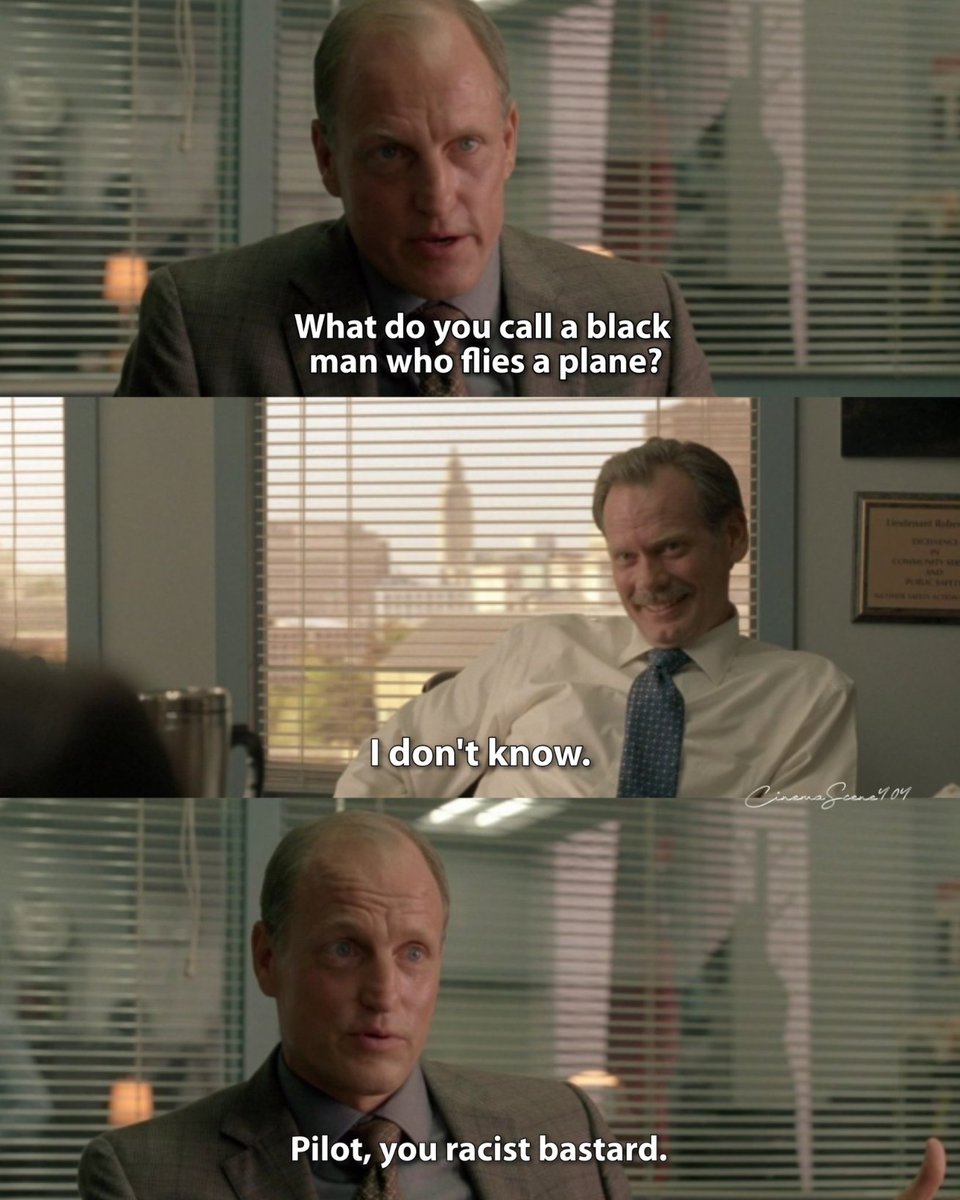
My salute to the Indian pilot Captain Smit Machchhar for his extraordinary bravery.
Despite being stabbed and seriously injured, he fought back, resisted, opened the cockpit door, and enabled passengers and crew to overpower the attacker — preventing a catastrophic mid-air disaster.
He saved the lives of 174 people, including Israeli citizens and other nationals.
I wish Captain Machchhar a speedy and full recovery.
He is a true hero.
ISRAELI PILOT: "This day is significant. It will definitely change something that we used to do. Like 25 years ago, on September 11th.
"Flying those same planes for more than 20 years and being the head of a thousand pilots in Israel, I can tell you that this incident, first, will be remembered as the one that landed safely. Everyone is okay, and that's not the case in many of other incidents that we know."
🚨😂 COMEDIC GOLD OUTSIDE THE WHITE HOUSE!
🇺🇸 TRUMP: “Sundar [Pichai], you wanna say something?”
🇮🇳 PICHAI: “First of all, thanks—”
😂 TRUMP: “This guy is a MONSTER, and nobody knows him. What a great life! To be a MONSTER and not have to go through this. All you have to know is — SUNDARR! Sundar is his name.”
🤣 PICHAI: “Hopefully a better tagline than I’m a monster!”
Everyone is cracking up outside the White House 😂🔥
Trump really knows how to turn a serious moment into comedy! 🇺🇸
📣 I couldn’t understand why people were so crazy about Shubhashree Sahu.
But today I subscribed to her in Instagram and I’m literally telling you. it was worth it.
Sorry, Shubhashree, I was wrong to judge you 😘🔥
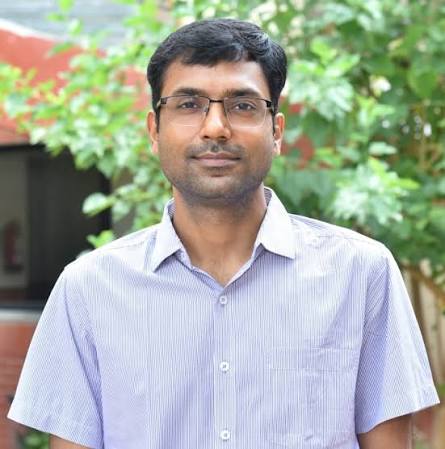
In 2000, he was All India Rank 1 in IIT-JEE. He took Computer Science at IIT Kanpur and finished the degree.
Then he left computing altogether and today he studies the brains of mosquitoes.
His name is Nitin Gupta. He graduated in 2004 with a BTech in computer science and an interest in biology that had been quietly growing through his undergraduate years.
He went to the University of California, San Diego for a PhD in bioinformatics and systems biology, finishing in 2009. Then he spent a few months in a cognitive neuroscience lab there, using magnetic stimulation to study how urges for food and money leak into the motor system before a person actually moves.
From 2010 to 2014 he was at the National Institutes of Health, in a laboratory studying sensory coding, learning electrophysiology. Recording the electrical conversation between neurons, one spike at a time.
In July 2014, he came back to IIT Kanpur as faculty in Biological Sciences and Bioengineering.
His lab asks a question that sounds simple and is not. How does a brain decide that something is worth moving towards, or running away from, without ever having learned it?
They use smell, and they use insects. Grasshoppers, flies and mosquitoes. A mosquito finds you largely by carbon dioxide, picked up by sensory neurons on its maxillary palps and carried into a region of its brain called the antennal lobe. Gupta's lab works on how those circuits weigh a human body against a repellent, and how that computation becomes a decision to approach or turn away.
His group also built TreadWill, a free, fully automated cognitive behavioural therapy programme for depression, designed for people in countries where therapists are scarce. In a randomised trial with 598 participants in India, users who completed at least half the modules showed significant reductions in depression and anxiety symptoms.
Of the twenty students who topped IIT-JEE between 2000 and 2019, twelve now work outside India.
He is not one of them.
"I always knew I had to return. Movies like Swades inspired me."