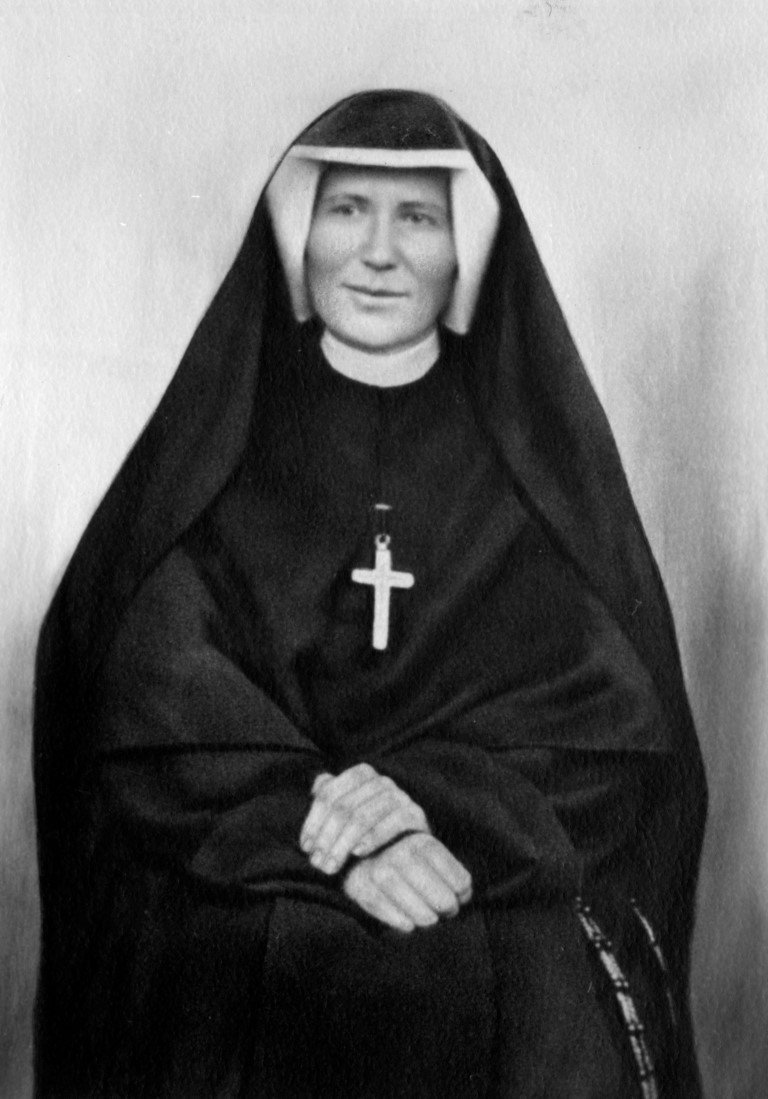
Carl Jung, fundador da psicologia analítica e pai da psicologia profunda, disse que católicos não precisam de terapia, mas de confissão e comunhão.
O psicólogo defendia que católicos não necessitavam de psicoterapia, pois a confissão sacramental e os sacramentos da Igreja Católica cumpriam essa função.
Em sua obra A Prática da Psicoterapia, Jung disse claramente:
“No tratamento de católicos, eu sempre os remeto ao confessionário da Igreja e aos seus meios de graça.”
Ele observou que, em mais de 40 anos de atendimento, teve apenas cerca de 6 católicos praticantes como pacientes. Segundo Jung, isso acontecia porque a confissão permitia a liberação da culpa e dos conflitos internos de forma eficaz, dispensando, na maioria dos casos, a necessidade de análise.
Jung também destacava o valor psicológico da Missa e da Eucaristia, descrevendo-a como uma das experiências mais completas para a transformação da alma.
Quando atendia católicos com problemas emocionais, Jung considerava seu dever reconduzi-los à prática da confissão e à vida sacramental da Igreja, em vez de mantê-los em tratamento prolongado.
Reminder that leftists murdered 55,000 priests and nuns in cold blood in Spain from 1936-1939 during the communist Red Terror.
To compare, the Spanish Inquisition killed 3,000 people over 374 years.
Francisco Franco is a hero and saved Spain from the same fate that Eastern Europe endured under communist tyranny.
ST. PADRE PIO ON HOW TO ATTEND MASS
Before Padre Pio offered the unconsecrated host on his Paten, he would run his fingers around the host to make sure there were no loose particles.
On July 25, 1915, Padre Pio wrote a letter to Anita Rodote on how to properly attend the Holy Mass:
The Divine Master calls the church the house of prayer. In order to avoid irreverence and imperfections I exhort you in the Lord to:
▪︎Enter the church in silence and with great respect.
▪︎Take the holy water and make the sign of the cross carefully and slowly.
▪︎Before God in the Blessed Sacrament genuflect devoutly.
▪︎At your pace, kneel down and render to Jesus the tribute of you presence.
▪︎Confide to him all your needs, and those of others.
▪︎Speak to him with filial abandonment.
▪︎Be very composed when standing up, kneeling down, and sitting.
▪︎Carry out every religious act with the greatest devotion.
▪︎Be modest in your glance.
▪︎Don't turn you head here and there to see who enters and leaves.
▪︎Don't laugh.
▪︎Don't speak to anybody, except when requested for charity or other strict necessity.
▪︎Say the words distinctly, observe the pauses, and never hurry.
▪︎Behave in such a way that all the presents are edified by you.
▪︎Don't leave without asking Jesus for his blessing, and forgiveness for your shortcomings.
▪︎Leave the church recollected and calm.
Credit:fearnot
According to Saxo Grammaticus, in medieval Danish law when a foreigner slew a Dane, two foreigners must be put to death.
Disproportionate penalty was seen as justice because foreigners lacked the same kinship and legal protections (weregild) that Danes enjoyed, so the society mandated a harsher, collective penalty for them. They believed rulers owed their people an uncompromising deterrent to prevent outsiders from disturbing the peace or assaulting native Danes.
Something to think about.
The West’s origins lie in the myth Perseus, of the slaying of such Gorgons and the replacement of the primordial and fecund matriarchy they represented with patriarchy
We have drifted very far from those roots
Now, we are once again ruled by termagants and harridans
Any revival of the West will be rooted in a renewal of the spirit of Perseus and rejection of our modern Gorgons
THEY THREW THIS SAINT INTO BOILING OIL. HE SURVIVED. THEN THEY EXILED HIM TO AN ISLAND.
SHOCKING FACT: The Apostle John, the one Jesus loved, was the only apostle not martyred by execution.
Not because they did not try.
Emperor Domitian had him thrown into boiling oil in front of a Roman crowd.
John stepped out unharmed.
Embarrassed, Domitian exiled him to the island of Patmos.
There, John received the Book of Revelation.
The Romans tried to silence him with death. God gave him the Apocalypse instead.
What is the most terrifying and beautiful thing in Revelation to you?
Death, my friends, is to the just man what sleep is to the tired laborer who is glad of the approach of night, which will bring him rest after the hardships of the day.
-St. Vianney
"Great sufferings seldom come alone, and they are commonly succeeded by several others, which are sometimes as sensible as the first. This is what Christ experienced all His life, but particularly in His Passion, every circumstance of which alone was sufficient to torment Him. Such were, when He was seized in the garden of Gethsemani, the treason of Judas, the flight of His other disciples, the insolence and cruelty of the soldiers, and upon the cross, the dislocation of His bones, the weight of His body, and several other such particulars, of which we must endeavour to omit nothing of, when we meditate on our Saviour's Passion; that we may compassionate all His pains in particular, and give Him thanks for them, since they cost Him so dear, and are so profitable to us. Thus among the reproaches which He endured, when He was dragged with so much ignominy through the streets of Jerusalem, we may consider, as circumstances which gave Him an extreme pain, though few persons reflect thereon, on one hand, the loss of His reputation in the minds of His friends, whose esteem He had acquired, by the greatness of His miracles, the purity of His doctrine, and the holiness of his life; who enjoyed the fruit of their malice. For, that He might more fully show us the extent of His charity, He never spared Himself in anything; because He was pleased, that in all kinds of sufferings that can happen to us, we might find in Him a companion, a model, and a comforter." - Suffering of Christ, Fr. Thomas of Jesus (1582)
"Before ascending Christ raised His hands and blessed His apostles, enjoining on them to preach the Gospel to all nations, and promising to be with them all days, till the end of the world (Matt. xxviii. 18; Lk. xxiv. 50). After the ascent two angels appeared and consoled the apostles (Acts i. 10). St. Jerome tells us that the impress of Christ's sacred feet used to be shown to pilgrims; there remains now only the trace of the left foot, that of the right having been removed by the Turks. It is remarkable that from the direction of this footprint Our Lord must have been facing Europe as He mounted into heaven, just as He faced it during the crucifixion. Christ made His ascent from the Mount of Olives, where He began His Passion, to show us that the road to heaven must be through suffering. He ascended into heaven by His own power, not like Elias borne on a chariot (4 Kings ii. 11), or like Habacuc carried by an angel (Dan. xiv. 36). His escort into heaven was formed of the souls released from limbo (Eph. iv. 8). The Fathers are of one mind in teaching that Christ has never descended in the flesh from heaven since then, except during Holy Mass. Forty days after Easter the feast of Ascension Thursday is kept, preceded by the three Rogation days with their processions, symbolic of the going out of Christ with His apostles to the Mount of Olives." - Rev. Francis Spirago
Aquinas gives Catholics the question sola scriptura cannot answer:
What is the formal object of faith?
Not the material object. The formal object.
The material object of faith is WHAT you believe: Trinity, Incarnation, Eucharist, Baptism, canon of Scripture, forgiveness of sins, resurrection of the body.
The formal object is WHY you believe it.
That distinction matters.
In Summa Theologiae II-II, Q.1, Aquinas says the object of faith is the First Truth. We believe Christian doctrine because God reveals it. Not because it seems plausible. Not because a preacher made a strong case. Not because we personally found a verse persuasive.
Faith is divine because its motive is divine.
Then Aquinas makes the point even sharper in II-II, Q.5, A.3.
A person can believe many true doctrines. He may confess the Trinity. He may believe the Resurrection. He may quote Scripture. He may defend biblical morality. He may sound very orthodox on many points.
But if he rejects one article of faith obstinately, Aquinas says he does not retain the habit of faith.
Why?
Because he no longer adheres to the formal object of faith.
He is not believing because God has revealed through the rule established by God. He is believing because his own private judgment has approved this article and rejected that one.
That is not the Catholic act of faith.
It is private theological judgment using Christian premises.
Aquinas says the formal object of faith is the First Truth as manifested in Holy Scripture and the teaching of the Church.
Read that again.
Not Scripture isolated from the Church.
Not Scripture interpreted by every individual as final judge.
Not Scripture filtered through a confession, seminary, or favorite sermon series as the ultimate rule.
First Truth manifested in Scripture and the teaching of the Church.
This is the problem sola scriptura cannot solve.
It shifts the formal object of faith from God revealing through His Church to the individual judging what counts as revelation and what it means.
The Protestant says, "I believe the Bible."
Good. Which Bible?
Sixty-six books? Seventy-three? Who decided?
The Protestant says, "Scripture interprets Scripture."
Fine. According to whom?
The Lutheran says baptism regenerates. The Baptist says it does not. The Calvinist says Christ died only for the elect. The Methodist says He died for all. The Anglican says one thing this century and another thing the next. Every one of them opens the Bible. Every one of them claims the Holy Spirit. Every one of them says the text is clear.
So who has the divine authority to settle the dispute?
If the answer is "the Bible," you have not answered the question. You have named the battlefield.
A text must be interpreted. A canon must be identified. A creed must be defined. Heresy must be condemned. The Arians had verses. The Nestorians had verses. The Monophysites had verses. Every major heresy in Christian history appealed to Scripture.
What settled those disputes was not private interpretation.
It was the Church.
This is why Nicaea matters.
The doctrine of the Trinity was not settled by handing Arius and Athanasius a Bible and saying, "Good luck, gentlemen."
It was settled by bishops in council, exercising the authority of the Church, defining the rule of faith against heretical interpretation.
And Protestants still recite the result.
They inherit the Catholic conclusion while rejecting the Catholic principle that made the conclusion binding.
That is incoherent.
Aquinas saw the problem with mathematical precision.
If you believe the Trinity because the Church, guided by God, proposes it as revealed truth, your act of faith has the right formal object.
If you believe the Trinity because you personally judge the verses to teach it, then your formal object is your judgment.
The conclusion may be true. The mode of assent is not the same.
That is the key.
Two men can say the same creed for radically different reasons.
The Catholic says: I believe because God reveals, and the Church He founded proposes this truth with divine authority.
The Protestant says: I believe because I think this is what Scripture means.
Those are not the same act.
One is faith as Aquinas defines it.
The other is private theological judgment.
This is also why "mere Christianity" collapses. There is no such thing as Christianity detached from the authority that tells you what Christianity is.
You cannot have the Trinity without Nicaea.
You cannot have the canon without the Church.
You cannot have orthodoxy without an authority capable of saying, "This is the faith, and that is heresy."
And once you admit that authority exists, the central question becomes unavoidable.
Where is that authority?
It is not in the individual believer. That is private judgment.
It is not in the local pastor. He can be wrong.
It is not in the denomination. Denominations contradict each other and revise themselves.
It is not in an invisible church. Invisible authorities cannot define visible doctrines, settle visible disputes, or excommunicate visible heretics.
It must be a visible, apostolic, teaching Church with authority to bind the faithful in the name of Christ.
That is the Catholic Church.
This is why Aquinas is so important. He does not begin with "Rome is right because Rome says so." He begins with the nature of faith itself.
Faith requires a divine formal object.
A divine formal object requires divine revelation.
Divine revelation must be proposed to man by an infallible rule, otherwise the believer is left deciding for himself which alleged revelations count.
But once the believer decides for himself, the formal object has shifted from God revealing to man judging.
That is the Protestant problem.
This does not mean Protestants are insincere. It does not mean they lack love for Christ. It does not mean they hold no true doctrines.
It means sola scriptura cannot produce the Catholic act of faith as Aquinas describes it.
Because the Catholic act of faith is not "I accept whatever doctrines survive my interpretation."
It is "I submit my intellect to God revealing through the Church Christ founded."
That is why heresy is not just getting one doctrine wrong. Heresy breaks the principle by which all doctrine is believed.
Reject one article obstinately, and the issue is not merely that one article.
The issue is the final authority.
Aquinas does not leave many options here.
The Church as infallible rule.
Or the individual as final judge.
One is Catholicism.
The other is Christianity reduced to private judgment.
Choose carefully.
Dziś byłam w przepaściach piekła, wprowadzona przez Anioła. Jest to miejsce wielkiej kaźni, jakiż jest obszar jego strasznie wielki. Rodzaje mąk, które widziałam: pierwszą męką, która stanowi piekło, jest utrata Boga; drugie – ustawiczny wyrzut sumienia; trzecie – nigdy się już ten los nie zmieni; czwarta męka – jest ogień, który będzie przenikał duszę, ale nie zniszczy jej, jest to straszna męka, jest to ogień czysto duchowy, zapalony gniewem Bożym; piąta męka – jest ustawiczna ciemność, straszny zapach duszący, a chociaż jest ciemność; widzą się wzajemnie szatani i potępione dusze, i widzą wszystko zło innych i swoje; szósta męka jest ustawiczne, towarzystwo szatana; siódma męka – jest straszna rozpacz, nienawiść Boga, złorzeczenia, przekleństwa, bluźnierstwa. Są to męki, które wszyscy potępieni cierpią razem, ale to jest nie koniec mąk, są męki dla dusz poszczególne, które są męki zmysłów, każda dusza czym grzeszyła, tym jest dręczona w straszny, i nie do opisania sposób. Są straszne lochy, otchłanie kaźni, gdzie jedna męka odróżnia się od drugiej; umarłabym na ten widok tych strasznych mąk, gdyby mnie nie utrzymywała wszechmoc Boża. Niech grzesznik wie, jakim zmysłem grzeszy, takim dręczony będzie przez wieczność całą; piszę o tym z rozkazu Bożego, aby żadna dusza nie wymawiała się, że nie ma piekła, albo tym, że nikt tam nie był i nie wie jako tam jest (Dz.741).